

Day 01Arrival in HanoiD
French-speaking guide · Transfer 40 km · 45 min
Your adviser is waiting for you at the exit from customs at Noi Bai. The drive to the old quarter crosses the Red River on the Nhat Tan bridge, and you can already see what shapes the geography of the North: a very densely populated alluvial plain, closed to the north and west by mountains you will reach in two days.
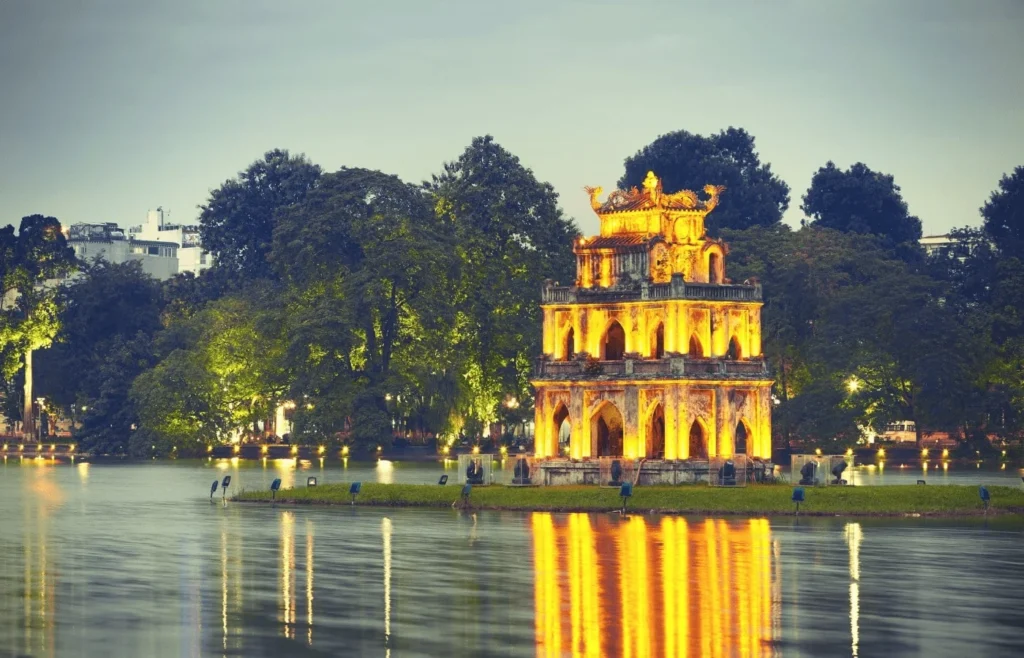
First stroll around Hoan Kiem lake at dusk, with no programme. Welcome dinner at a neighbourhood spot, on a low stool.
Your guide uses this first evening to check your walking kit. It isn’t a formality: the North-West paths are earth, and new shoes or smooth soles have ruined days before. If anything is missing, you buy it the next morning — Hanoi sells everything.
Day 02Hanoi, before the mountainsB, L
French-speaking guide · On foot and by private vehicle
Morning in the old quarter, the thirty-six guild streets where each thoroughfare once bore the name of a trade — Cotton Street, Tin Street, Bamboo Basket Street. Many have changed trade, a few haven’t.
The afternoon is devoted to the Museum of Ethnology, and it isn’t a filler visit: Vietnam has fifty-four recognised ethnic groups, you will meet four in a week, and two hours here completely change what you understand later in the villages. The full-size houses rebuilt in the garden — including an Ede longhouse over forty metres long — are worth the trip on their own.
The museum was designed with the help of French ethnologists and the museography shows it: objects are dated and located, and folklore is avoided. Your guide will show you in particular the differences in dress between White Thai and Black Thai — you will be able to tell them apart from the day after tomorrow.
Day 03Hanoi — Mai ChâuB, L, D
Road 140 km · 3½ hrs · Walk 1 hr
Departure west. The plain lasts an hour, then the road climbs into Hoa Binh province and crosses the Thung Khe pass, which the Vietnamese call White Rock Pass because of the limestone quarries cut into it. Stop at the top, where Muong vendors grill corn and tubers on braziers.
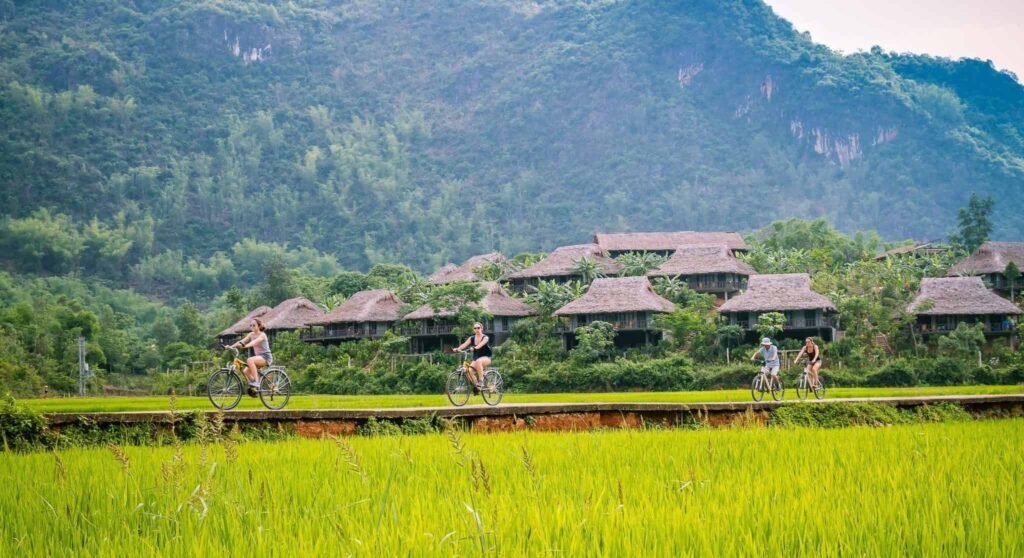
The descent to Mai Châu is one of the great moments of the North-West road: the valley appears all at once, perfectly flat, criss-crossed by rice fields, with stilt houses lined up at the foot of the cliffs.
Check-in with a White Thai family in Poom Coong or Lac, then a first one-hour walk between the hamlets in the late afternoon, to stretch your legs after the drive.
The Thai house is built without a single nail, on stilts, with a split-bamboo floor that echoes underfoot. Everyone sleeps together on mattresses on the floor, each under their own mosquito net. Comfort is simple and cleanliness impeccable; those who prefer a closed room tell us when booking — the valley’s lodges offer them.
Day 04Mai Châu, from village to villageB, L, D
Walk 4 hrs · 12 km · Ascent 300 m
The first real day of walking, with a local guide from the valley. The route follows the dykes then climbs into the hills on a porters’ path to the hamlet of Hang Kia, where Hmong people live — twenty kilometres and eight hundred metres of ascent separate the Thai of the plain from the Hmong of the ridges, and the two peoples farm neither the same land nor the same crops.
Lunch in a local home along the way. The afternoon descends by another slope, through cassava fields and bamboo groves.
The walk is moderate: three hundred metres of cumulative ascent, four hours of actual walking, with breaks. There is no technical difficulty, but the path is earth and slippery after rain.
Back at the guesthouse in the late afternoon. If the calendar allows, the family holds an evening of xòe dancing, the Thai round dance where everyone holds hands — we never order it for tourists, but we let you know when it is happening for real.
Day 05Mai Châu — Pu LuongB, L, D
Road 60 km · 2 hrs · Walk 2½ hrs
A short drive south-west into the Pu Luong nature reserve, straddling the provinces of Hoa Binh and Thanh Hoa. The landscape changes character: you leave the open valley of Mai Châu for a more enclosed limestone relief, with narrow terraces clinging to the slopes.
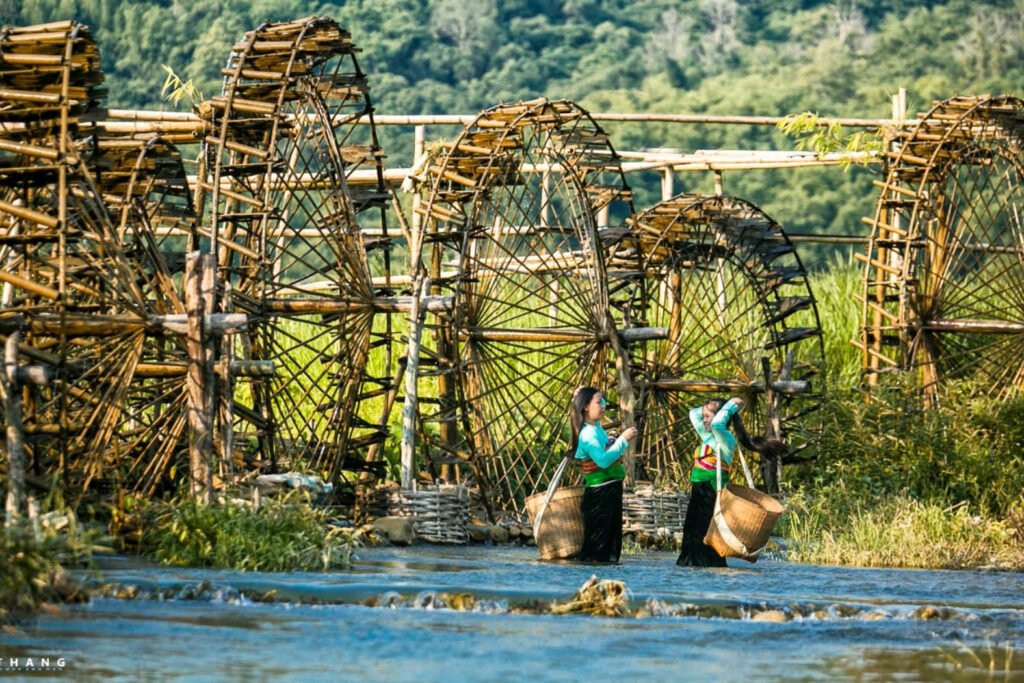
A two-and-a-half-hour walk in the afternoon between the hamlets of Don and Ban Hieu, along a stream dotted with bamboo water wheels. These wheels, five to six metres high, lift river water up to the rice fields above without a drop of petrol; they have turned for generations and are rebuilt every year.
Night in a lodge above the rice fields, or in a stilt house depending on the category chosen. The Pu Luong lodges were built in the last ten years, almost all in bamboo and local wood, often with an infinity pool facing the valley. It is one of the few regions in the North where comfort has arrived without disfiguring the landscape.
Day 06Pu Luong, the descent to Kho MuongB, L, D
Walk 5 hrs · 14 km · Ascent 500 m
The longest walking day of the tour, and the most beautiful. The path crosses a ridge then plunges into an enclosed valley hiding the hamlet of Kho Muong: some sixty Thai houses, no tarmac road until 2015, and electricity arriving after that.
Above the village opens Hang Doi, the bat cave, a huge limestone cavity whose ceiling has collapsed in places, letting columns of light fall through. It shelters several colonies, and villagers used to collect the guano to fertilise the rice fields.
Lunch with a family in Kho Muong, then back up by another path through the maize fields.
Five hours of walking and five hundred metres of ascent: it is the day that asks most of your legs. Those who prefer to shorten it can be picked up by vehicle halfway, as the track meets the path in two places. We always plan for it.
Day 07Pu Luong — Nghia LoB, L, D
Road 230 km · 6 hrs
The tour’s transfer day, and we don’t try to disguise it: six hours on the road through the Da and Thao valleys, with two stops. The long drive isn’t wasted though — it is the best moment to ask your guide the questions that don’t come up during visits.
Arrival in the late afternoon in Nghia Lo, in the Muong Lo basin. It is the second-largest rice-growing basin in the North-West after Muong Thanh at Dien Bien Phu, and the historic home of the Black Thai, who regard it as their cradle.
Night with a Black Thai family. The xòe dance, the collective round dance practised here for centuries, was inscribed on UNESCO’s Intangible Cultural Heritage list in December 2021; Nghia Lo is one of its main living centres.
Dinner prepared with the family: river fish grilled in a bamboo clamp, sticky rice steamed in a woven basket, bitter bamboo shoots. Thai cooking is very different from that of the plain, smokier and much less sweet.
Day 08Nghia Lo — Suoi Giang — Mu Cang ChaiB, L, D
Road 100 km · 3½ hrs · Walk 1½ hrs
In the morning, up to Suoi Giang, at 1,400 metres, where shan tuyết tea trees grow, some of them several centuries old. The trees reach five to six metres and the Hmong pickers climb them barefoot; the young shoots are covered in a white down that gave the variety its name — shan tuyết means mountain snow. Tasting with a producer.
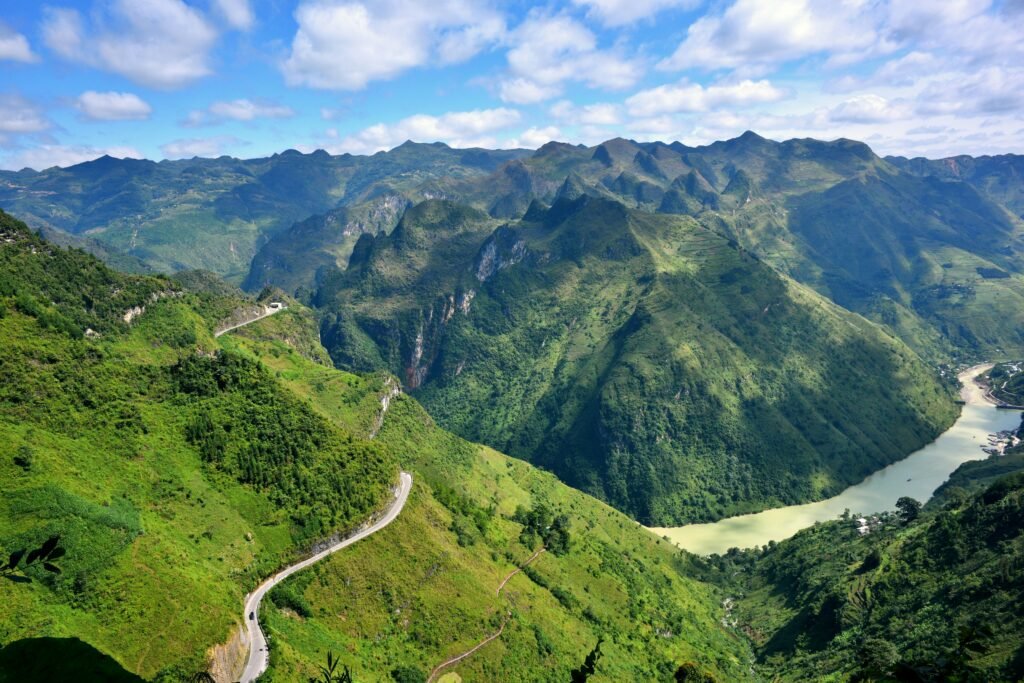
The afternoon tackles the Khau Pha pass, one of the four great passes of the North-West: thirty kilometres of hairpins, a frequent ceiling of cloud — khau pha means the horn of the sky in the Thai language — and a viewpoint over the La Pan Tan terraces that is one of the most photographed in the country. In September, the pass hosts a paragliding festival.
A one-and-a-half-hour walk at the end of the day down into the terraces from the pass, while the vehicle takes the road to the bottom.
Night in Mu Cang Chai, in a lodge or Hmong homestay depending on the category.
Day 09Mu Cang Chai, in the terracesB, L, D
Walk 4 hrs · 10 km · Ascent 400 m
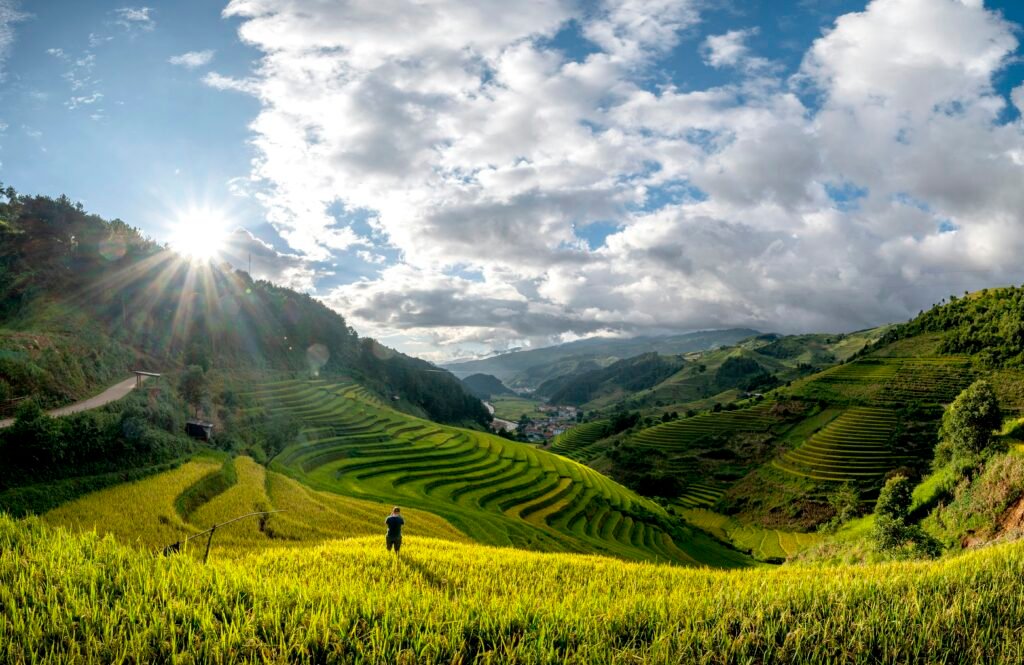
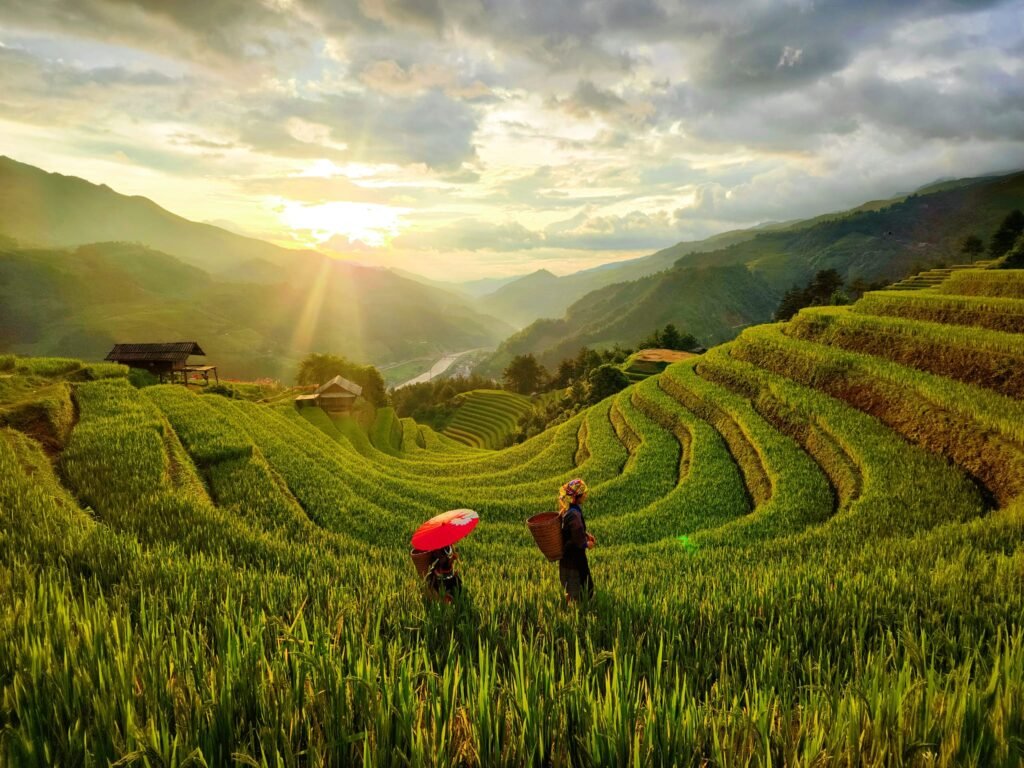
A whole day on foot in the communes of La Pan Tan, Che Cu Nha and Ze Xu Phinh, the three with the finest terraces. The whole area was listed as a special national monument in 2019 — the highest heritage protection in Vietnam, shared with the Imperial City of Hue and Halong Bay.
These terraces are the work of the Hmong, settled here for about two centuries after a long migration from southern China. They rise to 1,500 metres, produce only one harvest a year — against two or three in the delta — and are irrigated by a network of bamboo channels maintained collectively.
The walk follows the dykes, thirty centimetres wide, which requires a little care but no technique. You pass through hamlets where women work hemp — spinning, indigo dyeing, wax batik — and where nothing is sold to passers-by, for lack of passers-by.
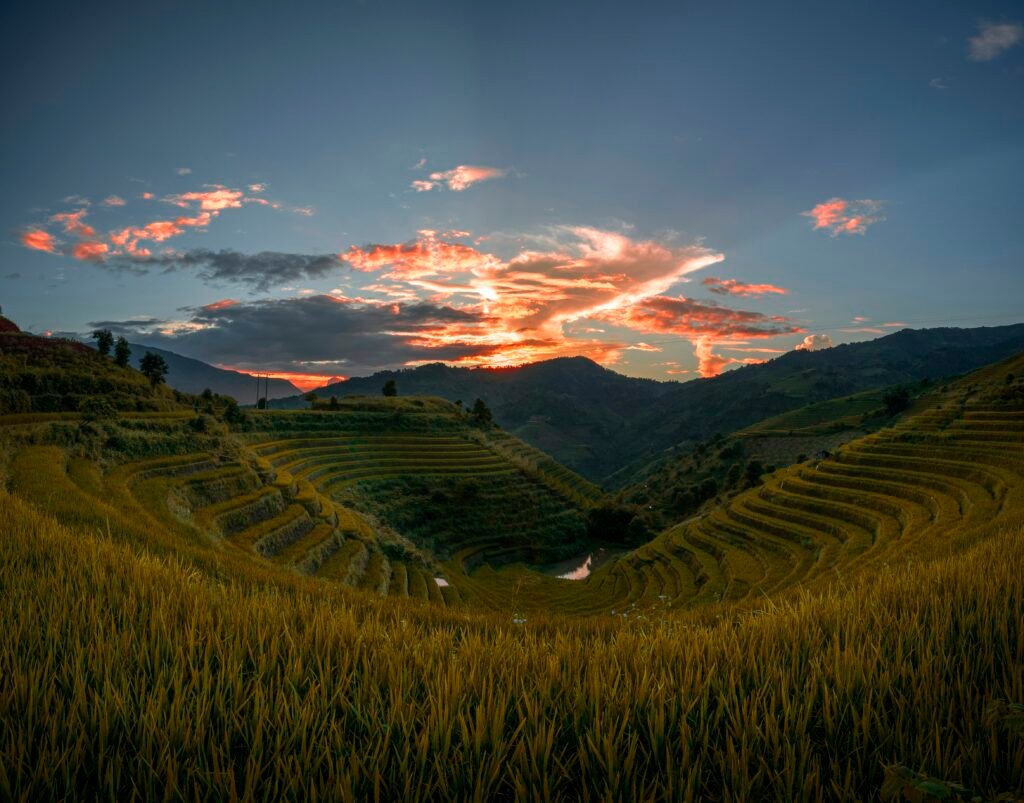
Depending on the season, the landscape is completely different. From May to June the terraces are flooded and reflect the sky; from mid-September to early October they are entirely golden and the harvest is in full swing. These are the two periods we recommend, and we will tell you frankly if your dates fall elsewhere.
Day 10Mu Cang Chai — Thac Ba lakeB, L, D
Road 160 km · 4 hrs · Private boat 2 hrs
Down east through the valley, arriving at Thac Ba lake in the early afternoon. The lake isn’t natural: it was formed in 1970 when Vietnam’s first hydroelectric dam was filled, drowning an entire valley and leaving the tops of more than thirteen hundred hills above water as so many islets.
A two-hour private boat trip among the islands, with a stop at a Dao village on a hillside. After a week in the mountains, silence has another quality on the water.
Night by the lake, in a lodge. It is a deliberately calm stop: it acts as a buffer between the mountains and the return to Hanoi, and above all avoids a seven-hour drive on the last day.
Dinner of lake fish, and an early night. The morning fog on Thac Ba, when it lifts, is worth getting up for.
Day 11Thac Ba — Hanoi — DepartureB
Road 180 km · 3½ hrs · Airport transfer
Back to Hanoi on the Lao Cai expressway, the newest in the North, which has halved journey times to the mountains since it opened.
Depending on your flight time, free time in the old quarter for last-minute shopping — that is where you find coffee, pepper and fabrics, at prices bearing no relation to the airport’s.
Transfer to Noi Bai and assistance with check-in. Our team remains reachable until take-off.
If your flight leaves in the evening, we add a day-use room rather than leave you waiting: after nine days of walking, a shower before an eleven-hour flight isn’t a luxury.
Continue
Other tours you might like
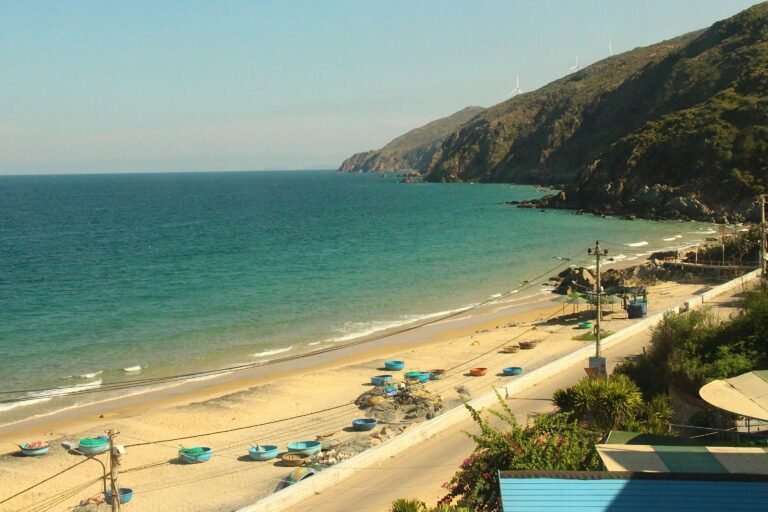 Off the beaten trackThe secret Centre: Kon Tum, Quy Nhon and Phong Nha — 12 daysHanoi — Phong Nha — Huế — Kon Tum — Quy Nhon — Saigon12 days / 11 nightsfrom €1,690
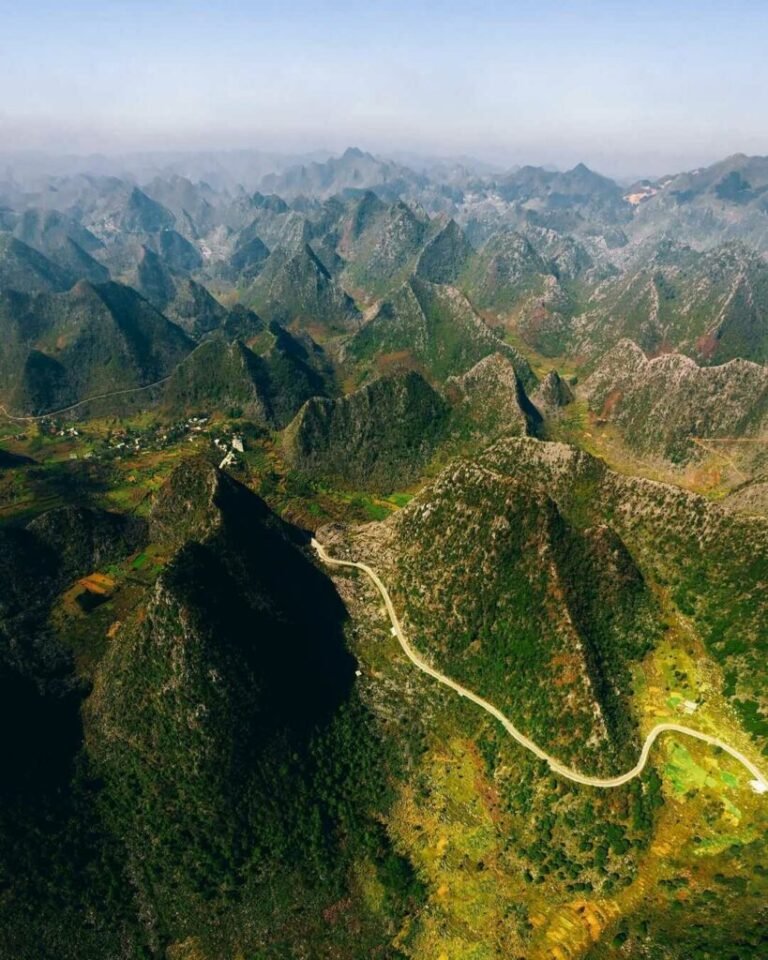 Off the beaten trackHa Giang off the beaten track — 9 daysHanoi — Ha Giang — Dong Van — Cao Bang — Ban Gioc — Hanoi9 days / 8 nightsfrom €1,390
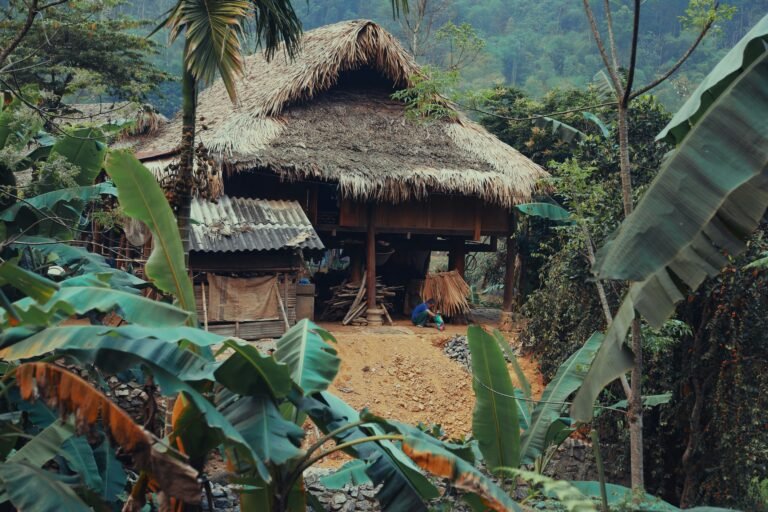 Off the beaten trackPu Luong and the delta villages — 8 daysHanoi — Craft villages — Ninh Binh — Pu Luong — Mai Châu — Hanoi8 days / 7 nightsfrom €1,150