Where to stay in Vietnam: hotels, boutique guesthouses, junks and homestays
This is the item where the price gap is widest and least understood. Between twenty-five and ninety euros a night, you are not buying extra comfort: you are buying a place. What is worth the money, and what isn’t.
In brief
The best value
The boutique house with 8–15 rooms, €50 to €120 a night for two
The most memorable
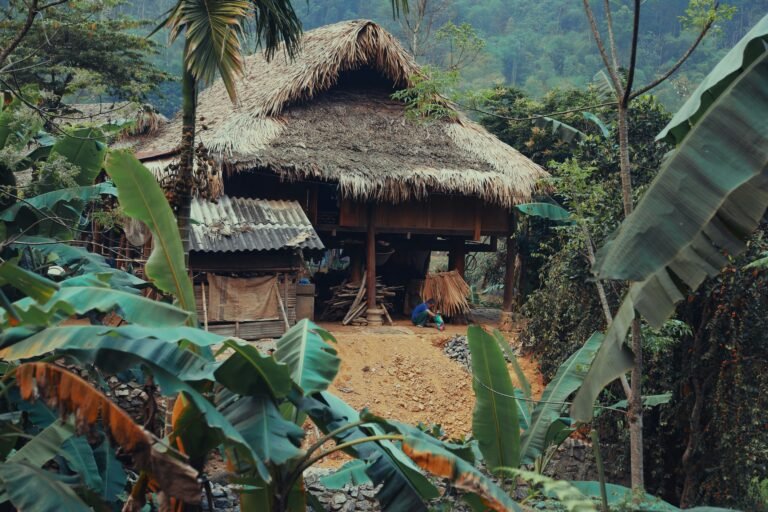
A homestay night in a stilt house, €15 to €40
Book early
Junks with fewer than 15 cabins and Ninh Binh lodges in May–June
Check
Lift in Hanoi, courtyard room in the old quarters, heating in the mountains
What money really buys
Accommodation is the item where the price gap is widest, and least understood. A clean, air-conditioned double room with private bathroom can be found for around twenty-five euros in a small family-run address. The same night in a colonial boutique hotel in Hội An costs ninety, and a seaside resort several hundred.Between twenty-five and ninety euros, what you buy is not extra comfort — the twenty-five-euro room is already comfortable. You buy a place: a mansion, a garden, a view, a pool, a breakfast worth the detour. It is a purchase of experience, not status.Beyond that, the gap becomes much less interesting. Our conviction after years of housing travellers: the best value in Vietnam lies in the middle bracket, and paying three times more doesn’t bring three times more.
The six options, and what they cost
Option
Price / night for two
Where
What you gain
Homestay, stilt house
15 – 40 €
Pu Luong, Mai Chau, Ha Giang, delta
The shared dinner, and the only real encounter
Small family hotel
25 – 50 €
Everywhere
Simple, clean, no character
Boutique house, 8 to 15 rooms
50 – 120 €
Hanoi, Hoi An, Hue, Ninh Binh
The best value in the country
Eco-lodge
60 – 200 €
Ninh Binh, Pu Luong, Mai Chau
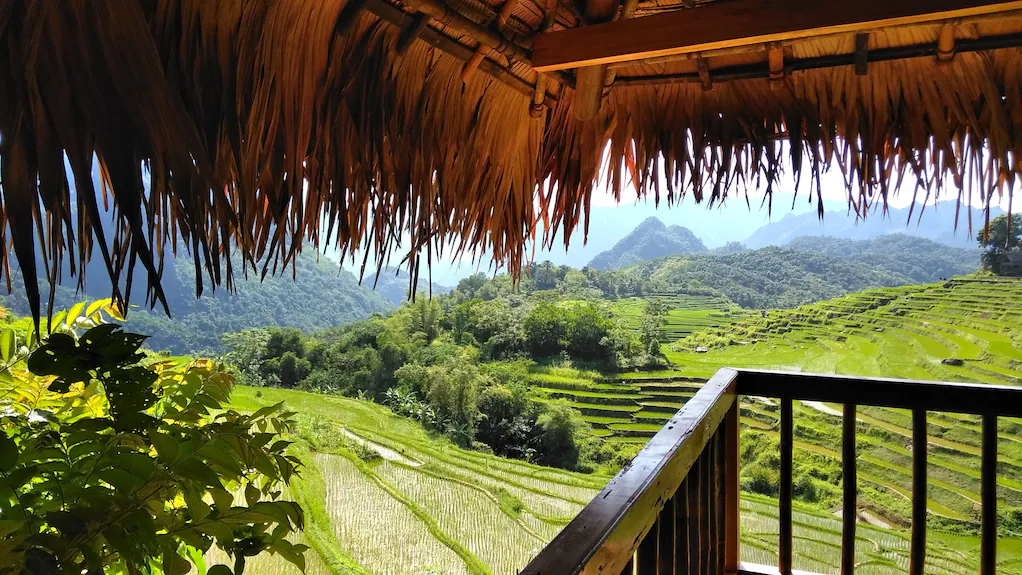
Pool facing the rice fields
Cruise junk
€150 – 500 / person
Lan Ha, Halong, Bai Tu Long
The night at anchor
International resort
150 – 800 €
Da Nang, Phu Quoc, Con Dao
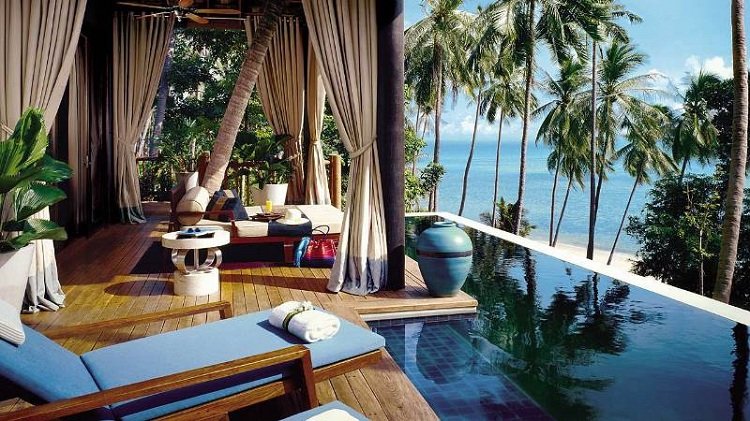
Comfort, rarely the place
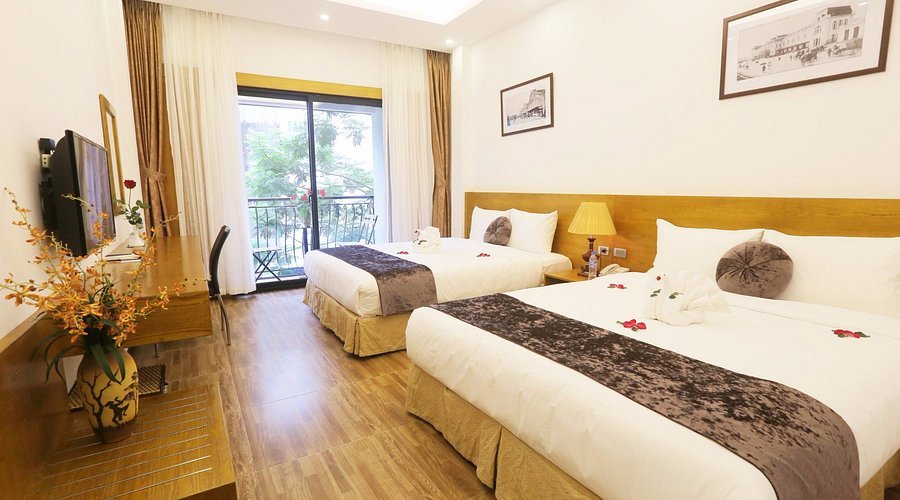
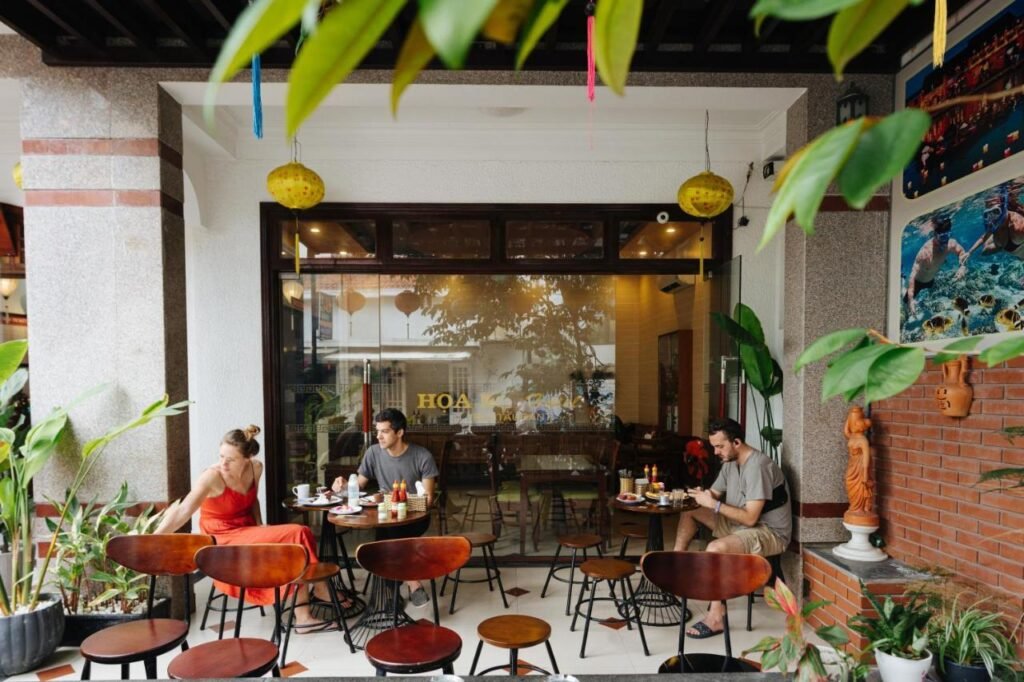
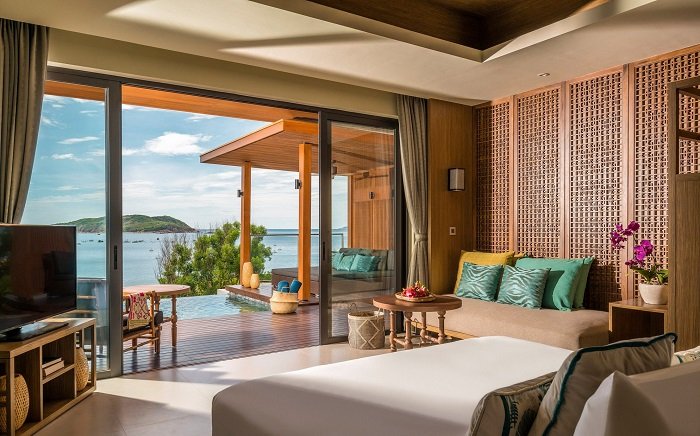
Our general recommendation fits in one sentence: the ten-room boutique house offers the best value in Vietnam, well ahead of the international resort at the same price. Over the last fifteen years the country has developed a generation of independent hotels run by their owners, in old buildings, with a personal service no chain can match.
The homestay night: what it really is
The actual comfort
A mattress on the floor under a mosquito net in a common room, or a small room separated by a partition depending on the house. Shared shower and toilet, uneven hot water, a fan rather than air-conditioning, and no heating — which matters in January in the mountains, where it is ten degrees at night.
What it brings
Dinner, served at one big table, shared with the family: river fish grilled in banana leaf, bamboo shoots, sticky rice cooked in a tube, rice spirit the household distils itself. It is what our travellers talk about most when they get back, by far.
The word “homestay”, and what it covers
Watch the vocabulary: in Vietnam, the word now refers as much to a real family home as to a small twelve-room concrete hotel named that way for the image. The difference comes down to one simple question: does the family live on site and have dinner with you? We only work with houses where the answer is yes.
Choosing your junk: the three criteria
Criterion
What to look for
Why
Number of cabins
Fewer than 15
Table service rather than a buffet, anchoring in enclosed coves
Sailing zone
Lan Ha or Bai Tu Long licence
An €80 boat sold as “Lan Ha” actually sails in the Halong corridor
Wastewater treatment
Stated by the operator
Hundreds of boats sleep every night in an enclosed body of water
Two nights on board are much better than one: the first day is eaten up by transfers, and it is the second that takes you into the hidden corners of the bay.
What to check before booking
In Hanoi and the old quarters
The lift. Tube houses often rise six storeys with steep stairs, and the lack of a lift is rarely mentioned. A courtyard room rather than one on the street: horns go on until midnight and deliveries resume at five.
In the mountains
Heating, or the lack of it. From December to February, it is zero to ten degrees in Sa Pa and Ha Giang, and almost no accommodation is heated. Good addresses provide thick blankets and sometimes a hot-water bottle; ask.
On the coast
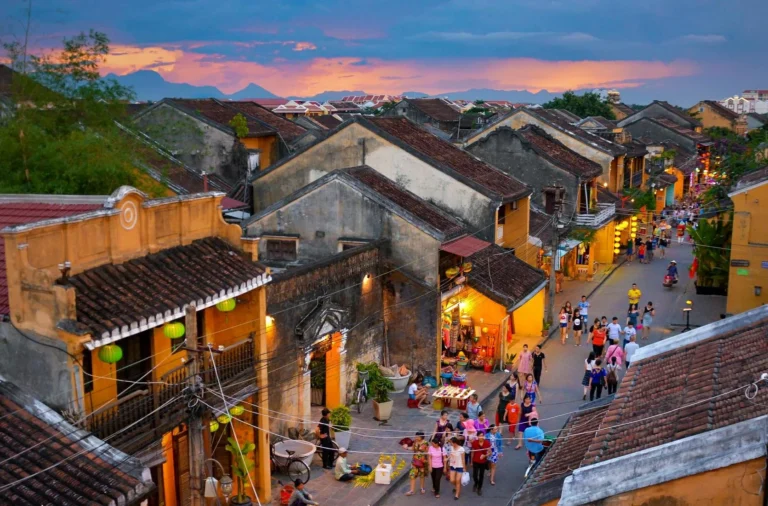
The state of the beach, which changes fast. Cua Dai, in Hoi An, erodes year after year despite the rock defences, and several hotels still boast about it. Look at recent photos, not those on the website.
Everywhere
The real distance from the centre. A hotel advertised as “ten minutes away” is ten minutes by scooter, not on foot. In Hoi An, the difference between the edge of the old town and a hotel three kilometres away completely changes the stay.
When to book, and when it is urgent
Period
Pressure
Recommended lead time
Tết (lunar new year)
Extreme
4 to 6 months
Golden rice fields (Sept.–Oct., North)
Very high
4 to 6 months
December – February (South and coast)
High
3 to 4 months
June – July (Vietnamese holidays)
High on the coast
3 months
May, September, November
Moderate
1 to 2 months
Two cases where the lead time is non-negotiable: small junks, whose supply is structurally limited, and Ninh Binh lodges in May–June, when the Tam Coc rice fields turn golden — the good addresses have ten to twenty rooms.
Noise, the first criterion
The main enemy of sleep in Vietnam is not the comfort of the room, it is noise: building sites, karaoke, motorbikes early in the morning, neighbourhood loudspeakers. In cities, ask for a room at the back on a high floor, and prefer quiet streets to main roads. We check this point for every hotel we propose.
The pool, a real plus
In the Centre and the South, and everywhere in summer, a pool transforms the afternoons, especially with children. Many boutique hotels and lodges have one, even a modest one. Let us know if it matters to you: we will factor it into the choice of accommodation.
How we choose
We test the addresses we offer ourselves, and we tell you frankly when a place is new to us. Three criteria come first: quiet, the quality of the French- or English-speaking welcome, and location — better a simple, well-placed address than a beautiful hotel twenty minutes from everything.We deliberately alternate the options within an itinerary: a few nights in boutique houses, a homestay night, a night on a junk, and family hotels the rest of the time. A stay spent entirely in the same category of accommodation is a poorer stay, whatever the level chosen.Just tell us your budget per night and your priorities — quiet, pool, city centre, character. We build around them, and tell you what is worth the extra money and what isn’t.
About twenty-five euros for a clean, air-conditioned double room in a family-run address, ninety for a colonial boutique house, several hundred for a resort. The best value lies in the middle bracket.
Do you need to book in advance?
Yes for the high season, for Tết — when you need to allow six months — and for junks, whose good places go early. As part of a tailor-made tour, we book everything before your departure.
Is a homestay night comfortable?
In Pu Luong and Mai Châu, yes: hot water, mosquito nets, sometimes a pool. High in the mountains of Hà Giang, it is more rustic, with little heating and cold nights from December to February. We always tell you what to expect.
Is one night on a junk enough?
One night covers the essentials; two let you leave the busy areas and reach calm anchorages. It is the only item where we advise against saving money: the quality gap between boats is huge.
Do the stars mean anything?
Not much, and not the same as in Europe. A well-run family three-star is often better than an international four-star. We work by address, not by rating.
Can families have connecting rooms?
In medium-sized hotels yes, more rarely in boutique houses, whose rooms are often one of a kind. Mention it from the first exchange: it determines the choice of addresses along the whole itinerary.
What type of accommodation should you choose in Vietnam?
The boutique house with eight to fifteen rooms, between €50 and €120, offers the best value in the country — well ahead of the international resort at the same price. Add one or two homestay nights: they are what our travellers talk about most when they get back.
Is a homestay comfortable?
Simple: a mattress on the floor under a mosquito net, shared shower, uneven hot water, no heating. What you gain is the dinner shared with the family. Watch the word itself: it also refers to twelve-room concrete hotels.
How far in advance should you book?
Four to six months for Tết and for the golden rice fields of September–October; three to four months for the South’s high season. Junks with fewer than fifteen cabins and Ninh Binh lodges in May–June go first.
Putting it into practice
The tours where you experience what this article is about
Audience measurement. We would like to know which pages are useful to you, using Google Analytics. Nothing is stored without your consent, and you can change your mind at any time. Learn more
 The essentialsVietnam in 3 weeksHanoi — Hà Giang — Đồng Văn — Pu Luong — Ninh Binh — Lan Ha Bay — Hue — Hoi An — Saigon — Mekong Delta21 days / 20 nightsdès 2 690 €