Talking about the war: where to see it, how to talk about it
It is the subject every traveller thinks about and few dare to raise. What the museums show and what they leave out, the places worth the detour, and what is said about it by people the vast majority of whom were born after 1975.
In brief
The name
“The American War” here, “the Vietnam War” in the West
The museums
To be read for what they are: an official narrative, not a debate
The places
From the 17th parallel to the Cu Chi tunnels, north to south
With whom
A guide who welcomes questions changes the visit completely
Two wars, and names that don’t match
What France calls the Indochina War ended at Điện Biên Phủ in 1954. What the West calls the Vietnam War began afterwards and ended in 1975. In Vietnam, people speak of the war of resistance against France then of the war of resistance against America — and the country adds two conflicts often forgotten in Europe: with the Khmer Rouge from 1978, then with China in 1979.These differences in vocabulary are not trivial. They show that thirty years of continuous war are not divided up the same way depending on where you look from, and that a Western traveller arrives with a chronology that is not their host’s.You should also know that the war was a civil war as much as a foreign one. Whole families found themselves on both sides of the 17th parallel. After 1975, hundreds of thousands of people linked to the South were sent to re-education camps, and more than a million fled by sea. That part is almost never shown in the museums.
Reading the museums for what they are
Vietnam’s war museums present a national narrative, framed, without internal contradiction. That is neither a scandal nor a reason to stay away: it is what most military museums in the world do, including in France. But you should go in knowing it.The War Remnants Museum, in Saigon, was called the Museum of American War Crimes until 1995; the change of name followed diplomatic normalisation. Its rooms on Agent Orange and war photography are genuinely hard. It is the most harrowing place in the country, and the most necessary.The Hỏa Lòprison, in Hanoi, illustrates the problem perfectly: built by the French colonial administration in 1896, it devotes most of its route to Vietnamese political prisoners of the French era, then presents the detention of American pilots in terms that flatly contradict the pilots’ own testimony. Both versions exist; the museum gives only one.Our position is simple: we take you there, and our guides provide what is missing — the disputed figures, the other testimonies, the grey areas. A museum with commentary is better than a museum avoided.
A museum that never contradicts itself is not a lie. It is a point of view, and it should be heard as such.
The places, from north to south
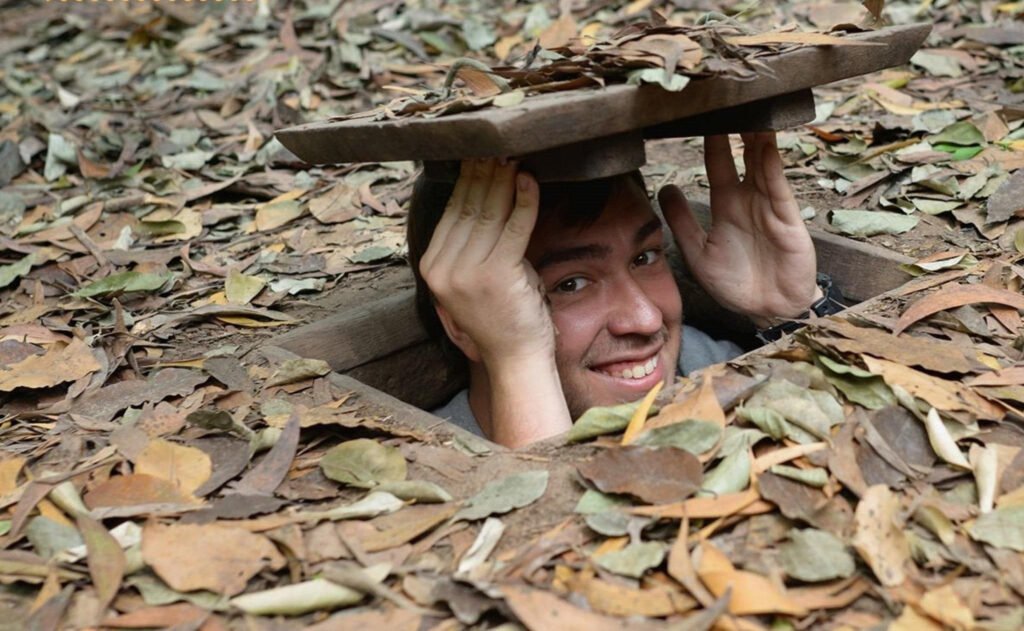
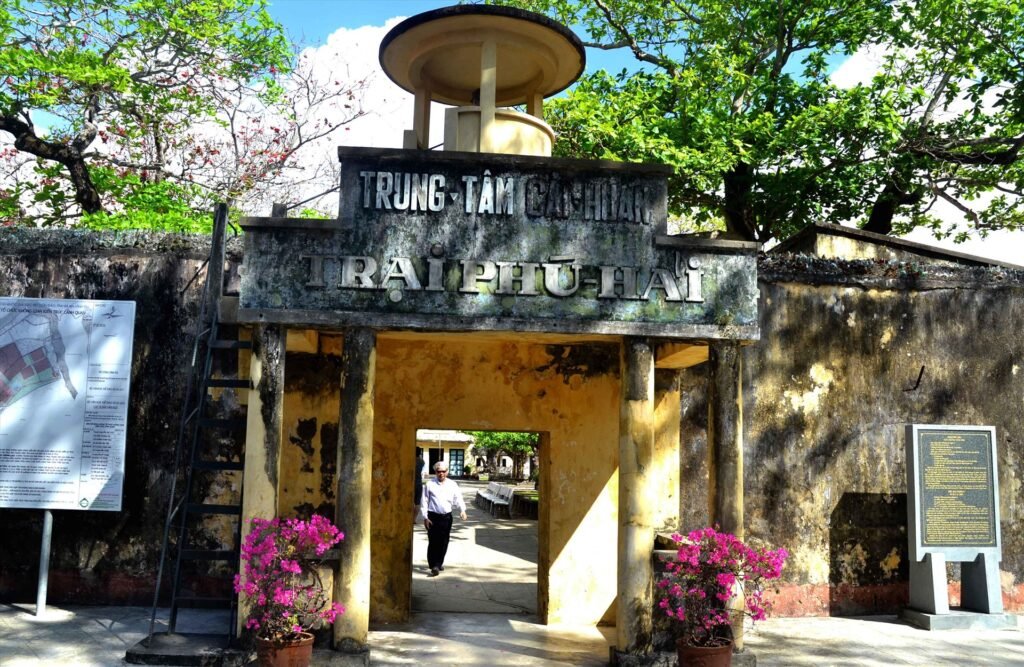
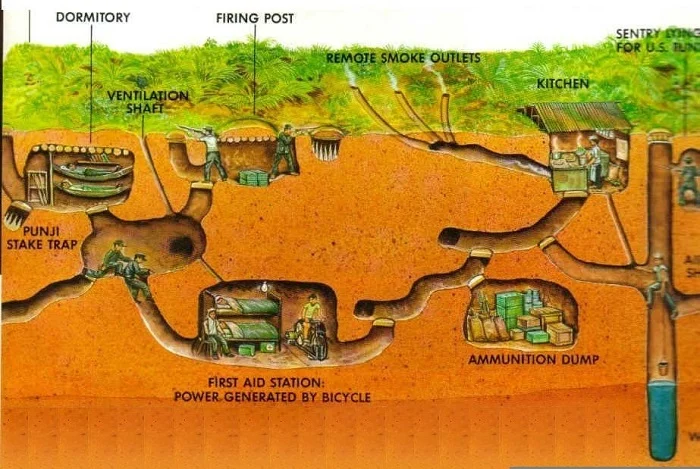
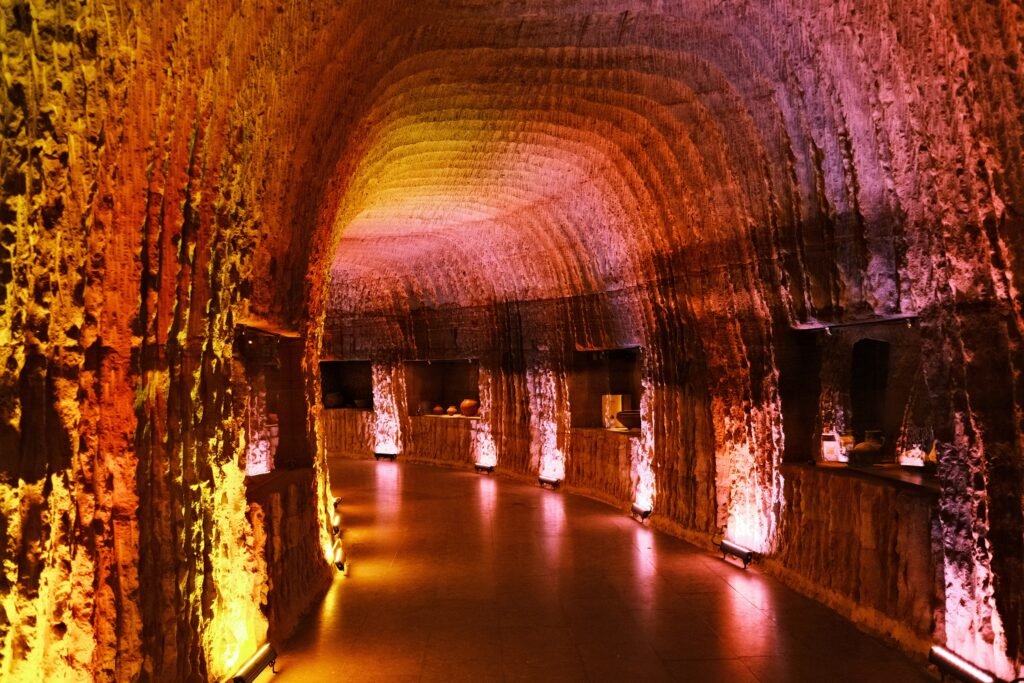
Điện Biên Phủ, in the far north-west, near the Lao border. The valley, Hill A1, Colonel de Castries’ bunker, a recent museum and a cemetery. It is a long detour — a flight from Hanoi or a whole day in the mountains — that we only offer to those for whom the name means something. For them, it is worth the trip.The demilitarised zone, around Đông Hà, on the former 17th parallel: the Hiền Lương bridge that cut the country in two, the Khe Sanh base, and above all the Vĩnh Mốc tunnels, where a whole village lived underground for years — seventeen children were born there. These tunnels were civilian, and that is what makes them so moving.Sơn Mỹ, in Quảng Ngãi province, on the site of the 1968 massacre. A sober memorial, almost empty of foreign visitors, in a hamlet rebuilt nearby. You don’t go there out of curiosity.Củ Chi, an hour and a half from Saigon: two hundred and fifty kilometres of hand-dug tunnels. The site is spectacular and educational, but it has to be said — a paying shooting range sits next to the tunnels, and the overall atmosphere sometimes feels like a theme park. We go early in the morning and avoid that corner.Côn Đảo, finally, where the “tiger cages” built under the French administration were used long after it left. The island combines this past with a national park and empty beaches, which makes it a strangely gentle place for such a history.
What the Vietnamese say about it
The most useful thing to know: the country’s median age is around thirty-three. The vast majority of the people you meet were born after 1975. For them, the war is a chapter of history and their grandparents’ business, not a memory.So there is no animosity towards American or French visitors — quite the opposite, which often surprises. One phrase comes up again and again among guides: “we won the war, so we can afford not to think about it any more”.That doesn’t mean everything is closed. Unexploded ordnance still claims victims, especially in Quảng Trị province, and demining is far from finished. The health effects of Agent Orange are passed down over several generations. And the fate of the defeated South remains a subject discussed in private, not in a museum.You can ask questions. Do so in private rather than in a group, without trying to put words in anyone’s mouth, and accept that you may not get an answer. A silence is an answer.
Talking about it with the next generation
Most guides are under forty and did not live through the war. Yet they willingly talk about it, drawing on what their grandparents told them, what they learned at school and what they think themselves. Ask your questions simply, without trying to make them take sides: you will often get nuanced and very personal answers.
Military cemeteries
Every commune in Vietnam has its martyrs’ cemetery, recognisable by its obelisk and rows of identical graves. The largest, the Truong Son National Cemetery in Quang Tri province, holds thousands of soldiers who fell along the Hô Chi Minh trail. People come in silence, often with incense.
With children
The War Remnants Museum in Saigon displays very harsh photographs, not suitable for young children. The Cu Chi or Vinh Moc tunnels, on the other hand, let you approach history in a concrete way with older children, accompanied by explanations.
Going, and with whom
Only one visit? The War Remnants Museum in Saigon. It is the most complete and the most difficult.
With children : not before twelve or thirteen for that museum, some of whose rooms are unbearable. The Củ Chi and Vĩnh Mốc tunnels work well from ten, but warn them about the cramped space.
With a parent who is a veteran or a family repatriated from Indochina: tell us. We prepare differently, allow time, and choose the guide.
Don’t cram it all in. Two memorial sites in one trip are enough. Three in a row is saturation, and the rest of the country deserves better than the aftermath.
We never put these visits at the start of a stay. It is better to have met the living country before entering into what it has been through.
Is it frowned upon to be French or American at these sites?
No. The country’s median age is about thirty-three: most people were born after 1975 and the war is a chapter of history for them. The welcome given to Western visitors is warm, even in the hardest museums.
From what age can you take children?
The War Remnants Museum in Saigon: not before twelve or thirteen, some rooms are unbearable. The Củ Chi and Vĩnh Mốc tunnels suit children from ten, provided you warn them about the cramped space and the heat.
Are the museums objective?
They present a coherent national narrative, without internal contradiction — like most military museums in the world. Some presentations, at Hỏa Lò in particular, flatly contradict the testimony of those involved. Our guides provide what is missing.
Is Củ Chi worth the trip?
Yes, for the feat itself, two hundred and fifty kilometres of hand-dug tunnels. But the site includes a paying shooting range and at times feels like a theme park. We go early in the morning and avoid that area.
Can you visit Điện Biên Phủ?
Yes, by a flight from Hanoi or a whole day on mountain roads. It is a major detour that we don’t offer by default: it is for those for whom the name has a precise family or historical meaning.
Can you talk about the war with Vietnamese people?
Yes, without difficulty, and many are happy to talk about it. Prefer private conversations to groups, don’t try to put words in anyone’s mouth, and accept that you may not get an answer — particularly about the post-1975 period and the fate of the defeated South, which remains a private topic.
Putting it into practice
The tours where you experience what this article is about
Audience measurement. We would like to know which pages are useful to you, using Google Analytics. Nothing is stored without your consent, and you can change your mind at any time. Learn more



 The essentialsVietnam in 15 daysHanoi — Pu Luong — Ninh Binh — Lan Ha Bay — Hue — Hoi An — Saigon — Mekong Delta15 days / 14 nightsfrom €2,070