The country’s median age is around thirty-three. Most of the people you meet have known neither the war nor the planned economy — and it is this Vietnam, of speciality coffee and tube houses, that brochures never show.
In brief
Demographics
Half the country was born after the economic opening
Cities
They grow faster than they are planned
What people talk about
A lot about the future, much less about politics
Where to see it
In cafés, on campuses and in new districts, not in museums
A country half of whom were born after the opening
The figure that explains everything: Vietnam’s median age is around thirty-three. The vast majority of the people you meet were born after the economic reform of đổi mới, launched in 1986, which took the country from a planned economy to a market economy without changing its political system.Those thirty years were one of the fastest exits from poverty in modern history. A country that imported rice in the 1980s became one of the world’s leading exporters. One generation lived through this shift within a single lifetime: your fifty-year-old hosts knew ration coupons; their children order dinner on an app.This produces a relationship with progress very different from ours. Optimism is the norm, nostalgia rare, and new is preferred to old — which also explains why so many old houses disappear without anyone being as moved as a European visitor.
The city that grows faster than it is planned
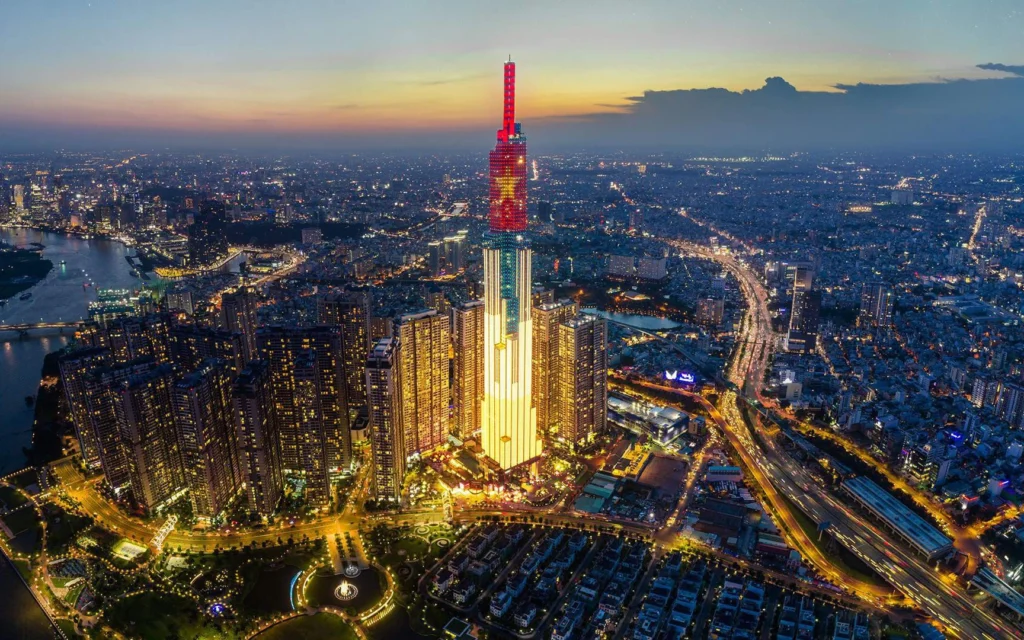
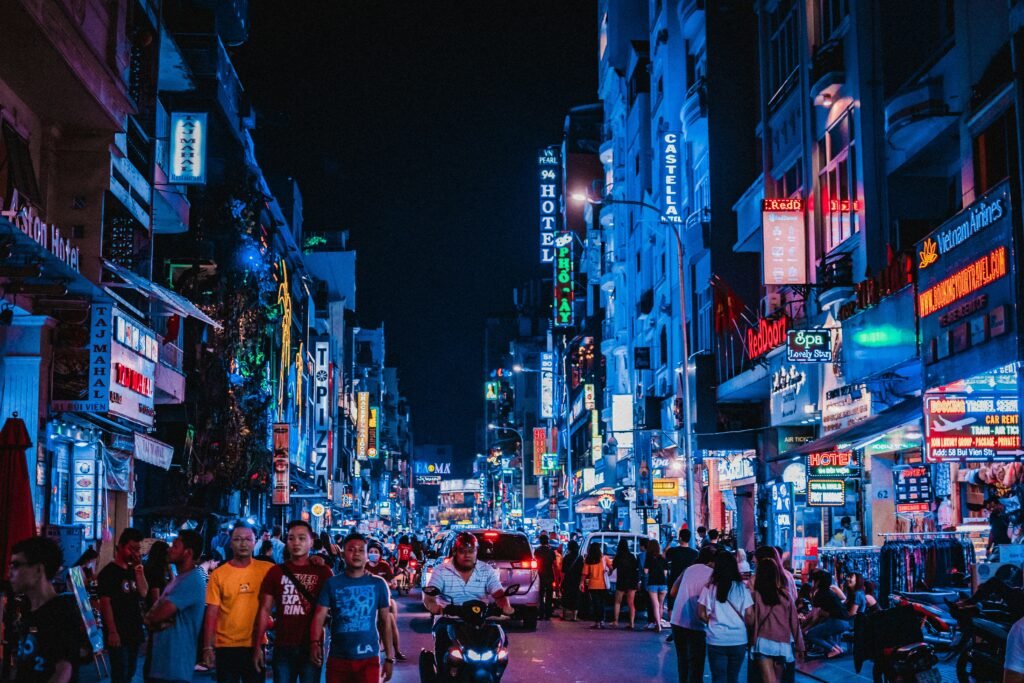
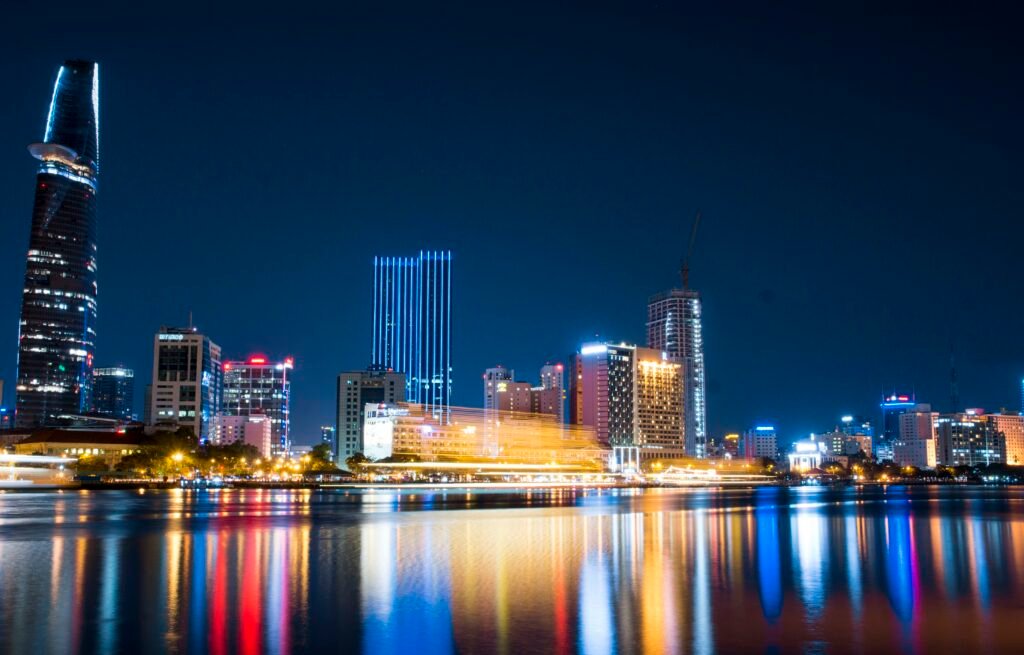
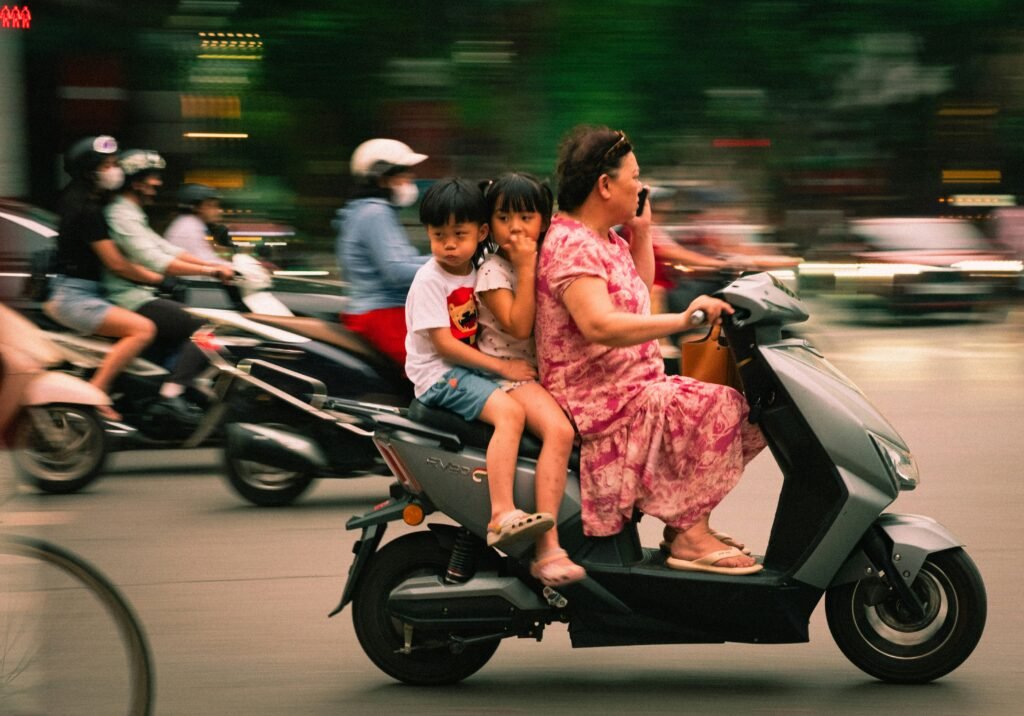
Hanoi and Saigon have changed face in twenty years. Towers have replaced whole districts, ring roads have been doubled, and the first metro lines finally opened after years of delay — a national joke.The tube house remains the country’s urban signature: three to five metres wide, twenty deep, four storeys. It comes from a colonial tax calculated on the width of the façade, and it still organises life: shop on the ground floor, family above, ancestral altar on the top floor.The scooter shapes everything else. There are tens of millions of them, and the city has been built around them: pavements occupied, shops open to the street at saddle height, restaurants where you eat twenty centimetres off the ground. The big cities say they want to restrict them in favour of public transport; nobody really knows how.A direct consequence for a traveller: air pollution, real in Hanoi in winter, when humidity and lack of wind press particles to the ground. You can check it on an app, and it can justify shifting a stop.
The generation inventing something else
It is what travellers see least and what is changing fastest. A generation of urban thirty-somethings, often educated abroad and back home, is taking the country’s raw materials and treating them differently. Speciality coffee is the most visible example: roasters working high-altitude arabica and fine robusta, with farm-by-farm traceability, in places that would hold their own in Melbourne or Oslo. Gastronomy follows, with chefs rereading regional cuisine rather than copying the French repertoire. Fashion reworks the áo dài and minority textiles. Contemporary Vietnamese design and architecture — bamboo, natural ventilation, greenery — regularly win international awards. And a whole music scene exists, which your guide listens to and which you will never hear about if you don’t ask.We are happy to slip one or two of these addresses into an itinerary. Not to look modern, but because a trip that shows only a country’s past gives a false picture of it.
Your fifty-year-old hosts knew ration coupons. Their children order dinner on an app.
What people talk about, and what they don’t
Ordinary conversations are about what they are about everywhere: work, property that has become unaffordable in the big cities, the children’s studies, the price of gold, family. You will be asked direct questions about your age, your salary, your family situation — it isn’t nosiness but a way of placing you.Social pressure to succeed at school is intense, and the gap between countryside and city has widened. Many rural families live on money sent home by a child who left to work in the city or abroad — a subject people talk about freely.Politics, on the other hand, isn’t discussed with a stranger, and it would be clumsy to push someone into it. Not because of any immediate danger to you, but because you leave and the other person stays. The subject sometimes comes up, late, in private, at the other person’s initiative. Never at yours.
The café, the young generation’s living room
To understand young Vietnamese people, you only need to spend an hour in a café. People work on their laptops there, study, meet friends or clients, often late into the evening. Cafés constantly reinvent themselves, hidden in old buildings, on rooftops or in former colonial houses, with very carefully designed interiors. A good part of the social life of the under-thirties takes place there.
A very connected country
Vietnam has embraced digital technology at high speed. People pay everywhere by QR code, down to the soup seller on the pavement; they order meals and rides through apps; they chat on Zalo, the national messaging app, with family and banker alike. For travellers, this means a good connection almost everywhere, and people who reply very quickly.
The city that draws people in, the countryside that empties
Every year, hundreds of thousands of young people leave the countryside for Hanoi, Saigon or the industrial zones. In the villages, it is often the grandparents who raise the children. At Tết, the movement reverses: the whole country goes back to the village, and the big cities empty for a few days.
What this means for you
The Vietnam you are going to see is not a frozen backdrop. Alongside the pagodas and rice fields, take time for a trendy café, an art gallery or a weekend makers’ market: your guide, often young themselves, will be delighted to take you there and talk about it.
A young, optimistic country
What strikes travellers most is often the energy and optimism of Vietnamese people under thirty. Many have seen their parents escape poverty in a single generation and believe their own lives will be better still. This confidence in the future, rare in Europe, can be felt in the street, in the cafés and in conversations with your guide.
Seeing today’s Vietnam
A speciality coffee shop in Saigon or Hanoi, one hour. It is the simplest window onto this generation.
A neighbourhood market at dawn, then a shopping mall in the afternoon. The contrast teaches more than a museum.
An evening of bia hơi at a street corner, where the whole city gathers at six in the evening.
A frank conversation with your guide about their salary, their housing, their children’s studies. Ask: it won’t shock.
It is the part of the trip we most like to add and that brochures most completely ignore. It costs nothing and it is often what our travellers talk about when they get home.
Not really any more. Thirty years of growth after the 1986 reform produced one of the fastest exits from poverty in modern history, and the country has become a major agricultural and industrial exporter. The gap between the big cities and the countryside, however, remains very marked.
Can you talk politics?
It isn’t a subject you raise with a stranger, and it is better not to push someone into it: you leave, the other person stays. If the conversation comes, it will come late, in private, and at the other person’s initiative.
Why am I asked personal questions?
Age, salary, family situation: these are questions of social positioning, not nosiness. Since Vietnamese needs relative age to choose its pronouns, the question is even grammatically necessary.
Is pollution a problem?
In Hanoi in winter, yes, when humidity and lack of wind press particles to the ground. You can check it on an air-quality app, and it can justify shifting a stop. The rest of the country is much less affected.
Can you see contemporary Vietnam without leaving the classic tours?
Yes, and it costs almost nothing: a speciality coffee shop, an evening of bia hơi at a street corner, a shopping mall in the afternoon after a market at dawn. We are happy to add these breathers to a heritage itinerary.
Is there a metro in the big cities?
The first lines opened after years of delay, and the network remains very partial. The scooter is still the dominant mode of transport, and the city has been built entirely around it.
Putting it into practice
The tours where you experience what this article is about
Audience measurement. We would like to know which pages are useful to you, using Google Analytics. Nothing is stored without your consent, and you can change your mind at any time. Learn more
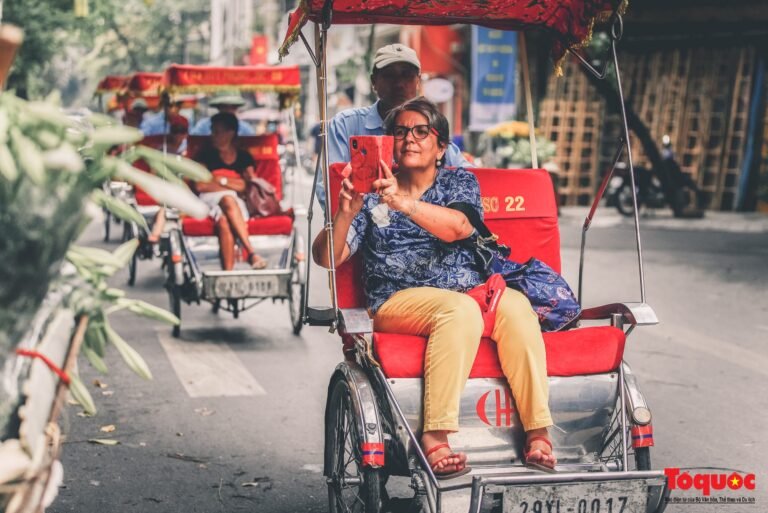
 The essentialsVietnam in 15 daysHanoi — Pu Luong — Ninh Binh — Lan Ha Bay — Hue — Hoi An — Saigon — Mekong Delta15 days / 14 nightsfrom €2,070