The French legacy in Vietnam: what you can still see
Seventy years after France left, Indochina is everywhere and nowhere: in an Art Deco station, in a word of vocabulary, in a baguette lightened with rice flour. Here is what really remains — and what the Vietnamese say about it today.
What is still standing
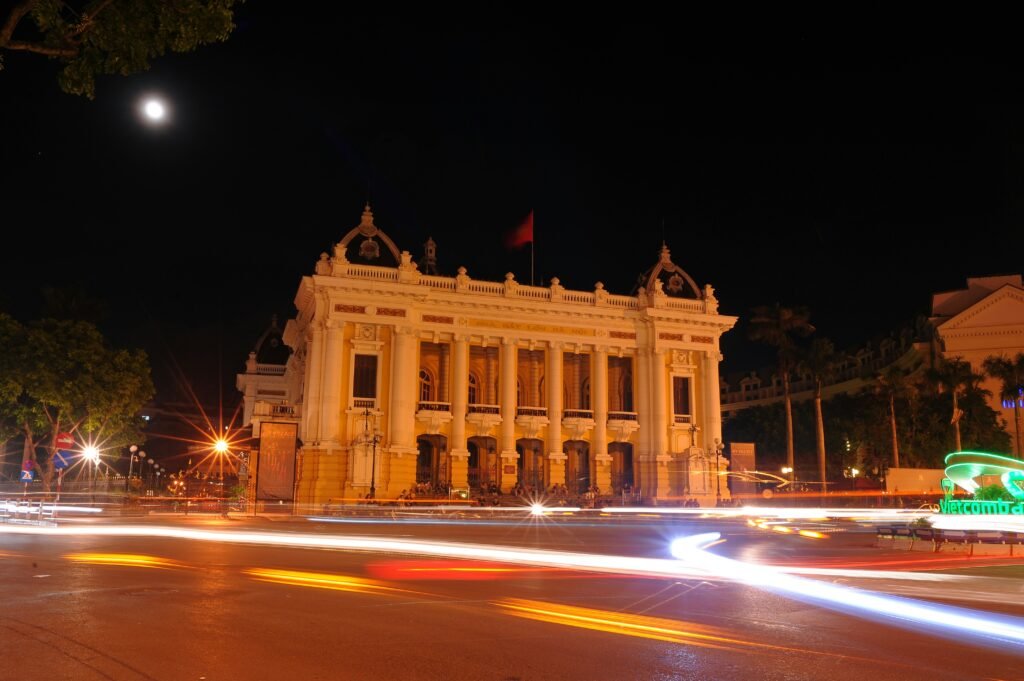
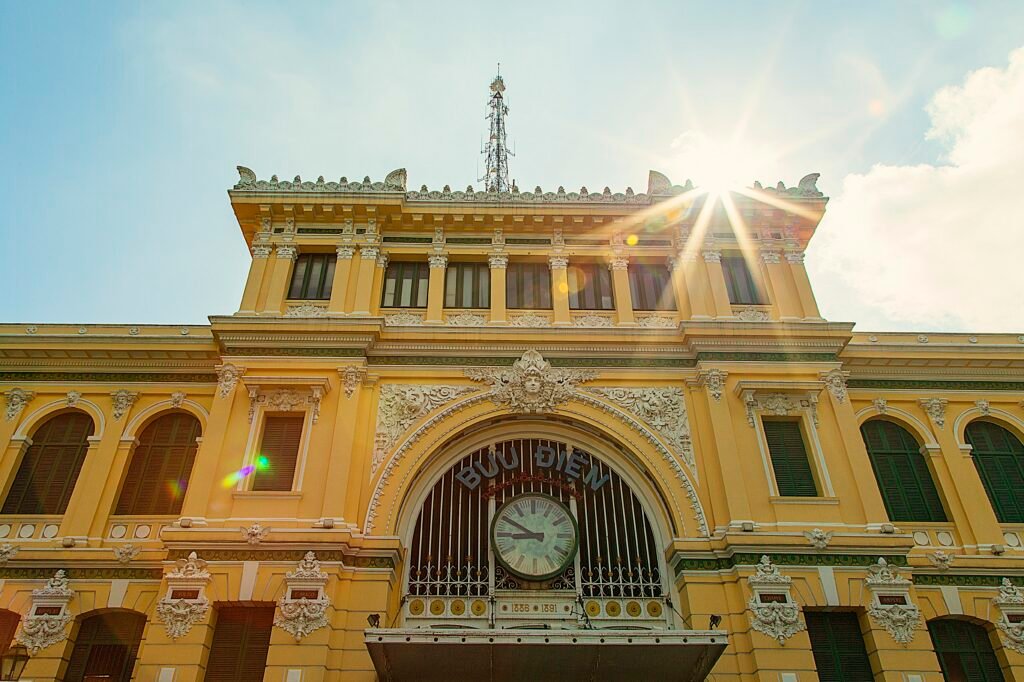
Hanoi has kept the largest ensemble of French colonial architecture in South-East Asia, and kept it partly for lack of means to demolish it. The French Quarter, south of Hoàn Kiếm Lake, still lines up its ochre villas with green shutters along tamarind-lined avenues.The 1911 Opera House is a scaled-down replica of the Palais Garnier. The Metropole, opened in 1901, has never stopped operating and keeps an air-raid shelter beneath its courtyard, rediscovered in 2011, which can be visited. Saint Joseph’s Cathedral, completed in 1886, is a reduced Notre-Dame de Paris, blackened by tropical humidity.In Saigon, the central post office is a metal railway-station hall turned into a post office; the wall maps of the Indochinese telegraph painted in the 1890s are still in place. Notre-Dame cathedral, opposite, was built with bricks imported from Marseille.A myth to correct, because you will be told it: Long Biên bridge is not by Eiffel. It was built between 1899 and 1903 by the firm Daydé & Pillé. The confusion is so old that it still appears in printed guidebooks. The bridge is no less remarkable: bombed many times during the war, repaired each time, it still carries trains, motorbikes and pedestrians.
The towns invented to escape the heat
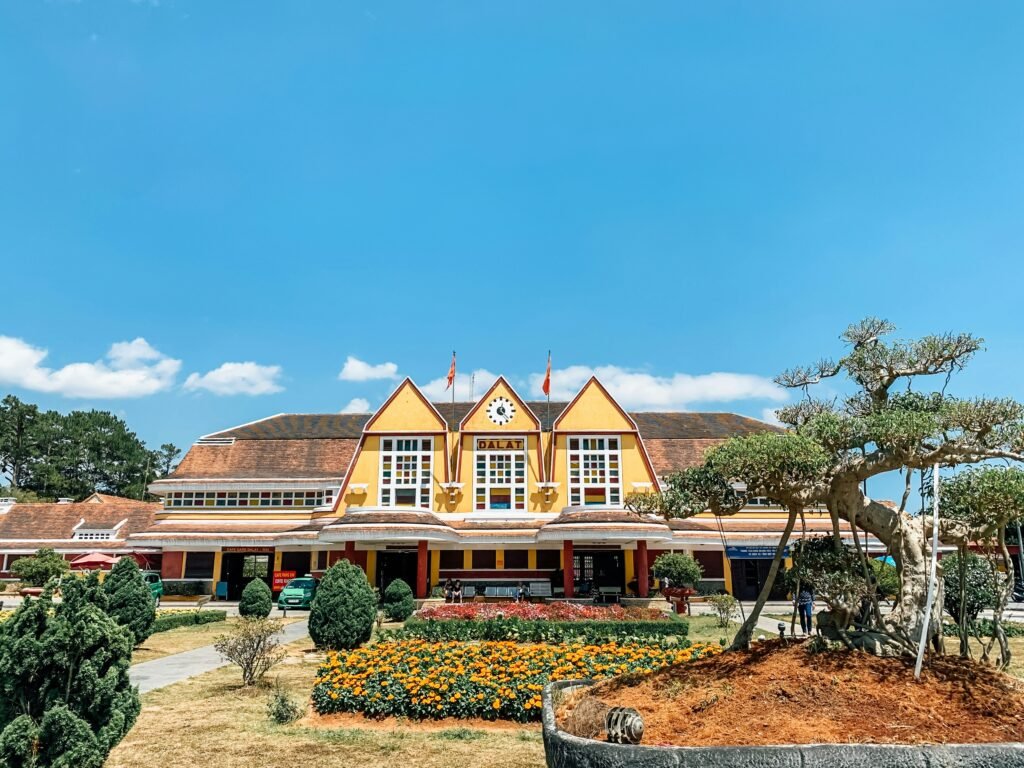
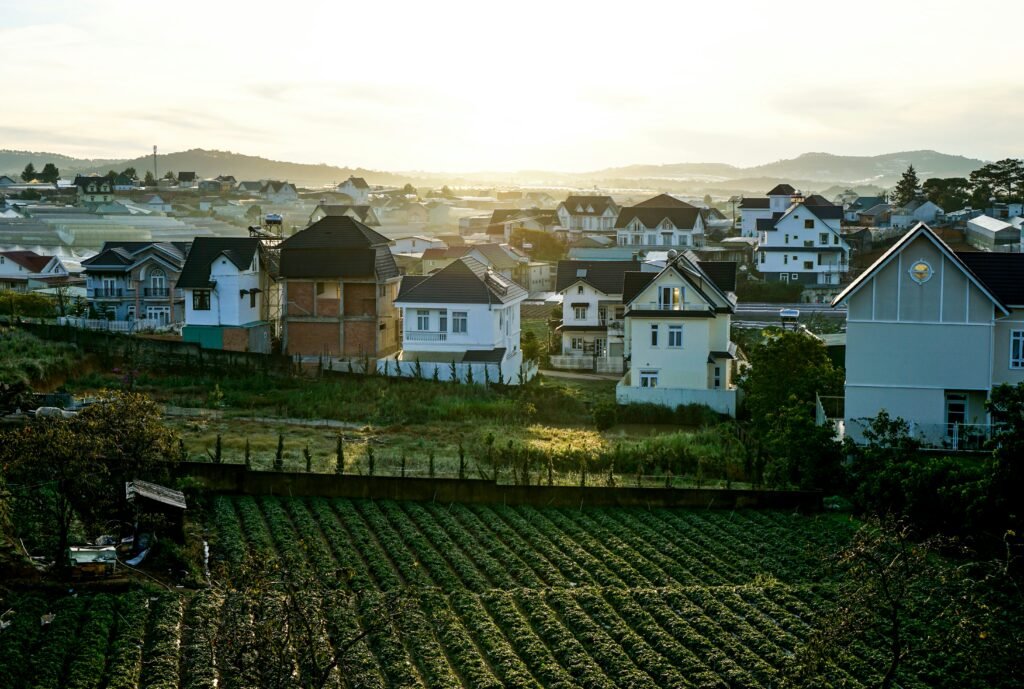
Đà Lạt would not exist without a Swiss doctor in the service of France. In 1893, Alexandre Yersin climbed onto the Lang Biang plateau and noted that at fifteen hundred metres the climate was one of permanent spring. A hill station was built there: Norman villas, a red-brick lycée, an Art Deco station whose roof imitates the communal houses of the highlands.The result is a French-looking town in the tropics, where artichokes, strawberries and roses are grown, and where it is fifteen degrees in the morning. Vietnamese couples come here on honeymoon for the reason that brought colonial administrators in summer: it is cool.Sa Pa, Bà Nà and Tam Đảo follow the same logic. Yersin himself deserves a separate detour: co-discoverer of the plague bacillus, he spent most of his life in Nha Trang, ran a Pasteur Institute there and introduced rubber and cinchona to Vietnam. He is buried at Suối Dầu, local people lay flowers on his grave, and he remains one of the few foreigners to have streets named after him in several Vietnamese cities.
The invisible legacy: the alphabet
Vietnamese is written in Latin script. It is unique in East Asia, and probably the deepest European trace in the country — far more than any villa.The system, quốc ngữ, was developed in the 17th century by Portuguese, Italian and French missionaries; Alexandre de Rhodes published the first printed trilingual dictionary in 1651. For a long time it served only evangelisation. The colonial administration then imposed it against Chinese characters, and the mandarin examinations were abolished in 1919.The paradox is that Vietnamese nationalists then seized on it as a weapon: an alphabet can be learned in a few months, whereas characters took years. The tool imposed by the coloniser became the instrument of mass literacy, and then of independence.Vocabulary keeps lighter traces, fun to spot once your ear is tuned: ga (gare, station), xe buýt (bus), bơ (beurre, butter), phô mai (fromage, cheese), sơ mi (chemise, shirt), bít tết (bifteck, steak), cà phê, ô tô, va li, ga ra.
The coloniser left villas. It is the alphabet, coffee and the baguette that have stayed alive.
What the Vietnamese say about it today
It is the question our French travellers ask most often, usually in a low voice. The honest answer comes in two parts.Colonisation is taught without indulgence: forced labour, monopolies on salt, alcohol and opium, the 1945 famine. Điện Biên Phủ is a national place of memory and its museum is explicit. Nobody will hold you to account, but nothing has been erased either.And yet French visitors are received with particular warmth. Two reasons: the next war, against the United States, was longer and deadlier, which shifted memory; and Vietnam clearly distinguishes a state of the past from travellers of today. Several hundred thousand people of Vietnamese origin live in France, almost every family has a relative in Paris, and the country is a member of the International Organisation of La Francophonie.Our guides tackle this history directly, without avoiding it or overloading it. It is often the conversation our travellers remember most.
Churches and cathedrals
St Joseph’s Cathedral in Hanoi, completed in 1886, and Notre-Dame Cathedral in Saigon, built of red bricks from France, are the two great religious monuments of the colonial era. More surprising, Phat Diem Cathedral, near Ninh Binh, blends pagoda roofs and Catholic bell towers in a building of stone and wood. Vietnam today has several million Catholics, and these churches remain very busy.
The opera houses of Hanoi and Saigon
Inspired by the Palais Garnier, the Hanoi Opera House, inaugurated in 1911, dominates the French quarter. Saigon’s, a little older, stands at the end of Dong Khoi Street. Both still host concerts and shows, and attending a performance is a lovely way to see these buildings from the inside.
Bread and the table
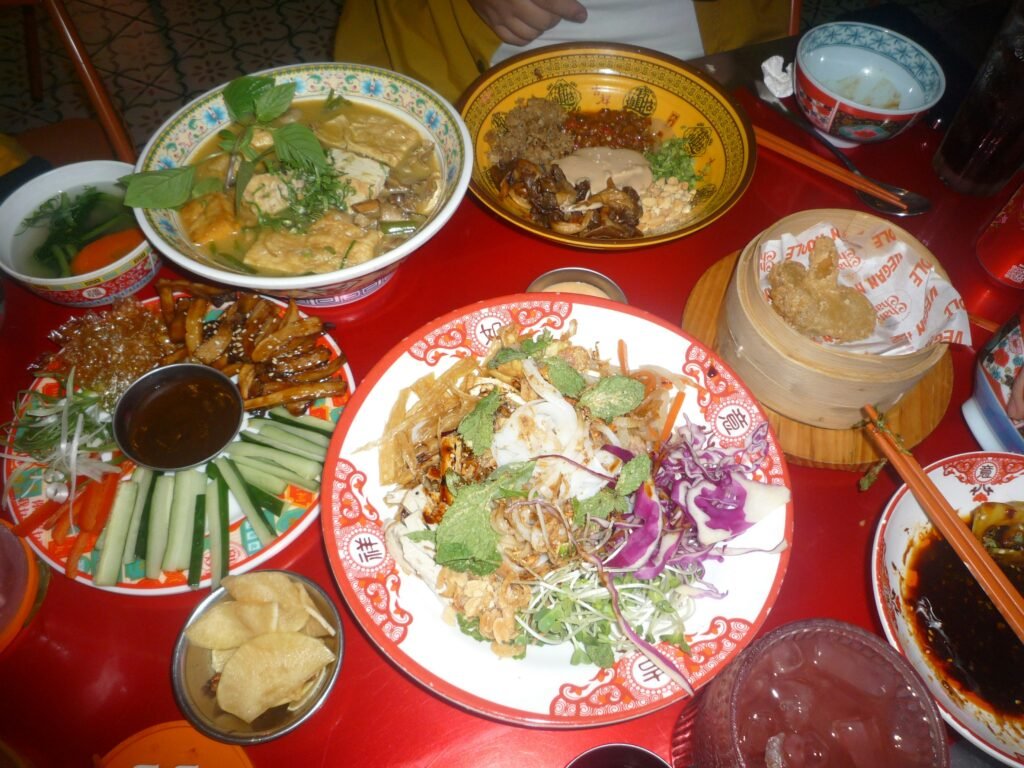
The most everyday legacy is probably on the plate. The baguette, which became bánh mì, has grown lighter and is filled with pâté, herbs and pickled vegetables; coffee has become a habit, and you still find butter, processed cheese and crème caramel, bánh flan, all over the country.
In one sentence
From cathedrals to baguettes, from the alphabet to the hill towns, the French legacy can be seen everywhere in Vietnam, as long as you know where to look: your guide will help you.
An itinerary of the Franco-Vietnamese heritage
Hanoi : the French Quarter on foot, the Opera House, Long Biên bridge at sunset, an egg coffee at the Metropole. Half a day.
Hải Phòng : less well known, an early-20th-century municipal theatre and whole streets intact, with almost no visitors.
Điện Biên Phủ : the valley, Hill A1, De Castries’ bunker. A substantial detour, best kept for those to whom the name means something.
Đà Lạt : the station, the villas, the flower market. Two nights, ideally between the Centre and the South.
Nha Trang and Suối Dầu : the Pasteur Institute and Yersin’s tomb, about twenty kilometres away.
Saigon : the central post office, Notre-Dame, the Continental hotel, and Bến Thành market.
We regularly build tours around this thread, especially for travellers whose family lived in Indochina. If that is your case, tell us: we can look for an address, a school, sometimes find a building.
A little, mostly among very elderly people and in academic and medical circles. English has taken over since the 1990s. You will nonetheless meet excellent French speakers, often trained in the bilingual streams that still exist in Hanoi, Huế and Saigon — our guides among them.
Is it awkward to be French in Vietnam?
No, quite the opposite. Colonisation is taught without sugar-coating, but it is never transferred onto today’s travellers. Our guides are happy to talk about it if you raise the subject, and it is often a fine conversation.
Is Long Biên bridge really by Eiffel?
No. It was built from 1899 to 1903 by the firm Daydé & Pillé, and Gustave Eiffel had no part in it. The mistake is so widespread that it still appears in printed guidebooks and on tourist signs.
Can you visit Điện Biên Phủ?
Yes. The town is about an hour’s flight from Hanoi, or a long day’s drive through the mountains. The site is well maintained and deserves a full day. It is a major detour, which we only offer to travellers who ask for it.
Can you find a family address from the Indochina era?
Often yes, with time. Street names have changed but the correspondences are documented, and archives can be consulted in Hanoi and Saigon. Send us what you have — a photo, a street name, a number — a few weeks before departure.
What remains French in the cuisine?
The baguette turned bánh mì, coffee, draught beer, crème caramel, cold cuts, and the butter in Hanoi’s pastries. Vietnamese has even kept the words: bơ, phô mai, bít tết.
Putting it into practice
The tours where you experience what this article is about
Audience measurement. We would like to know which pages are useful to you, using Google Analytics. Nothing is stored without your consent, and you can change your mind at any time. Learn more

 The essentialsVietnam in 15 daysHanoi — Pu Luong — Ninh Binh — Lan Ha Bay — Hue — Hoi An — Saigon — Mekong Delta15 days / 14 nightsfrom €2,070