
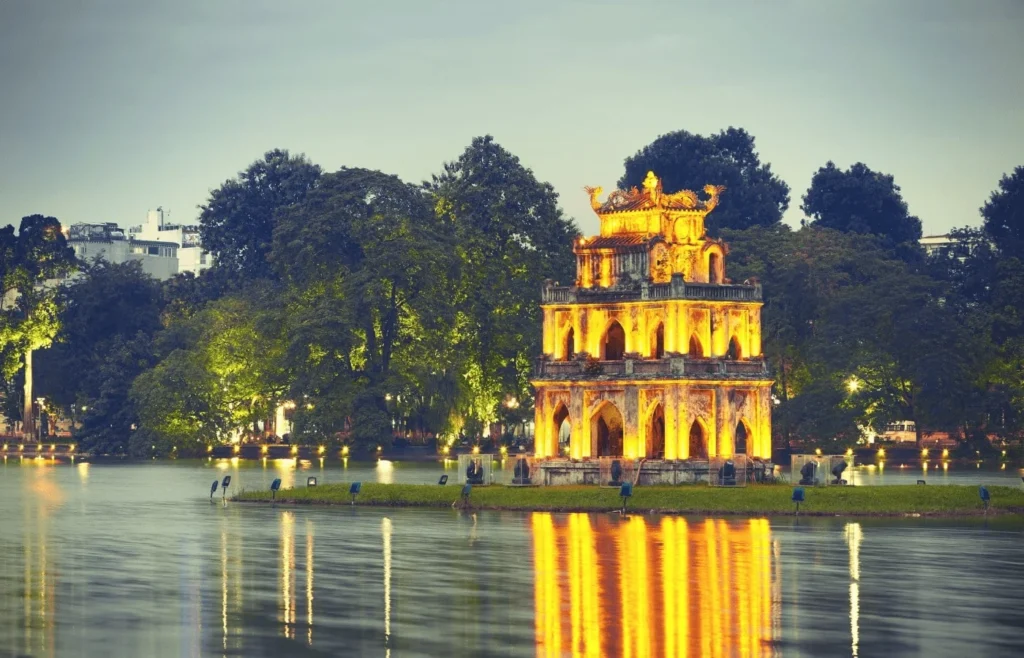
Day 01Arrival in HanoiD
French-speaking guide & private driver · 40 km · 45 min
Welcome at Noi Bai and transfer to the Old Quarter. This tour is for those who already know Vietnam, or who want to see it differently. It goes through neither Halong Bay, nor Sa Pa, nor Hoi An. It crosses the Centre through the interior: the Phong Nha caves, the Ho Chi Minh trail, the Kon Tum highlands and the Binh Dinh coast.
It is the part of the country least travelled by foreign visitors, and that is no accident. These provinces were the hardest hit by the war — the trail passed here, the demilitarised zone was two hours from Phong Nha — and tourist infrastructure arrived twenty years after the rest. You sleep simply, eat very well, and meet few foreigners.
The highlands, where you will spend three days, are the only region of Vietnam whose indigenous peoples didn’t come from China: the Bahnar, Sedang and Jarai speak Austroasiatic and Austronesian languages, have lived there for millennia, and their society is traditionally matrilineal. Nothing like the Hmong of the North.
Welcome dinner at a neighbourhood address and briefing. The programme for the following days is adjusted according to the rainy season, which determines access to the river caves.
Day 02Hanoi — Phong NhaB, L, D
Domestic flight · 1 h 20 then 50 km · 1 h
Flight to Dong Hoi then an hour by road to Phong Nha-Ke Bang national park.
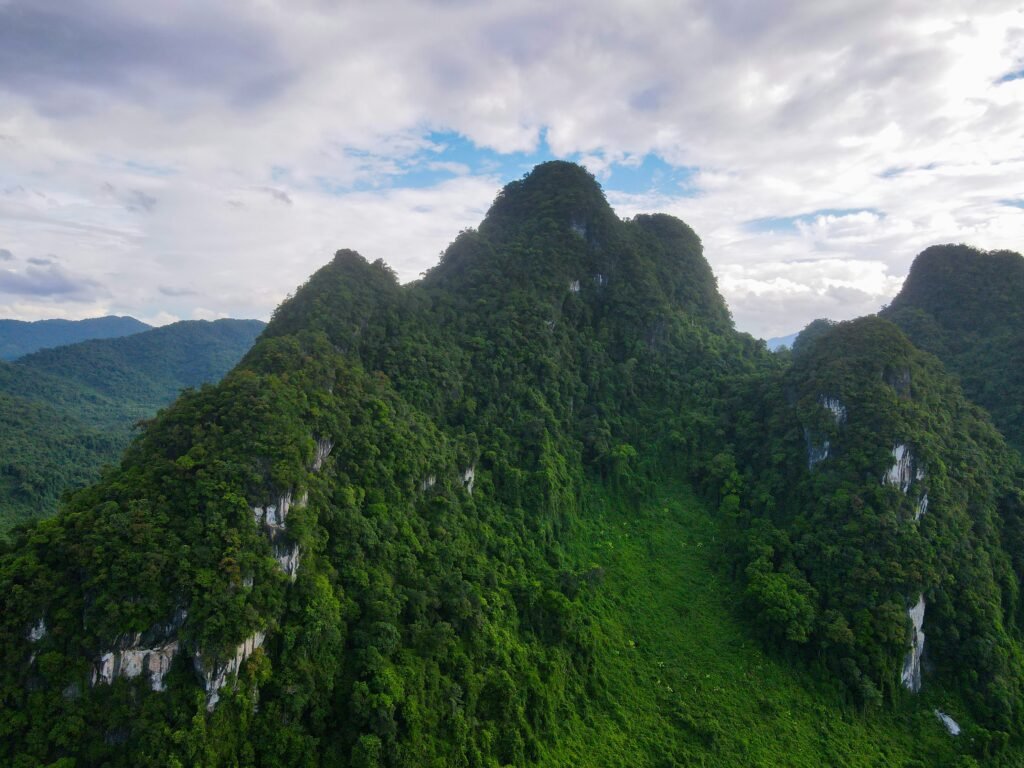
Twelve hundred and thirty square kilometres of four-hundred-million-year-old limestone, between the sea and the Lao border: it is one of the oldest karsts in Asia and the largest known underground network in the country. Three hundred caves have been recorded and exploration continues — new caves are found every year, often by local hunters and wood-gatherers.
The region still bears the marks of war. The western branch of the Ho Chi Minh trail ran through these valleys, making it one of the most heavily bombed areas in military history: the village of Phong Nha was entirely razed and rebuilt after 1975. The caves served as hospitals, ammunition depots and shelters for whole villages.
Settling in for two nights in a guesthouse or lodge in Son Trach, on the banks of the Son river. Free late afternoon: the Bong Lai loop, by bike, crosses a very peaceful farming valley with three or four stops where you have a drink in the middle of a meadow.
Day 03Phong NhaB, L, D
French-speaking guide & private driver · 60 km · 1 h 30
A whole day in the park, with two caves of completely different character.
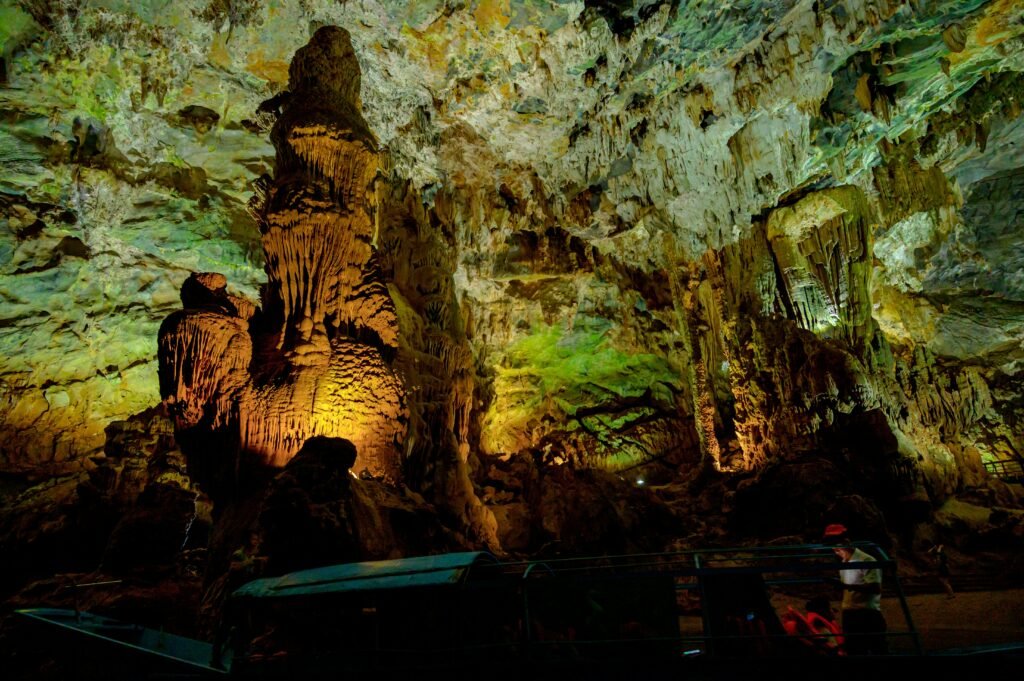
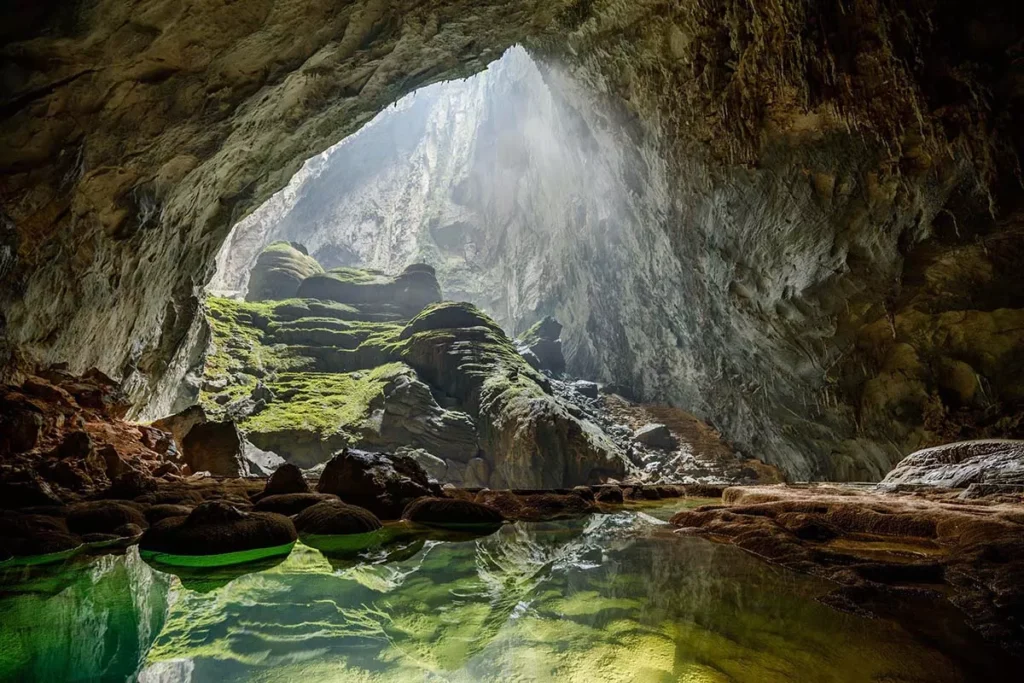
Thien Duong, Paradise Cave, runs for thirty-one kilometres, one of them fitted with a wooden walkway. The entrance chamber is seventy-two metres high: formations hang from the ceiling like curtains, and the temperature is twenty degrees all year round when it can be thirty-eight outside. We go at opening time; the coaches arrive around ten.
For walkers, the “seven-kilometre” option leaves the walkway and heads into the wild section, with helmet, headlamp and wading. A guided half-day, technically easy but muddy.
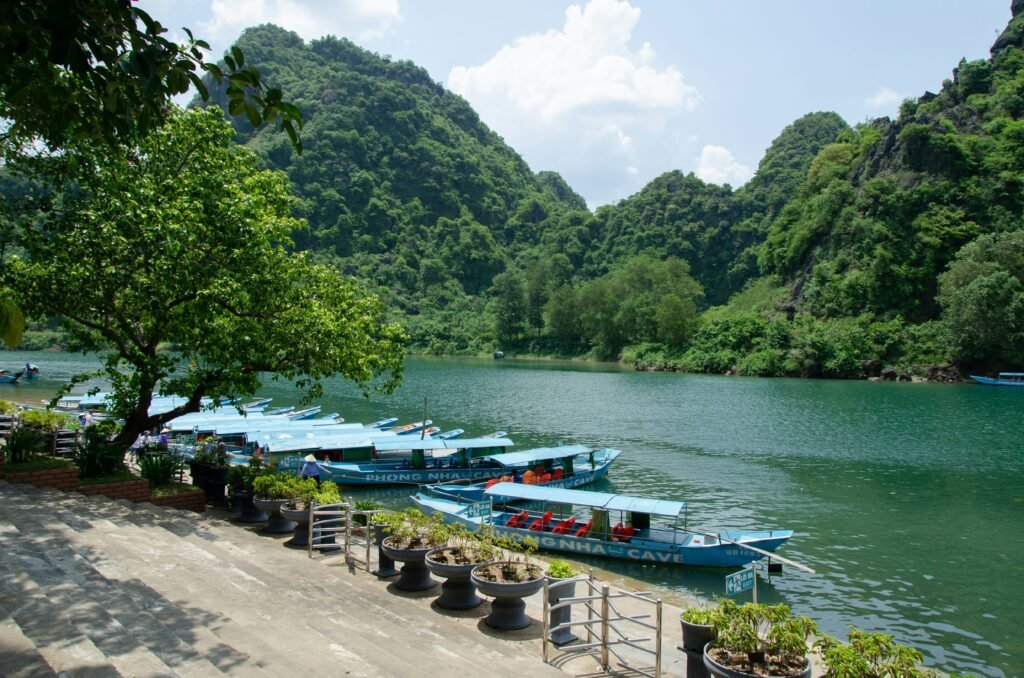
Phong Nha cave, by contrast, is entered by river: a motorboat travels upstream for thirty minutes, cuts its engine at the entrance and continues by oar for a kilometre and a half under the vault. The silence, the green water and the echo make the experience. On the walls are 9th-century Cham inscriptions: the place was a sanctuary long before it was a tourist site.
A seasonal note. From October to December, floods regularly close the river caves for several days at a time; it is the only real risk of this stop, and we always plan an alternative on land.
Day 04Phong Nha — HuếB, L
French-speaking guide & private driver · 210 km · 4 h
Road south by the national highway or the western branch of the Ho Chi Minh trail, depending on the weather. The latter crosses the jungle for eighty almost deserted kilometres and is worth the extra half-hour.
Halfway, the demilitarised zone. From 1954 to 1975, the 17th parallel separated the two Vietnams on either side of the Ben Hai river, over a strip five kilometres wide. You visit the Hien Luong bridge, painted in two colours for twenty years — each side repainted its half — and the Vinh Moc tunnels, where six hundred villagers lived underground for six years, on three levels down to twenty-three metres. Seventeen children were born there.
Vinh Moc is less well known than Cu Chi yet tells the story of the war better: it wasn’t a military network but a whole village moved underground, with its wells, its maternity ward and its meeting room. The passages are their original size; nothing has been widened for visitors.
Arrival in Huế in the late afternoon. Settling in for two nights and a first stroll along the banks of the Perfume River.
Day 05HuếB, L, D
French-speaking guide & private driver · 40 km · 1 h 30 in total
The citadel at its seven o’clock opening: a two-kilometre square, ramparts and moats, built on the Vauban model by French engineers in the service of Gia Long. In February 1968, during the Tết Offensive, it was held for twenty-six days then retaken building by building: of a hundred and sixty buildings, about twenty survived.
As this is the Centre tour, we add here what classic programmes skip. First, the garden houses of Kim Long and Thuy Bieu: mandarin residences arranged around an orchard, a pond and a screen hedge, the domestic version of the geomantic principles that shaped the Imperial City. Several can be visited and you can have lunch with the family, under the pomelo trees.
Then the Thuy Bieu canal by bike, four kilometres from the centre: lanes between orchards, incense workshops where sticks are rolled by hand, and a view of the river the groups never see.
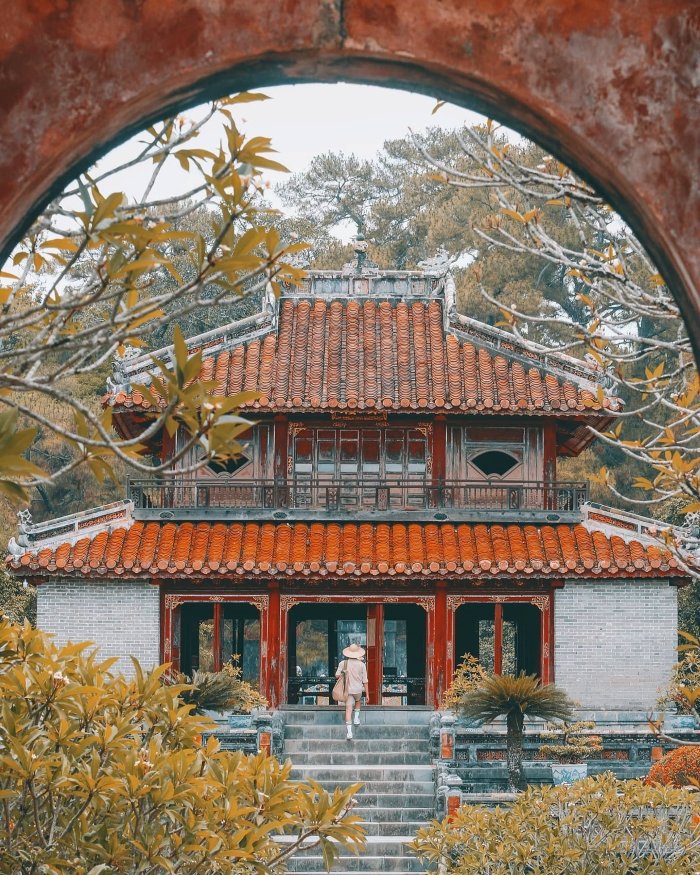
In the afternoon, two imperial tombs out of seven: Tu Duc, a park with a lotus lake where the emperor wrote poems during his lifetime, and Khai Dinh, blackened concrete and porcelain mosaics, completed in 1931. Imperial cuisine dinner: the court demanded numerous small dishes, and what remains is a cuisine of detail only Huế practises.
Day 06Huế — Kon TumB, L, D
French-speaking guide & private driver · 300 km · 6 h 30 with stops
The longest drive of the tour, and one of the most beautiful in the country. You leave the coastal plain to climb onto the highlands through the Annamite Range, following part of the old Ho Chi Minh trail.
The change is total in six hours. The coast is Vietnamese, densely populated, planted with rice; the plateaus, at five to eight hundred metres, are covered in red basalt soil, planted with coffee, rubber and pepper, and half populated by indigenous groups.
This red earth is laterite from volcanic flows; it is acidic and poor in organic matter but deep, and that is precisely what the coffee plant likes. The French understood this in the 1920s and opened the first plantations here; Vietnam is today the world’s second-largest producer and most of it comes from these plateaus.
Arrival in Kon Tum in the late afternoon. The town is small and calm, set on the Dakbla river, and has two unexpected buildings: a cathedral entirely of wood from 1913, built without a single nail by Bahnar carpenters, and a 1935 seminary that blends colonial architecture and the longhouse.
Day 07Kon TumB, L, D
French-speaking guide & private driver · 70 km · 2 h
A day in the Bahnar and Sedang villages around the town. It is the heart of this tour and something you see nowhere else in Vietnam.
The building to look at is the nhà rông, the communal house. A timber frame on stilts, an axe-blade thatched roof rising up to twenty metres — the tallest traditional roof in South-East Asia. It belongs to the whole village, serves as a school of life for boys, a court, a festival hall and a guesthouse; its height shows the village’s prosperity. Each hamlet rebuilds its own every twenty or thirty years, collectively, without a written plan.
Highland societies are matrilineal: the house belongs to the women, inheritance passes through them, and it is the husband who joins his wife’s family. This organisation, shared by the Bahnar, Jarai and Ede, is the exact opposite of the patrilineal Confucian model of the Vietnamese plains — and it is one of the things that made integrating this region so long and so conflict-ridden.
A visit to a weaving workshop, where geometric motifs are passed from mother to daughter, and to a village where collective tombs remain, adorned with wooden statues — crouching figures, pregnant women, animals — left to the forest after the tomb-abandonment ceremony.
Day 08Kon Tum — Măng ĐenB, L, D
French-speaking guide & private driver · 110 km · 2 h 30
Up to Măng Đen, at twelve hundred metres, in a pine forest the Vietnamese nickname “the second Da Lat”. It is sixteen to twenty-two degrees all year round, and mist comes down almost every afternoon.
The region lives from forestry, high-altitude coffee and above all sâm Ngọc Linh, the ginseng of Mount Ngoc Linh, endemic to these mountains. It is one of the most expensive plants in the world — several thousand euros a kilo for ten-year-old roots — and its cultivation, long wild, is now organised with the Xo Dang communities who discovered it. A farm visit is possible depending on the season.
The rest of the day is spent outdoors: the Pa Sy and Dak Ke waterfalls, Dak Ke lake, and a walk in the pine forest. You meet few people; Vietnamese tourism arrived ten years ago, foreign tourism hardly at all.
Back to Kon Tum at the end of the day, or a night on site depending on the season and your preferences — nights in Măng Đen drop to twelve degrees in December–January.
Day 09Kon Tum — Quy NhonB, L
French-speaking guide & private driver · 200 km · 4 h
Down from the plateaus to the sea via the Mang Yang pass and then the An Khe valley. Four hours, and you are back on the coast after three days at altitude.
This road is known in France. At the Mang Yang pass, in June 1954, Mobile Group 100 — made up largely of French veterans of the Korea battalion — was destroyed in a Viet Minh ambush, a few weeks after Dien Bien Phu and during the Geneva negotiations. A discreet memorial recalls the episode; we stop there if you wish, and don’t insist if you prefer to pass by.
As you descend, the red basalt soil gives way to sand and rice fields, and Cham towers begin to appear on the mounds. Gia Lai province (the former Binh Dinh province, merged in July 2025) was, from the 11th to the 15th century, the heart of Vijaya, the last capital of the Cham kingdom: about ten towers survive, often deserted.
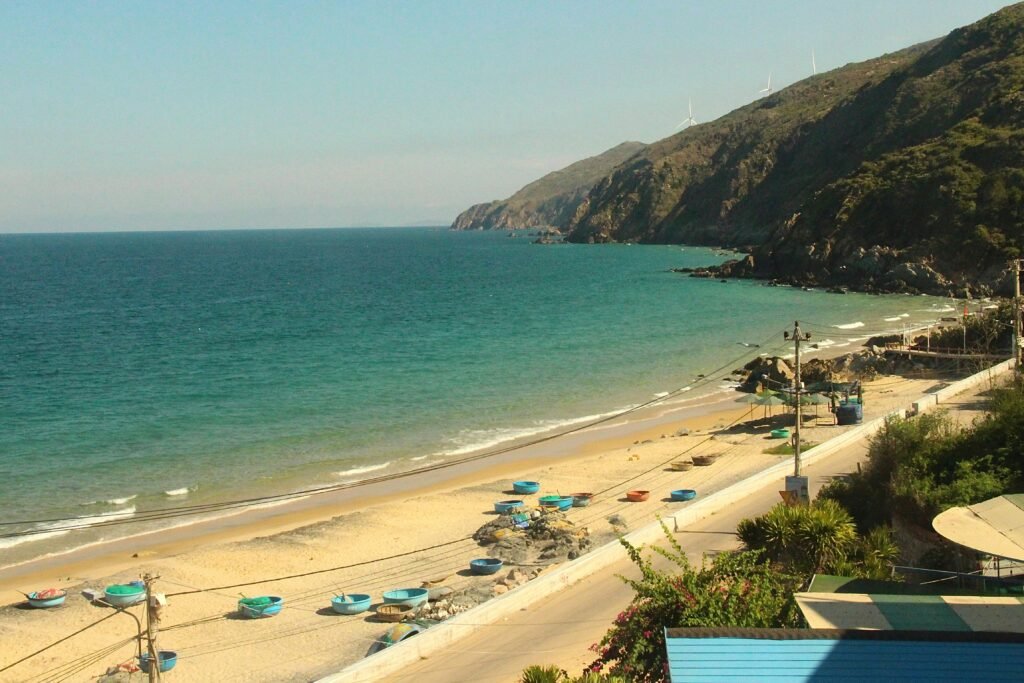
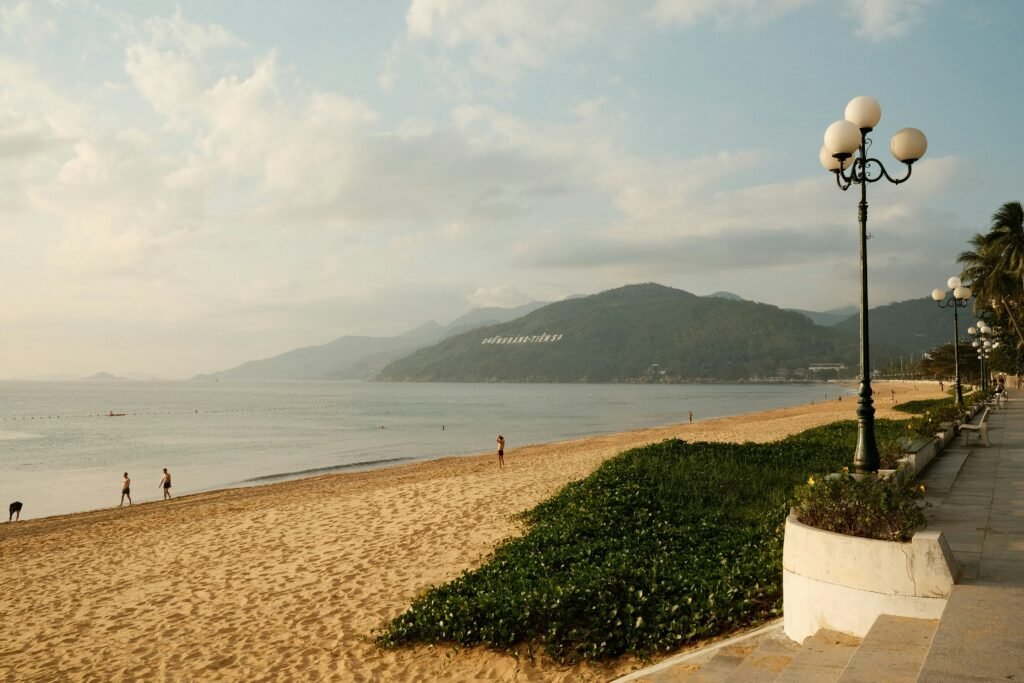
Arrival in Quy Nhon in the late afternoon and settling in for two nights facing the bay. The town has three hundred thousand inhabitants, a promenade lined with coconut palms, round boats pulled up on the sand in the early morning, and Vietnamese people who come to swim at five. It isn’t Nha Trang, and that is exactly why it is here.

Day 10Quy NhonB, L
French-speaking guide & private driver · 60 km · 1 h 30
A Cham morning. The Banh It twin towers, on their hill twenty minutes from the centre, are the most beautiful in the province: four 11th-century buildings and a view over the whole plain. The Duong Long Golden Towers, further inland, are the tallest Cham towers in Vietnam, nearly forty metres. You will have them to yourself.
The Cham were Hindu, seafarers and traders, looking to India and Java rather than China. Their kingdom faded slowly, absorbed by the Việt march to the south between the 15th and 17th centuries; their descendants, about one hundred and eighty thousand people, still live in Vietnam, today Muslim or Hindu, mainly further south.
In the afternoon, the coast. The road up to Nhon Ly passes a succession of coves, dunes and fishing villages. Eo Gio is a windswept gorge where cliffs drop into the sea, with a path along the ridge; Ky Co is reached by boat.
The outing not to miss is the round boat at sunrise from Nhon Ly, with fishermen hauling in their nets. Two hours, a few euros, and the best scene in the region. Seafood dinner on the seafront: bánh xèo tôm nhảy, a pancake with live shrimp, is the local speciality.
Day 11Quy Nhon — SaigonB, D
Domestic flight · 1 h 15
Free morning in Quy Nhon — the town beach can be walked barefoot at sunrise, when the round boats come back — then a flight to Saigon from Phu Cat airport, forty minutes away.
An hour and fifteen minutes in the air, and you are back in the Vietnam everyone knows: ten million inhabitants, a third of national GDP, a city that has always traded. The contrast with the previous eleven days is abrupt, and it is part of the trip.
End of the day in District 1, or in Cholon if you prefer: the Chinese quarter, settled here since the 18th century, lines up pagodas hung with incense coils that burn for two weeks and a market built in 1928 around an open courtyard.
Farewell dinner. It is the moment when our travellers take stock: most tell us that in twelve days they saw four or five things they had never heard of before leaving. That is exactly the point of this tour.
Day 12Departure from SaigonB
Private driver · 8 km · 30 min
Depending on your flight time, a last morning. District 1 is done on foot: the central post office, Notre-Dame cathedral built of Toulouse bricks, the opera house, and the Reunification Palace left as it was on 30 April 1975.
A final word. This tour will have taken you through three worlds that classic programmes ignore: a four-hundred-million-year-old karst where caves are still discovered every year, highlands whose peoples didn’t come from China and whose societies are matrilineal, and a Cham coast that Vietnamese history covered over without erasing.
You will also have seen the war in a different way from the Saigon museums: the demilitarised zone, the tunnels of a whole village that took refuge underground for six years, the Ho Chi Minh trail in the jungle, and a pass where a French unit disappeared in 1954. These are places that can’t be told from a beach.
Transfer to Tan Son Nhat, which is within the city itself: count on traffic rather than distance.
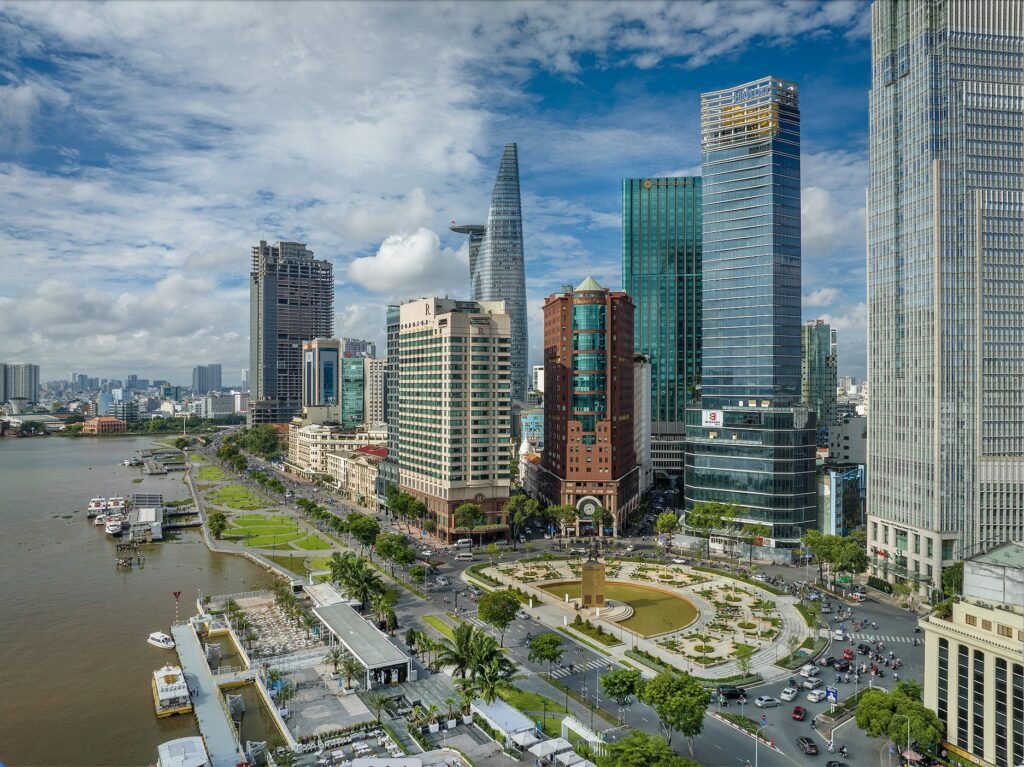
Continue
Other tours you might like
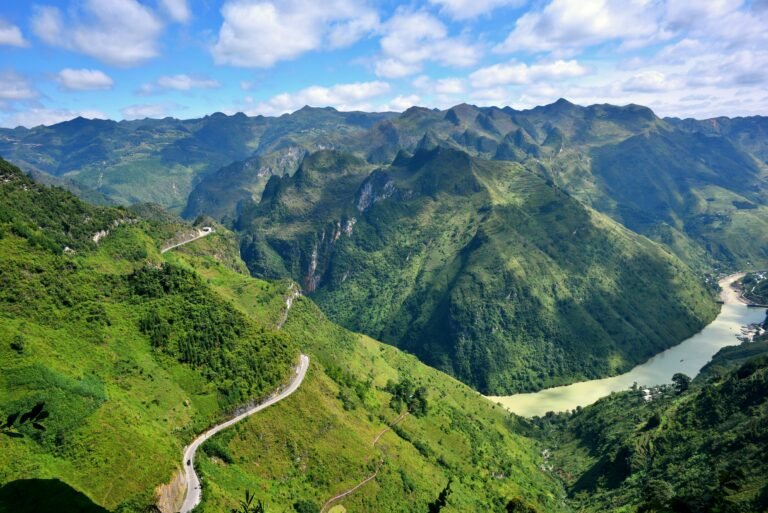 Off the beaten trackTrekking in the North-West — 11 daysHanoi — Mai Châu — Pu Luong — Nghia Lo — Mu Cang Chai — Thac Ba Lake — Hanoi11 days / 10 nightsfrom €1,650
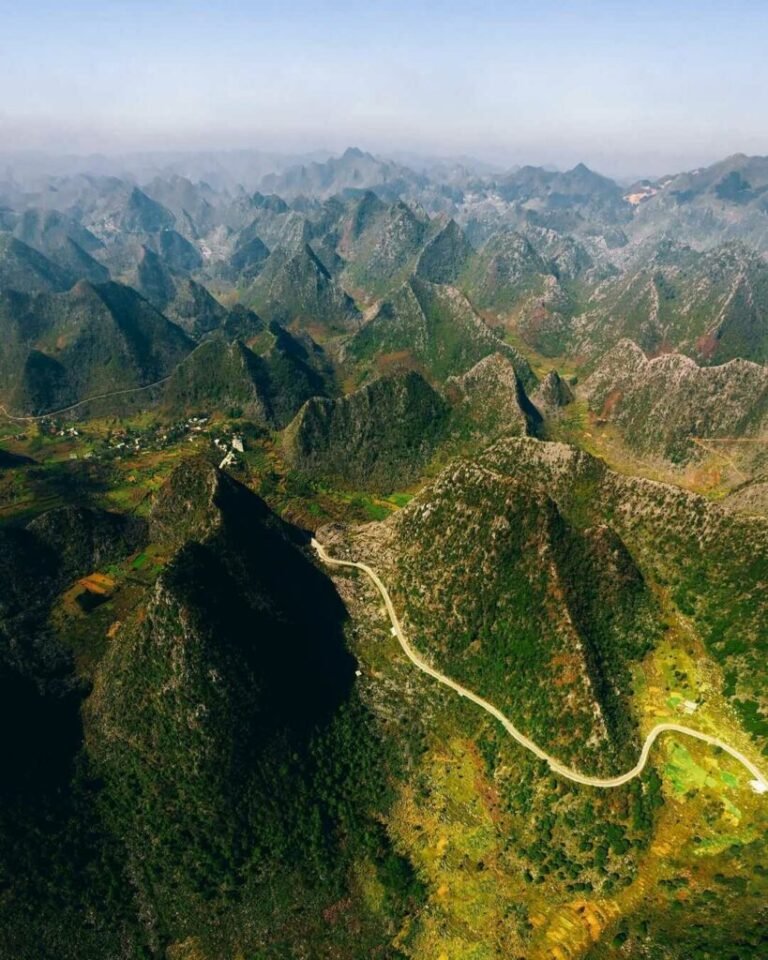 Off the beaten trackHa Giang off the beaten track — 9 daysHanoi — Ha Giang — Dong Van — Cao Bang — Ban Gioc — Hanoi9 days / 8 nightsfrom €1,390
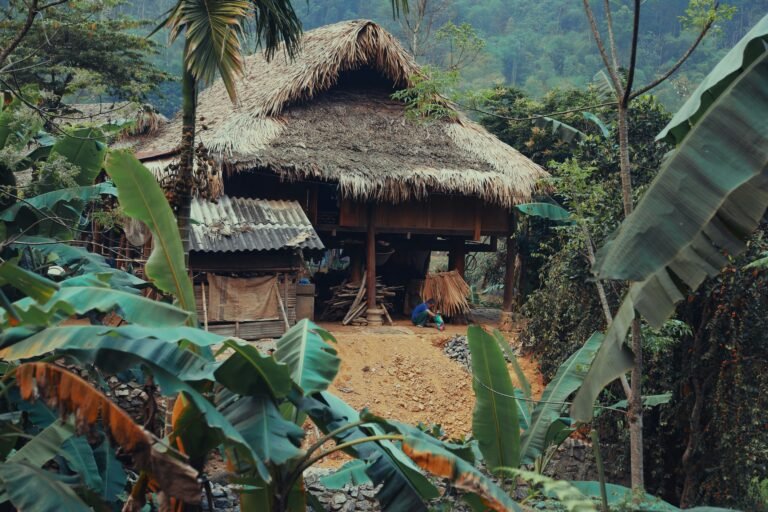 Off the beaten trackPu Luong and the delta villages — 8 daysHanoi — Craft villages — Ninh Binh — Pu Luong — Mai Châu — Hanoi8 days / 7 nightsfrom €1,150