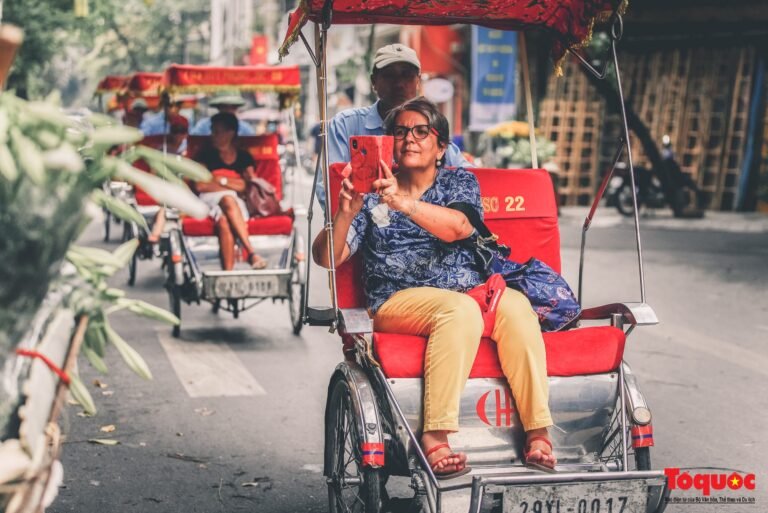
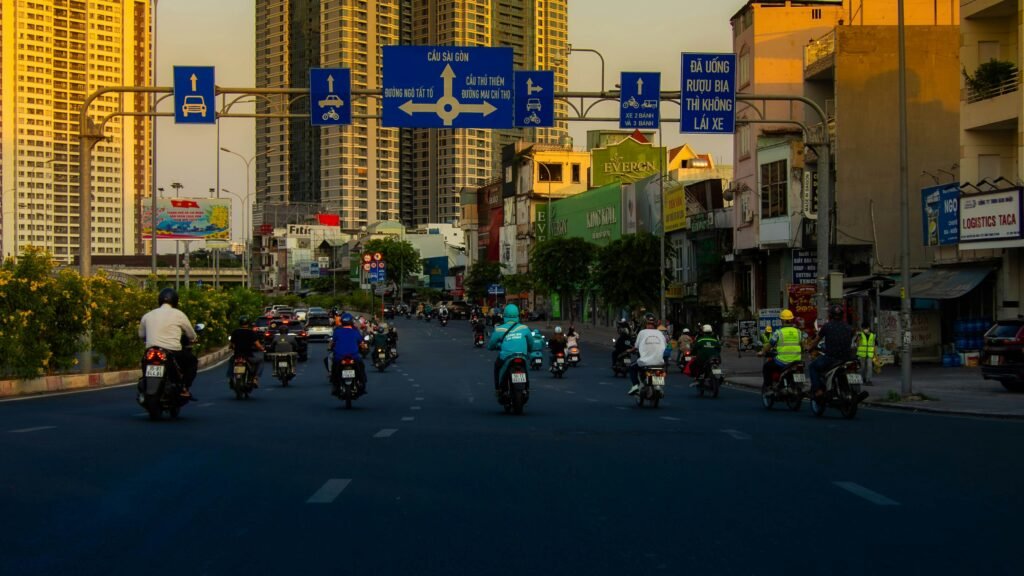
Nobody will correct you. Out of politeness, a Vietnamese person will let your blunders pass without a word — which means you will repeat them for the whole trip. Here is what can be seen, what is said at the table, and why people almost never tell you no.
The pronoun trap
Vietnamese has no neutral “you”. You don’t say “you” to someone: you call them “older brother”, “younger sister”, “uncle”, “grandmother”. The pronoun depends on the assumed age of the person relative to yours, and it changes within the same conversation if a third person arrives.That is why you will be asked your age within the first five minutes. It is not nosiness: without this information, the other person literally doesn’t know how to address you. Answer, even approximately.Three words are enough to get by. Anh for a man a little older than you, chị for a woman a little older, em for someone younger. A twenty-five-year-old waiter will call himself em and call you anh or chị. It isn’t servility, it is grammar.And cảm ơn — thank you — is used far less than in European languages. Between people who are close, thanking someone for an ordinary favour creates distance. People smile, nod, and return the favour later.
At the table
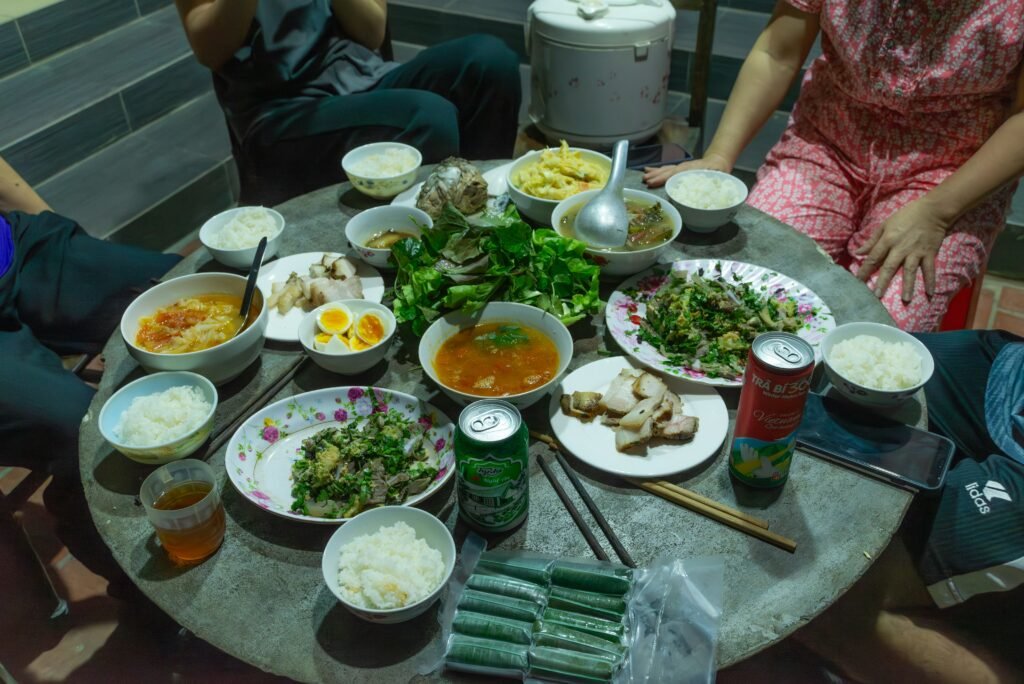
Never stand your chopsticks upright in your rice. That is how incense is offered to the dead, and the gesture chills a table. Lay them across the bowl or on the chopstick rest.
Wait for the eldest. Before starting, you invite others to eat, addressing the oldest first. One phrase is enough: mời followed by the pronoun.
Dishes are shared; only the rice bowl is personal. You serve others before yourself, especially the elders, and take the nearest piece rather than the best.
Receive and give with both hands, or with the right hand while touching the forearm with the left. This applies to a dish, a business card, a banknote, a gift.
Noise is not rude. Slurping noodles, putting bones on the table or the floor depending on the stall, talking loudly: none of this shocks.
Who pays? Whoever invited, or the oldest, or whoever earns most — in that order. Splitting the bill among friends is spreading among young city-dwellers, but offering to split it equally with a family hosting you would be clumsy. Let them, and invite them next time.
Face, and why people don’t tell you no
The notion of face governs many exchanges: people avoid putting someone in difficulty publicly, including themselves. The practical consequence, and the source of most misunderstandings between Westerners and Vietnamese: you will rarely be told no.An embarrassed smile, a “maybe”, a “that’s difficult”, a change of subject or a silence all mean no. Insisting won’t produce a yes, only discomfort. Likewise, a badly put closed question — “it’s this way, isn’t it?” — will often get a polite yes rather than a correction. Ask instead: “which way do we go?”.Raising your voice, even slightly, even with good reason, is the surest way to lose. Whoever gets angry loses face, and the negotiation ends there. Calm gets you everything; irritation gets you nothing.Finally, a smile doesn’t always mean amusement. It also covers embarrassment, apology and sometimes sadness. Don’t take it for mockery.
Nobody will correct you. That is precisely why it is better to know.
The body, gestures, dress
The head is noble; the feet are not. You don’t pat a child’s head, even affectionately; you don’t point your feet at an altar or at a person.
Point with an open hand, never with the index finger. And beckon someone palm down, curling your fingers — palm up is for calling a dog.
Little physical contact between adults, especially between men and women. No hugs, no kisses on the cheek. A light handshake, often with both hands, works everywhere.
Shoes : take them off in a house, a temple, sometimes a shop. Follow the shoes left at the entrance.
Dress : shoulders and knees covered in places of worship, and generally more covered than on a Mediterranean beach as soon as you leave the seaside.
Public displays of affection remain discreet among Vietnamese couples, but nobody will be offended to see you holding hands.
Money, gifts, tips
Tipping is not a Vietnamese tradition, but it has taken hold in tourism and is now expected for a guide and a driver. It is not compulsory; it rewards work: give at the end of the stay, in an envelope, discreetly and to each person separately. In restaurants, rounding up is enough; in a taxi, nothing is expected.If you are invited to someone’s home, don’t arrive empty-handed: fruit, tea, cakes, or something from your home region. Gifts are given and received with both hands, and they are generally not opened in front of the giver.To avoid: black objects, knives and scissors — which cut the relationship —, watches, and handkerchiefs. The number four brings bad luck, eight brings good luck; this also applies to sums in an envelope.Finally, don’t give money or sweets to children in villages. It is the practice that has turned some hamlets in the North into places of begging, at the expense of school. If you want to support a family, buy what it makes.
Being invited to a Vietnamese home
If you are invited to someone’s home, bring a small gift, fruit, cakes or a souvenir from your country, and take off your shoes at the entrance. At the table, wait for the eldest person to start eating, accept what you are served, even in small quantities, and leave a little in your bowl at the end to show you are full. Greet the elders first, with a slight bow of the head.
Photographing people
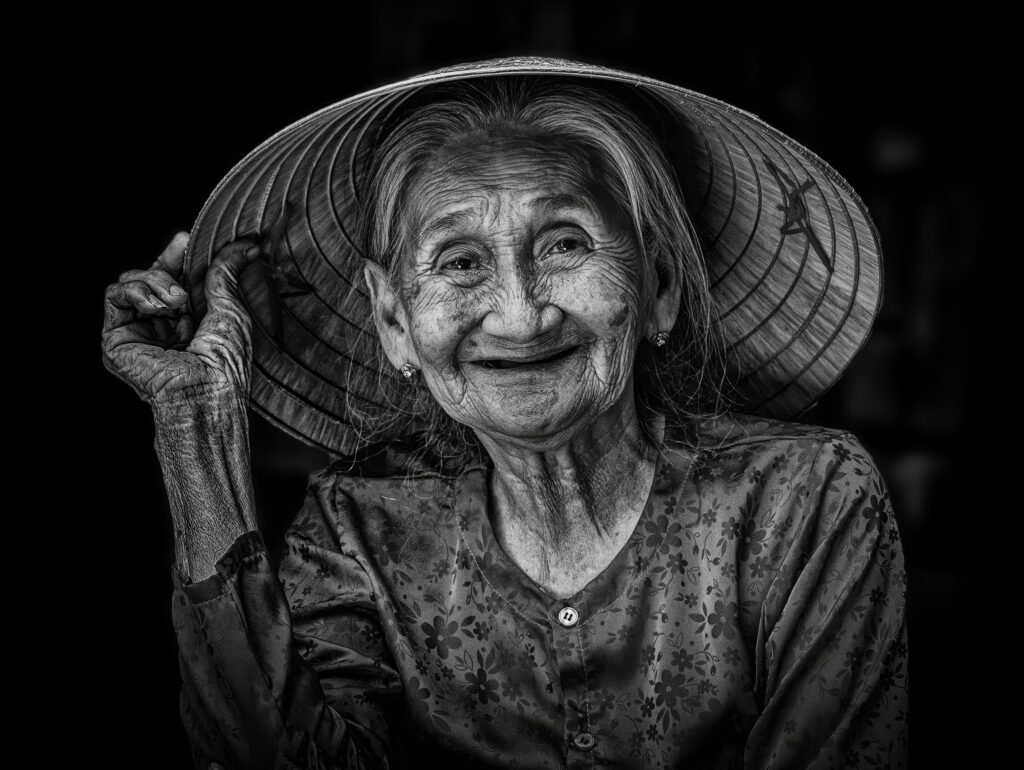
Always ask, with a gesture or a smile, before photographing someone close up, especially elderly people and children. In the mountains, some people ask for a little money in exchange for a photo: it is up to you, but a sincere exchange is often worth more than a stolen portrait.
Ten words that change everything
Xin chào — hello
Cảm ơn — thank you
Xin lỗi — sorry, excuse me
Bao nhiêu ? — how much?
Ngon quá ! — it’s delicious (the compliment that opens every door)
Không cảm ơn — no thank you
Ít cay — a little spicy
Không đường — no sugar
Tính tiền — the bill
Vệ sinh ở đâu ? — where are the toilets?
Vietnamese is a six-tone language and your pronunciation will be wrong. It doesn’t matter at all: the effort counts infinitely more than the result, and a badly pronounced ngon quá at a food stall will earn you a welcome that ten sentences in English never will.
Do you really have to take your shoes off everywhere?
In homes, yes, always. In temples and pagodas, to enter the main sanctuary. In some shops and massage parlours too. The rule is simple: look to see if there are shoes left at the entrance.
How much should you tip?
Nothing is compulsory. For a guide and a driver who have accompanied you for several days, an envelope handed over at the end of the stay, separately for each, is customary. In restaurants, rounding up is enough. In a taxi or a Grab, nothing is expected. We give you rough figures before departure if you wish.
Why am I asked my age?
Because Vietnamese has no neutral “you”: the pronoun depends on the relative ages of the speakers. Without this information, the other person doesn’t know which word to use. The question isn’t nosy, it is grammatical.
Can you bargain everywhere?
No. At markets and stalls without displayed prices, yes, with a smile. Never in a restaurant, a craft workshop, a shop with price tags or a metered taxi. And never aggressively: whoever gets angry loses.
What if I make a blunder?
Almost nothing will be said, and that is precisely the problem. A smile and a xin lỗi are enough to fix everything. Vietnamese people are forgiving with foreigners acting in good faith; what is hard to forgive is impatience and a raised voice.
Should you learn Vietnamese before you go?
Ten words are more than enough, and your pronunciation will be wrong anyway — it is a six-tone language. The effort is what counts: it completely changes the quality of exchanges, even when badly executed.
Putting it into practice
The tours where you experience what this article is about
Audience measurement. We would like to know which pages are useful to you, using Google Analytics. Nothing is stored without your consent, and you can change your mind at any time. Learn more




 The essentialsVietnam in 15 daysHanoi — Pu Luong — Ninh Binh — Lan Ha Bay — Hue — Hoi An — Saigon — Mekong Delta15 days / 14 nightsfrom €2,070