The central moment of a Vietnamese wedding is not the exchange of vows but the moment of reverence before the ancestral altar. The rites, what to do if you are invited, and why you will see so many newlyweds in the rice fields.
In brief
Two ceremonies
At the bride’s home then the groom’s, on a chosen date
Red
Colour of happiness; trays of betel open the proposal
Attending
An invitation is rarely refused, and is repaid with an envelope
Getting married here
Many couples come to renew their vows rather than marry
How does a Vietnamese wedding unfold?
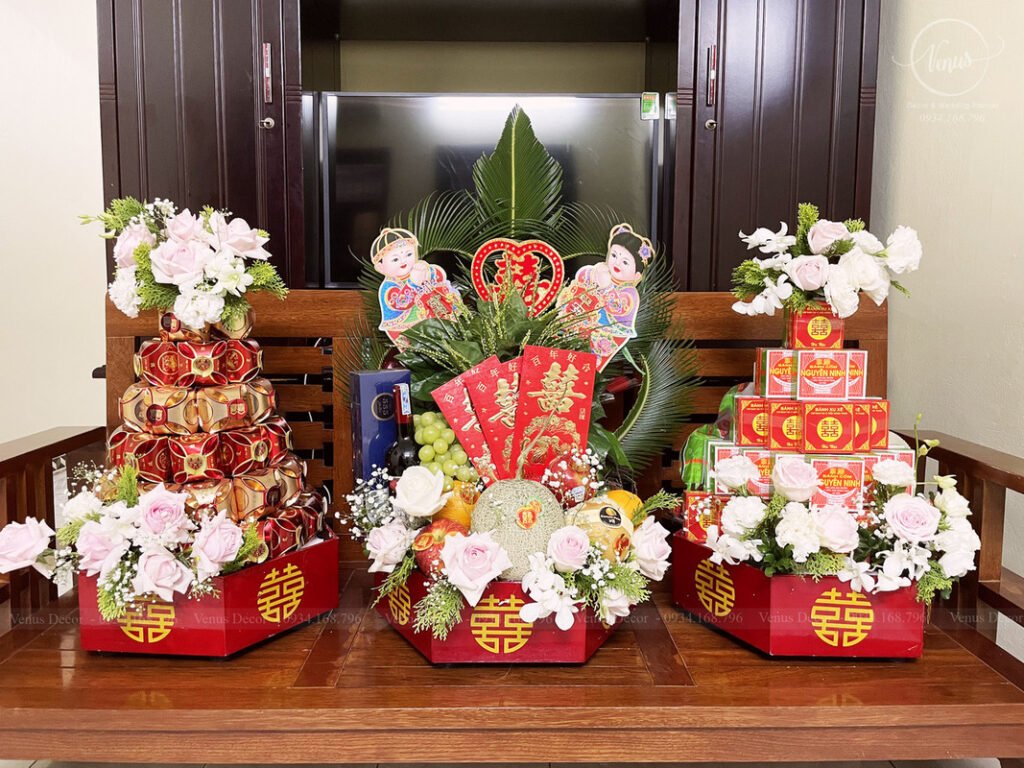
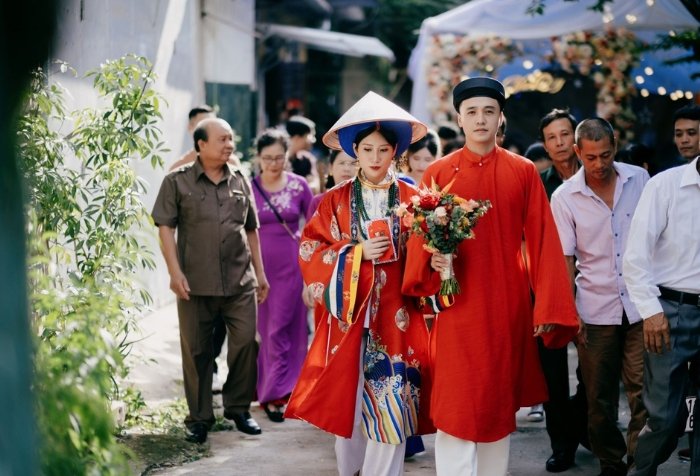
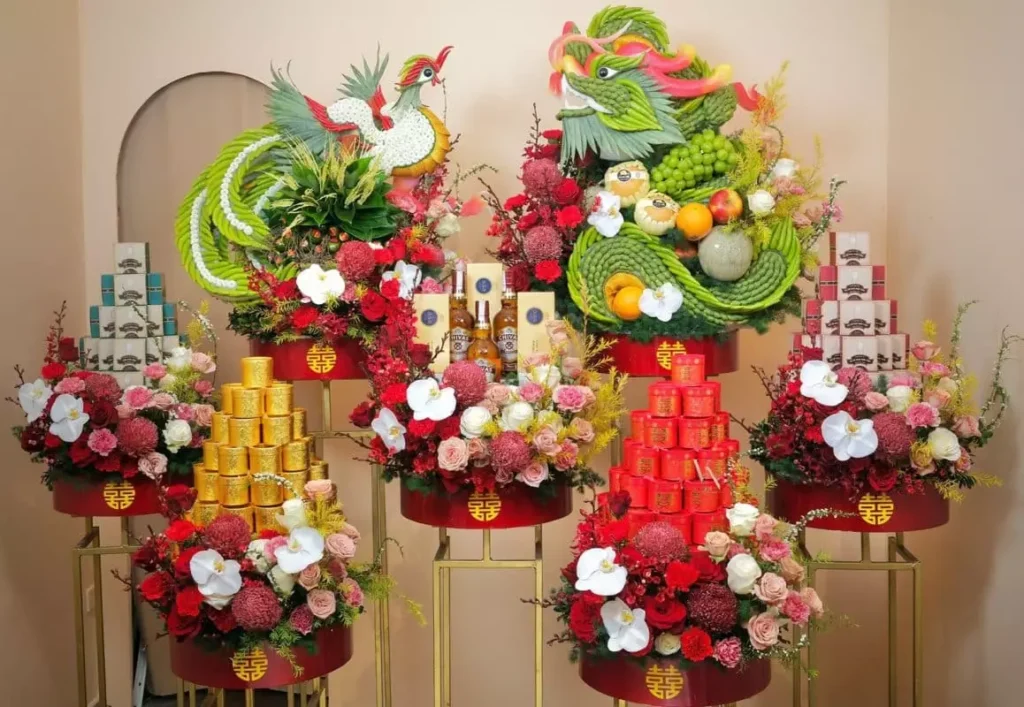
A traditional Vietnamese wedding is not one ceremony but a series of rites, two of which survive almost everywhere today.The Lễ ăn hỏi, the official proposal, takes place a few weeks before. The groom’s family goes to the bride’s in procession, carrying round red-lacquered trays, covered with cloth and carried at chest height by young people in áo dài. They contain areca nuts and betel leaves, tea, alcohol, cakes, fruit, sometimes a whole roast pig. Their number is always odd in the North.The Lễ cưới, the wedding itself, takes place on the chosen day. The procession comes to fetch the bride from her home, both families pay their respects before their ancestral altars — the central moment, far more than any exchange of vows — then the banquet often brings together three to six hundred people.The date is never chosen at random: an almanac or a fortune-teller is consulted, the compatibility of the zodiac signs is checked, and even the hour is fixed. A wedding at seven in the morning is nothing unusual.
Betel, red and the colours that matter
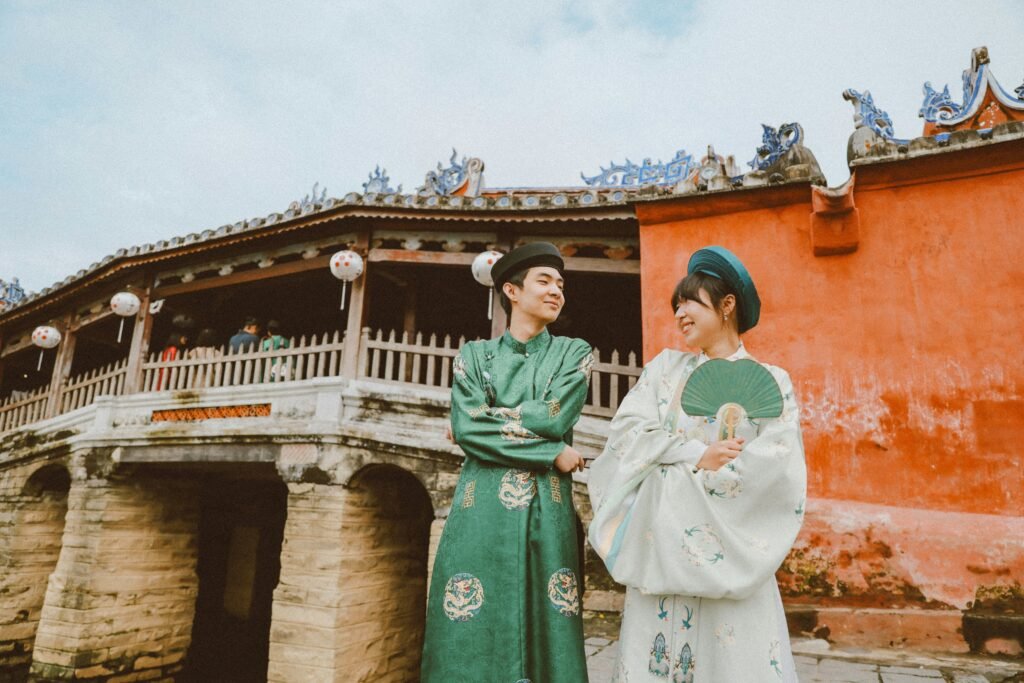
The areca nut and the betel leaf are the nuptial symbol par excellence, to the point that in Vietnamese “the matter of betel and areca” simply means “marriage”. An ancient legend links them to a story of loyalty between two brothers and a wife, and every Vietnamese person knows it. Red dominates everything: trays, invitations, the bride’s dress, envelopes. It brings luck and wards off misfortune. White, by contrast, is the colour of mourning — the Western white dress has nonetheless taken hold for photographs, and many brides change outfits three or four times during the day. Wedding photos deserve a mention: they are taken weeks beforehand, in sessions lasting several days, in carefully chosen settings. That is why you will see so many couples dressed as bride and groom in the rice fields, on beaches or in front of monuments, outside any ceremony.
Can you attend a Vietnamese wedding?
Yes, and it happens more often than you might think. Banquets are held in large halls open to the street, and Vietnamese hospitality does the rest: it is not unusual for a passing foreigner to be invited in to sit down and eat. Accepting is a compliment; refusing isn’t.A few pointers if it happens to you:
A red envelope is given containing money, handed over at the entrance. It is the custom and replaces a gift. A modest sum is perfectly fine from a passing guest.
Avoid white and black in your clothing. A bright colour is appropriate.
The newlyweds go round each table to toast. Stand up and hold your glass with both hands.
Alcohol flows freely. You can decline after the first glass without awkwardness.
You leave when you have finished eating, without waiting for the end. Staying to the end isn’t expected.
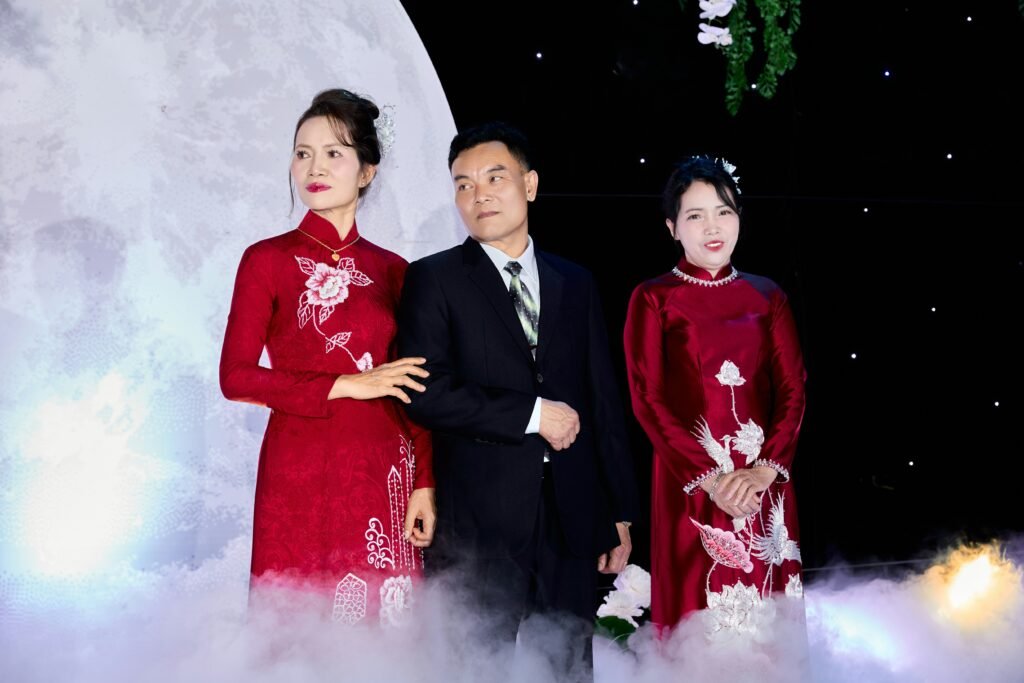
The central moment is not the exchange of vows. It is the moment of reverence before both families’ ancestral altars.
Getting married or renewing your vows in Vietnam
A civil marriage between foreigners in Vietnam involves lengthy administrative formalities and legalisation of documents in your home country: it isn’t something you can improvise on the spot, and it takes several months of preparation.On the other hand, a symbolic ceremony or a renewal of vows poses no difficulty, and it is what most of the couples we accompany ask for. On a beach on the central coast, in a garden in Huế, on the deck of a junk in Lan Ha at sunset, or in a Thái house in Pu Luong with the neighbours.We can organise the traditional part — lacquered trays, made-to-measure áo dài, musicians, blessing — with craftspeople and families we know. It takes two to three months of preparation and costs a fraction of the European equivalent.A calendar tip: avoid Tết week, when everything is closed and suppliers are with their families, and avoid July–August on the coast, typhoon season.
The wedding, a window on Vietnamese society
Few things say as much about the country. The ceremony unites two families before it unites two people, parental approval still carries real weight, and the ancestral altar sits at the centre of it all — the whole Vietnamese family system fits into that morning.Things are changing fast among young city-dwellers, though: later marriages, smaller banquets, growing rejection of astrological compatibility, and couples paying for the party themselves instead of leaving it to their families. It is a good topic of conversation with your guide, and you will rarely get the same answer twice.
The stages, from proposal to celebration
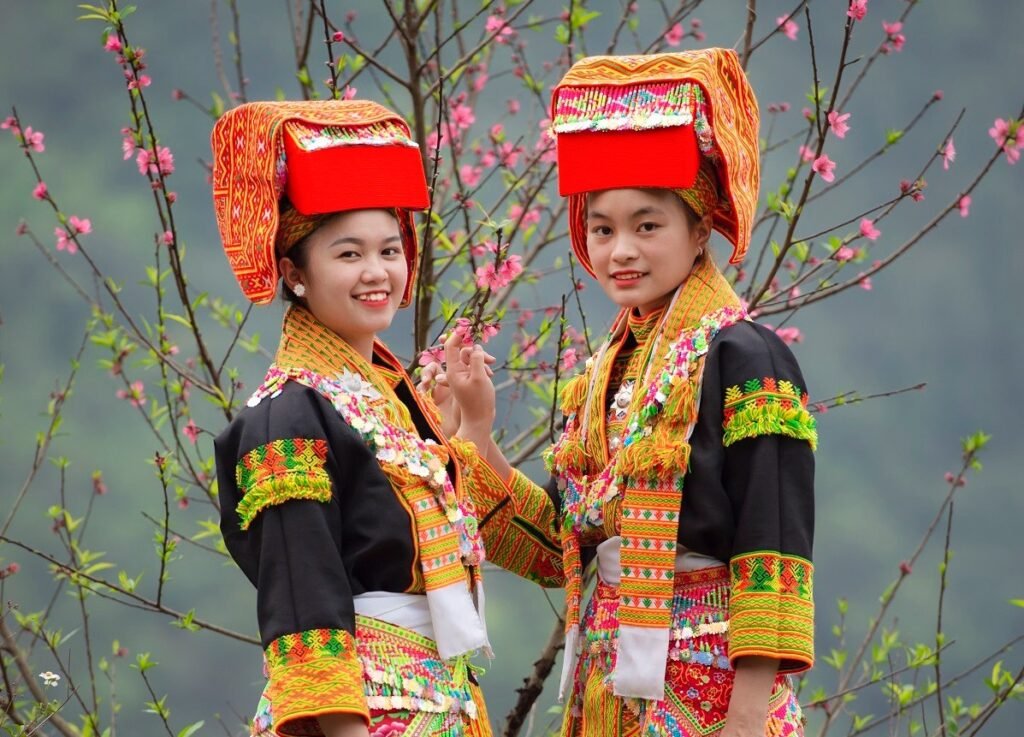
A traditional Vietnamese wedding doesn’t fit into one day: it unfolds in several stages, which families set by consulting a calendar of auspicious days.The first visit. The groom’s family visits the bride’s, with tea and betel, to formally ask permission to consider the union. It is a meeting between two families as much as between two people.The engagement and the red trays. A few weeks or months later, a procession of young people carries trays covered with red cloth to the bride’s house: cakes, fruit, tea, alcohol, areca nuts and betel leaves. Their number is always odd, and the bearers, often dressed in red, are chosen from the unmarried members of both families.The ceremony before the ancestral altar. On the wedding day, the groom’s procession comes to fetch the bride. Before the family altar, the couple light incense and bow to announce their union to the ancestors, then serve tea to their parents. The bride often wears a red áo dài, the colour of luck, and sometimes a traditional headdress.The reception. It often brings together several hundred guests, in a restaurant or under a tent set up in the street. Guests slip their gift, almost always money, into an envelope handed over at the entrance. The newlyweds go from table to table to toast.The wedding season peaks in autumn and in the months before Tết: if you travel then, you will see wedding tents in almost every neighbourhood.
Wedding season
Weddings are concentrated mainly between autumn and Tết, after the harvests, on dates chosen from the lunar calendar for being auspicious. During these weeks, you will see large red and pink tents set up in front of houses in the streets, processions of decorated cars and couples posing for photos in parks and in front of monuments. If you are invited, accept: it is a great honour, and you slip an envelope of money in as a gift.
It happens more often than you might think: banquets are held in halls open to the street and a passing foreigner is happily invited in to eat. Accepting is a compliment.
What should you give at a wedding?
A red envelope containing money, handed over at the entrance; it replaces a gift. A modest sum is fine from a passing guest. Avoid white and black in your clothing — white is the colour of mourning.
Why do you see newlyweds everywhere, outside any ceremony?
Because wedding photos are taken weeks in advance, in sessions lasting several days and in chosen settings: rice fields, beaches, monuments. The couples you see dressed up aren’t getting married that day.
What do betel and areca symbolise?
They are the nuptial symbol par excellence: in Vietnamese, “the matter of betel and areca” simply means “marriage”. An ancient legend links them to a story of loyalty that everyone knows.
Can foreigners get married in Vietnam?
A civil marriage involves lengthy formalities and legalisation of documents in your home country: several months of preparation. A symbolic ceremony or a renewal of vows, on the other hand, poses no difficulty.
Do you organise symbolic ceremonies?
Yes, including the traditional part: lacquered trays, made-to-measure áo dài, musicians, blessing, with craftspeople and families we know. Allow two to three months of preparation. Avoid Tết week and the typhoon season on the coast.
Putting it into practice
The tours where you experience what this article is about
Audience measurement. We would like to know which pages are useful to you, using Google Analytics. Nothing is stored without your consent, and you can change your mind at any time. Learn more


 The essentialsVietnam in 15 daysHanoi — Pu Luong — Ninh Binh — Lan Ha Bay — Hue — Hoi An — Saigon — Mekong Delta15 days / 14 nightsfrom €2,070