
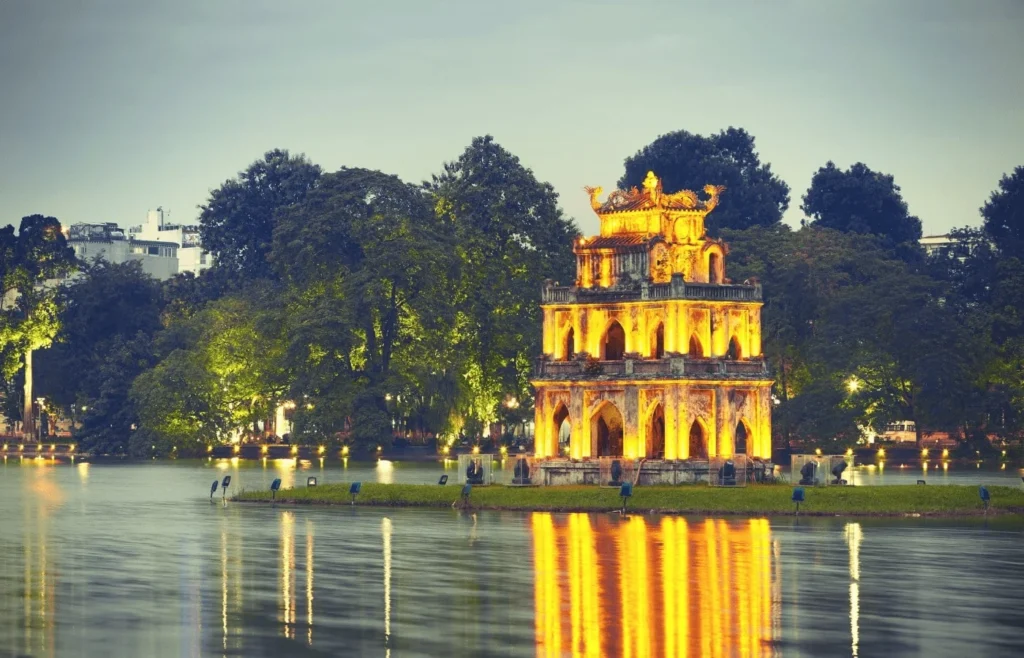
Day 01Arrival in HanoiD
French-speaking guide & private driver · 40 km · 45 min
Welcome at Noi Bai and transfer to the Old Quarter. This tour doesn’t head south: it climbs. Nine days in the country’s two northernmost provinces, Ha Giang and Cao Bang, along the Chinese border, where some thirty peoples live and where Vietnam looks least like the idea people have of it.
One thing to know right now: the thread of this trip is not the landscape but the market. In these mountains, villages are scattered, often two or three hours’ walk from one another, and the weekly market is the institution that links them. Things are sold there, but above all everything else happens: news is exchanged, marriages arranged, debts settled, drinks drunk. It is the only day of the week when a scattered society comes together.
So we fit the itinerary to this calendar rather than the other way round. Some markets are weekly — Meo Vac and Dong Van on Sunday —, others run on a six-day cycle, which shifts the date every week. Your guide knows the current cycle.
Welcome dinner at a neighbourhood address and a last comfortable night before five days of guesthouses. The compulsory border-zone travel permit has been arranged before your arrival.
Day 02Hanoi — Ha GiangB, L, D
French-speaking guide & private driver · 300 km · 6 h on the road
A day on the road heading north. You leave a delta with more than a thousand inhabitants per square kilometre for a province with a hundred, and you can see it from the window long before the first passes.
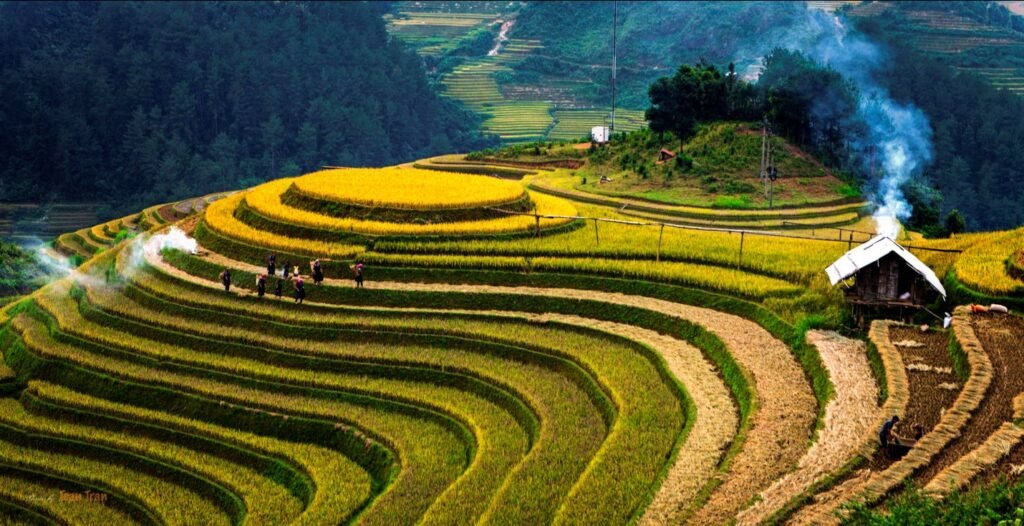
Crops change in steps: irrigated rice as long as the land is level, then tea on the hills of Thai Nguyen and Tuyen Quang, then maize, then cassava. Each plant corresponds to a band of altitude and a capacity for irrigation, and this plant ladder mirrors a human one: Việt and Tay at the bottom, Nung and Dao mid-slope, Hmong and Lo Lo at the top.
Vietnam is the world’s sixth-largest tea producer and you are crossing one of its cradles. Ha Giang’s shan tuyết is a curiosity: it grows on trees eight to ten metres tall, sometimes a hundred years old, which the pickers climb — nothing like the hip-height hedges of industrial plantations. The leaves are covered in white down, hence the name: “mountain snow”.
Arrival in Ha Giang in the late afternoon, briefing with the local guide who will accompany you on the plateau, and night in a guesthouse.
Day 03Ha Giang — Dong VanB, L, D
French-speaking guide & private driver · 150 km · 5 h with stops
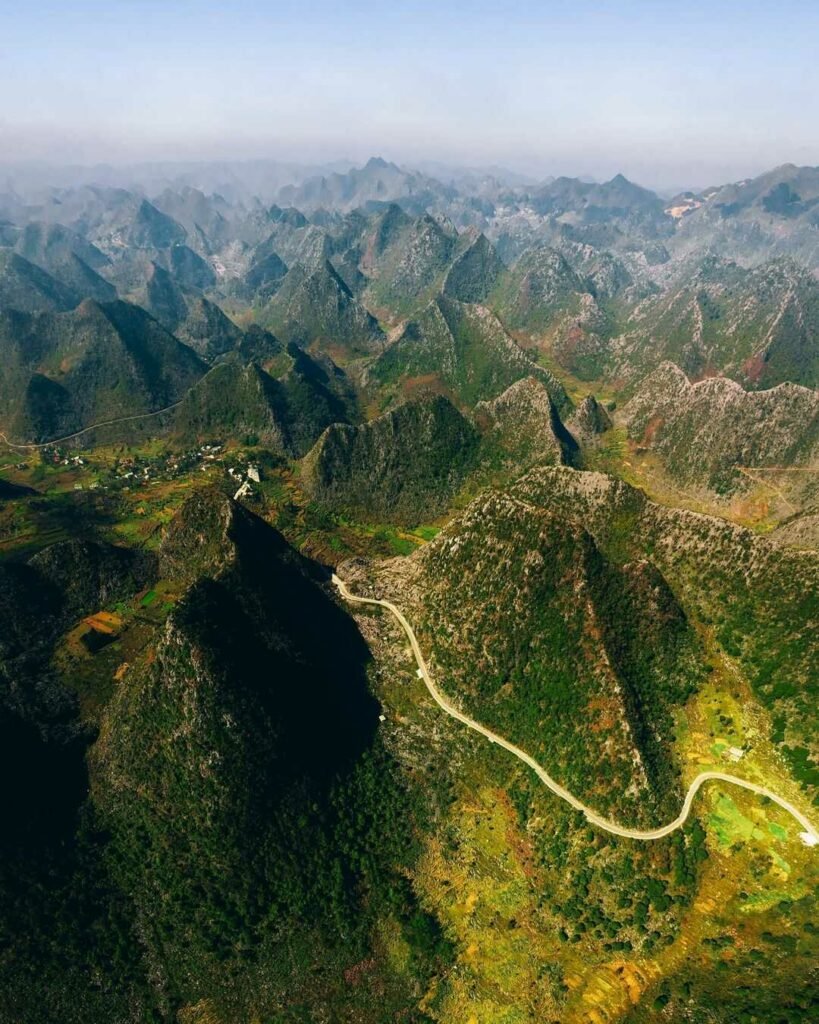
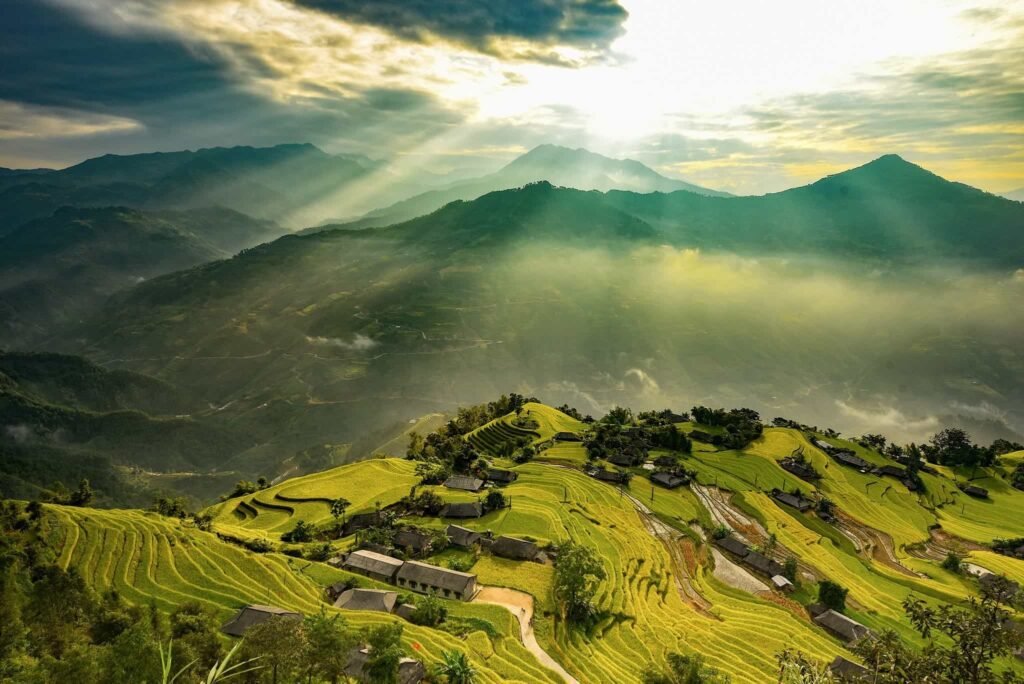
Climb onto the Dong Van limestone plateau, a UNESCO Global Geopark. A hundred and fifty kilometres in five hours: you don’t drive fast, and there is no reason to want to.
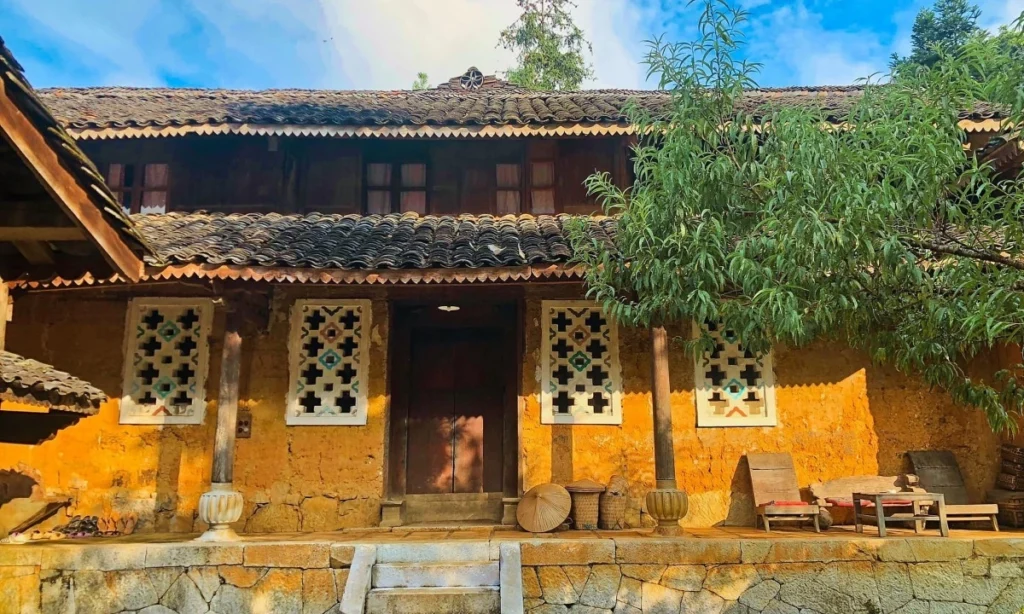
The Vuong palace, in Sa Phin, is the stop that best explains this region. It is a Hmong residence from 1919, in stone and pinewood, built by a Chinese mason to a Sino-Hmong plan, with sixty-centimetre walls and arrow slits. The Vuong family controlled the opium trade across the whole plateau; the French armed it and granted it the title of “king of the Hmong”, a convenient fiction for administering from a distance a region over which they had no hold.
Opium is not a folkloric detail: the poppy was the main cash crop of the far North for a century, encouraged by the colonial monopoly, which drew a large share of Indochina’s budget from it. Eradication was completed only in the 1990s, and the maize that covers the slopes today is what replaced it.
Stop at the Heaven’s Gate of Quan Ba and its viewpoint over the twin hills. Arrival in Dong Van in the late afternoon. The old town, with its earth houses roofed with yin-yang tiles and its stone market built in 1925, is the best place to sleep on the plateau.
Day 04Dong Van — Meo VacB, L, D
French-speaking guide & private driver · 30 km · 2 h with stops
Only thirty kilometres, over the Ma Pi Leng pass, which overlooks the gorges of the Nho Que by seven to eight hundred metres.
The road is called the “Happiness Road” and the name deserves a pause. Opened between 1959 and 1965, it was cut almost entirely by hand by more than twelve hundred workers from sixteen ethnic groups. For the pass alone, men spent eleven months hanging from ropes over the void, drilling the rock with chisels. Before it, it took three days’ walk to reach Ha Giang from Meo Vac.
Boat trip down into the Tu San canyon if conditions allow: eight hundred metres of vertical cliffs, the deepest gorge in South-East Asia. The water is an opaque green, a colour due to limestone particles in suspension.
If you are there on a Sunday, Meo Vac market alone is worth the trip. It is the largest livestock market in the North: from five in the morning, the Hmong walk down from the ridges, sometimes after three hours on foot, driving a buffalo or carrying a basket on their back. An animal is assessed for an hour before the price is discussed, and the deal is sealed with a shared drink.
Day 05Meo Vac — Bao LacB, L, D
French-speaking guide & private driver · 110 km · 4 h on the road
A link road between the two provinces, very little used, which avoids going back down to Hanoi between Ha Giang and Cao Bang. It is one of the most beautiful and least known routes in the North.
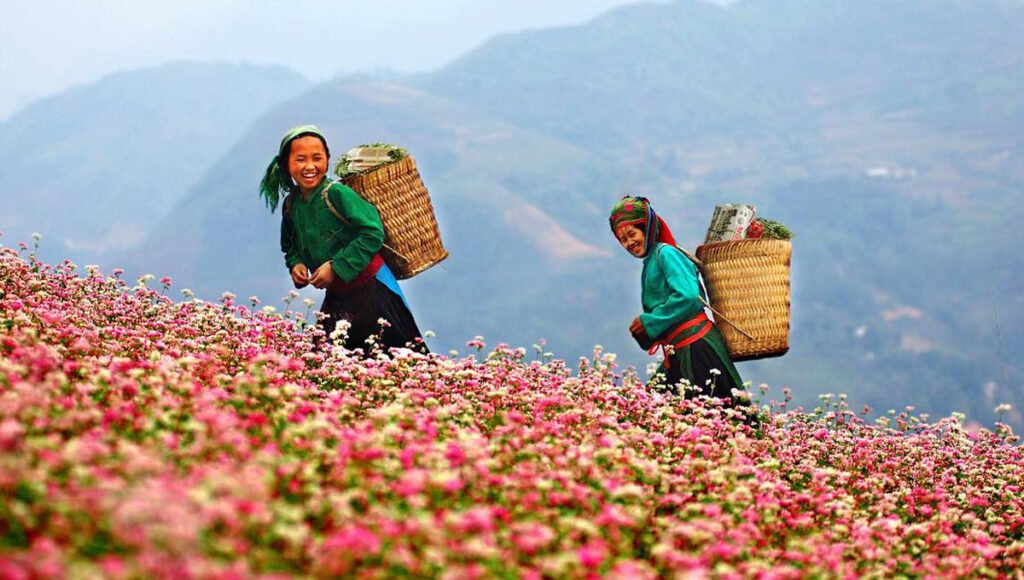
This is the day of textiles. The women you meet wear a costume that can be read: the subgroup, often the village, sometimes marital status. White, Black, Flower and Green Hmong can be told apart at thirty metres by those who know how to look; the Red Dao wear a scarlet turban and married women shave their foreheads; the Lo Lo, only a few thousand people, have unique geometric embroidery and speak a Tibeto-Burman language.
Hemp is the basic material for the Hmong, and processing it takes a whole year: sowing in spring, harvesting, retting, drying, then splitting the stems and joining the fibres by hand — women spin as they walk, distaff at the waist, because this gesture fills every idle moment of a life. Then comes indigo dyeing: twenty to thirty successive baths in a vat of fermented leaves to obtain the deep blue-black. The dyers’ hands stay blue for several months a year.
A complete costume thus represents twelve to eighteen months of work, and it is passed down. That explains the price of old pieces, and the immediate difference from the industrial embroidery sold to tourists.
Night in Bao Lac, a large, unpretentious valley town, in a guesthouse.
Day 06Bao Lac — Cao Bang — Ban GiocB, L
French-speaking guide & private driver · 150 km · 4 h 30
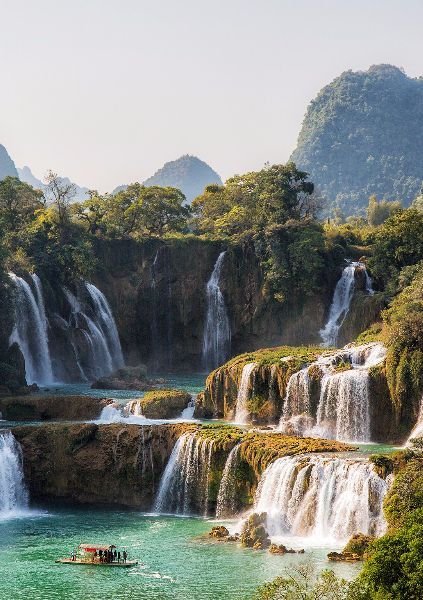
Crossing Cao Bang province to the Chinese border and Ban Gioc waterfall.
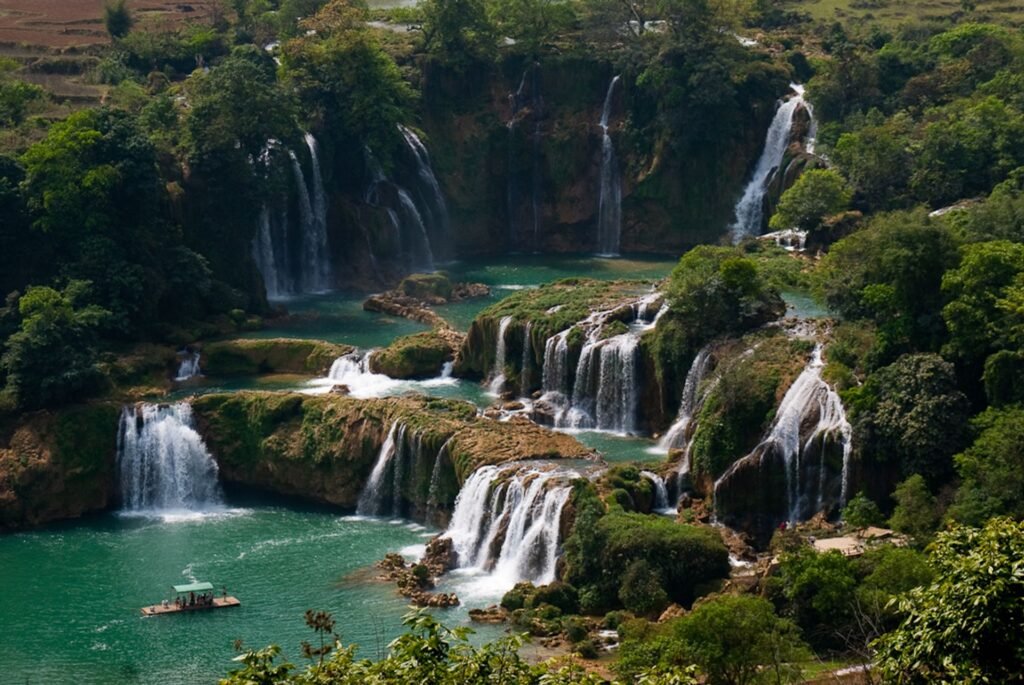
It is the largest waterfall in Vietnam and the fourth-largest border waterfall in the world: three hundred metres wide, thirty high, in tiers, with China on the other bank. The Quay Son river is a jade green you would think had been retouched in photos — again, limestone in suspension.
The border runs through the middle of the falls, which was long a matter of dispute: it was finally fixed only in 2009, after ten years of negotiations and the demarcation of the thirteen hundred and fifty kilometres of shared land border. This administrative detail says a lot about Vietnam’s relationship with its neighbour: the country was invaded again in 1979, and the military cemeteries in the region date from that war, not the one with the Americans.
A bamboo raft takes you to the foot of the falls, right up to the border line where Chinese and Vietnamese boats pass each other. The flow decides everything: from September to November, after the monsoon, the falls are full and the rice fields below are golden.
Night in a Tay guesthouse in Khuoi Ky, a hamlet whose houses are all built of dry stone, walls and roofs included, using a technique dating back to the 16th century.
Day 07Ban Gioc — Nguom Ngao caves — Cao BangB, L
French-speaking guide & private driver · 80 km · 2 h 30
Three kilometres from the waterfall, Nguom Ngao cave runs for more than two kilometres, one of them fitted out for visitors. It was explored in 1921 and its name means “tiger cave” in the Tay language — villagers heard a roar in the passages, which was only the wind. The formations, ochre and white, are among the most beautiful in the North.
Then the road to Pac Bo, on the border. It was here that Hồ Chí Minh returned to Vietnam in February 1941, after thirty years in exile, to found the Viet Minh. He lived in a damp cave, sleeping on a plank, working at a stone table beside a stream he named Lenin, facing a peak he named Karl Marx.
The site is a place of national pilgrimage, much visited by Vietnamese and almost never by foreigners. For a French traveller, it is a visit that sheds light on a shared history: the five years spent here prepared the declaration of independence of September 1945, whose first paragraph quotes the 1789 Declaration of the Rights of Man word for word, along with the American Declaration of Independence.
The Cao Bang geopark, UNESCO-listed in 2018, covers three thousand square kilometres. On the way back, a stop at Thang Hen lake, a string of mountain lakes whose level rises and falls by several metres with the seasons because of underground channels, and at the Ma Phuc pass, “the kneeling horse”, where the road runs between two upright blocks of limestone.
Day 08Cao Bang — HanoiB, L
French-speaking guide & private driver · 280 km · 6 h on the road
Back to the delta. The road descends via Bac Kan and follows valleys where rice gradually takes over from maize.
It is time to take stock of what you have seen. On the Dong Van plateau alone, twenty-two ethnic groups live; in the two provinces crossed, about thirty. Vietnam officially recognises fifty-four, but the figure is an administrative construction of the 1970s: some groups gathered under the same name cannot understand one another, and others, distinguished on paper, consider themselves a single people.
These populations make up fourteen per cent of the country’s inhabitants but occupy three-quarters of its territory — mountainous, border and strategic areas, which explains the central state’s constant attention to them, between development programmes and sedentarisation policies.
You will also have noticed that tourism is changing these valleys fast. Ten years ago, Dong Van had a few dozen beds; today it has several thousand. We work with family guesthouses rather than the new concrete hotels, because it is the only way to keep some of the money in the hamlets.
Arrival in Hanoi in the late afternoon, free evening.
Day 09Departure from HanoiB
French-speaking guide & private driver · 40 km · 45 min
Depending on your flight time, a last morning in Hanoi. We suggest the Museum of Ethnology, even if the order seems reversed: after a week in the mountains, you recognise what you have seen, and the collections take on a meaning they would not have had on the way out.
The life-size houses rebuilt in the garden were built by craftsmen from their villages, with the original materials: a forty-metre Ê Đê longhouse, a Tay stilt house, a Bahnar collective tomb. The textile section lets you check what you have learned to read in the markets.
Another, lighter option: Hang Bac street and its silversmiths, or a last egg coffee upstairs overlooking the lake. If you bought textile pieces during the trip, it is also the time to have them valued by a reputable dealer in the Old Quarter.
A final word. This tour is one of the most demanding we offer — mountain roads every day, simple nights, little comfort — and it is the one travellers talk to us about for longest afterwards. The far North is not easy to describe: you have to have slept there.
Transfer to Noi Bai airport, three hours before the flight.
Continue
Other tours you might like
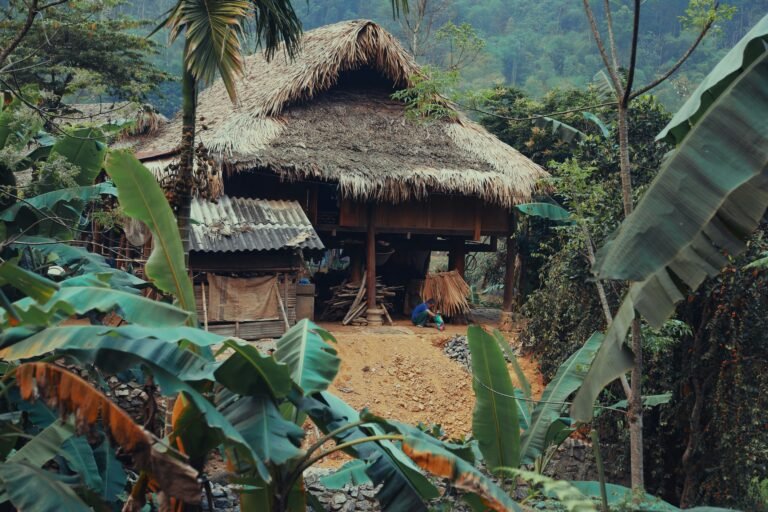 Off the beaten trackPu Luong and the delta villages — 8 daysHanoi — Craft villages — Ninh Binh — Pu Luong — Mai Châu — Hanoi8 days / 7 nightsfrom €1,150
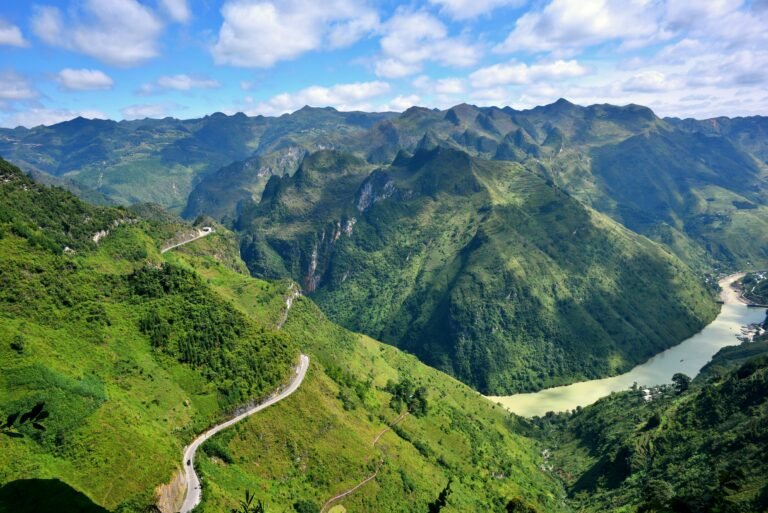 Off the beaten trackTrekking in the North-West — 11 daysHanoi — Mai Châu — Pu Luong — Nghia Lo — Mu Cang Chai — Thac Ba Lake — Hanoi11 days / 10 nightsfrom €1,650
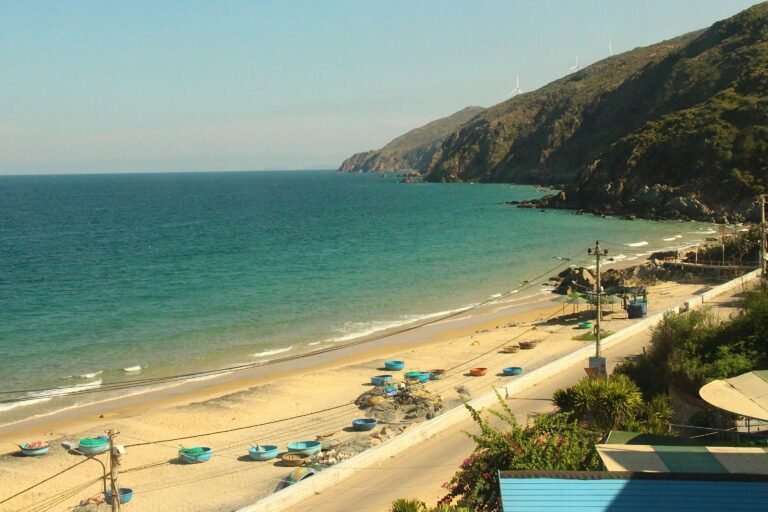 Off the beaten trackThe secret Centre: Kon Tum, Quy Nhon and Phong Nha — 12 daysHanoi — Phong Nha — Huế — Kon Tum — Quy Nhon — Saigon12 days / 11 nightsfrom €1,690