There are more than three hundred thousand people of Vietnamese origin in France, and most travellers heading to Hanoi don’t know that this presence began more than a century ago, in the arms factories of the First World War.
1916: the first ones, and they didn’t come of their own free will
The first Vietnamese immigration to France was not a choice. Between 1915 and 1919, some forty-three thousand Indochinese were recruited — often by force, through quotas imposed on villages — to work in arms factories and serve as auxiliaries behind the front. They were workers in Toulouse, Bergerac, Saint-Chamas, stretcher-bearers, cooks, labourers.A second wave followed in 1939, even less well known: twenty thousand men, the công binh, unskilled workers requisitioned from the countryside of Tonkin and Annam. The defeat of 1940 left them stranded in France, without status or wages. Several thousand were sent to the Camargue to revive rice growing; Camargue rice today owes much of its modern existence to them.
Camargue rice owes much of its modern existence to Vietnamese workers requisitioned in 1939.
Their story was only publicly recognised in 2009, with the unveiling of a stele in Arles. Pierre Daum’s book, Immigrés de force, brought it out of oblivion.
1954 and 1975: two exiles
After the 1954 Geneva Accords, several tens of thousands of people left Indochina for France: civil servants, soldiers, Franco-Vietnamese families, soldiers’ wives. Many were housed in transit camps — the best known is Sainte-Livrade-sur-Lot, in Lot-et-Garonne, where eleven hundred and sixty people arrived in 1956 in former military buildings. Some families would live there for fifty years.The second wave, after 1975, was that of the boat people. About eight hundred thousand people left Vietnam by sea between 1975 and 1995, a large proportion of them Sino-Vietnamese hit by the nationalisations of 1978. France took in nearly a hundred and twenty thousand, often after months in camps in Malaysia, Thailand or Hong Kong. Shipwrecks, pirate attacks in the Gulf of Thailand, months of waiting: it is the family history of much of today’s diaspora in France.
The 13th arrondissement, and the common misconception
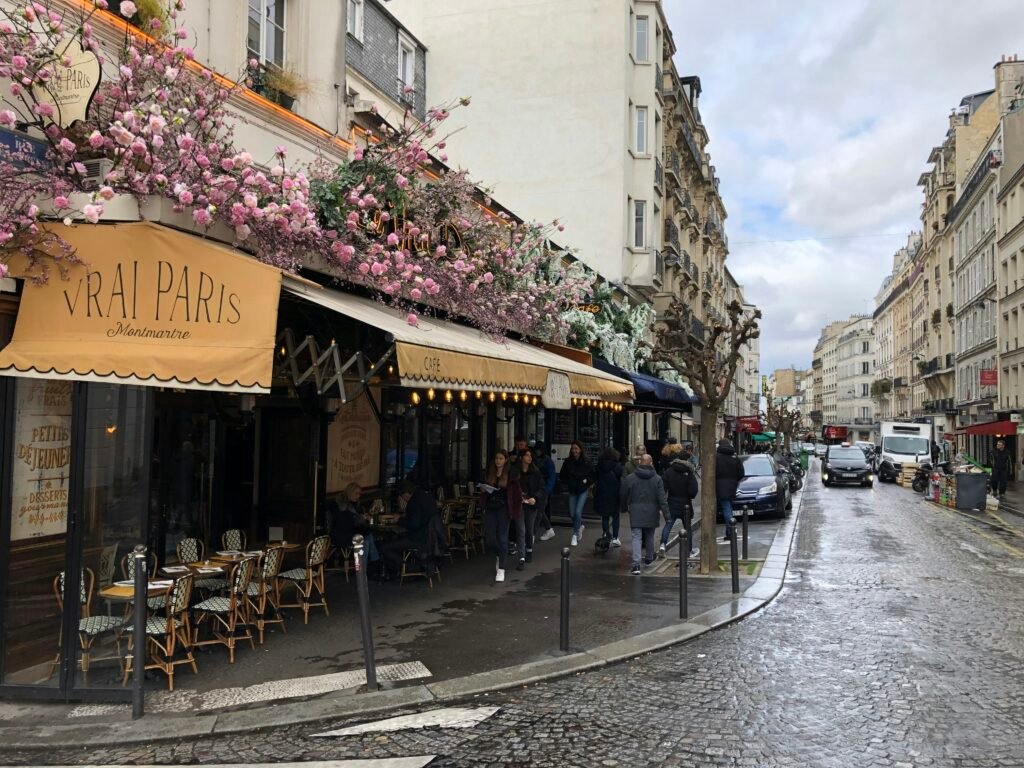
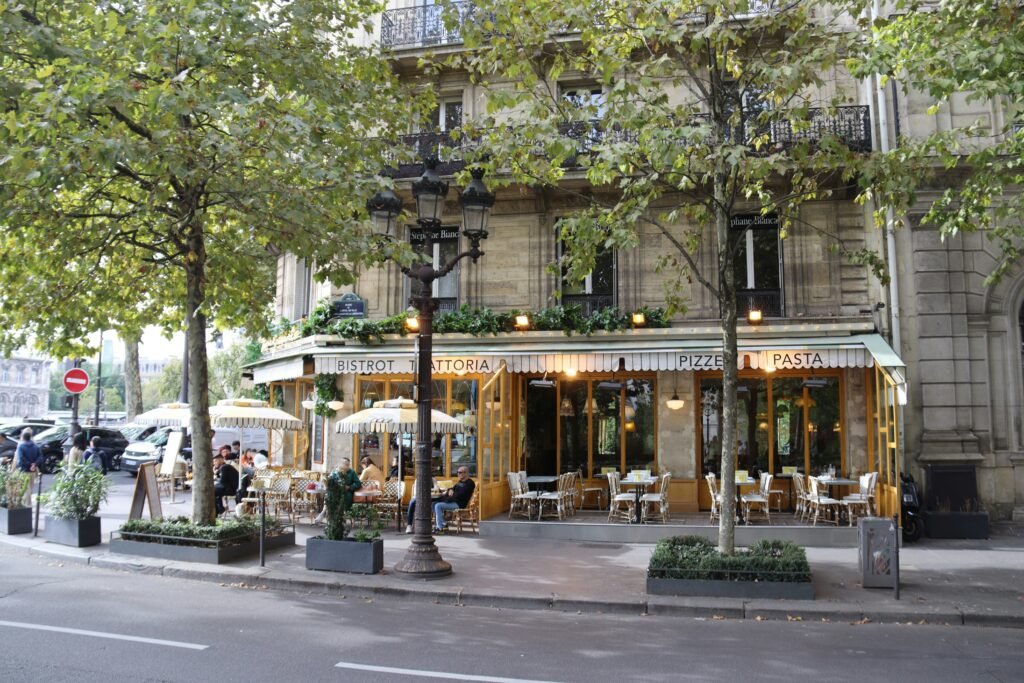
Paris’s “Asian quarter”, between the Olympiades towers and avenue de Choisy, took shape at precisely that moment: the towers, built in the 1970s and hard to rent, filled with refugee families from 1976 onwards.A point that matters: this quarter isn’t Vietnamese but Indochinese and Chinese at once. Vietnamese, Cambodians, Laotians and Chinese from South-East Asia live side by side, and many of the big shops are run by Sino-Cambodian families. The Vietnamese of France are in fact far more scattered than this quarter suggests: Marseille, Lyon, Toulouse, the wider Paris region.
Pho, bò bún and the invention of a French cuisine
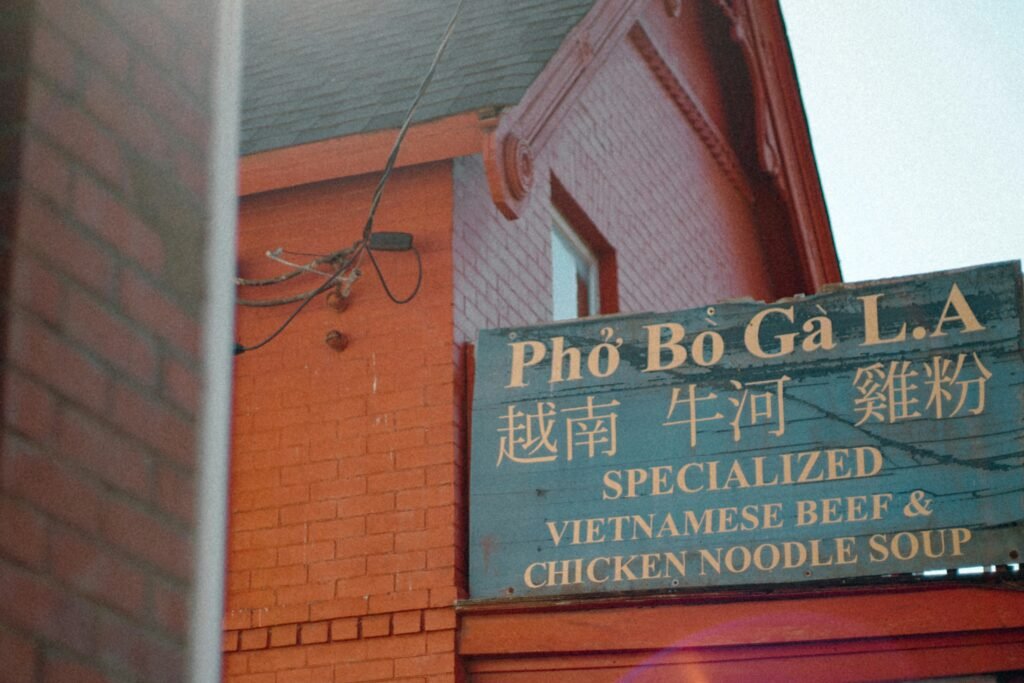
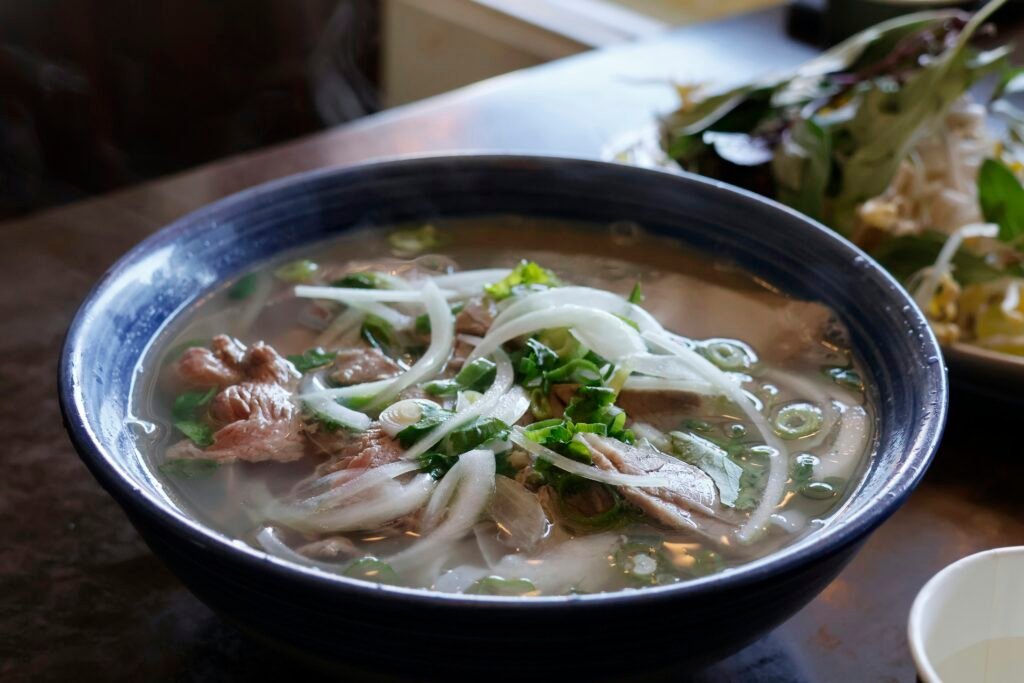
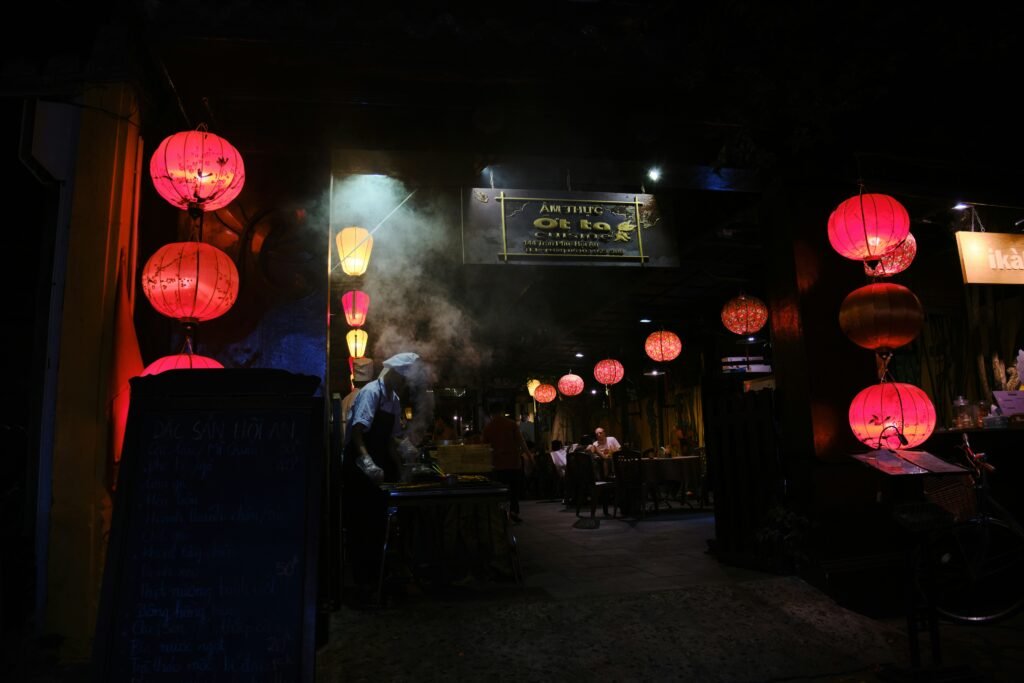
The dish most ordered in Vietnamese restaurants in France hardly exists in Vietnam under that name: bò bún. It is a Parisian adaptation of the Saigon dish bún bò Nam Bộ , served in a big bowl with a sliced spring roll — a combination that makes visiting Vietnamese smile and that has fed two generations of French students.Phở arrived with the refugees of 1975, and its Parisian version has stayed close to the southern one: sweeter broth, a plate of herbs on the side, hoisin sauce. A traveller who knows Hanoi pho — more sober, without herbs or sauce — will be surprised; it is not a betrayal, it is another lineage.These restaurants also played a very specific economic role. Opening a small catering business was, for families who arrived without recognised qualifications or capital, the fastest route to independence. The next generation went into higher education in large numbers.
What it changes when you travel in Vietnam
Three things, very concretely.
Vietnamese people in Vietnam often have family in France, or know someone who does. The word Việt kiều refers to Vietnamese abroad, and it is loaded: it means at once those who left, those who send money — diaspora remittances account for several per cent of the country’s GDP — and those who come back as tourists to their parents’ village.
French is now spoken only by a small minority of elderly people, but the cultural attachment remains. Many of our guides learned French by choice, not by inheritance.
Finally, if you are of Vietnamese origin yourself, the trip isn’t the same trip. We regularly organise returns to a home village, with prior research into the address and the family register; it is slow work, often moving, and it is worth talking to us about it early.
The Việt Kiều who return
Việt Kiều is the name given to Vietnamese people abroad and their descendants. Since the country opened up, many come back, to find family, discover their parents’ village or settle and start a business. These returns are not always easy: people sometimes speak the language poorly, do not find the country their parents described, and are seen both as family and as foreigners. We regularly accompany Franco-Vietnamese families on these journeys home, with great sensitivity.
The French words in Vietnamese
The French presence left dozens of words in the Vietnamese language, which you will recognise by ear: cà phê for coffee, bơ for butter, ga for station, xà phòng for soap, phô mai for cheese, sơ mi for shirt. Turning them into a guessing game with your guide is a very good way to break the ice.
Tết in Paris
Every year, the Lunar New Year is celebrated in Paris’s 13th arrondissement with a parade, lion dances and firecrackers, in which the Vietnamese, Chinese and Cambodian communities take part. It is a good opportunity, before a trip, to get a taste of the Tết atmosphere without leaving France.
A final word
If you have Vietnamese roots, tell your guide at the start of the trip: it changes the relationship, and they will gladly help you find a village, a street or a family recipe.
In short
A century of shared history explains why so many French people feel a special bond with Vietnam, and why visitors from France are welcomed there with such curiosity.
Further reading
A few pointers, without claiming to be exhaustive. In literature, Linda Lê, born in Da Lat and arrived in France at fourteen, and Kim Thúy, who left Vietnam at ten and settled in Quebec, whose Ru tells of the crossing and the camp. In comics, Une vie chinoise isn’t Vietnamese, but Vietnamerica by GB Tran tells precisely what a family doesn’t tell its children.In cinema, The Scent of Green Papaya and Cyclo by Trần Anh Hùng, a French-Vietnamese director who arrived in France in 1975: it is a view from inside and outside at once, which is exactly the diaspora’s position.
Estimates put it at around three hundred and fifty thousand people of Vietnamese origin, making it one of the largest Vietnamese diasporas in Europe. The figure is approximate: France doesn’t record ethnic origin.
Is French still spoken in Vietnam?
Very little. French is spoken by a minority of elderly people and by professionals who learned it by choice, including our guides. English is now the first foreign language taught.
What is a Việt kiều?
The term refers to Vietnamese people living abroad. It is in common use in Vietnam, with no negative connotation in itself, but it marks a distinction — you remain a Việt kiều even if you come back to live in the country.
Can you find your family’s home village?
Often yes, if you have the name of the village and the district. Family registers, the gia phả, are sometimes kept in the lineage’s ancestral hall. We organise this kind of research ahead of the trip; allow several weeks.
Why doesn’t bò bún exist in Vietnam?
It exists in another form, bún bò Nam Bộ, without the spring roll and in a smaller portion. The French version, with the fried roll cut into slices, is a Parisian adaptation from the 1980s.
Where can you see traces of this history in France?
In Sainte-Livrade-sur-Lot, where part of the reception camp for repatriates from Indochina survives; in Arles, where a stele pays tribute to the Indochinese workers of 1939; and in the Olympiades district of Paris.
Putting it into practice
The tours where you experience what this article is about
Audience measurement. We would like to know which pages are useful to you, using Google Analytics. Nothing is stored without your consent, and you can change your mind at any time. Learn more


 The essentialsVietnam in 15 daysHanoi — Pu Luong — Ninh Binh — Lan Ha Bay — Hue — Hoi An — Saigon — Mekong Delta15 days / 14 nightsfrom €2,070