Vietnamese tea and the hundred-year-old trees of the North
Coffee makes Vietnam’s reputation; tea makes its social life. And on the ridges of Hà Giang grow tea plants that are not bushes but trees, sometimes several hundred years old, which you have to climb to pick.
A tea country before a coffee country
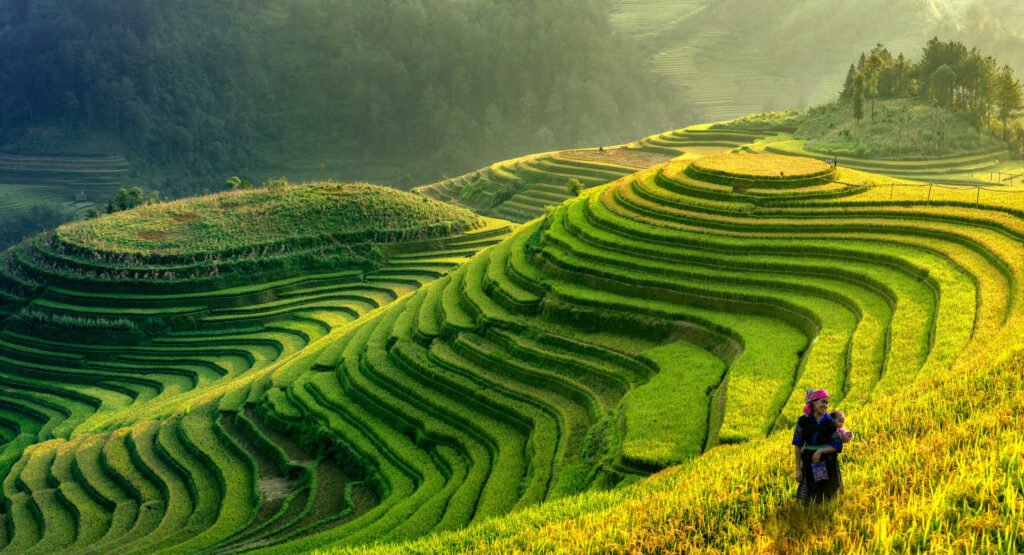
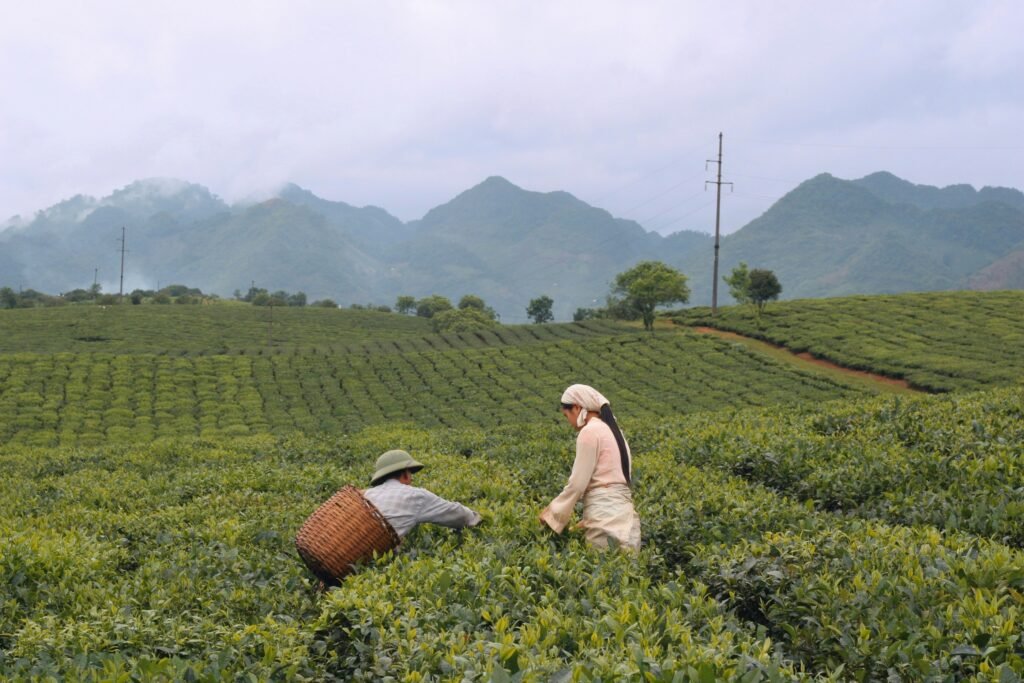
Coffee makes Vietnam’s economic reputation, but tea makes its social life. Tea is served to anyone who comes through a door: in a shop before talking business, at a craftsman’s before he shows his work, in an office before a meeting. It is free, it is constant, and refusing it closes the conversation before it begins.This everyday tea is a simple green tea, served in very small handleless cups, often poured from a pot that steeps all day. It is bitter, a little astringent, and that is not a flaw: bitterness is what is expected of it.Tea culture goes back much further than coffee, which arrived with missionaries in the 19th century. Thái Nguyên province, north of Hanoi, remains the benchmark for everyday Vietnamese green tea, and its hills in regular rows have become an emblematic landscape.
The hundred-year-old tea trees of the North
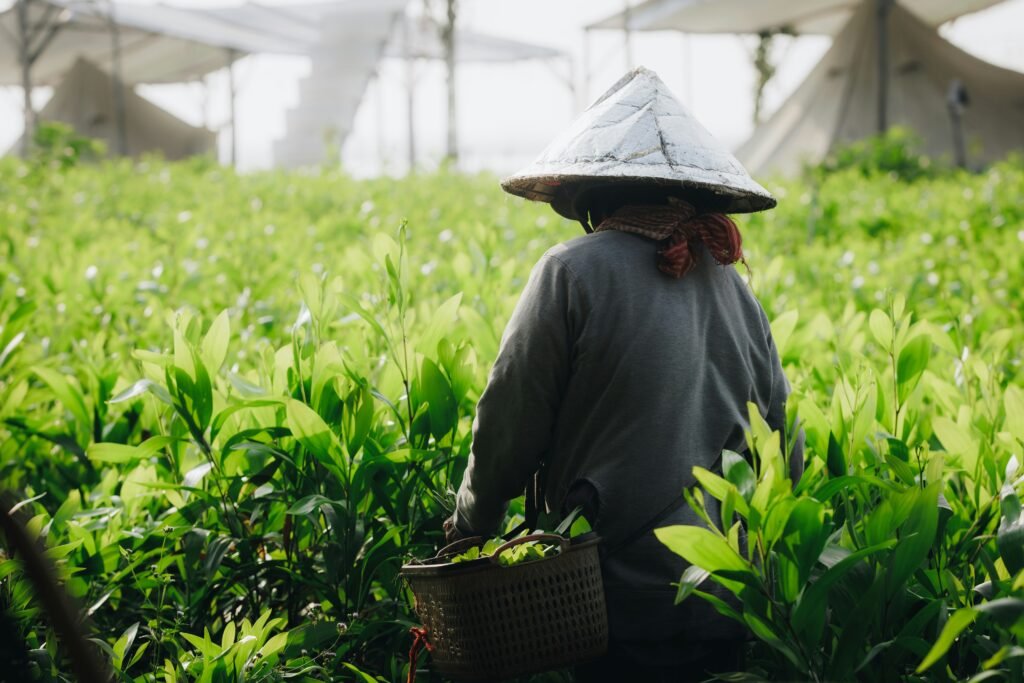
It is the Vietnamese particularity few travellers know about. On the ridges of Hà Giang, Yên Bái and Sơn La grow tea plants shan tuyết — “mountain snow” — that are not pruned bushes but real trees, sometimes several hundred years old, several metres tall.People climb them to pick. The buds are covered in white down, hence the name, and give a thick, mineral liquor, much less astringent than lowland tea. It is the H’mong and the Dao who harvest them, often without fertiliser or treatment, simply because these trees have always grown there.Suối Giàng, in Yên Bái province, is the most accessible place to see them. On the Hà Giang loop, several villages also live from them. These teas are starting to interest foreign buyers, and their price has doubled in a few years — which, for once, directly benefits the families who pick them.
Lotus tea, or the art of taking your time
The trà sen of Hanoi is the most extravagant preparation in the country. The principle: scenting green tea with lotus stamens, of which each flower gives only a tiny pinch. The traditional West Lake method requires more than a thousand flowers for a single kilo of tea, repeated over five to seven successive scentings spread over three weeks.An even older version involves slipping a handful of tea into a living flower on the pond, closing it for the night and coming back to collect it in the morning. One flower, one cup.You can understand the price: authentic lotus tea costs several times as much as a good green tea. Most of what is sold under this name is industrially flavoured. The real thing can be recognised like this: the scent is discreet when dry and opens up in hot water, never the other way round.
A thousand flowers for a kilo. It isn’t a recipe, it is a statement about time.
Drinking, and receiving
Accept the first cup. It is offered, it isn’t refused, and it marks the start of the exchange rather than its end.
Serve others before yourself, and the eldest first. Hold the cup with both hands to receive it.
The cups are tiny on purpose. You drink many small cups rather than one big one: it forces a refill, and so a longer stay.
The first infusion is often thrown away, to rinse the leaves and wake up the tea. Don’t be surprised to see your host empty the pot.
Tea isn’t sweetened and isn’t taken with milk. It is, however, happily drunk with sunflower seeds or candied fruit.
The Trà đá, iced green tea served on pavements for a few thousand dong, is an institution of its own: the poor man’s café, where you sit for an hour on a stool watching the street go by.
The great tea regions
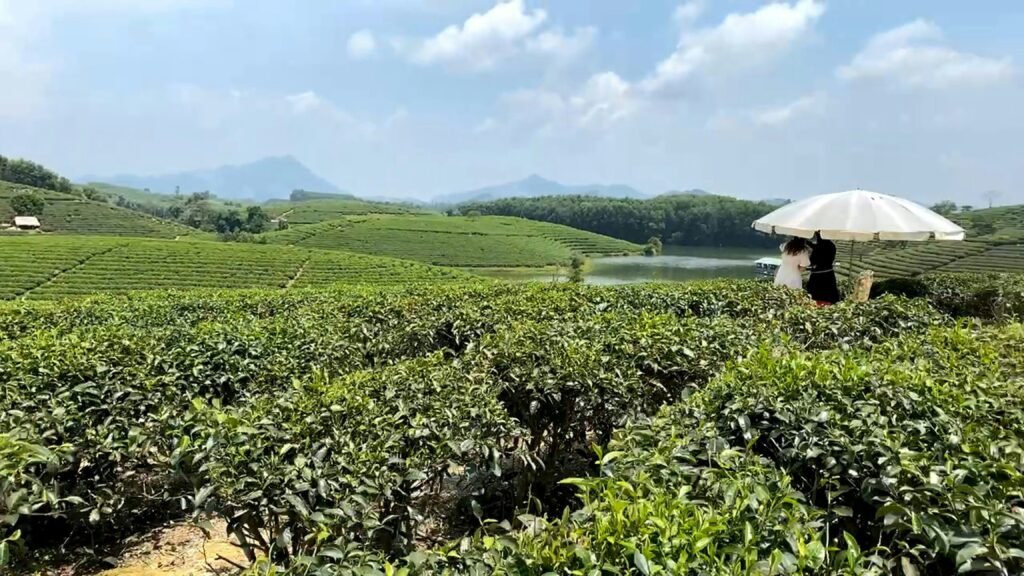
Thái Nguyên province, two hours north of Hanoi, produces the country’s most renowned green tea, with fine, twisted leaves. Further north, in Ha Giang and Yên Bái, centuries-old shan tuyết trees yield highly sought-after wild teas. The Mộc Châu plateau, on the road to the North-West, lines up entire hills of tea bushes, very photogenic. In the South, around Bảo Lộc and Da Lat, quality oolongs are also grown.
From street iced tea to artichoke tea
The most widely drunk tea in Vietnam is probably trà đá, a light green tea served iced, often offered free with a meal on the street. Alongside the noble teas, you also find local infusions: the artichoke tea of Da Lat, mild and slightly sweet, the jasmine teas of the South and various herbal teas sold at markets. They are easy to bring home and make good gifts.
Visiting a plantation or a producer
Several of our itineraries pass close to tea regions. On the road to Ha Giang, a stop with a family harvesting leaves from the ancient trees lets you see the handwork and taste the tea by the hearth. In Mộc Châu, you walk between the rows of tea bushes. In Thái Nguyên, family tea houses explain how the leaves are dried and rolled. Let us know if tea interests you: we will gladly add one of these visits.
Making tea the Vietnamese way
Green tea is made in a small clay teapot, with plenty of leaves and little water. You first rinse the leaves with a splash of hot water that is thrown away, then make very short infusions of a few tens of seconds, served in small cups. The water must not boil, or the tea turns bitter. The same leaves are infused several times, and it is often the second or third cup that people prefer.
Bringing it home
Tea is Vietnam’s best taste souvenir after coffee, and it travels better. Three pointers when buying.Choose whole, rolled leaves over powders and broken leaves. Beware of strong scents when dry : a tea that smells heavenly in the bag has almost always been flavoured. And ask to taste — any serious seller offers it spontaneously; it is even the heart of the transaction.Allow a modest sum for a Thái Nguyên green tea, much more for an old-tree shan tuyết, and a lot more for a real lotus tea. Add an ấm, the small Bát Tràng clay teapot: it costs little and travels safely in a sock.We are happy to add a tasting at a producer’s to an itinerary passing through the mountainous North. It takes an hour, costs almost nothing, and people rarely leave empty-handed.
A Thái Nguyên green for everyday use, an old-tree shan tuyết if you want something impossible to find at home. Authentic lotus tea is superb but expensive, and widely faked — only buy it after tasting.
How can you recognise real lotus tea?
By its scent: the real thing smells faint when dry and opens up in hot water. Industrially flavoured tea does the opposite: it smells heavenly in the bag and disappears when brewed. Price is also a clue: the traditional method needs more than a thousand flowers per kilo.
Can you visit a tea plantation?
Yes, in Thái Nguyên from Hanoi for the classic hills, and in Suối Giàng or on the Hà Giang loop for the hundred-year-old trees. Allow half a day. We are happy to add it to an itinerary in the North.
Is tea always offered?
Almost always, and for free: in a shop, at a craftsman’s, in an office. Accept the first cup, held with both hands. Refusing isn’t rude but closes the conversation before it has started.
Why are the cups so small?
To make you refill. A big cup is drunk alone; ten small ones mean ten shared gestures. The size of the cup is a social choice, not a technical constraint.
Does Vietnamese tea keep well?
Green tea should be drunk within the year, kept away from air, light and odours — above all not next to coffee. Shan tuyết pressed into cakes keeps much longer and even mellows with age.
Putting it into practice
The tours where you experience what this article is about
Audience measurement. We would like to know which pages are useful to you, using Google Analytics. Nothing is stored without your consent, and you can change your mind at any time. Learn more



 Culture & foodFlavours of Vietnam — 10 daysHanoi — Bat Trang — Hue — Hoi An — Saigon — Cai Be10 days / 9 nightsfrom €1,450