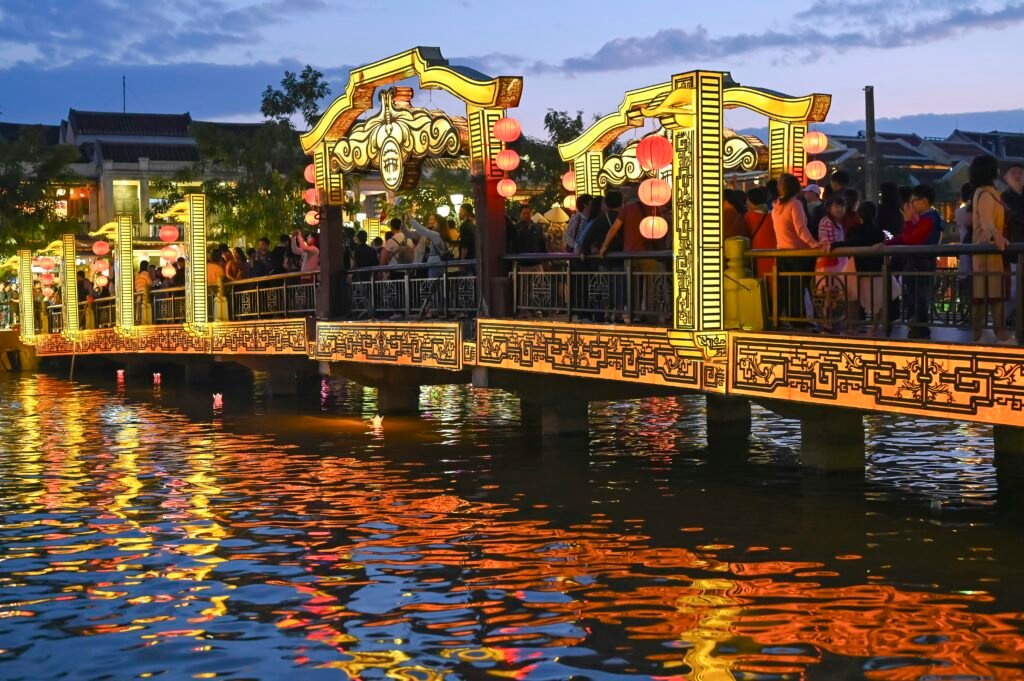
Vietnamese specialities: 25 dishes to try, and where
Morning soups, lunchtime noodles, evening pancakes and egg coffee: the twenty-five dishes we have our travellers taste, with the region, the time and the price.
In brief
The morning dish
Phở, bánh cuốn, xôi
The lunchtime dish
Bún chả in Hanoi, cơm tấm in Saigon
Budget
€1 to €3 a dish on the street
The right reflex
A stall, a single dish, full of Vietnamese people
How to read this list
Vietnamese food is discovered dish by dish, and almost every dish has its time, its region and its specialist stall. Here are the twenty-five we have our travellers taste, grouped by family. For each: what it is, where to eat it, and when. The prices given are street prices; allow two to four times more in a restaurant.
Almost every Vietnamese dish has its time, its region and its stall that serves nothing else.
Soups, from morning to night
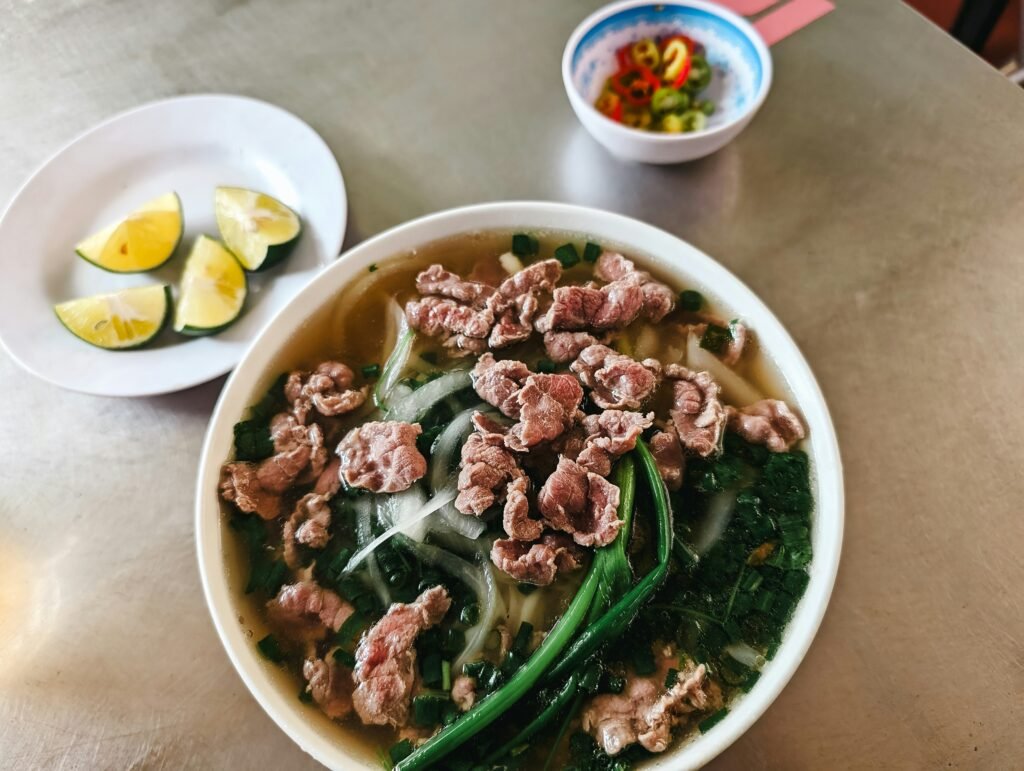
1. Phở. Beef broth scented with star anise, cinnamon and charred ginger, with flat rice noodles and thin slices of meat. Born in the north, it is eaten in the morning. In Hanoi it is served plain; in Saigon, with a plate of herbs and bean sprouts. One to two euros.2. Bún bò Huế. Hue’s great soup: round noodles, beef and pork knuckle in a lemongrass and chilli broth, red and powerful. Eat it in Hue, for breakfast.3. Mì Quảng. Wide rice noodles, yellow with turmeric, with very little broth, prawns, pork, peanuts and a crunchy toasted rice cracker. The dish of Quảng Nam province, around Hoi An and Da Nang.4. Cao lầu. Hoi An’s speciality: thick, firm noodles, barbecued pork and herbs, with a little sauce. The real ones are found in the old town, made by families who have prepared them for generations.5. Bún riêu cua. A tangy soup of tomato and pounded freshwater crab, with fried tofu. Very popular in Hanoi, in the morning and early afternoon.6. Hủ tiếu. The southern soup, of Sino-Cambodian origin: a slightly sweet pork broth, thin noodles, prawns, liver and sometimes squid. It is eaten in Saigon and the Mekong Delta.7. Bánh canh. Thick rice or tapioca noodles in a thick broth, often with crab or fish. Every town in the centre and south has its own version.
Rice and dry noodles
8. Bún chả. Hanoians’ lunch: charcoal-grilled pork served in a lukewarm sweet-and-sour sauce, with rice vermicelli and herbs that you dip yourself. Lunchtime only.9. Cơm tấm. Saigon’s broken rice, served with a grilled pork chop, an egg, a slice of meatloaf and a sweet fish sauce. The everyday dish of the south, from morning to night.10. Bún thịt nướng. A cold salad of vermicelli, grilled pork, herbs, peanuts and fried spring rolls, dressed with fish sauce. Perfect in hot weather.11. Chả cá Lã Vọng. Hanoi’s fish dish, marinated in turmeric and fried at the table in a pan with dill and spring onion. The street that bears its name has made it an institution.12. Bánh cuốn. Very thin steamed rice sheets rolled around minced pork and wood-ear mushrooms, served with fried shallots. The northern breakfast.13. Xôi. Sticky rice, savoury or sweet, sold on the street in the morning, wrapped in a banana leaf. With chicken, mung beans or fried shallots. Less than a euro.
Pancakes, rolls and sandwiches
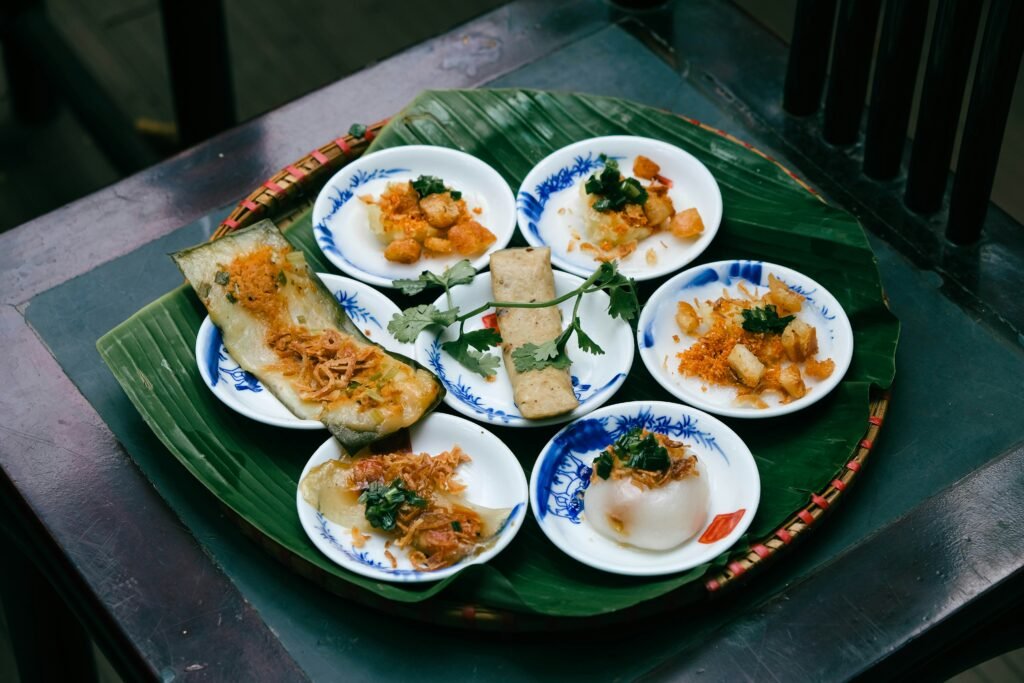
14. Bánh mì. The best-known legacy of the French presence: a very light baguette filled with pâté, cold cuts, pickled vegetables, coriander and chilli. Hoi An and Saigon make the best.15. Gỏi cuốn. Known in the West as fresh spring rolls or summer rolls: soft rice paper, prawns, pork, vermicelli and herbs, dipped in a peanut sauce. A southern speciality.16. Nem rán or chả giò. Fried spring rolls, called nem rán in the north and chả giò in the south. Smaller and crispier than the ones served in the West, they often come with bún chả.17. Bánh xèo. A large crispy pancake made with turmeric and coconut milk, filled with prawns, pork and bean sprouts, which you wrap in mustard leaves and herbs.18. Bánh khọt. The little cousins of bánh xèo, cooked in round moulds, crispy underneath and soft on top, with a prawn in the centre. A speciality of the south coast.19. Nem nướng. Grilled pork skewers, rolled at the table in rice paper with herbs, green mango and a thick sauce. The pride of Nha Trang.20. Bánh bèo. Tiny steamed rice cakes in little saucers, topped with dried shrimp and crispy pork crackling. A typical Hue snack.
Braised and shared dishes
21. Cá kho tộ. Fish braised in a clay pot with caramel, fish sauce and pepper. A family dish, served with white rice and a clear soup.22. Thịt kho trứng. Pork and eggs slowly braised in coconut water and caramel. The Tết dish of the south, also found all year round in canteens.23. Lẩu. Vietnamese hotpot: a pot of broth in the middle of the table, in which everyone cooks meat, seafood, vegetables and noodles. It is shared in the evening, among friends, with beer.
Desserts and drinks
24. Chè. The name for dozens of sweet desserts, hot or iced: beans, tapioca pearls, fruit, jellies and coconut milk, served in a glass. A chè stall often offers twenty kinds.25. Cà phê trứng. Hanoi’s egg coffee: a strong coffee topped with egg yolk whipped with sugar, almost a dessert. Invented in the 1940s, when milk was scarce.
Specialities city by city
Hanoi: morning phở, lunchtime bún chả and egg coffee.
Huế: bún bò Huế, cơm hến and little rice cakes.
Hoi An: cao lầu, bánh mì and chicken rice.
Saigon: cơm tấm, broken rice with grilled pork, and the seafood of District 4.
Mekong Delta: hủ tiếu, elephant ear fish and orchard fruit.
Eating vegetarian
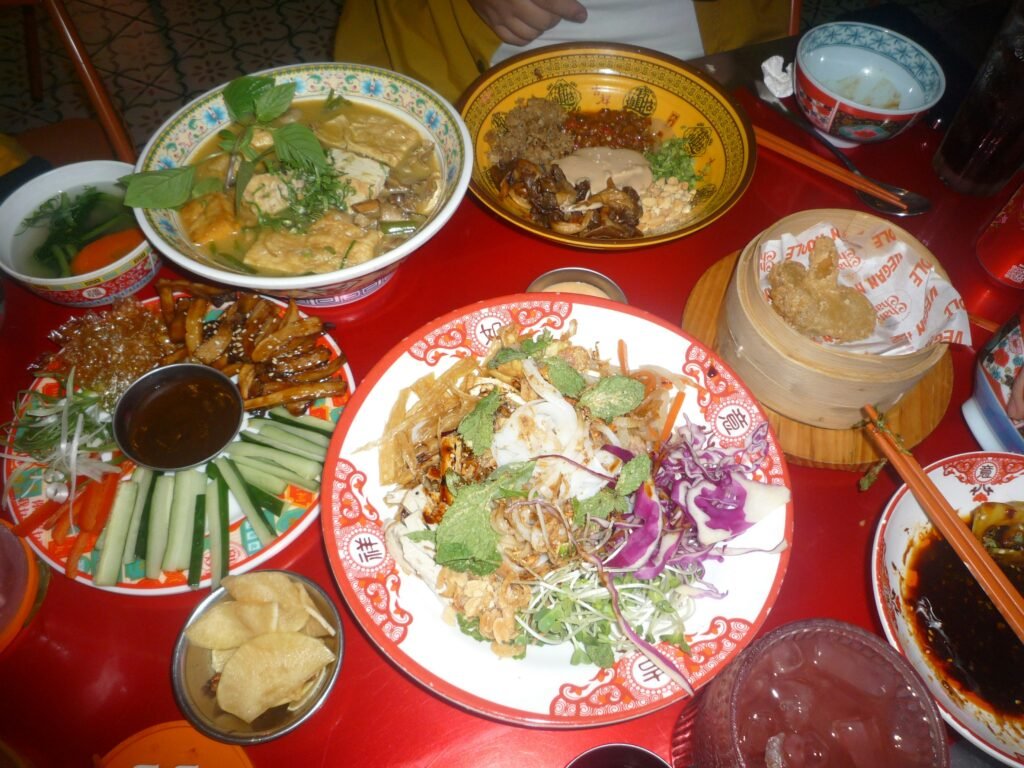
Thanks to the Buddhist tradition, every city has its vegetarian restaurants, recognisable by the word chay. They serve meat-free versions of most of the dishes above, made with tofu, mushrooms and vegetables. On the first and fifteenth days of the lunar month, many Vietnamese eat there themselves.
Our tips for eating well
Follow the clock: phở in the morning, bún chả at lunchtime, lẩu in the evening. Choose stalls that serve only one dish and are full of Vietnamese people. Don’t be afraid of the herbs: they are part of the dish, like the sauce you season yourself. And if you have a special diet or an allergy, let us know: our guides know how to order for you.
Audience measurement. We would like to know which pages are useful to you, using Google Analytics. Nothing is stored without your consent, and you can change your mind at any time. Learn more


 Culture & foodFlavours of Vietnam — 10 daysHanoi — Bat Trang — Hue — Hoi An — Saigon — Cai Be10 days / 9 nightsfrom €1,450