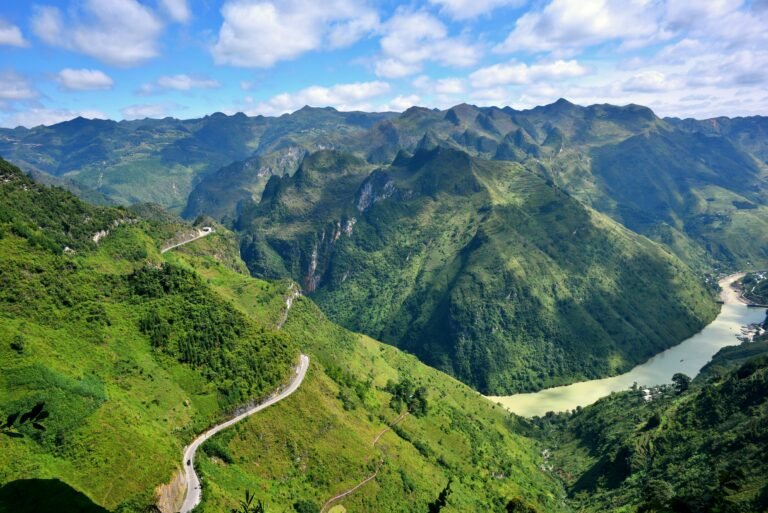
Three connected lakes between forested cliffs, Tay stilt houses, a cave you cross by boat: the quiet north, far from the Sa Pa crowds.
In brief
Best time
March to May and September to November; cold winter nights
Getting there
About 4½ to 5 hrs by road from Hanoi
How long
Two homestay nights
Combine with
Cao Bang and Ban Gioc waterfall 3 hrs away, Ha Giang
Vietnam’s largest natural lake
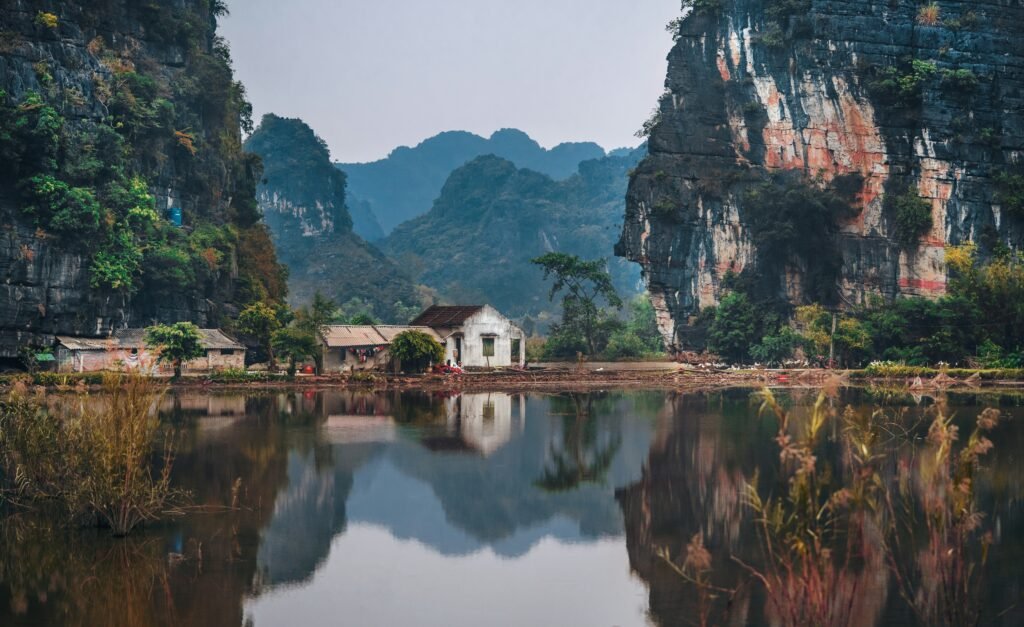
Ba Bể means “three lakes”: three connected basins forming a body of water about eight kilometres long, wedged between forested limestone mountains. It is the largest natural lake in the country, at the heart of a national park created in 1992 and listed as a Ramsar site for its wetlands.There is no major site to tick off here. You come for the still water early in the morning, the mist lifting off the cliffs, the fishermen’s dugouts and the silence. It is the stop we suggest to travellers who found Sa Pa too crowded and want to see the north differently.
You don’t come here to tick off a site, but for the still water early in the morning and the mist lifting off the cliffs.
Staying with the Tay
The lake shores are home to the Tay, one of the country’s largest minorities. In the villages of Pac Ngoi and Bo Lu, many families host travellers in their stilt houses: a large wooden room on the first floor, mattresses under mosquito nets, and dinner with the family.Comfort is simple but clean, and the food is one of the best surprises of the stay: grilled lake fish, smoked pork, bamboo shoots, sticky rice cooked in a bamboo tube. For those who want more privacy, a few houses now offer private rooms with bathrooms.
The lake by boat
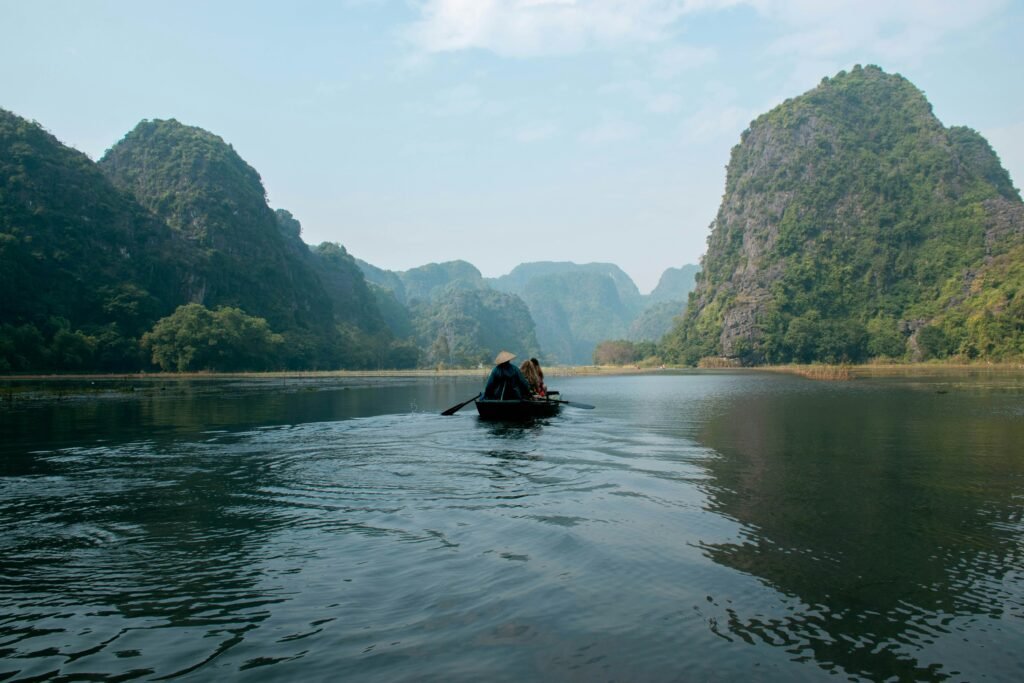
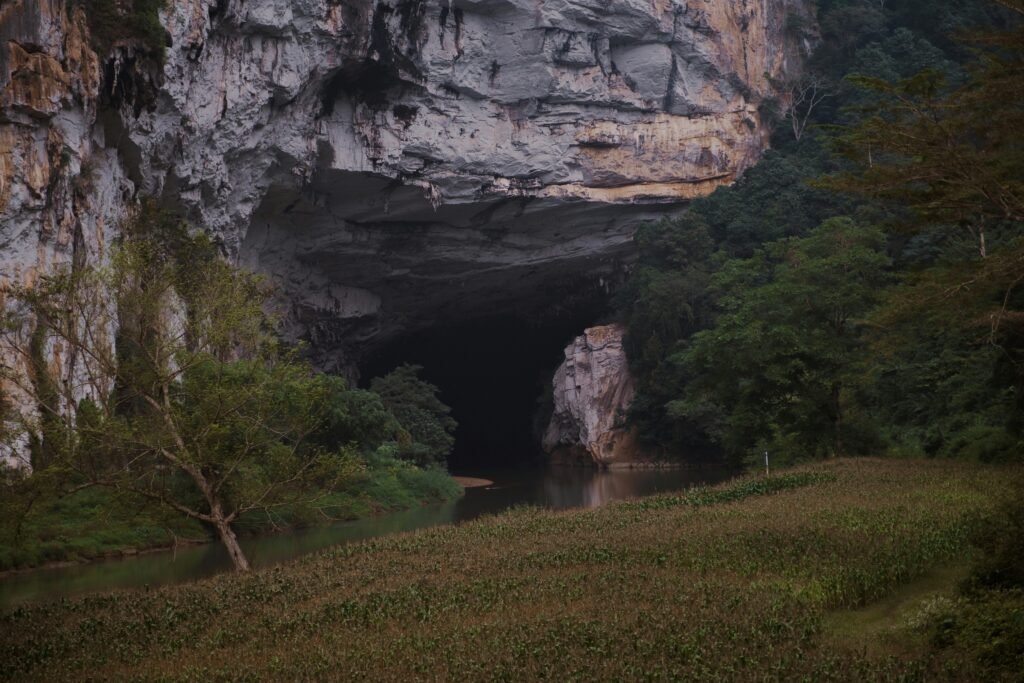
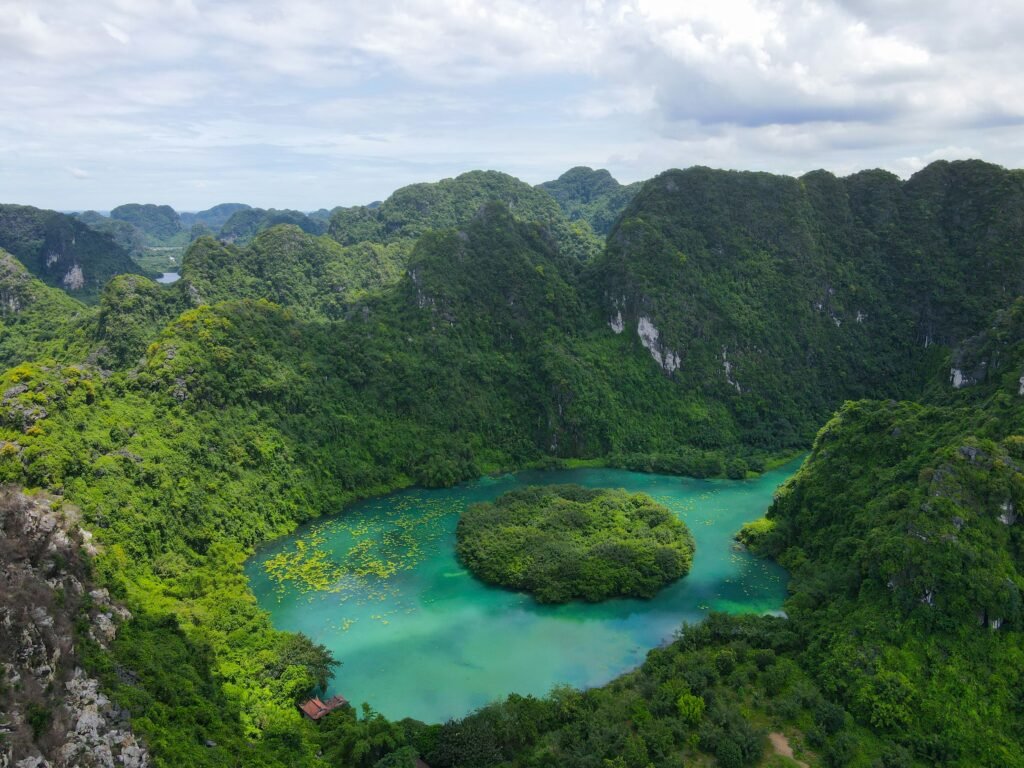
The classic visit is by motorboat, over half a day or a full day. The boat goes up the Nang river and through Puong cave, a natural tunnel several hundred metres long carved into the mountain, where thousands of bats roost. Further on, the Dau Dang waterfall tumbles over a series of rocks; it is best seen after the summer rains.On the lake itself, you stop at the islet of An Ma temple and at Ao Tien, “the fairies’ pond”, a small perched lake reached after a few minutes’ walk. If you can, ask for a kayak outing at sunrise: it is the best time, before the motorboats.
Walking and cycling
Around the lake, paths link Tay and Dao villages between the rice fields and the forest. The walks are easy, two to four hours, and can be done with a local guide who will take you into families’ homes. Cycling is the other good way to get around: the small road along the shore has little traffic, is almost flat, and passes through the villages.
When to come
The best periods are March to May, with green rice fields and mild temperatures, and September to November, when the rice ripens and the skies are clear. Summer is hot and rainy, but it is the season when the waterfalls are at their best and the forest greenest. Winter, from December to February, can be cold at night — under ten degrees — and stilt houses aren’t heated: bring a fleece.
Getting there, and what to combine it with
Ba Bể is about 230 kilometres north of Hanoi, four and a half to five hours by road with a driver. The lake is often a stop on a north-eastern loop: Ba Bể, then Cao Bang and Ban Gioc waterfall three hours further north, before continuing to Ha Giang or heading back to Hanoi.Allow two nights to enjoy the lake without rushing. A single night is possible if Ba Bể is just a stop on the way to Cao Bang, but you will then spend most of the time in the car.
Two days at the lake, step by step
Day one. Leave Hanoi around eight, arriving at the lake in the early afternoon after a lunch stop on the way. Settle into your homestay in Pac Ngoi, then a first walk through the village and along the rice fields to the shore. At the end of the day, the low light on the water is the best moment for photos. Dinner with the family, and often a glass of rice wine offered by the head of the household.Day two. Kayaking at sunrise if the weather allows, then the big boat trip: the Nang river, Puong cave, Dau Dang waterfall, An Ma temple and the fairies’ pond. Back for lunch, a nap, then a loop by bike or on foot to the Dao villages on the east shore. Second night by the water.On the third morning, you set off for Cao Bang or Hanoi. With three nights, you add a real day of walking between the hamlets, with lunch with a family.
The best moment of the day is the first: still water, mist, and no engines.
Good to know before you go
ATMs are rare around the lake: bring cash for drinks, small purchases and tips. The phone network works in the villages, less well on the water and in the caves.Bring shoes that grip on wet steps, a light rain jacket in summer, and mosquito repellent for dusk. In stilt houses, you take your shoes off before going upstairs: a pair of easy-to-remove sandals makes life simpler.Finally, Ba Bể works very well with children from six or seven: the boat, the cave and the homestay night often make a bigger impression on them than the major sites.
Eating with the Tay
Around the lake, Tay families serve simple, generous food: lake fish grilled or in soup, bamboo shoots, forest vegetables, sticky rice cooked in bamboo and smoked pork hung above the hearth. The meal is shared, sitting on mats, often with a homemade rice spirit that you will gladly be offered to taste.
With children
Ba Bể is a stop families really enjoy: the stilt house, the boats, kayaking on the lake, the cave you cross by boat and the village animals. The journey from Hanoi is long, about five hours: break it up with stops and plan at least two nights there.
Photographing the lake
The lake is most beautiful at daybreak, when mist floats on the water and the fishermen’s boats head out. In the evening, the low light on the limestone cliffs is superb from the village jetties.
Our agency’s view
Ba Bể won’t suit those who need a fully comfortable hotel every night, nor those with only ten days for the whole country. On the other hand, for a second trip, for curious families, or for those who want an authentic north without the crowds, it is one of our favourite stops.
Audience measurement. We would like to know which pages are useful to you, using Google Analytics. Nothing is stored without your consent, and you can change your mind at any time. Learn more


 Off the beaten trackHa Giang off the beaten track — 9 daysHanoi — Ha Giang — Dong Van — Cao Bang — Ban Gioc — Hanoi9 days / 8 nightsfrom €1,390