Vietnamese nature: karst, caves and a sinking delta
Underground passages among the largest in the world, limestone peaks at sea as on land, and a delta sinking faster than the sea is rising. What Vietnam really has to show, and what it can no longer offer.
In brief
Relief
Karst in the north and centre, delta in the south, forest in the highlands
The most spectacular
Phong Nha and its underground, UNESCO-listed
What is changing
The Mekong Delta is sinking and turning salty
Wildlife
Not very visible: aim for birds and primates, with a guide
A land of karst, delta and forest
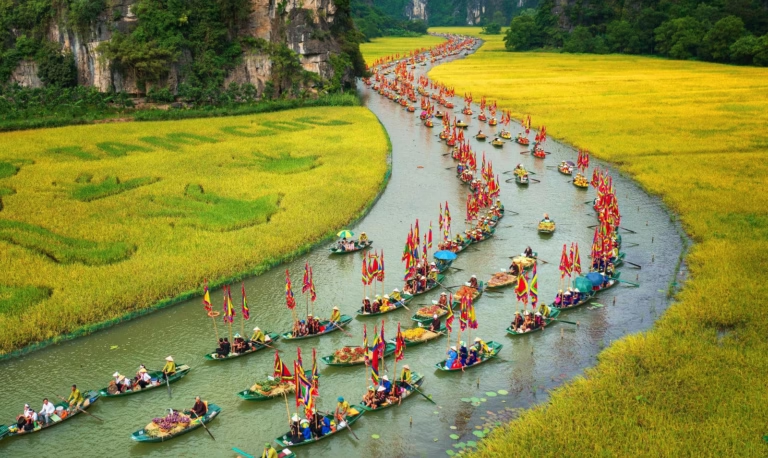
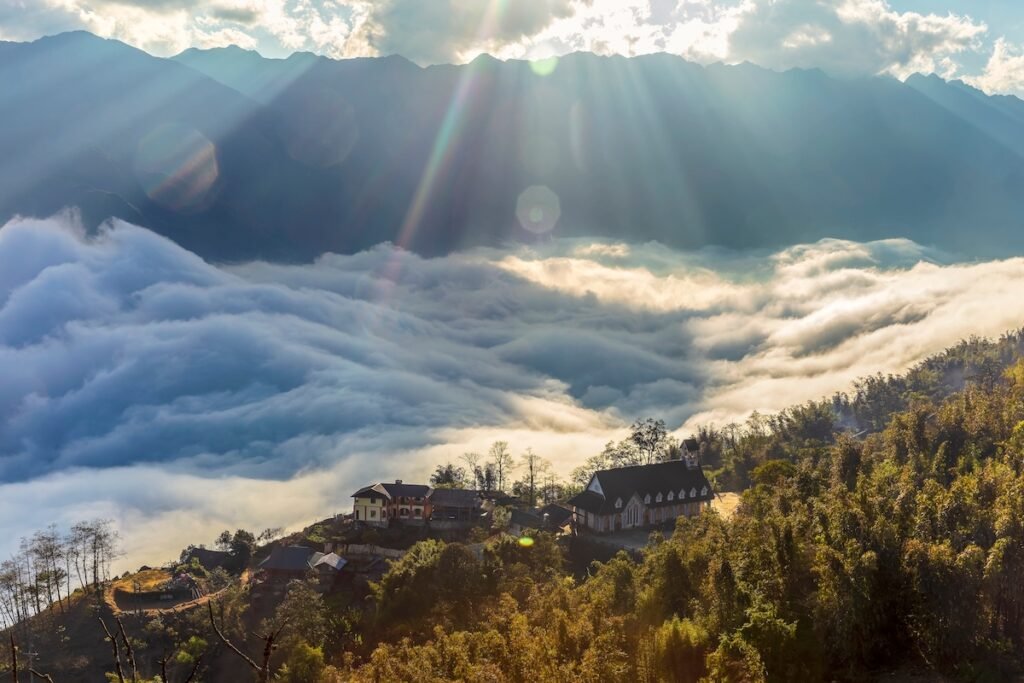
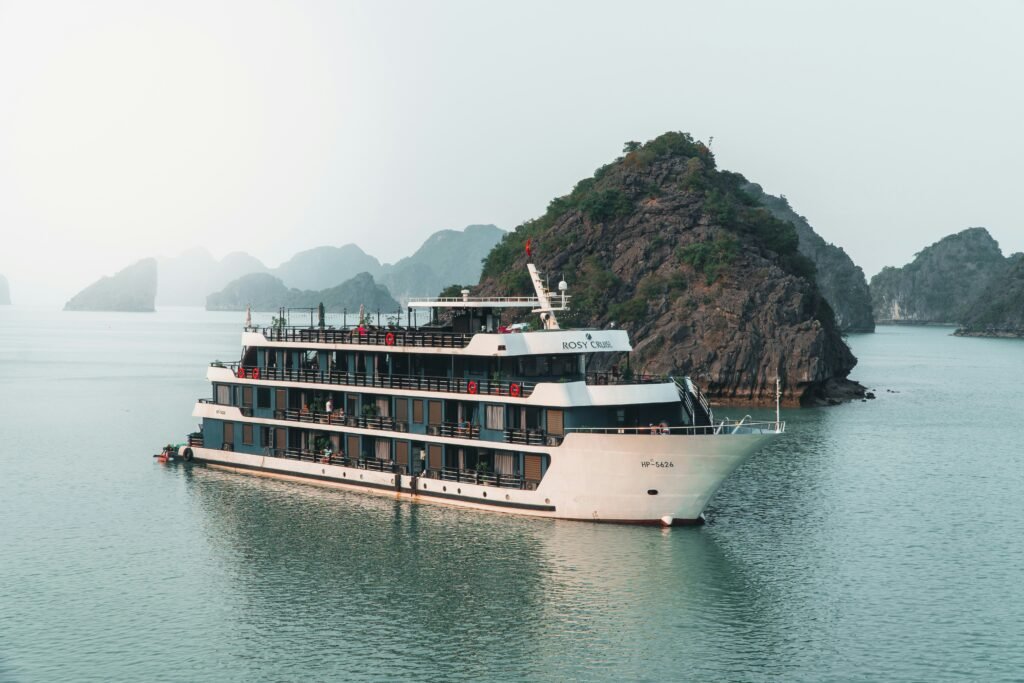
Vietnam fits into a 1,650-kilometre strip crossing two climate zones, which gives it a diversity out of all proportion to its area. Three great landscapes structure the country and explain almost everything else, including food and housing.Karst — those vertical limestone peaks — dominates the North. It forms Halong and Lan Ha bays at sea, its land version at Ninh Binh, and the cave-riddled plateaus of Hà Giang and Cao Bang, both UNESCO Global Geoparks. It is a rock that hollows out: Vietnam has some of the largest underground networks on the planet.The deltas hold the two ends: the Red River in the north, the Mekong in the south, both flat, densely populated, criss-crossed with canals. They feed the country and are home to half its population.The Annamite Range, finally, runs along the Lao border and separates the Centre from the rest. It is what reverses the seasons between Huế and Hanoi, and it was in its forests that several large mammals unknown to science were discovered in the 1990s — including the saola, never since observed alive by a scientist.
Phong Nha, the most spectacular underground in Asia
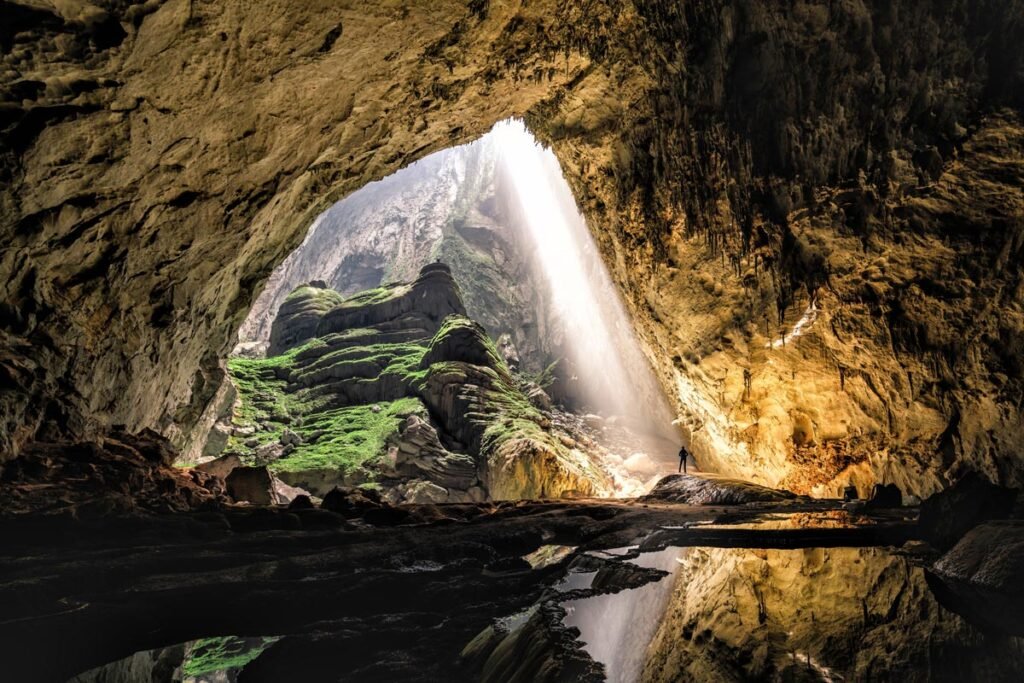
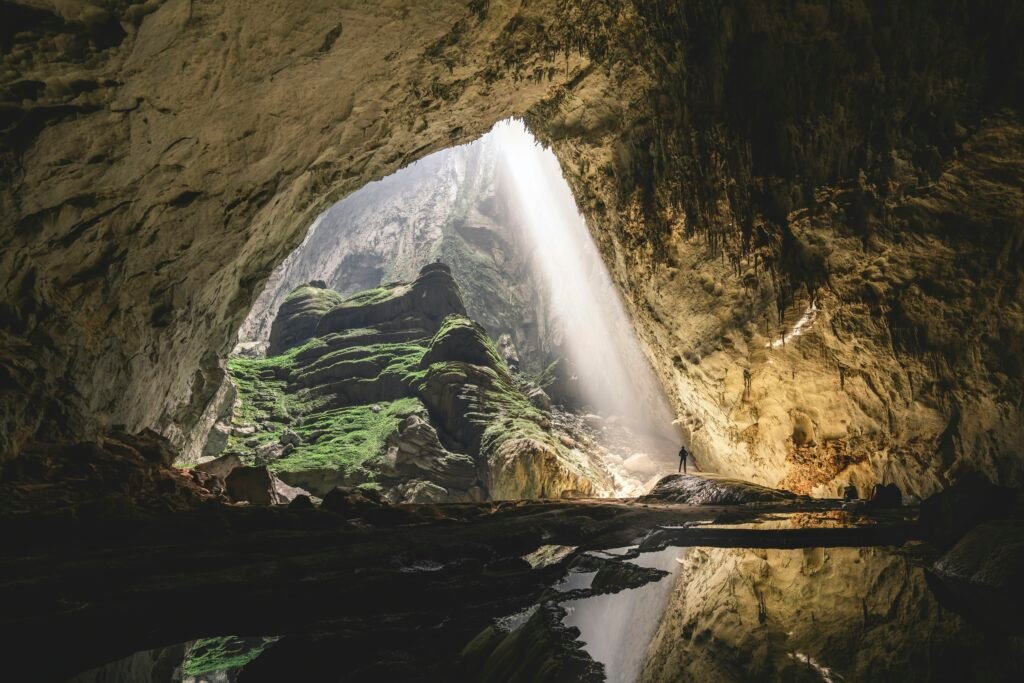
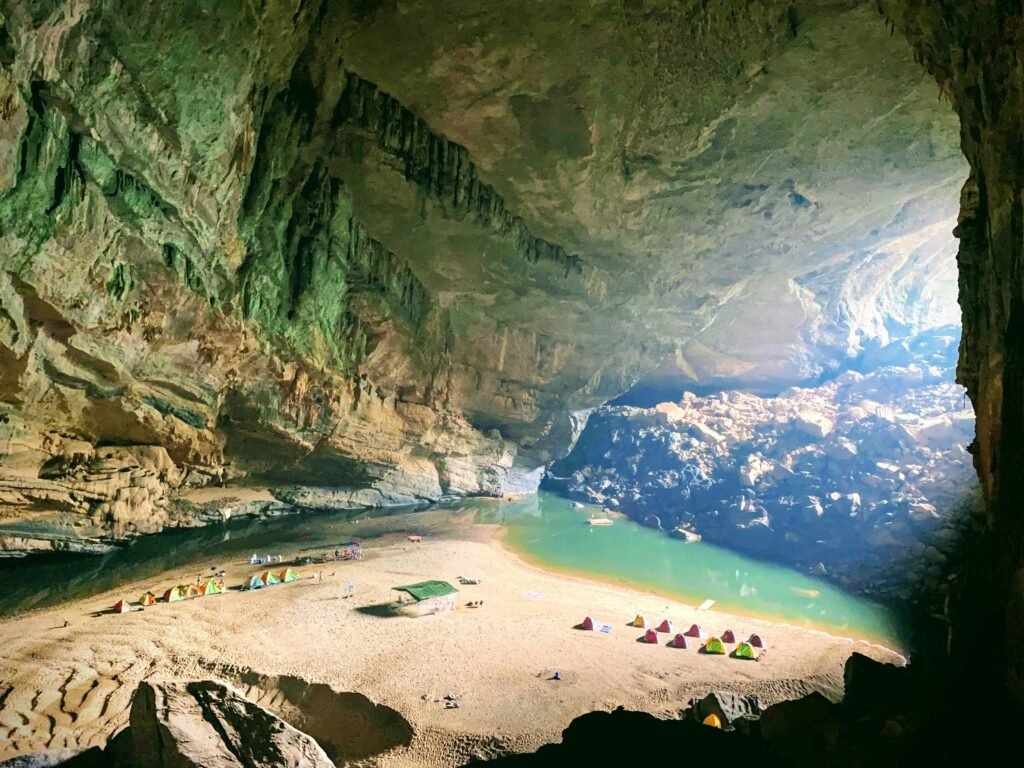
Phong Nha-Kẻ Bàng national park, a World Heritage Site, contains several hundred caves, many still unexplored. The most famous, Sơn Đoòng, is among the largest known underground passages in the world: it contains its own forest and its own clouds, where the roof has collapsed.It can only be visited on a multi-day expedition, with a single operator, a very limited number of permits a year and a price of several thousand euros. It isn’t a visit, it is an expedition, and it is booked a year ahead.The good news: the park’s other caves are accessible to everyone. Paradise Cave is explored on a walkway, Phong Nha by boat, Dark Cave in a wetsuit and headlamp. Two nights on site are enough, and the region remains far less crowded than Halong Bay for an impression at least as strong.
The Mekong Delta is sinking
It is the subject rarely talked about that will determine the face of the South in thirty years. The Mekong Delta is subsiding, faster than the sea is rising, and for largely human reasons: massive groundwater pumping, and dams built upstream that hold back the sediment that rebuilt the delta every year.The consequences are already visible. Salt water pushes further and further up the canals during the dry season, forcing rice farmers to change crops or switch to shrimp. Banks collapse. Whole villages have been moved.We don’t say this to darken a trip, but because it changes the way you look. When you see a floating market, know that it is declining as much because of bridges and trucks as anything else. And when a host talks to you about the salinity of their water, it won’t be small talk about the weather.
The delta isn’t retreating before the sea. It is sinking, because water is pumped from beneath it and its sediment is held back upstream.
Seeing wildlife, and on what terms
Let us be direct: Vietnam is not a wildlife destination. Hunting pressure and habitat loss have emptied much of the forest of its large mammals. The country’s last Javan rhinoceros was killed in 2010. Promising tigers or elephants would be a lie.What really exists and is worth the detour: primates, with several endemic species of langur that can be observed on Cát Bà and at Cúc Phương; birds of the delta, notably in the mangrove reserves and the “bird gardens” of the South; and the green turtles of Côn Đảo, which lay their eggs between June and September under the supervision of park rangers.On the other hand, we take nobody to places offering elephant rides, animal shows or civet farms for coffee. It is a firm position and it sometimes costs us a booking.
The national parks to know
Vietnam has some thirty national parks. Cuc Phuong, near Ninh Binh, is the oldest, created in 1962, with primary forest and a primate rescue centre. Phong Nha-Ke Bang, a UNESCO World Heritage Site, is home to the country’s largest caves. Bach Ma, above Huế, offers cool high-altitude trails and views over the coast. In the South, Cat Tien is one of the best places to hear gibbons at dawn and watch birds.
The monsoon, the engine of the landscapes
Vietnam’s landscapes are shaped by the monsoon. Summer rains fill the rice fields of the North and swell the Mekong, which every autumn floods part of the delta and leaves the silt that makes it so fertile. On the central coast, autumn rains and typhoons set the rhythm of village life. Understanding this cycle explains why the same region can be unrecognisable from one season to the next.
Birdwatching
Bird lovers will find some very fine sites in Vietnam. In the Mekong Delta, Tram Chim park welcomes sarus cranes, now rare, in the dry season. The Van Long marshes, near Ninh Binh, and the coastal mangroves are rich in herons and kingfishers. Bring binoculars: even on a classic tour, they transform a boat trip.
Seeing nature without harming it
Choose operators that limit group sizes, avoid animal shows and selfies with wild species, and do not bring back coral, shells or animal products. In caves and parks, stay on marked trails.
In one sentence
Karst in the North, caves in the Centre, delta in the South: in two weeks, Vietnam takes you through three very different natural worlds, provided you choose the right season for each.
Where to go, depending on what you are looking for
Caves and forest — Phong Nha, two nights, between Huế and the North.
Karst at sea — Lan Ha Bay rather than the heart of Halong: the same landscape, ten times fewer boats.
Karst on land — Ninh Binh by rowing boat, a day from Hanoi.
Terraced rice fields — Pu Luong, two harvests a year; Mù Cang Chải and Hoàng Su Phì in late September.
Mangrove and birds — the Mekong Delta, early in the morning, by rowing boat rather than motorboat.
Island and sea — Côn Đảo, national park and empty beaches, three nights minimum.
Season matters more here than elsewhere: the Phong Nha caves partly close in floods, the terraces are golden for only a few weeks, and the turtles lay only in summer. Tell us what you want to see, and we will tell you when to come.
No, and we prefer to say so. Hunting and habitat loss have emptied much of the forest. What is worth the detour: the primates on Cát Bà and at Cúc Phương, the birds of the delta, and the green turtles of Côn Đảo between June and September.
Can you visit Sơn Đoòng cave?
Only on a multi-day expedition, with a single operator, a very limited number of permits each year and a budget of several thousand euros. You need to book about a year ahead. The park’s other caves are accessible to everyone.
Halong or Lan Ha?
Lan Ha, without hesitation: the same karst landscape with a fraction of the boats. The heart of Halong Bay is a victim of its own success, especially at the times when the groups converge.
Is the Mekong Delta under threat?
It is subsiding, faster than the sea is rising, because of groundwater pumping and upstream dams that hold back sediment. Salt water is pushing up the canals and some rice farmers have switched to shrimp. You can see it and have it explained on the spot.
Do you offer activities with animals?
We take nobody on elephant rides, to animal shows or to civet farms for coffee. Supervised turtle watching on Côn Đảo and primates at a conservation centre, however, yes, gladly.
What is the best season for the landscapes?
The terraced rice fields are golden in late September in the North-West, and twice a year in Pu Luong. The Phong Nha caves can be visited outside flood times. Côn Đảo from March to July, with turtles from June to September. Tell us what you want to see.
Putting it into practice
The tours where you experience what this article is about
Audience measurement. We would like to know which pages are useful to you, using Google Analytics. Nothing is stored without your consent, and you can change your mind at any time. Learn more

 Off the beaten trackThe secret Centre: Kon Tum, Quy Nhon and Phong Nha — 12 daysHanoi — Phong Nha — Huế — Kon Tum — Quy Nhon — Saigon12 days / 11 nightsfrom €1,690