School in Vietnam: a thousand years of exams and pressure still intact
Everywhere you will see children in uniform and red scarves. Behind this very ordinary image lie a thousand years of a system in which study was the only way up — and academic pressure that Vietnamese families now talk about openly.
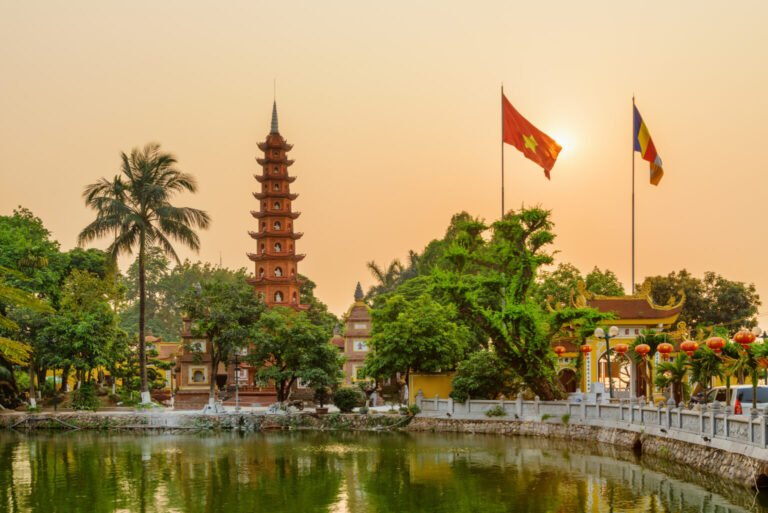
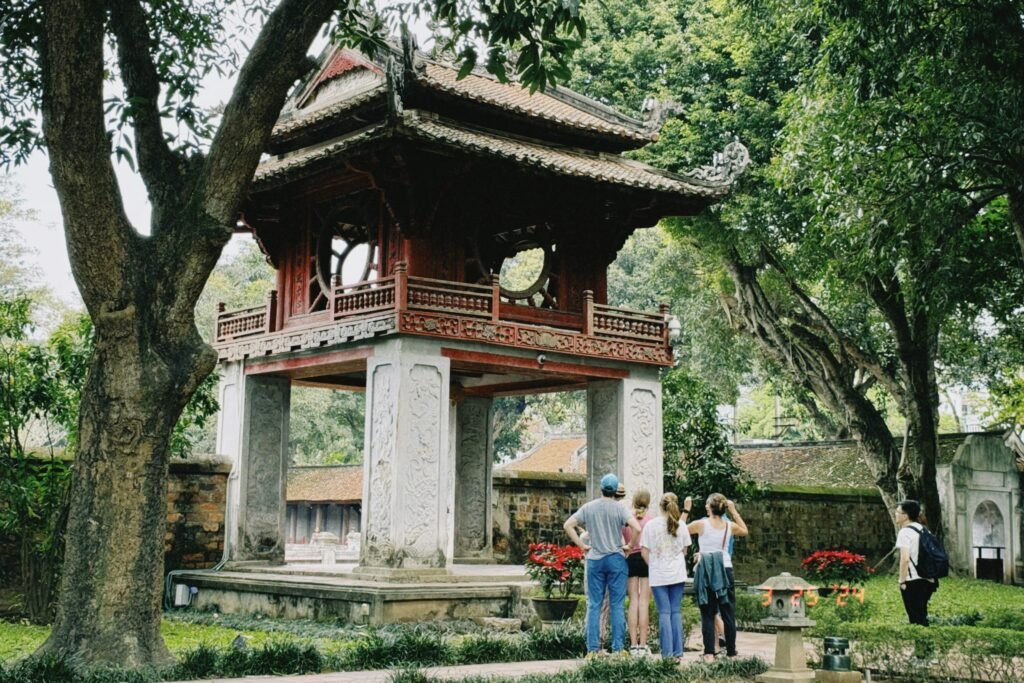
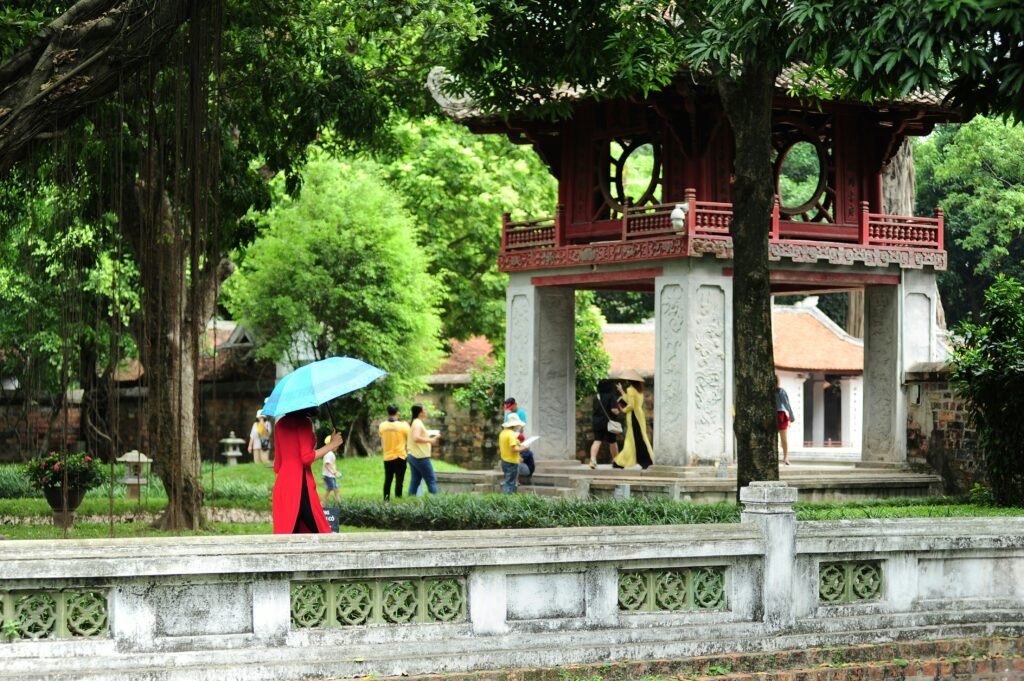
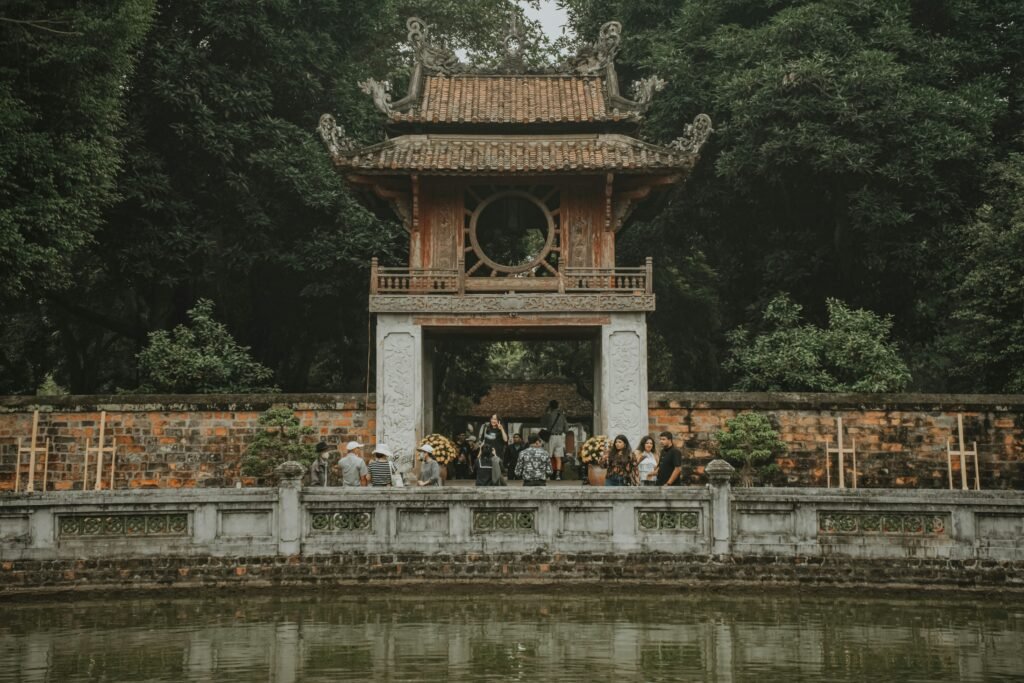
The Temple of Literature is not a temple
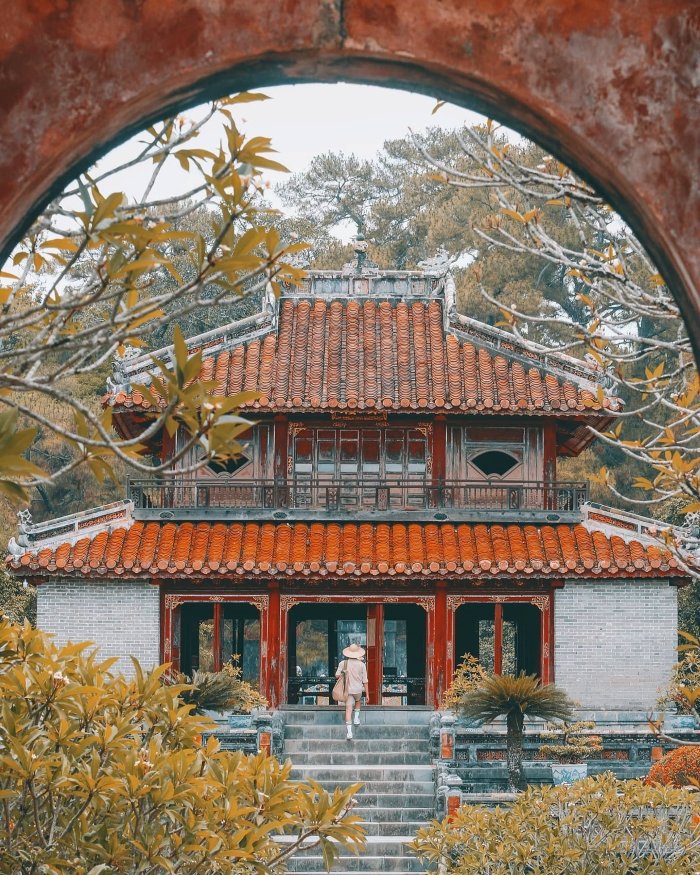
Founded in 1070 in Hanoi, Văn Miếu is dedicated to Confucius, but from 1076 it housed the Quốc Tử Giám, “the college for the sons of the nation”: the country’s first university. Mandarins — in other words the entire administration — were trained there for seven centuries.In the third courtyard stand eighty-two stone steles carried by turtles. Each records the name, age and home village of those who passed a given examination, between 1442 and 1779. It is a roll of honour spanning three centuries, inscribed on UNESCO’s Memory of the World register, and above all the physical proof of an idea: that a peasant’s son’s name could be carved in stone next to a mandarin’s son’s.
A three-century roll of honour carved in stone, where a peasant’s son’s name sits beside a mandarin’s son’s.
How the examinations worked
The system had three tiers. The regional examination, thi hương, was held every three years in the provincial capitals; those who passed could teach or hold minor posts. Next came the court examination, thi hội, then the final examination before the emperor himself, thi đình, which ranked the laureates.The tests lasted several days. Candidates set themselves up in bamboo huts on a patch of waste ground, with their ink, mat and rice, under supervision. They had to compose in classical Chinese, master the Four Books and the Five Classics, write regular poems and draft political essays.The pass rate was around one per cent. Some sat ten times, up to the age of sixty. The last mandarin examination was held in Hue in 1919; the colonial administration then replaced it with the French system.
The invention of quốc ngữ, the alphabet that changed everything
Until the 20th century, Vietnamese was written with adapted Chinese characters, chữ nôm, which first required mastery of Chinese: a few years of study to read, a lifetime to write correctly. The Latin alphabet developed in the 17th century by missionaries, including the Jesuit Alexandre de Rhodes from Avignon, remained confined to Catholic circles for two and a half centuries.Its general adoption, in the early 20th century, had a massive effect: you could learn to read in a few months. Nationalist movements seized on it, created free schools, published newspapers. Vietnam’s literacy rate now exceeds ninety-five per cent, one of the highest in the region for a country at this income level.
A Vietnamese schoolchild’s day
School starts at seven or a quarter past. Primary classes often have forty to fifty pupils; uniform is compulsory, white shirt and red scarf for members of the Young Pioneers organisation, which covers almost all children.In many schools, the day is split by a long break: children have lunch and a nap on site, often on a mat on the classroom floor. Lessons resume around half past one.Then come the extra classes, học thêm, often given by the teachers themselves after school and paid for by the families. It is an unofficial institution, regularly denounced and never abolished, which weighs heavily on budgets and on children. Many get home at seven or eight in the evening.
The university entrance exam
The end-of-secondary-school exam, in June, serves as both the school-leaving certificate and the university entrance exam. The ranking decides the field of study and the institution, and places at prestigious universities come down to a few tenths of a point.The scene is the same every year across the country. Parents wait outside the gates during the exams. Families go to the Temple of Literature, or to the local temple, to leave offerings and rub the heads of the stone turtles — a practice now prevented by barriers, precisely because it was too popular. Thousands of candidates leave incense sticks.This pressure is recognised as a public health problem. Every summer the Vietnamese press publishes investigations into school anxiety, and successive reforms try to lighten the curriculum. It also explains the results: in the international PISA assessments, Vietnam scores in maths and science on a par with countries whose income per head is ten times higher.
The uniform, the red scarf and the start of the school year
On 5 September, the whole country celebrates the start of the school year at the same time, with a ceremony in every school. Pupils wear uniforms, white shirt and dark trousers or skirt, and many wear the red scarf of the Young Pioneers. In high schools, especially in Huế and the South, girls often wear the white áo dài. In the morning, the streets fill with parents dropping their children off by motorbike, sometimes three or four on the same scooter.
Evening classes
After school, extra classes often begin, the học thêm: mathematics, English, exam preparation. Many Vietnamese children have very long days, and families spend a large share of their budget on education. English centres are everywhere in the cities, and you may be approached by students who want to practise with a foreigner.
Teachers, respected and celebrated
20 November is Teachers’ Day. Pupils and their parents give flowers and gifts to their teachers, and former pupils visit them, sometimes decades later. It is a direct legacy of the Confucian respect for the teacher, which you also find at the Temple of Literature.
School as seen by the traveller
You do not visit a Vietnamese school without permission, but you come across school everywhere: pupils on bicycles in the early morning, high school students revising in cafés, graduates in gowns posing for their degree photos at the Temple of Literature, especially in spring and early summer. These scenes say a lot about the place of study in families. If schooling interests you, we can sometimes arrange a meeting with an association that supports children’s education in the mountains.
What this says about the country
Three consequences you will notice without necessarily linking them to school.
Respect for teachers is real and ritualised. On 20 November, Teachers’ Day, pupils and former pupils bring flowers — florists have one of their best days of the year.
Families invest heavily in education, including very modest ones. A fishing family will pay for private lessons before buying a new scooter.
The country exports students. France hosts several thousand of them, and Vietnam regularly ranks among the leading nationalities of foreign students in science subjects.
When a guide talks to you about their children, the conversation will turn to school in under two minutes. It isn’t politeness: it is the subject.
Why do Vietnamese schoolchildren wear a red scarf?
It is the badge of the Young Pioneers, the youth organisation linked to the Party, which almost all primary and lower-secondary children join. It is worn with the uniform.
What is the Temple of Literature?
Vietnam’s first university, founded in Hanoi in 1070 and 1076. Mandarins were trained there for seven centuries. Its eighty-two steles record the names of those who passed the examinations between 1442 and 1779.
Is French taught in Vietnam?
Marginally. Some French bilingual classes survive in a few schools in Hanoi, Hue and Ho Chi Minh City, supported by French cooperation, but English is by far the first foreign language.
Why do Vietnamese people write in the Latin alphabet?
The alphabet, developed in the 17th century by missionaries including Alexandre de Rhodes, replaced Sino-Vietnamese characters in the early 20th century. It lets you learn to read in a few months instead of several years.
What are extra classes?
The học thêm: paid lessons given after school, often by the pupil’s own teachers. The practice is very widespread, expensive for families and regularly criticised in the press.
Can you visit a school during your trip?
Yes, at some rural schools we work with, outside lesson times and without interrupting the class. We avoid school visits sold as an attraction, which disturb the children more than they give them.
Putting it into practice
The tours where you experience what this article is about
Audience measurement. We would like to know which pages are useful to you, using Google Analytics. Nothing is stored without your consent, and you can change your mind at any time. Learn more
 The essentialsVietnam in 15 daysHanoi — Pu Luong — Ninh Binh — Lan Ha Bay — Hue — Hoi An — Saigon — Mekong Delta15 days / 14 nightsfrom €2,070