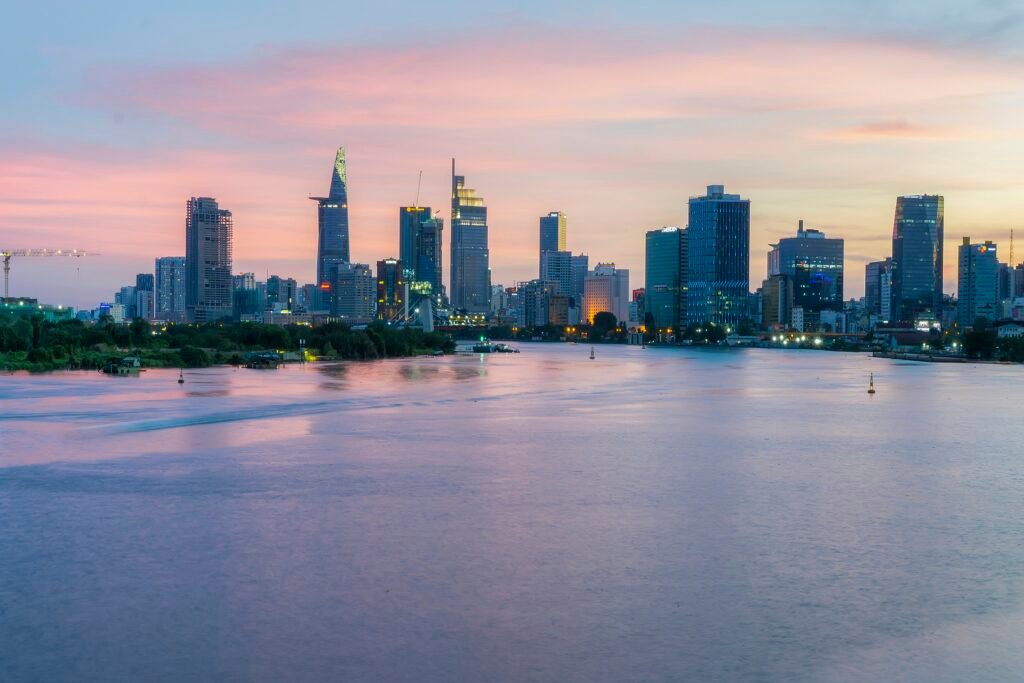
People often think Vietnamese cuisine comes down to two dishes: phở and spring rolls. That is like summing up France as steak and chips. Each region tells its geography and its history on the plate.
In brief
The North
Restraint: clear broths, little sugar, lots of herbs
The Centre
The court cuisine of Huế, more complex and spicier
The South
Sugar, coconut milk and the abundance of the delta
The exchange
The bánh mì and coffee on one side, the spring roll that went to France on the other
The North: restraint
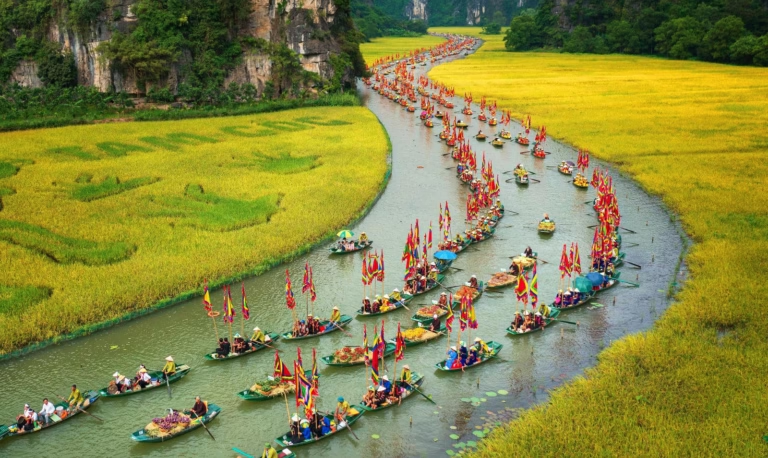
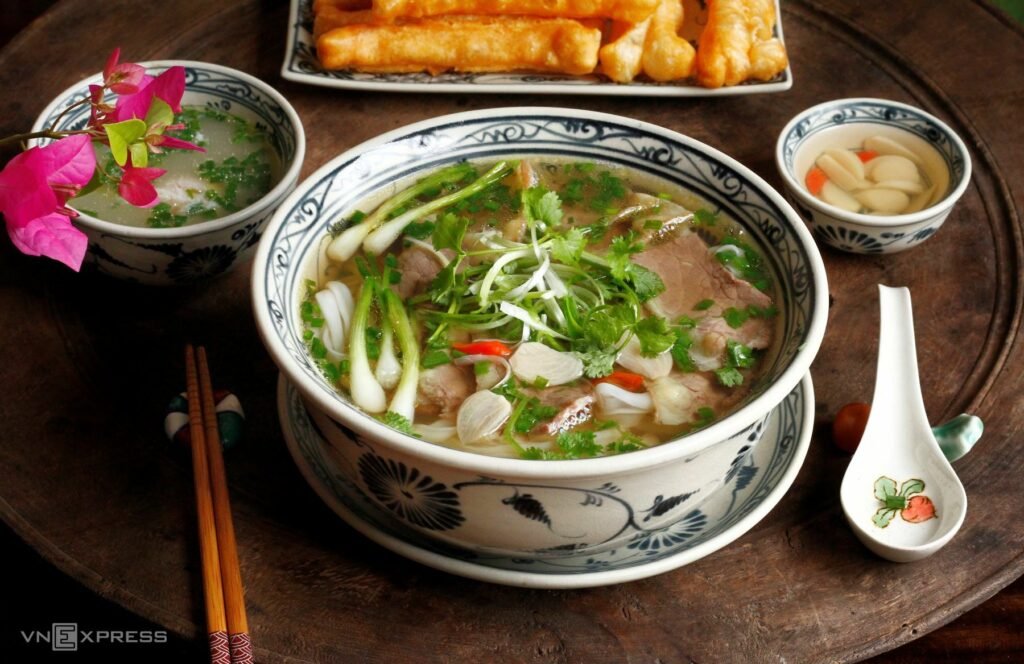
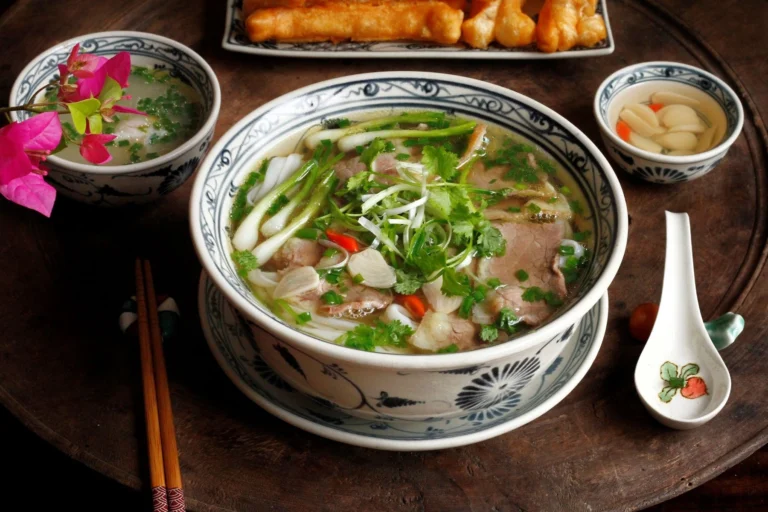
Little chilli, little sugar, lots of herbs. The cuisine of the Red River Delta is the oldest in the country and the most frugal: it was shaped by a four-season climate, real winters and centuries of scarcity. Nothing is masked, because there was never anything to mask with.Hanoi phở is drunk clear, almost austere: a bone broth simmered for eight hours with charred ginger, star anise and cinnamon, and nothing else — no hoisin sauce, no sriracha, no mountain of bean sprouts. Those additions are an invention of the South, then of the diaspora. A Hanoian who sees you sweeten your phở won’t say anything, but he will think it.Bún chả is eaten at noon and only at noon, sitting on a plastic stool, dipping cold noodles into a bowl of charcoal-grilled pork. Bánh cuốn — steamed rice rolls ladled onto a cloth stretched over a pot — are assembled in front of you in fifteen seconds each.And egg coffee, invented in 1946 at the Metropole by a bartender who had run out of fresh milk, remains the city’s signature: an egg yolk whipped with sugar into a sabayon on top of piping-hot black coffee. It looks like a mistake and it is a dessert.
The Centre: imperial complexity
Huế fed a court for a hundred and forty-three years. The kitchens of the Imperial City had to prepare dozens of different dishes every day, served in tiny portions so that one man could taste everything. That constraint produced a cuisine unique in Asia: miniature, codified, obsessively presented.You recognise it by the translucent rice cakes served three or four bites at a time — bánh bèo in their little dishes, bánh nậm folded in banana leaf, bánh bột lọc where you can see the shrimp through the tapioca dough. Nothing is copious and everything takes time.It is also the only region where chilli goes into the dish in the kitchen, rather than into the little bowl placed beside it. Bún bò Huế — beef, lemongrass, fermented shrimp paste — is a festive dish disguised as breakfast, and it has none of the gentleness you expect from a Vietnamese soup.Finally, Huế’s Buddhist vegetarian cuisine is among the most refined in Asia. It is served in pagodas on full-moon and new-moon days, and it imitates meat dishes with unsettling virtuosity — out of respect for the guests, it is said, so that none feels deprived.
In Huế, you don’t cook to feed people: you cook to impress an emperor.
The South: generosity
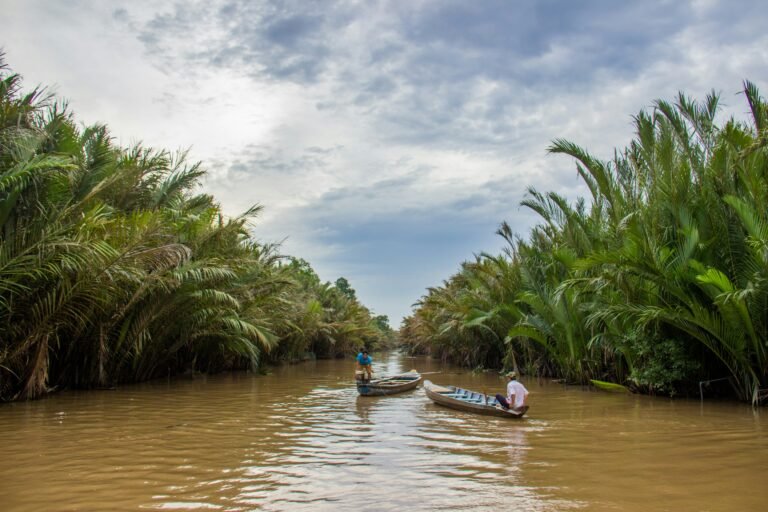
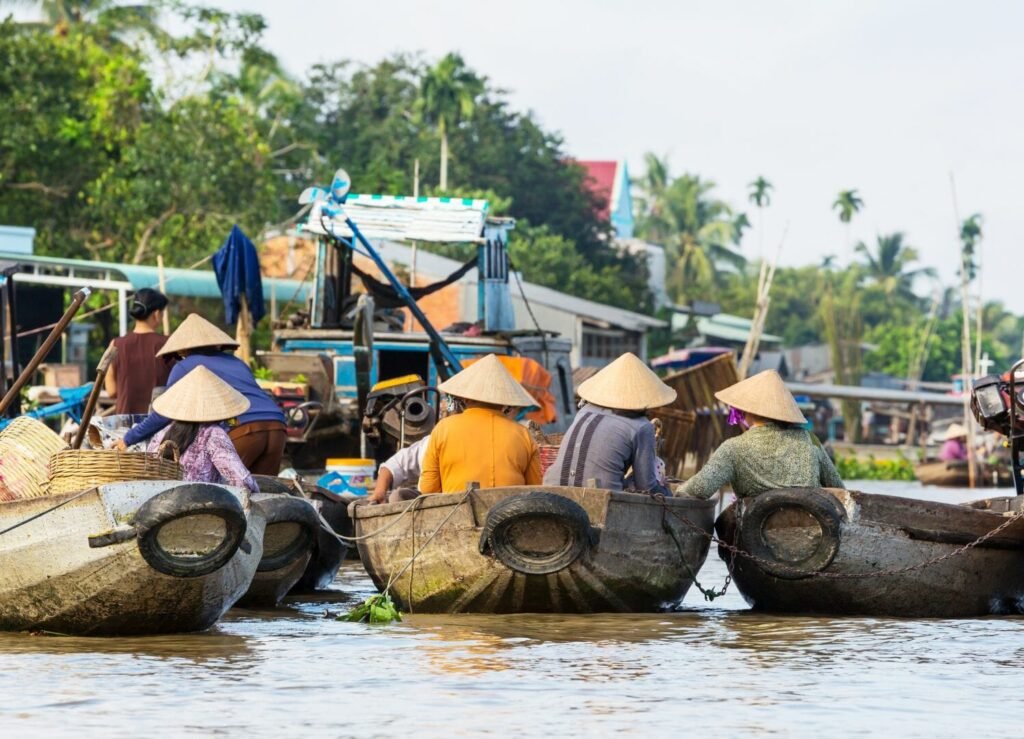
The Mekong Delta gives everything, all year round. Three rice harvests, permanent orchards, river fish in abundance: the cuisine of the South never had to economise, and you can taste it. It is sweet — palm sugar goes into everything, even savoury dishes —, herbal, exuberant.The table is organised around a mountain of fresh herbs placed in the middle: mint, perilla, sawtooth coriander, Thai basil, shredded banana flower. It is not a garnish. You build your own mouthful, herb by herb, and two diners at the same table don’t eat exactly the same dish.It is the region of cơm tấm, the broken rice once served to the poorest because broken grains could not be sold, now Saigon’s emblematic breakfast. And of hủ tiếu, a legacy of the Chinese merchants of Chợ Lớn, eaten dry or as a soup depending on your mood.Khmer influence is everywhere in the border provinces: tamarind, turmeric, fermented fish. The South has been Vietnamese for only three centuries, and its cuisine remembers it.
What Vietnam owes to France, and vice versa
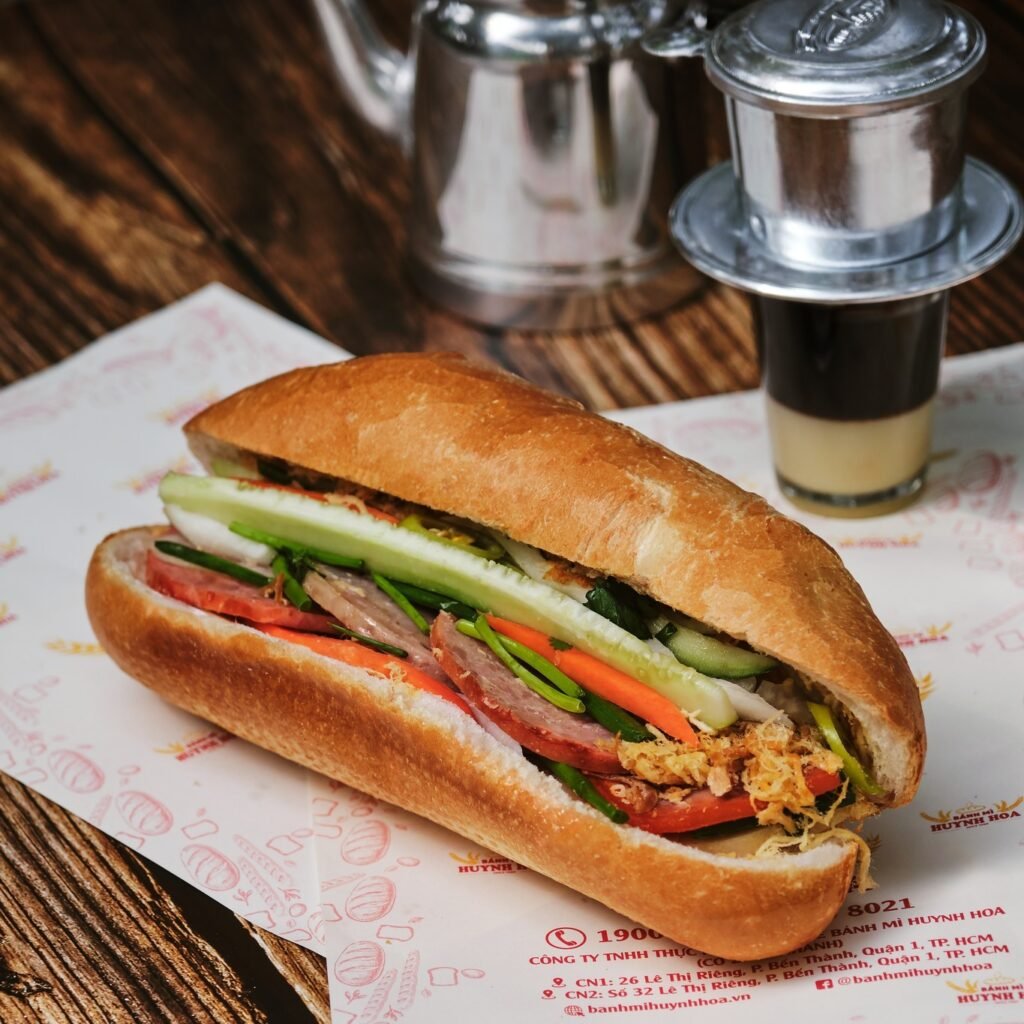
The most visible legacy is the baguette. Introduced by the French, it was remade with rice flour mixed with wheat, giving a lighter crumb and a thinner crust: the Vietnamese bánh mì is hollower than its model, and that is precisely what lets it hold pâté, coriander, pickled carrot and chilli without collapsing.Coffee arrived with the missionaries in 1857 and settled in the highlands. Vietnam is today the world’s second-largest exporter and the leading producer of robusta. The individual phinfilter, the use of condensed milk — for lack of fresh milk in the tropics — and crushed ice produced a drink that exists nowhere else.Draught beer followed the same path: Hanoi’s bia hơi , brewed the same day and delivered in metal kegs to street corners in the late afternoon, descends directly from the colonial breweries. It is three per cent alcohol and costs less than a bottle of water.In the other direction, France received nước mắm, whose Phú Quốc variety has been protected by a European geographical indication since 2013 — the first granted to a Vietnamese product.
How to taste it right
Choose the stall with a queue of Vietnamese people, never the one with an English menu and photos.
Eat early. The best phở is served between six and eight in the morning, and the good places close when the pot is empty — often before noon.
A stall that makes only one dish makes it better than a restaurant that offers forty. It is the most reliable rule in the country.
Ask for “ít cay” (a little spicy) rather than “không cay” (not spicy at all): the dish will keep its balance.
Help yourself to the fresh herbs. They are not decoration, and the dish has been seasoned with them in mind.
Accept the tea you are offered on arrival. It is the start of the conversation, not the end of the meal, and it is free.
Allow 30,000 to 50,000 dong for a bowl in the street, that is one to two euros. A full meal in a good neighbourhood restaurant stays under ten euros per person.For vegetarians, Buddhist đồ chay cuisine is widespread everywhere and often excellent; just beware of broths, where nước mắm slips in unannounced. Tell us about your allergies when booking: we notify every restaurant on your itinerary and give you a card written in Vietnamese.
One last piece of advice
Eat what the locals eat, at the time they eat it: it is the best way to understand a region through its food.
Yes, and that is where you eat best. The criterion is simple: a stall full of Vietnamese people has a fast turnover, so its produce is fresh. The real risk is almost never cooked food but water — ice cubes and pressed juices in isolated places. Allow 30,000 to 50,000 ₫ for a bowl of phở, that is €1 to €1.70.
Is Vietnamese food spicy?
Much less than Thai food. The North hardly is, the Centre definitely is — Huế is the only region where chilli goes into the dish in the kitchen — and the South stays moderate. Everywhere else it comes separately, in a little bowl. Say “ít cay” (a little spicy) rather than “không cay” (not at all): the dish keeps its balance.
What do you do if you are vegetarian?
Easy: Buddhist đồ chay cuisine is found all over the country, excellent in Huế, and served in pagodas on full-moon days. One warning, though — “vegetarian” in Vietnam does not always exclude fish sauce or shrimp paste, present in broths that look plant-based. We notify every restaurant on your itinerary, which settles the matter in advance.
And with a serious allergy, peanut or shellfish?
It is manageable, provided you don’t rely on the waiter’s English. We give you a card written in Vietnamese describing your allergy, to show at every meal. Peanuts are everywhere, crushed on noodles and in sauces; shrimp paste hides in dishes where you don’t expect it, starting with bún bò Huế.
Raw herbs and salads — is that OK?
Yes. Fresh herbs are not decoration, they are part of the dish, and the places we recommend wash them properly. If you are cautious, the useful rule is not to avoid raw food but to avoid non-bottled water: crushed ice outside the cities, juices topped up with water.
Can you learn to cook on the spot?
It is a half-day that is often worth more than a museum visit: the market in the morning with the chef, then four or five dishes prepared and eaten together. We organise them in Hanoi, Huế and Hoi An — the one in Huế is the only one that really covers imperial cuisine.
Putting it into practice
The tours where you experience what this article is about
Audience measurement. We would like to know which pages are useful to you, using Google Analytics. Nothing is stored without your consent, and you can change your mind at any time. Learn more
 Culture & foodFlavours of Vietnam — 10 daysHanoi — Bat Trang — Hue — Hoi An — Saigon — Cai Be10 days / 9 nightsfrom €1,450