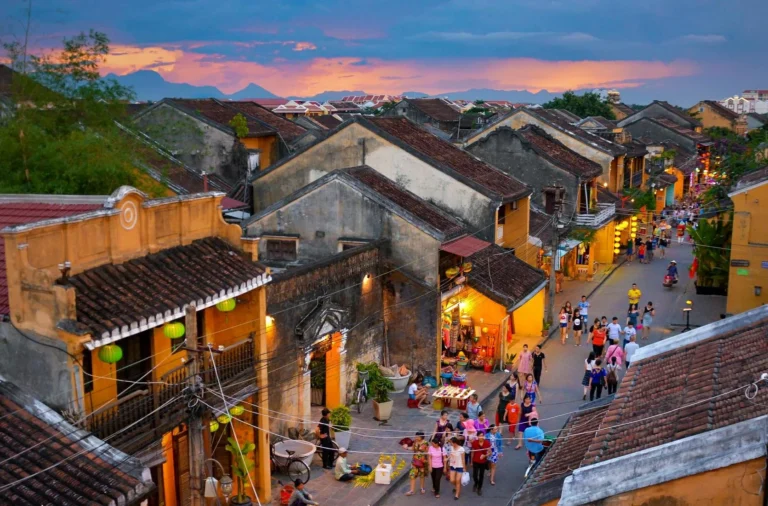
The Centre finally comes out of the rain, the South stays dry, the North keeps its mist. February is the month when the country becomes travellable from end to end again — as long as Tết doesn’t fall in the middle.
In brief
Best region
All three: it is the first month that works everywhere
Driest
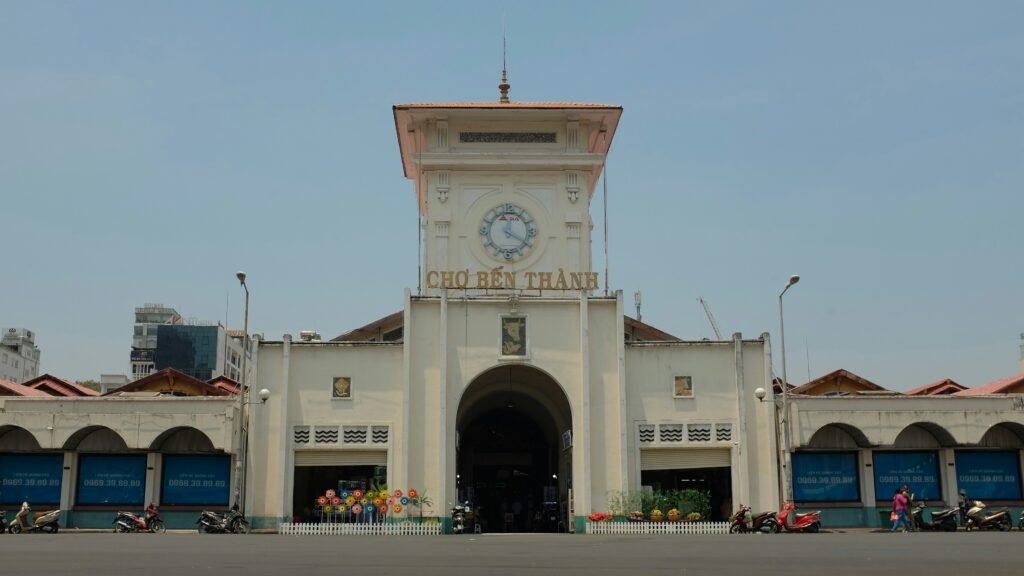
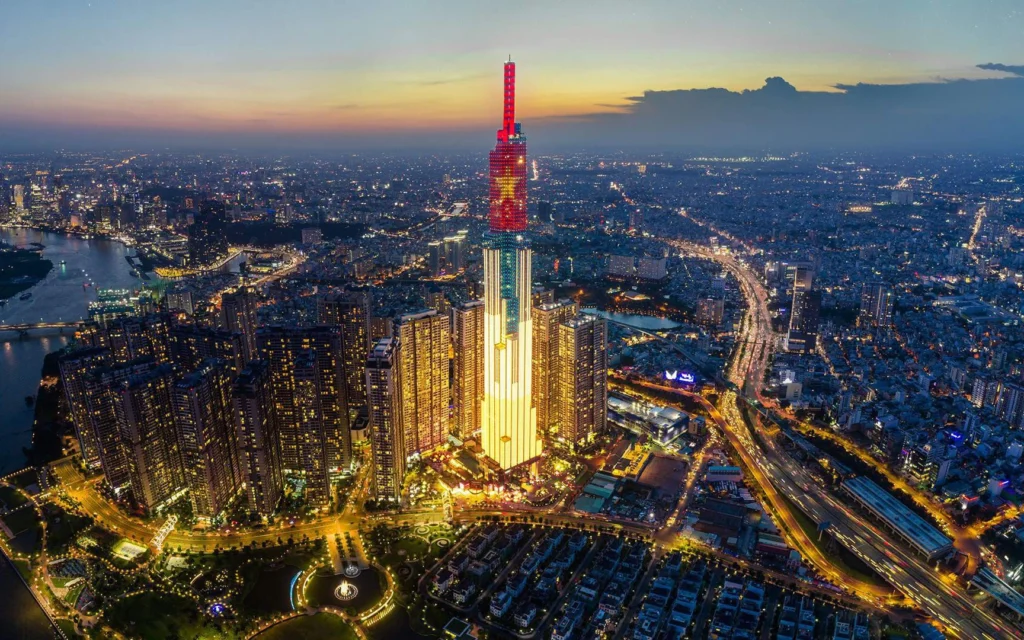
Saigon, 5 mm over the whole month
Temperatures
16–22°C in Hanoi, 23–33°C in Saigon
Watch out
Tết often falls in February: book six months ahead
Tết 2027
Saturday 6 February; allow a week of closures around it
The weather in February
February marks the turning point for the Centre: the north-east monsoon runs out and Hue goes from 125 to 65 mm of rain.
Region
Temperatures
Rain
Verdict
North — Hanoi
16 to 22°C
20 mm
Mild but very overcast
Centre — Hue
18 to 25°C
65 mm
The dry season begins
South — Saigon
23 to 33°C
5 mm
The driest month of the year
Saigon gets only 5 mm over the month and nine hours of sunshine a day: statistically the sunniest month in the South. Hanoi, by contrast, peaks at an hour and a half of sunshine a day.
Sea, sun and light in February
Region
Sea
Sunshine per day
Rainy days
North
21°C
1 h 30
12 days
Centre
23°C
4 h
12 days
South
25°C
9 h
1 day
February is the darkest month of the year in Hanoi: an hour and a half of sunshine a day, or fifteen per cent of daylight hours. Drizzle is frequent without ever really soaking you.Saigon, on the other hand, shows nine hours of sunshine and a single day of rain over the month. It is statistically the sunniest month in the South.
Where to go in February
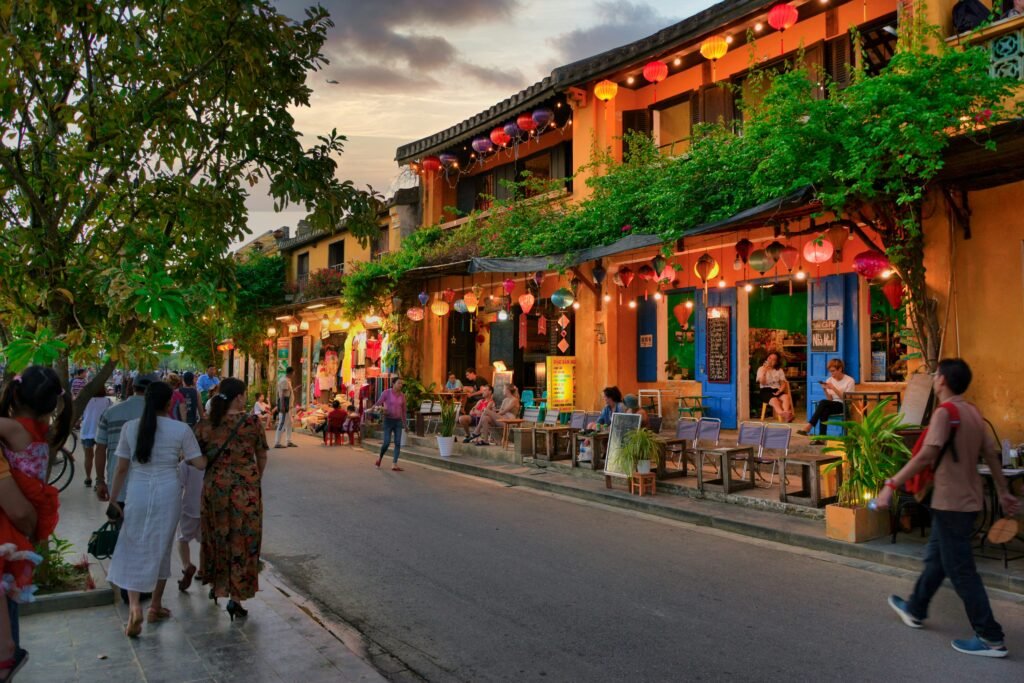
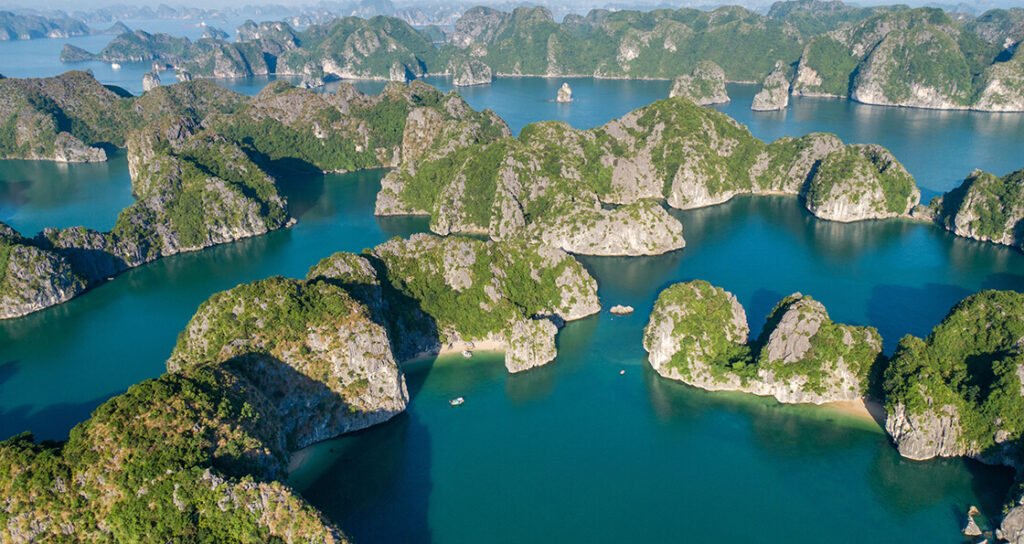
It is the first month when a full North–South trip becomes comfortable again. The Centre is dry, the South is perfect, and the North — without being bright — remains travellable. Hue and Hoi An regain their colours after four months of rain.In the North, favour the lowlands over the high country. Ninh Binh, Lan Ha Bay and Pu Luong work well. The high mountains stay misty, but February has a consolation: plum trees in blossom cover the Bac Ha plateau in white for two to three weeks.The South remains unbeatable for ending a trip with three nights on the beach.
What to avoid
Tết week, if you want a smooth trip. Depending on the year, the lunar new year falls between late January and mid-February. During that week, domestic flights and trains are full, many shops close for three days and the sites fill with Vietnamese visitors.That said, the week that follows Tết is one of the best of the year: everything has reopened, the country is still celebrating, and foreign travellers are few.
The week after Tết: everything has reopened, the country is celebrating, and nobody is there.
What happens in February
Besides Tết, February opens the season of village festivals in the North — including the Perfume Pagoda pilgrimage, which draws tens of thousands of people over several weeks.It is also the month when accommodation prices in the South reach their peak: European high season and perfect weather coincide.
North to South or South to North: which way to travel in February
February is like January with a few more degrees, but one element changes everything: Tết often falls this month, and it redefines the country’s calendar for a week.If your trip coincides with the festival, it is better to be in the North at that time. That is where Tết is most visible: flower markets, kumquat trees strapped to scooters, open houses. On the other hand, many shops close for two to three days and domestic transport is saturated.Outside the festival period, January’s logic applies: start in the North, heading down towards the light. Hanoi’s drizzle is still there at the start of the month, but it lifts more often than in January.A calendar tip: avoid booking a domestic flight the day before or the day after Tết. Those are the two days when the whole country is on the move, and delays pile up.
A typical February itinerary
February allows a real North–South trip, the first of the year. Over twelve days, here is the split that works best.Days 1 to 3 — Hanoi and Ninh Binh. With a visit to a craft village if your dates follow Tết: it is when the workshops reopen.Days 4 and 5 — Lan Ha Bay by junk, then back to Hanoi and a flight.Days 6 to 8 — Hue and Hoi An. It is the first month when the Centre deserves three nights: rain has dropped to 65 mm and the light is returning.Days 9 to 12 — Saigon, the delta, then an island. The safest part of the trip weather-wise.If your dates straddle Tết, we reverse the direction: we start in the South, where shops reopen faster.
What to pack in February
January’s list still applies, with one nuance: the South is noticeably hotter, and the North starts warming up at the end of the month.For the North: a jumper, a light windproof jacket, a compact umbrella. The drizzle doesn’t soak much but it is continuous; a hooded rain jacket is more practical than an umbrella in narrow alleys.For the South: light clothes, sunglasses, high-factor sun cream. February is one of the driest and sunniest months of the year in Ho Chi Minh City and the delta.If you travel during Tết: bring a slightly smart outfit. You may be invited to someone’s home, and it is an invitation you don’t turn down.And always: comfortable closed shoes. A day of sightseeing in Hanoi or Hue is counted in kilometres, not sites.
Budget and recommended tour
Allow €800 to €1,100 for the flight from Paris depending on school holidays, more if your dates straddle Tết.February copes very well with a full North-to-South itinerary over fifteen days or three weeks. If your dates touch Tết, we shift the stages that depend on a domestic flight and book six months ahead.
Prices and crowds in February
This month
Paris–Hanoi flight
€800 to €1,100, more around Tết
Accommodation
Peak of the year in the South
Crowds
High everywhere, very high in Tết week
Book early
Everything, six months ahead if Tết falls during your stay
February combines European high season, French school holidays and, in some years, Vietnamese New Year. It is the tightest month of the calendar for bookings.
With the family in February
February suits families very well, provided you do not linger in the cool North with young children. Two or three days in Hanoi and Ninh Binh, a night on a junk, then the sun of the Centre and the South: Hoi An, the Mekong Delta and the beach at Phu Quoc or Con Dao. If Tết falls during your stay, children will love the lanterns, the unicorn dances and the flower markets, but plan a quiet stage for the public holidays, when many restaurants close.
Our advice for February
Build the trip from north to south, to finish in the sun, and check the date of Tết before fixing your domestic flights: on the eve and the first days of the new year, airports are saturated.
Yes, it is the first month of the year when all three regions work together. Only the North stays overcast.
Should you avoid Tết at all costs?
No, but you need to know about it. Book six months ahead, expect reduced services for three days, and a human experience you won’t find in any other month.
Where can you see plum blossom?
On the Bac Ha plateau, in the North-West, for two to three weeks in February.
What should you pack in February?
A jacket and a jumper for Hanoi and the bay, where it is 16 to 22°C, and summer clothes for the South, between 23 and 33°C. A light rain jacket is enough for the northern drizzle.
How many days to cross the country in February?
Twelve to fifteen days allow North–Centre–South without rushing. If Tết falls during your stay, add a spare day: transport is full.
Putting it into practice
The tours where you experience what this article is about
Audience measurement. We would like to know which pages are useful to you, using Google Analytics. Nothing is stored without your consent, and you can change your mind at any time. Learn more
 The essentialsVietnam in 15 daysHanoi — Pu Luong — Ninh Binh — Lan Ha Bay — Hue — Hoi An — Saigon — Mekong Delta15 days / 14 nightsfrom €2,070