Getting around Vietnam: night train, domestic flight or private car?
Hanoi to Saigon is like London to Rome. Most disappointing itineraries are disappointing for one reason: too many stops, so whole days spent travelling. What each means of transport really costs, in money and fatigue.
In brief
The fastest
The plane: 1 h 20 between Hanoi and Hue, 2 h 15 between Hanoi and Saigon
The most pleasant
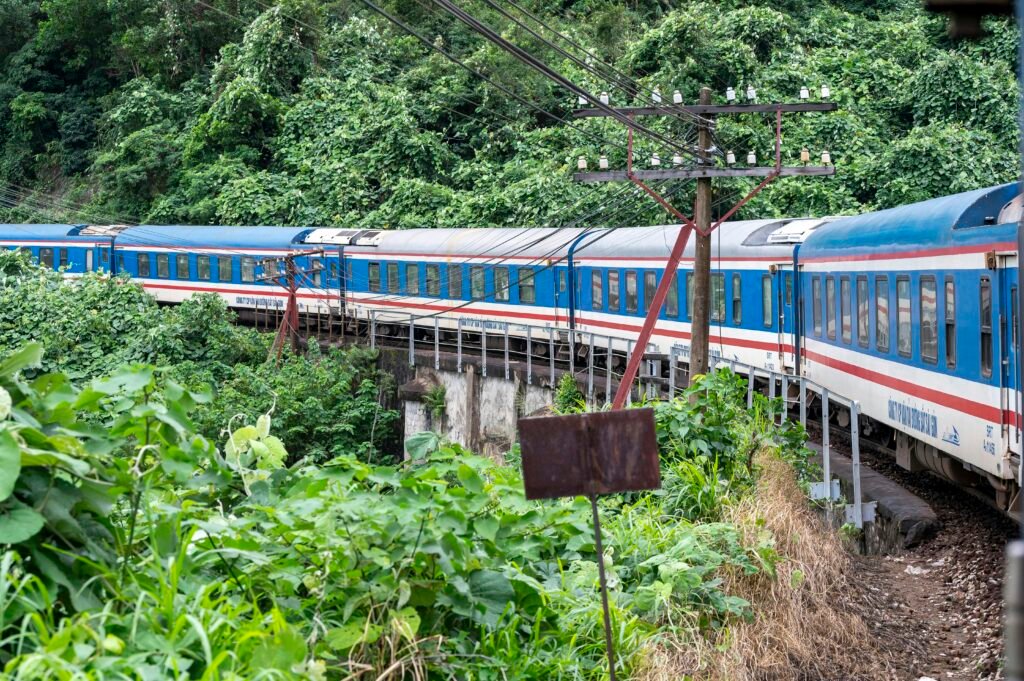
The night train in a four-berth cabin, for journeys of 8 to 13 h
The most flexible
The private car with driver, €80 to €130 a day
To avoid
Sleeper night buses on long journeys, and riding a scooter without a motorbike licence
A country 1,650 kilometres long
This is the fact that governs everything else. Hanoi–Saigon is roughly London–Rome: you don’t cross this country the way you cross a European one. Most disappointing itineraries are disappointing for one reason — too many stops, therefore too many journeys, therefore whole days spent travelling rather than seeing.The rule we apply: never more than four hours on the road at a stretch, and a domestic flight as soon as the distance exceeds six hundred kilometres. A night saved on a journey is never a night saved: it is a day lost the next day.Three serious options exist for long distances — the plane, the night train, the private car — and they are not opposed. A good itinerary combines them: the plane to cross the country, the car to explore a region, the train for one particular stage.
The decision table
Before the detail, the essentials on one page. Times are real, door to door, airport transfers included.
Journey
Plane
Train
Private car
Our choice
Hanoi – Hue
3 h 30 door to door
13 h overnight
12 pm
Plane
Hanoi – Saigon
4 h 30
33 h
No
Plane
Hanoi – Lao Cai (Sa Pa)
No flight
8 h overnight
5 h 30
Night train
Hanoi – Dong Hoi (Phong Nha)
3 h
10 h overnight
9 h
Train or plane
Hue – Hoi An
No
4 h
4 h via the pass
Car, for the pass
Saigon – delta
No
No
2 to 3 h 30
Car
Hanoi – Ha Giang
No
No
6 am
Car
A simple rule emerges: the plane for hops of more than six hundred kilometres, the night train when it replaces a hotel night, the car for everything else. The day train is only worthwhile on Hue – Da Nang, where the line runs along the sea at the foot of the Hai Van Pass.
The night train, in detail
The four classes
Class
Description
Price Hanoi – Lao Cai
Hard seat
Wooden bench. Avoid absolutely for a night.
~ 8 €
Soft seat
Reclining seat, air-conditioned.
~ 12 €
Hard sleeper
Six-berth cabin, three levels. The top berth is narrow.
~ 18 €
Soft sleeper
Four-berth cabin, two levels, sheets provided. Our choice.
25 – 35 €
Private cabin (operators)
Renovated carriages attached to regular trains, 2 berths.
45 – 90 €
What to know before boarding
Cabins are mixed by default: if you book two places in a four-berth cabin, two strangers will occupy the others. To be on your own, book all four berths — the price difference is moderate and we always do it for couples.The lower berth costs more and is worth it: you can sit on it, store your bag underneath, and don’t climb in the dark. The train shakes noticeably more than European trains, and the tracks are metre gauge inherited from the French, which limits the average speed to sixty kilometres an hour.Bring earplugs, a torch and water. The toilets are at the end of the carriage and deteriorate over the night.
The domestic flight: how it differs from a European flight
Luggage
Vietnamese low-cost airlines sell tickets without checked luggage. A twenty-kilo bag added afterwards at the airport costs three to four times the price of the option bought online. Check this on every segment.
Punctuality
Delays of one to two hours are common on domestic routes, especially late in the day and during the rainy season. Never schedule a domestic flight on the day of your international return flight: take one the day before.
Useful airports
Airport
Serves
Distance from centre
Noi Bai (Hanoi)
North
40 km, 45 min
Tan Son Nhat (Saigon)
South
8 km, 30 to 60 min depending on traffic
Da Nang
Hoi An, Hue, Hai Van Pass
3 km — right in town
Phu Bai (Hue)
Hue
15 km
Dong Hoi
Phong Nha
50 km, 1 h
Phu Cat (Quy Nhon)
Quy Nhon, Binh Dinh
30 km, 40 min
The private car with driver
What it really costs
Option
Indicative price
Includes
Day in town and surroundings
60 – 90 €
8 h, 100 km, fuel, tolls, driver
Long transfer day
90 – 130 €
Up to 300 km
French-speaking guide supplement
50 – 80 €
Per day
Minibus 7 to 16 seats
+ 30 to 60%
Depending on size
A point few agencies explain: the driver is not a guide. He drives, carries the luggage, knows the roads and the stops, but generally speaks neither French nor English. The French-speaking guide is a separate service, which we add on sightseeing days and not on simple transfer days — it is the most honest way to keep the budget under control.
Driving times to know
Journey
Distance
Real time
Hanoi – Ninh Binh
100 km
2 h
Hanoi – Lan Ha Bay
180 km
3 h
Hanoi – Pu Luong
170 km
4 h
Hanoi – Ha Giang
320 km
6 am
Hue – Hoi An via the pass
130 km
4 h with stops
Saigon – Can Tho
170 km
3 h 30
These times include real traffic and stops. Beware of navigation-app estimates: they calculate an average speed that doesn’t exist in Vietnam, where you share the road with scooters, trucks and livestock.
In town: apps, taxis, cyclos
Ride-hailing apps
They work very well in the big cities and show the price in advance, which settles the question of bargaining and rigged meters. Allow one to three euros for a city ride, half that by motorbike taxi. Paying in cash is still possible.
Taxis hailed in the street
Avoid them around tourist sites and airports, where vehicles in colours imitating the big companies are numerous. If you take a street taxi, check that the meter starts at pick-up.
The cyclo
This pedal tricycle survives as a ride through the old quarters. Half an hour is enough; agree the price before getting in — allow three to six euros — and know that the drivers are mostly men over sixty.
The metros
Hanoi opened its first line in 2021, Ho Chi Minh City its own in 2024. The networks remain marginal for a visitor, but Hanoi’s elevated line offers an unexpected view over the rooftops for a few cents.
What we advise against
Sleeper night buses
They are cheap — ten to twenty euros for a long journey — and that is their only argument. The berths are sized for Asian builds, night driving on the national highways is nervy, and the rate of serious accidents involving night buses remains high. On the same routes, the night train costs barely more.
Riding a two-wheeler yourself
Above 50 cc, a recognised motorbike licence is required. Without one, most travel insurance policies exclude damage suffered while riding, and a minor fall can be very expensive. Instead we offer a local rider — you are the passenger, the experience is the same.
Renting a car without a driver
The international driving permit is not recognised in Vietnam for driving a car: you need a Vietnamese licence. Beyond the legal question, local driving follows conventions that can’t be learned in two days. A driver costs less than a rental in most cases.
How we plan transfers
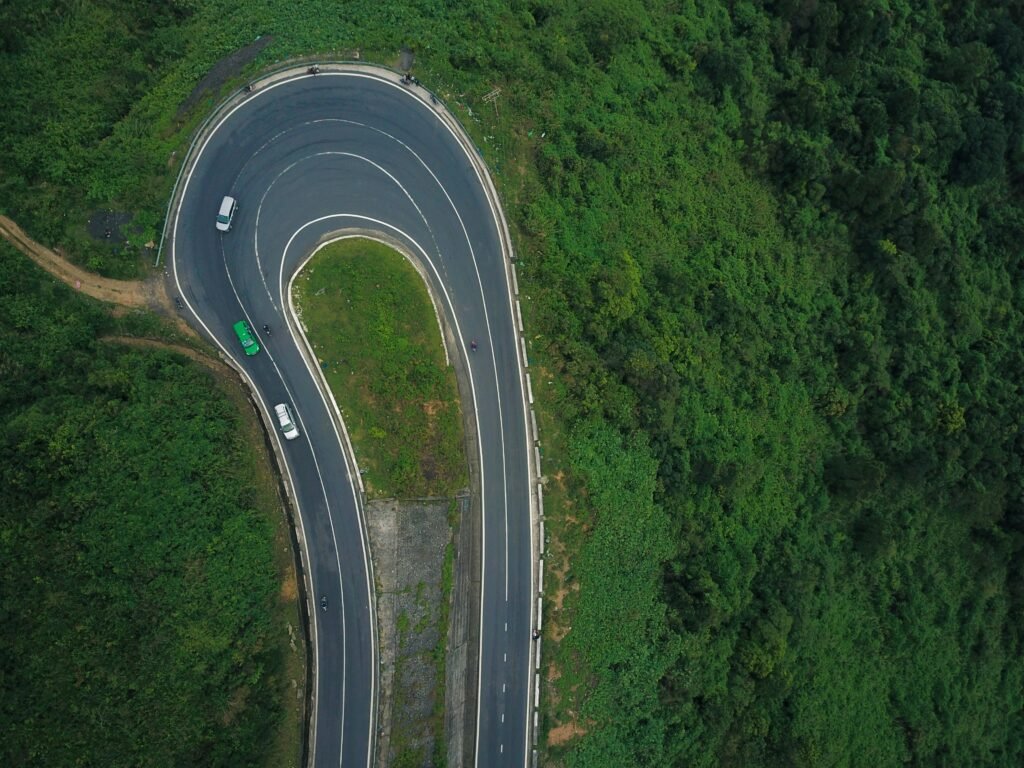
Three principles we apply on all our tours.Never more than four hours on the road at a stretch, except on routes with no alternative — Hanoi to Ha Giang, for example. Beyond that, the day is lost for everyone.Never a domestic flight on the day of the return flight. A two-hour delay on a domestic flight is enough to miss a long-haul one, and no insurance properly covers this case when the two tickets are separate.The ridge road rather than the tunnel on the Hai Van Pass, even when it costs thirty minutes. It is the only case where we deliberately turn down the time saving.
Fly for long distances, without hesitation: Hanoi–Saigon in just over two hours compared with more than thirty by train. Take the train for one specific section, in particular Huế–Đà Nẵng by day, one of the most beautiful rail journeys in Asia.
Is the night train comfortable?
In a four-berth soft-sleeper cabin, yes, without being luxurious: air-conditioning, a door that closes, twenty-five to forty-five euros. The train shakes and sleep is hit and miss. For two people, booking all four berths in the cabin costs little and changes everything.
How much does a car with driver cost?
Sixty to a hundred and ten euros a day depending on the distance, shared between travellers. For four people, it often works out cheaper than four train tickets, with the freedom to stop wherever you like.
Can you rent a scooter?
The question of licence and insurance must be settled before departure, never at a rental counter: in an accident without a licence valid in Vietnam, no insurance covers you. Talk to us about it when preparing and we will review your situation.
Are night buses safe?
We don’t recommend them. They are very cheap, twelve to twenty euros, but night accidents are the leading cause of incidents among foreign travellers in Vietnam. The night train costs barely more and is in a different league in terms of risk.
How do you cross the street?
Slowly, steadily, without stopping or running: the scooters anticipate your path and go around you. Stopping in the middle is the only real mistake. Follow a Vietnamese person the first few times; you learn it in a day.
Is the night train worth it in Vietnam?
Yes on Hanoi – Lao Cai and Hanoi – Dong Hoi: it replaces a hotel night and saves a day. Take a soft sleeper in a four-berth cabin, and book all four places if you want to be on your own.
Can you drive a car in Vietnam with an international permit?
No. The international permit is not recognised for driving a car; you need a Vietnamese licence. A car with driver costs less than a rental in most cases anyway.
Do you need a guide every day?
No. The driver drives but generally speaks no foreign language; the French-speaking guide is a separate service, at €50 – 80 a day. We add one on sightseeing days, not on simple transfers.
Putting it into practice
The tours where you experience what this article is about
Audience measurement. We would like to know which pages are useful to you, using Google Analytics. Nothing is stored without your consent, and you can change your mind at any time. Learn more


 Off the beaten trackThe secret Centre: Kon Tum, Quy Nhon and Phong Nha — 12 daysHanoi — Phong Nha — Huế — Kon Tum — Quy Nhon — Saigon12 days / 11 nightsfrom €1,690