Fruits of Vietnam: which to try and in which season
A Vietnamese market stall displays fifteen fruits a European can’t name. Which is really the best, why they are dipped in salt and chilli, and which month matches which harvest.
In brief
To taste
Mangosteen, rambutan, dragon fruit, longan
The most debated
Durian, banned in many hotels and taxis
The local way
At the end of a meal, cut and shared, sometimes with salt and chilli
Precaution
Prefer fruit you peel yourself
Which fruits should you taste in Vietnam?
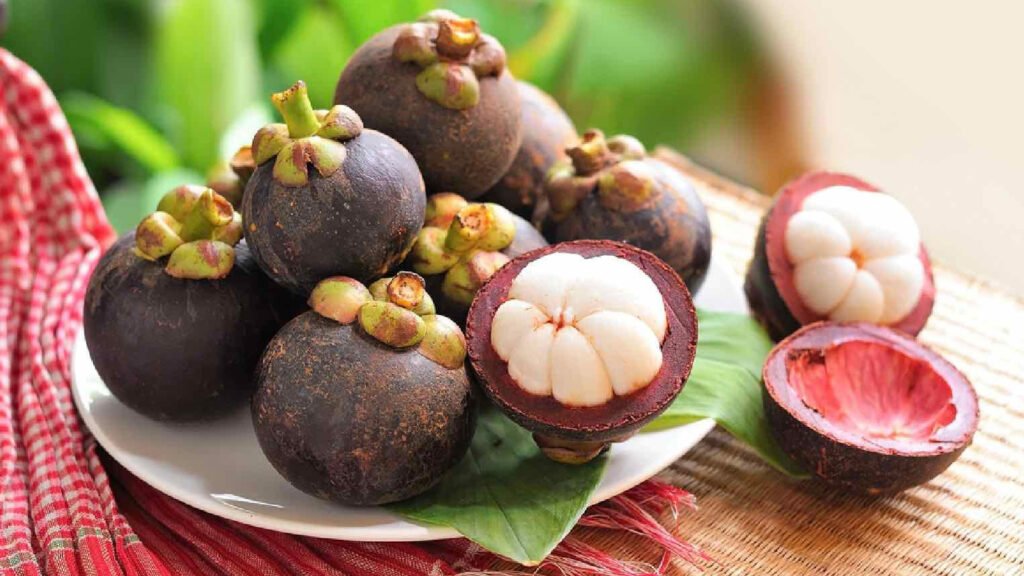
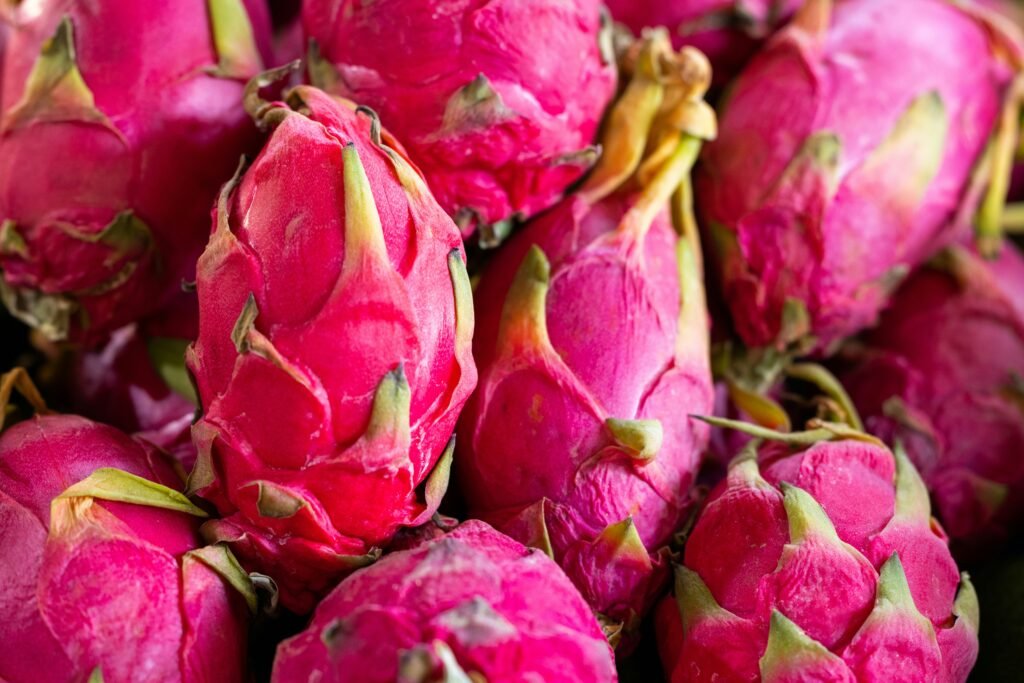
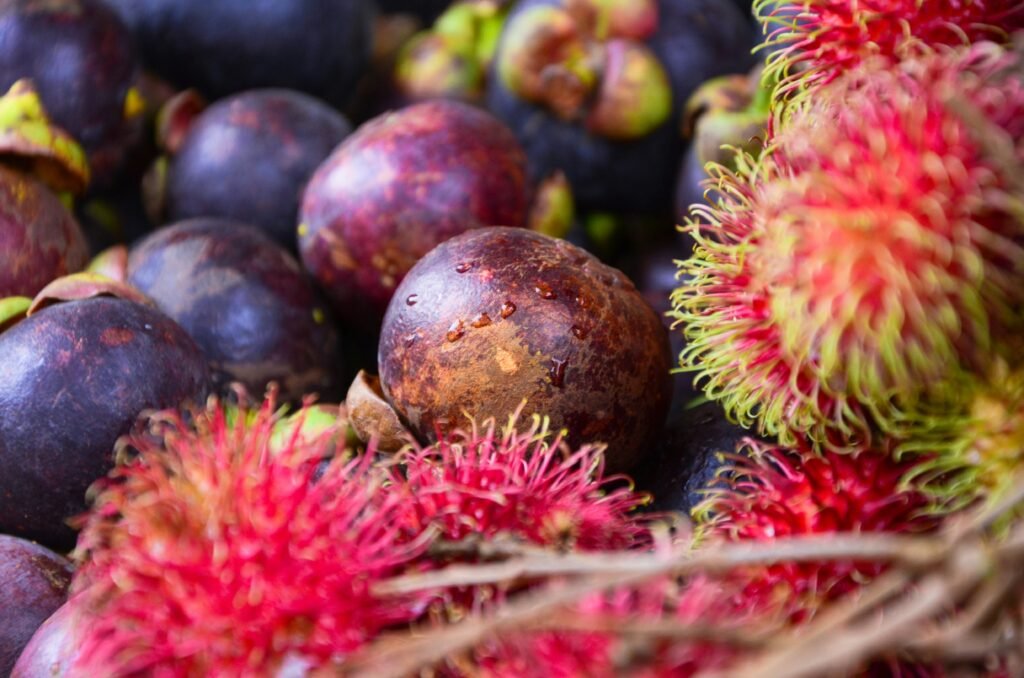
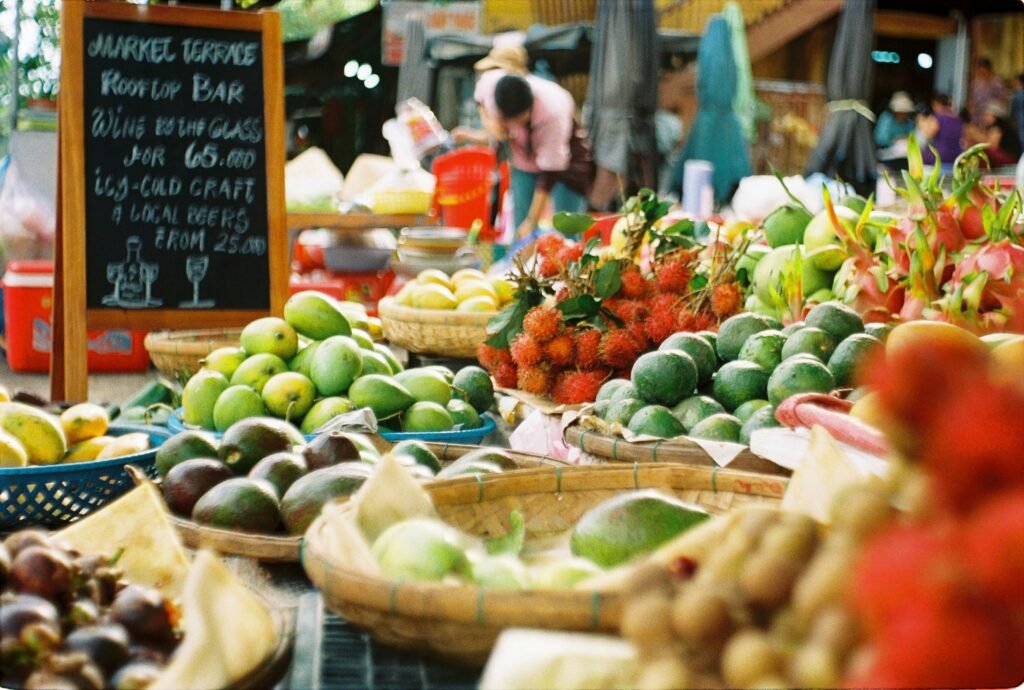
The country stretches across three climate zones and produces all year round. A Vietnamese market stall commonly displays fifteen fruits a European can’t name.Mangosteen (măng cụt) is the best of all and nobody disputes it locally: thick purple shell, white flesh in segments, a taste between lychee and peach. From May to August. Choose those whose shell gives slightly under your thumb.Dragon fruit (thanh long) is the most photogenic and the most disappointing: pretty, refreshing, not very sweet. Choose the red-fleshed variety, much more fragrant.Lychee (vải) from Bắc Giang, in June, has nothing in common with the ones sold in winter in Europe: picked that day, crunchy and floral. Longan (nhãn) takes over from July to September, and rambutan (chôm chôm) belongs to the same family.Add custard apple, star apple (vú sữa) from the delta, soursop, jackfruit (mít) and pomelo (bưởi), served as a salad with dried shrimp and peanuts.
Durian: should you really try it?
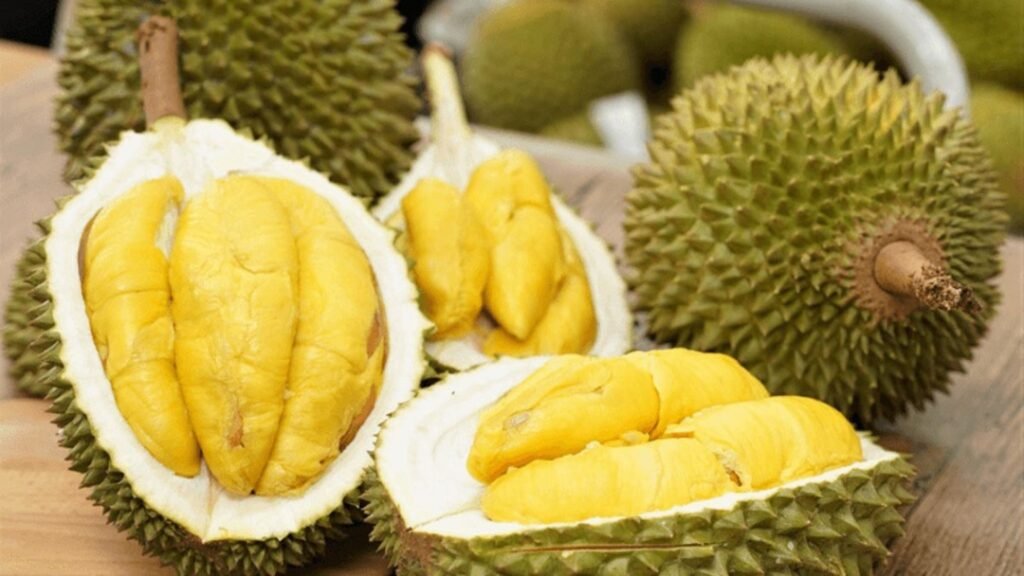
Yes, once, and preferably outside. Sầu riêng is the most expensive and most revered fruit in South-East Asia, and its smell is as powerful as its reputation — somewhere between cooked onion and gas.The flesh has almost nothing to do with the smell: creamy, rich, with notes of almond and caramel. Many travellers who dreaded the experience end up having more.A practical detail that surprises: durian is banned in most hotels, planes and taxis, with explicit signs at the entrance. The smell clings to fabrics for days. Season: May to August, peaking in June–July.
How do the Vietnamese eat their fruit?
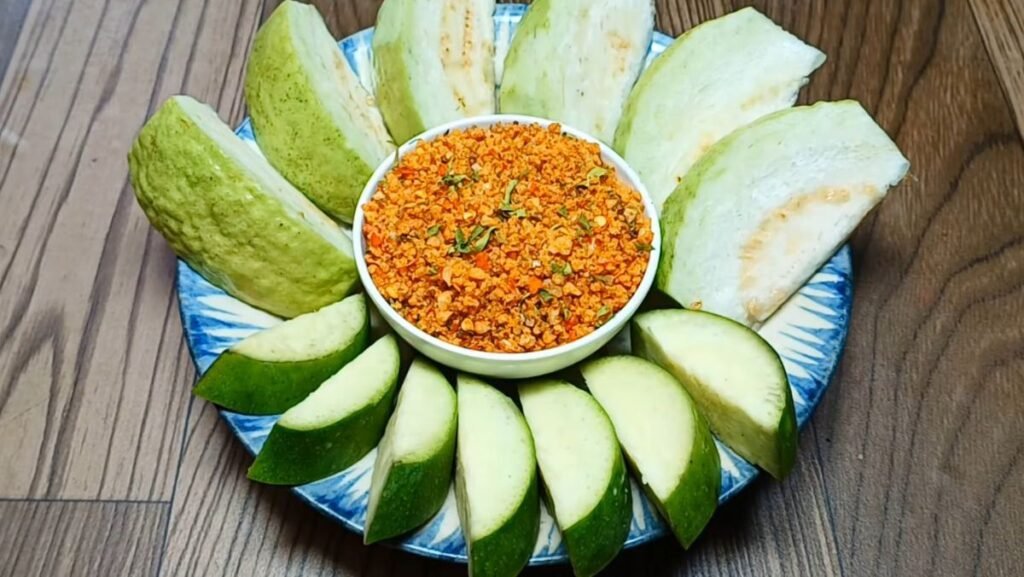
The most surprising difference is salt. Sour or barely sweet fruits — green mango, guava, pineapple, tamarind — are dipped in a mixture of salt, chilli and sometimes sugar, muối ớt. The contrast brings out the fruit instead of masking it. It is disconcerting, then addictive. Green mango, raw and crunchy, is a fruit in its own right, not a failed mango. It is eaten in slices with chilli salt, or grated in a salad.Fruit is also enjoyed as sinh tố, a smoothie with condensed milk, and as chè, layered desserts in a glass mixing fruit, beans, jellies and coconut milk.
Green mango isn’t a failed mango. It is a fruit in its own right, eaten with salt and chilli.
Which fruit in which season?
March – May : ripe mango, rose apple, jackfruit, pomelo.
May – August : the high season. Mangosteen, durian, rambutan, custard apple.
June : Bắc Giang lychee, for a few weeks only.
July – September : longan, soursop, highland avocado.
October – February : star apple, persimmon, orange, Đà Lạt strawberries.
All year round : banana, papaya, pineapple, coconut, dragon fruit.
If you travel between May and August, you hit the country’s best fruit period — which partly makes up for the heat and the rain.
Where to taste them, and with what precautions?
At neighbourhood markets at dawn, at local prices. In the orchards of the Mekong Delta, where you pay a small fee to taste on the spot what you pick — a visit we are happy to add to a day in the delta.Only one real precaution: fruit already peeled and cut sold in tubs, rinsed in unknown water. Buy whole, peel it yourself. Anything with a thick skin is safe by design.Finally, customs severely limit importing fresh fruit from outside the European Union: don’t bring any home. Dried and candied fruit, on the other hand, travels without a problem.
Fruit by region
The Mekong Delta is the country’s orchard. You taste star apple (vú sữa), whose sweet white flesh is eaten with a spoon, Hoa Loc mango, rambutan and mangosteen in season, and you visit orchards by boat along the canals.The south-central coast, around Binh Thuan and Phan Thiet, is the great dragon-fruit region: cactus fields lit up at night to bring forward flowering make an astonishing landscape from the road.The North has its summer fruits: lychee, harvested in June, and longan, in July–August, sold in bunches by the roadside. Winter is the season for pomelo, oranges and persimmons.
How to choose fruit at the market
A ripe mangosteen gives slightly under your finger; too hard, it is dry. Choose rambutans whose hairs are still red and supple. For dragon fruit, prefer well-coloured skin and scales that aren’t drying out. Ask the vendor to cut it for you: she will gladly do so, often with a little chilli salt on the side.Prices are by the kilo. At neighbourhood markets, they are much lower than in touristy streets; your guide will tell you the right order of magnitude so you don’t pay the visitor price.
Juices and smoothies
Sinh tố, a smoothie of fresh fruit blended with ice and often a little condensed milk, is one of the best ways to taste the country’s fruit. Avocado, mango, dragon fruit, soursop or sapodilla: every seller has their own blends. Ask for it without condensed milk if you prefer it less sweet, and without ice if you have a sensitive stomach.
The orchards of the delta
The Mekong Delta is the country’s great orchard. Around Cai Be, Vinh Long or Ben Tre, families open their gardens to visitors: you walk among rambutan, longan and pomelo trees and taste fruit picked within the hour, often with tea and honey. It is one of families’ favourite visits on our southern tours.
Fruit to bring home, or not
Fresh fruit generally cannot enter the European Union without a phytosanitary certificate: better to enjoy it on the spot. Packaged dried, candied or freeze-dried fruit, on the other hand, can be brought home without difficulty and makes good gifts, such as jackfruit chips or dried mango.
A few precautions
Prefer fruit that is peeled or opened in front of you, and wash, or have washed, any that is eaten with the skin. With children, start with small quantities: some tropical fruits, such as durian or jackfruit, are very rich.
The fruit of your month
Ask your guide which fruit is in season at the time of your trip and taste it at the market in the morning, from a seller with a whole cartload. That is when it is best, and cheapest. In May and June it will probably be lychee or mango; in winter, pomelo or the Tết mandarin.
Mangosteen is unanimous locally: purple shell, white flesh in segments, a taste between lychee and peach. From May to August. Choose those whose shell gives slightly under your thumb.
Should you taste durian?
Yes, once, and outside. The smell is as strong as they say; the flesh has almost nothing to do with it: creamy, with notes of almond. It is banned in most hotels, planes and taxis.
Why is fruit eaten with salt and chilli?
The muối ớt goes with sour or barely sweet fruit: green mango, guava, pineapple, tamarind. The salty-spicy contrast brings out the fruit instead of masking it.
What is the best fruit season?
From May to August: mangosteen, durian, rambutan, custard apple, and Bắc Giang lychee in June only. It is also the hot and rainy season — a compensating argument few brochures put forward.
Can you eat fruit safely?
Yes, by buying whole and peeling it yourself. Avoid tubs of cut fruit sold in the street. Anything with a thick skin — mangosteen, pomelo, banana, rambutan — is safe by design.
Can you bring fruit home?
No, customs severely limit importing fresh fruit from outside the European Union. Dried and candied fruit travels without a problem.
Putting it into practice
The tours where you experience what this article is about
Audience measurement. We would like to know which pages are useful to you, using Google Analytics. Nothing is stored without your consent, and you can change your mind at any time. Learn more
 Culture & foodFlavours of Vietnam — 10 daysHanoi — Bat Trang — Hue — Hoi An — Saigon — Cai Be10 days / 9 nightsfrom €1,450