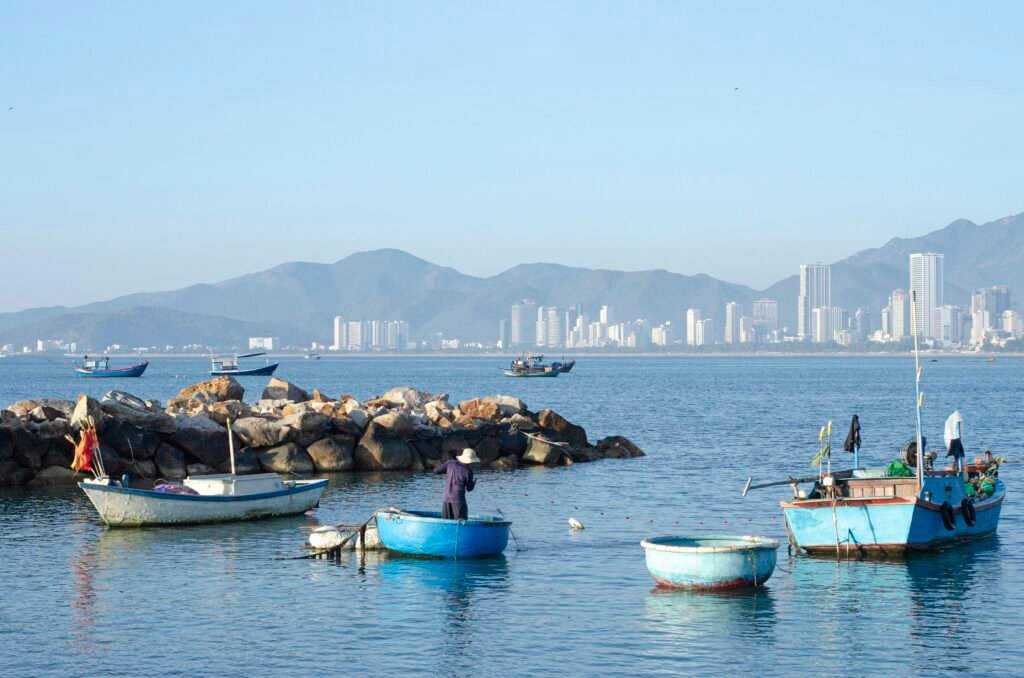
A large bay, islands for swimming and diving, Cham towers and a real city around it: Nha Trang is the most convenient resort in the country, provided you know where to stay.
In brief
Best time
February to May; dry until August, rain from October to December
Getting there
Flight to Cam Ranh (2 hrs from Hanoi, 1 hr from Saigon), train, or 3½ hrs by road from Da Lat
How long
Two to four nights
Combine with
Da Lat, Quy Nhon, Hoi An
What to know before choosing Nha Trang
Nha Trang is Vietnam’s best-known beach resort: a large bay, six kilometres of beach right in town, islands offshore and an international airport forty minutes away. It is also a city of nearly half a million people, with a seafront of hotel towers, signs in several languages and crowds in high season.We tell our travellers frankly: if you want a wild beach, Nha Trang city isn’t the right choice. If you want an easily reached bay, islands for swimming and diving, hotels in every category and a real Vietnamese city around it, it is a very convenient stop — especially if you stay outside the centre.
The secret of Nha Trang is not to stay in Nha Trang: the most beautiful beaches are north and south of the city.
The islands and the sea bed
The bay has some twenty islands. Around Hon Mun, a marine protected area, are the best corals on the central coast: this is where most of the city’s dive clubs take their students. For simple snorkelling, a private boat trip to the coves of the islands in the south of the bay is more pleasant than the “four islands” group excursions, often very crowded.Hon Tre island, linked to the city by a cable car over the sea, is taken up by a large amusement park. Children love it; others can skip it.
The Po Nagar Cham towers and the city
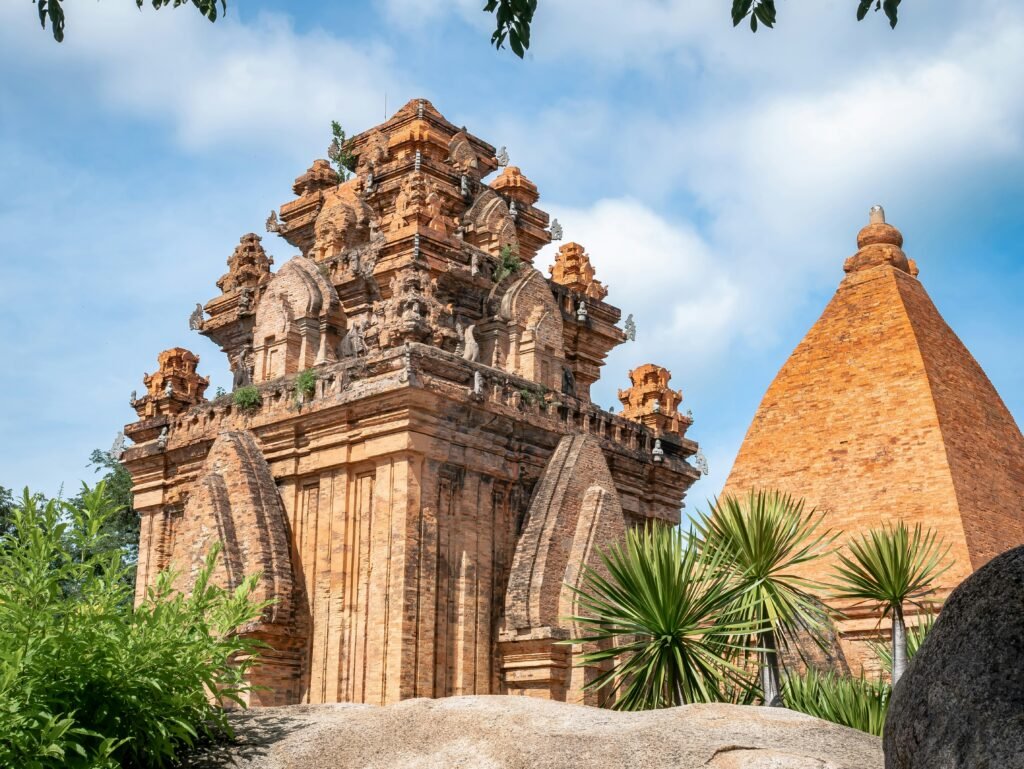
On a hill beside the Cai river, the Po Nagar towers are one of the best-preserved Cham sanctuaries in the country. They are dedicated to the kingdom’s mother goddess, still worshipped today by Vietnamese and Cham alike. Come early in the morning, before the groups, and cover shoulders and knees.In town, Long Son pagoda and its great white Buddha overlook the station. Dam market, under its dome, is the best place to see the city at work and taste local specialities. The hot mud baths, north of the city, are a very popular half-day after several days on the road.
The beaches outside the city
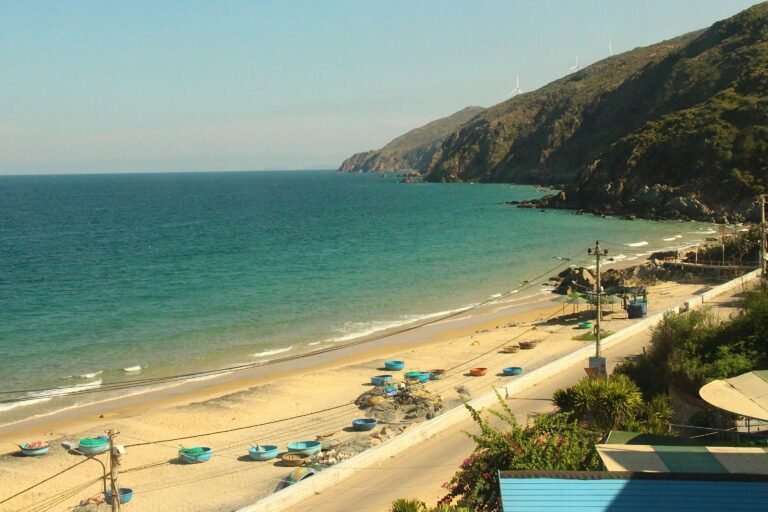
This is where Nha Trang gets interesting. To the north, Ninh Van Bay is reachable only by boat and has a few secluded hotels, between forest and rocks. Further up, Doc Let beach, an hour’s drive away, is long, white and almost deserted on weekdays.To the south, the long Bai Dai beach, between the city and Cam Ranh airport, has been built up with resort hotels in recent years, but remains much quieter than the centre. For a real beach break at the end of a tour, we almost always recommend staying in one of these three areas and coming into town for dinner.
Eating in Nha Trang
The city’s speciality is bún chả cá, a noodle soup with fish balls and fish cake, eaten for breakfast. nem nướng, grilled pork skewers rolled in rice paper with herbs, is the other dish not to miss. For seafood, avoid the seafront restaurants and follow Vietnamese families to the fishing districts.
When to come
Nha Trang follows the climate of the central coast: dry and sunny from January to August, rainy from October to December, with a risk of storms and rough seas. The most pleasant months are February to May: calm, clear sea and bearable heat. Summer is very hot but still a good option, at a time when Phu Quoc is in its rainy season.
Diving and snorkelling in Nha Trang
Nha Trang is one of Vietnam’s main diving centres. The marine protected area around Hon Mun island is home to coral and varied marine life, reachable by boat in under an hour. Dive centres offer try dives, beginner courses and trips for experienced divers. Visibility is generally best from February to September, when the sea is calm; from October to December, swell and rain reduce it considerably.For simple snorkelling, choose a small-group trip rather than the big party-style island tours, which are often noisy and crowded. We point you towards reputable dive centres that respect the rules of the protected area.
Mud baths and hot springs
It is the local activity par excellence. A few kilometres from the centre, several establishments offer warm mineral mud baths, followed by hot-water pools and swimming pools. Vietnamese families happily spend half a day there. It is simple, sometimes a little kitsch, but very pleasant after a day on a boat, and children love it.
Ninh Van, Vinh Hy and the wild coast
For those looking for peace and quiet, the coast around Nha Trang offers fine alternatives. To the north, Ninh Van Bay has a few hotels reachable only by boat, facing very clear water. To the south, in Ninh Thuan province, Vinh Hy Bay and the cliffs of Nui Chua form one of the most spectacular coastal landscapes in the country, dry and almost desert-like. On the way, the Cham towers of Po Klong Garai, near Phan Rang, are among the best preserved in Vietnam, and the Cham community still holds its festivals there.
Nha Trang with children
Nha Trang is an easy family stop: a beach right in town, hotels with pools in every category, mud baths, short boat trips and a large theme park on Hon Tre island. Choose a hotel a little away from the centre for peace and quiet, and keep the sea for the morning: in the afternoon the wind often picks up and the waves get bigger.
Where to stay in Nha Trang
The seafront in the centre is home to the big hotels, practical but busy. For peace and quiet, we prefer the north of the bay, around Hon Chong beach, or the hotels on the Cam Ranh peninsula, closer to the airport and lined with long beaches. For a real retreat, Ninh Van Bay and its boat-access hotels are a rare option in Vietnam.
Getting there, and how long
Cam Ranh airport is a little under two hours from Hanoi and one hour from Saigon. The Reunification Express stops in the city; the road from Da Lat, over the Khanh Le pass, takes about three and a half to four hours and offers beautiful scenery.Two to four nights are enough: a day on the islands, half a day of sightseeing, the rest for relaxing. Nha Trang combines naturally with Da Lat, and with Quy Nhon for those who want to compare two faces of the coast.
Yes for an easily reached beach break, islands and diving, especially if you stay north or south of the city. No if you are looking for a wild beach in the middle of town.
What is the best time for Nha Trang?
From February to May for a calm, clear sea. Summer is still good but very hot. Avoid October to December, the rainy season.
Nha Trang or Quy Nhon?
Nha Trang offers more hotels, activities and flights. Quy Nhon is calmer and more authentic, but less well connected.
Nha Trang or Phu Quoc?
In winter, Phu Quoc is a safer bet for sunshine. From May to August, Nha Trang is the better choice, when Phu Quoc is in its rainy season.
How many nights in Nha Trang?
Two to four nights depending on whether you only want to see the islands or really rest at the end of the trip.
Can you dive in Nha Trang?
Yes, it is one of the main dive sites in the country, around the Hon Mun marine protected area. The best visibility is from February to September.
Audience measurement. We would like to know which pages are useful to you, using Google Analytics. Nothing is stored without your consent, and you can change your mind at any time. Learn more




 The essentialsVietnam in 15 daysHanoi — Pu Luong — Ninh Binh — Lan Ha Bay — Hue — Hoi An — Saigon — Mekong Delta15 days / 14 nightsfrom €2,070