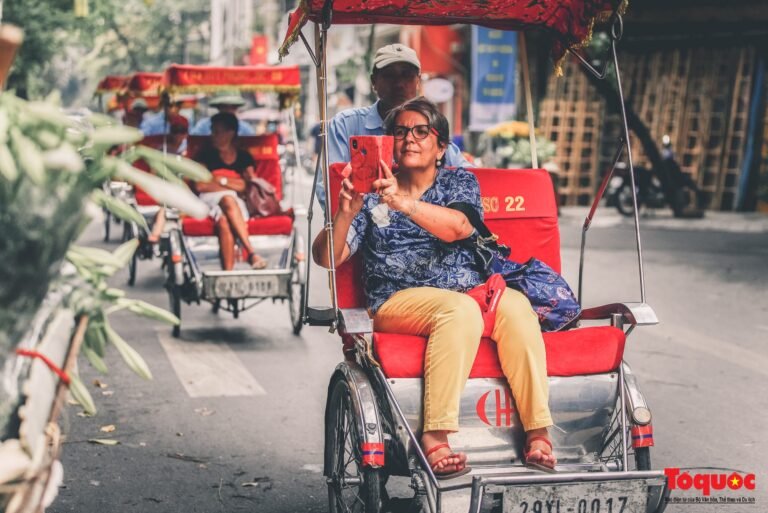
Vietnam lives by two calendars. The official one runs the offices; the lunar one runs everything else — weddings, harvests, visits to the ancestors, and the way a village will welcome you on a Tuesday in March.
In brief
Tết
Between late January and mid-February: a week when the whole country goes home
Trung Thu
September or early October, the festival of children and lanterns
Village festivals
On moving dates, missing from brochures because they change every year
Booking
Six months ahead for a departure during Tết
Tết, the lunar new year
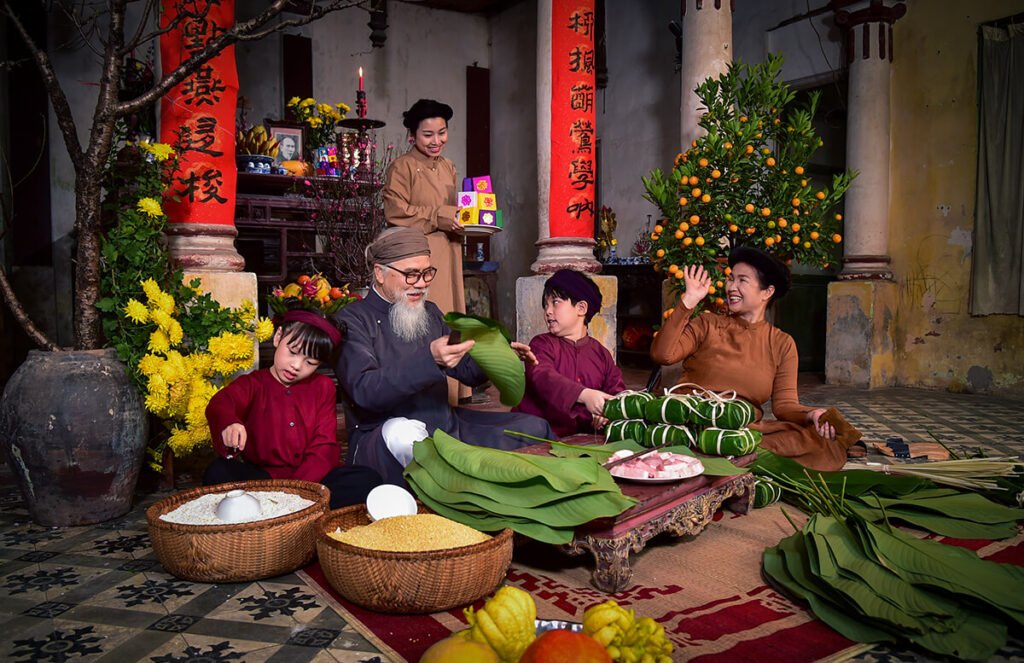
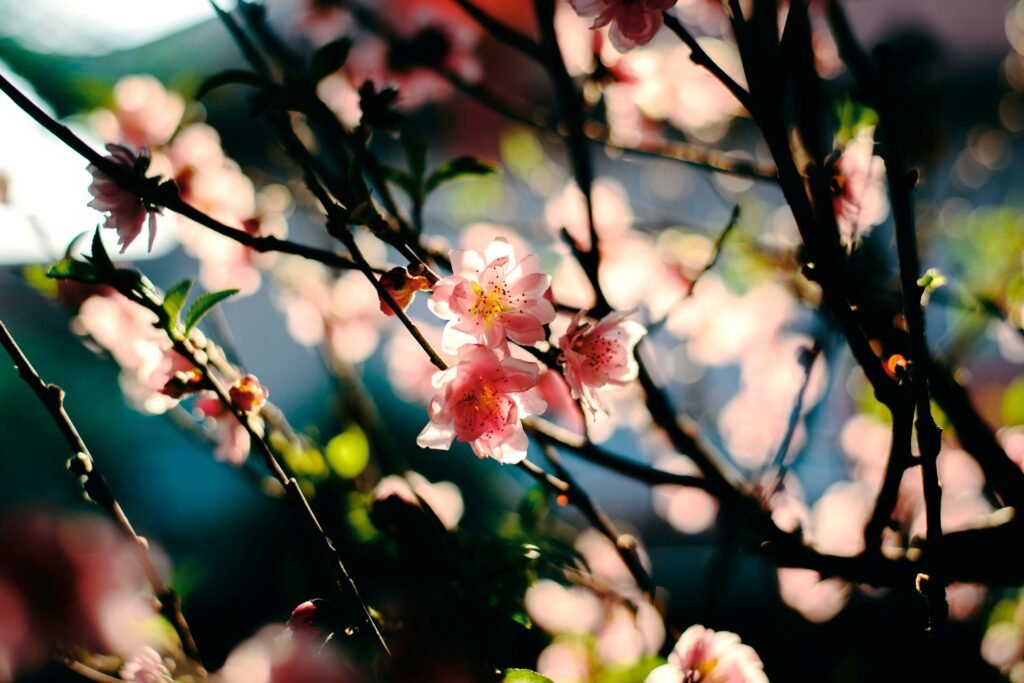
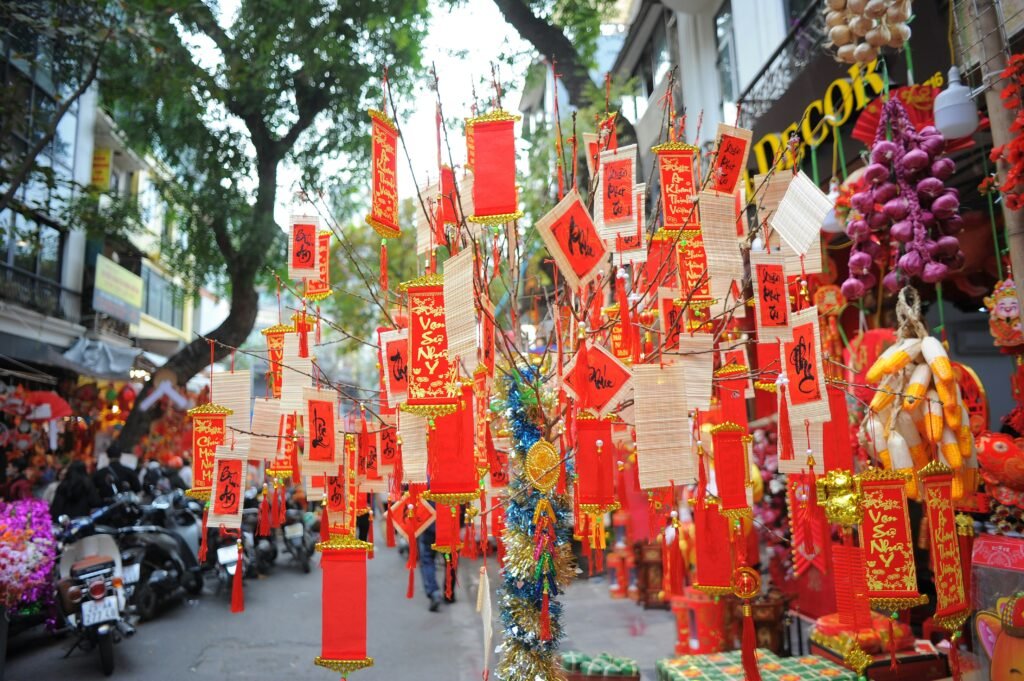
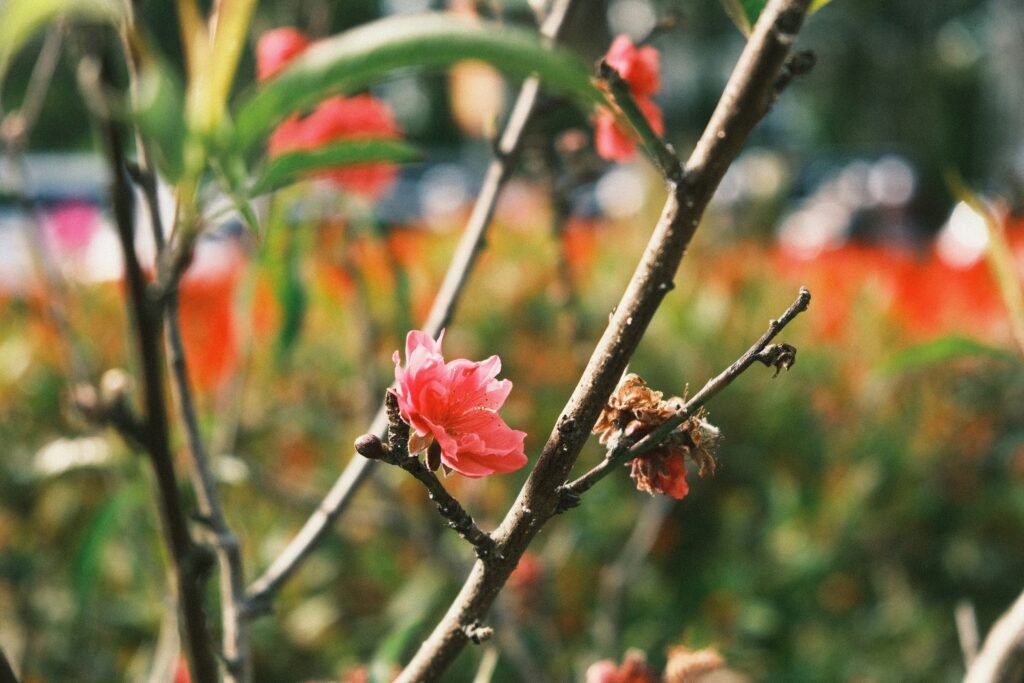
Between late January and mid-February, the whole country goes home. It is the biggest population movement of the year: Saigon’s workers head back to the villages of the North, students leave Hanoi, and for three days the big cities empty. It is the only week when you can cross a street in Hanoi without looking.The preparation matters as much as the celebration. Debts are settled before the new year — starting it in debt brings bad luck —, the house is cleaned from top to bottom, then the brooms are put away, because sweeping during the first three days means sweeping away luck. Seven days before, the kitchen god is sent back to heaven by releasing live carp into lakes and rivers.Altars are covered with flowers: peach branches in the North, yellow apricot blossom in the South, kumquat trees laden with fruit for abundance. On them is placed bánh chưng, a square sticky rice cake wrapped in leaves and cooked for twelve hours, whose shape represents the earth. It is made as a family the day before, and the overnight cooking is in itself the warmest moment of the year.The first visitor to cross the threshold on new year’s morning decides the household’s luck for twelve months. So he is chosen in advance. If you are invited on that day, it is not a courtesy: it is a considerable mark of trust.
Trung Thu, Mid-Autumn
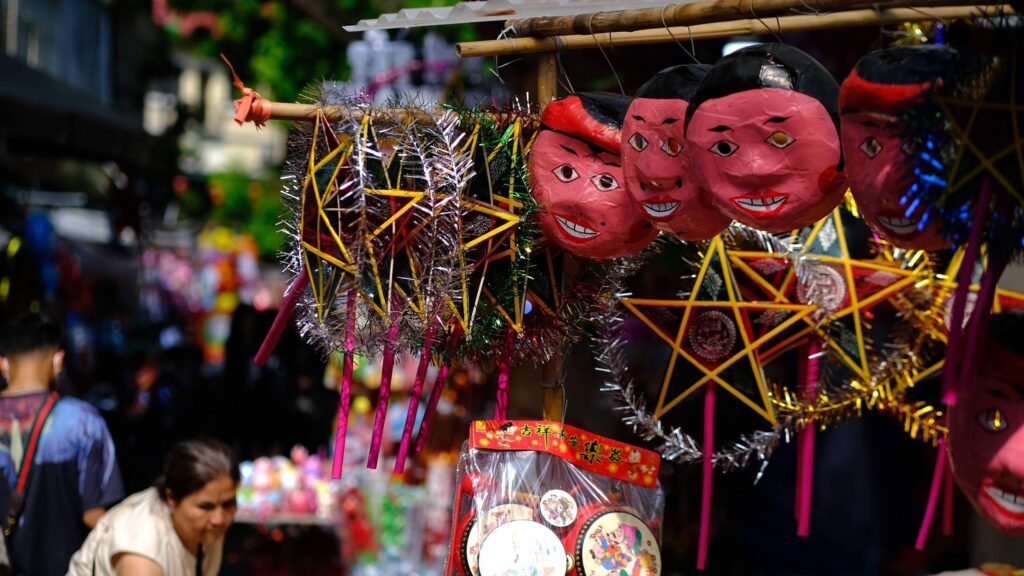
The finest festival for families, and by far the easiest to enjoy as a traveller. It falls on the fifteenth day of the eighth lunar month, in September or early October — 15 September in 2027 —, at exactly the moment when the light in the North becomes perfect and the second-harvest rice fields turn yellow.The streets fill with lanterns shaped like stars, fish or butterflies, carried by children in procession. Lion dances go from shop to shop: the shopkeeper hangs a red envelope high up, the troupe comes to take it down, and the din of the drums is supposed to chase away anything bad lingering in the premises.People eat bánh trung thu, a dense mooncake filled with lotus, mung bean or watermelon seeds, often with a salted egg yolk in the centre representing the full moon. It is given more than eaten: families exchange boxes of them during the three weeks beforehand.Unlike Tết, Trung Thu blocks nothing. Hotels, roads, trains and restaurants run normally, and prices don’t move. It is our favourite time for a family trip.
Village festivals
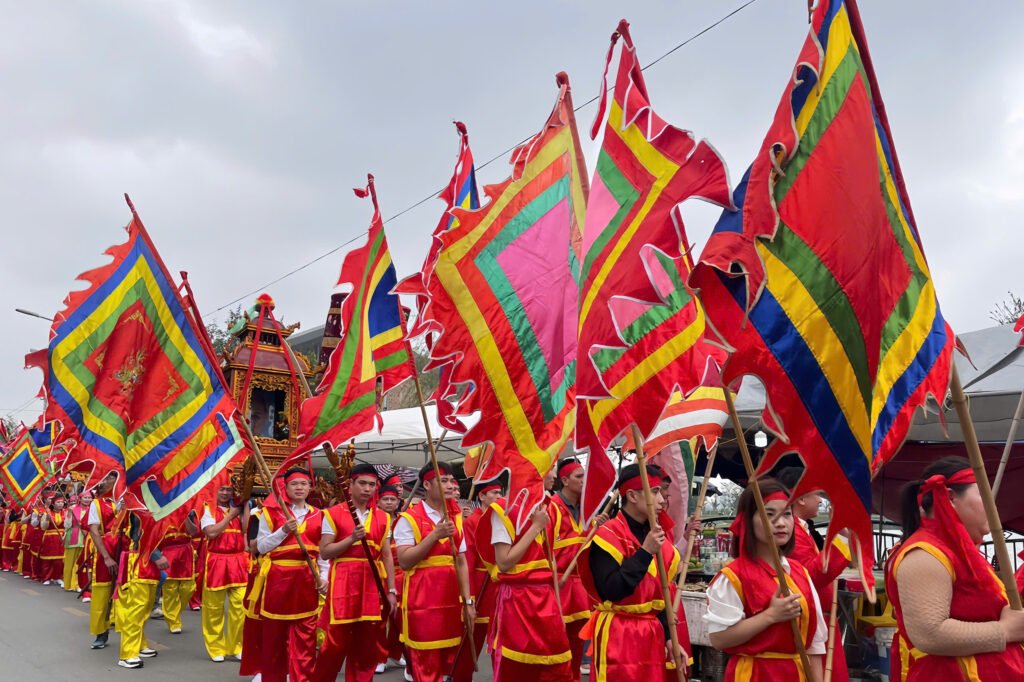
Less well known, often the most moving, and invisible to anyone not on the spot. The Perfume Pagoda festival, south-west of Hanoi, draws hundreds of thousands of pilgrims from the second to the third lunar month: you travel up the Yến River in a rowing boat before climbing to the cave, and it is the longest pilgrimage in the country.The worship of the Mother Goddesses, inscribed on UNESCO’s intangible cultural heritage list in 2016, is practised in lên đồng ceremonies in which a medium changes costume several times to embody different deities in turn, carried by a chầu văn orchestra. It lasts for hours and is nothing like a show: nobody sells tickets.Add the boat races in the delta after the harvests, buffalo fights, and the “love markets” of the northern minorities — the one at Khâu Vai, in Ha Giang, is held once a year and brings together former lovers who never married.None of these festivals appears in brochures, because none falls on a fixed date: they follow the lunar calendar and are announced nowhere online, in any language. We track them for you.
A good itinerary is not just about places. It takes into account the day you will be there.
Two calendars, one daily life
The official calendar governs offices and flights. The lunar calendar governs everything else, and it is far more present than you would imagine. The date of a wedding, a house move or the opening of a shop is chosen by consulting an almanac, sometimes a fortune-teller.The first and fifteenth days of each lunar month — new moon and full moon — structure religious life: incense is burned on the ancestral altar, people eat vegetarian, the pagodas fill up. For a traveller, that means two days a month when temples are alive rather than monuments, and when đồ chay cuisine is at its best.The seventh lunar month is the month of wandering souls: votive paper is burned in the streets — banknotes, houses, cardboard phones — for the dead who have no family. It is also the month when important decisions are avoided. Don’t be surprised if a craftsman postpones a delivery.
How to time your trip
If your dates are flexible : avoid Tết week and the three days after it — unless the experience really tempts you, in which case book six months ahead.
As a family : aim for Trung Thu, late September or early October.
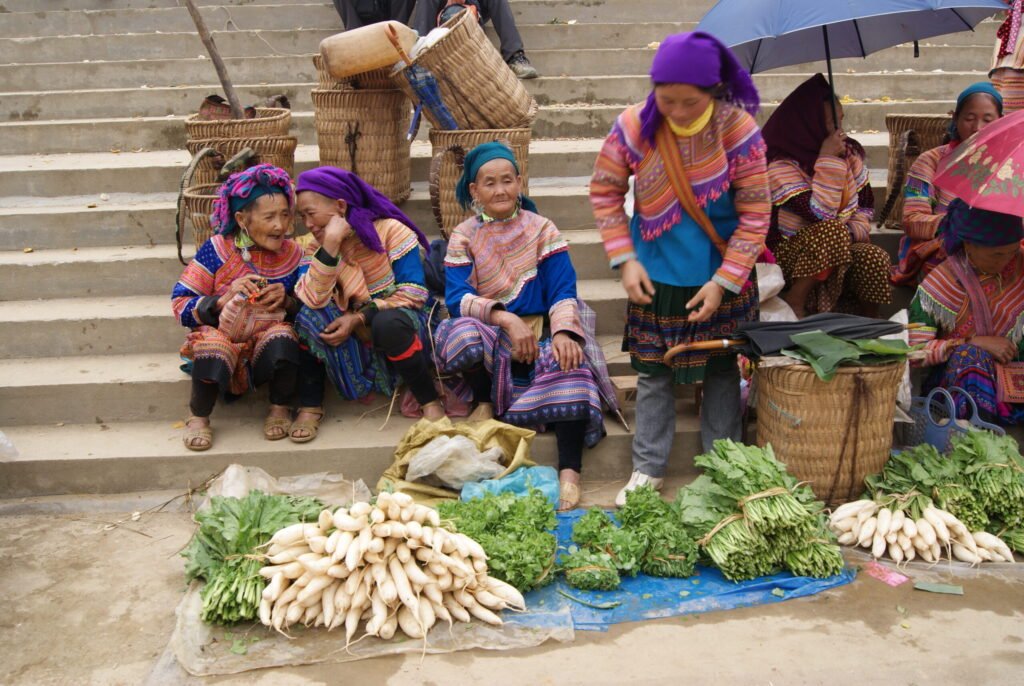
For the ethnic markets : Sunday morning in the North, almost all year round.
For golden rice fields : late May–early June or late September, depending on the region.
For living pagodas : plan a day around a full moon. We’ll give you the dates.
In any case, tell us your dates from the very first exchange. We will tell you what is happening on those days, and whether a four-day shift changes everything — it often does.
Tết dates: 2027 and 2028
Tết falls on a different date every year, between late January and mid-February, on the first day of the first lunar month. In 2027, it falls on Saturday 6 February, the start of the Year of the Goat, with New Year’s Eve on the night of the 5th. In 2028, it will fall on Wednesday 26 January, Year of the Monkey. The official holidays, about a week long, are set each year by the government.
Tết customs
Flowers. In the North, every home sets up a flowering peach branch or a small kumquat tree laden with fruit; in the South, it is the yellow flowers of the apricot tree. The flower markets in the days beforehand are among the most beautiful sights of the year.Bánh chưng. A square cake of sticky rice, mung beans and pork, wrapped in leaves and cooked for many hours. In the South, people prefer its cylindrical version, bánh tét.The first visitor. The first person to cross the threshold after midnight is believed to set the household’s luck for the year; families carefully choose who will come.Red envelopes. Adults give children, and often elderly parents, small red envelopes containing new banknotes, carrying wishes for prosperity.For the exact dates of Tết 2027, public holidays and what closes during the festivities, see our festival calendar.
Between 21 January and 20 February, according to the lunar calendar. In 2027 it falls on Saturday 6 February. The date changes every year and it governs everything else: tell us your dates from the very first exchange, and we will tell you what is happening on those days.
Should you avoid travelling during Tết?
Not necessarily, but you should choose it knowing what it means. What you lose: many shops and restaurants close for three days, trains and domestic flights are full, prices rise. What you gain: a hospitality you don’t see the rest of the year — you will be invited to eat, often by strangers.
In practice, what closes and for how long?
The first three days of the new year are the quietest: small shops, markets, craft workshops and family restaurants close their shutters. Hotels, historic sites and the big restaurants stay open. From the fourth day life resumes, and a week later everything is working. If you are aiming for this period, book six months ahead.
Which festival should you aim for when travelling as a family?
Trung Thu, Mid-Autumn: star- or fish-shaped lanterns, lion dances in the alleys, mooncakes. In 2027 it falls on Wednesday 15 September. Unlike Tết it blocks nothing — hotels, roads and restaurants run normally — and it arrives when the light in the North is at its most beautiful.
Can you attend a village festival?
Yes, and it is free. The problem is not access but information: these festivals follow the lunar calendar, don’t fall on a fixed date and are announced nowhere online, in any language. It is our team on the ground that spots them and slips the one that falls during your stay into your itinerary.
What if you are invited to someone’s home during Tết?
Never arrive empty-handed: fruit, tea or cakes are enough. Red envelopes (lì xì) are given to children and elderly people, with new banknotes and a symbolic sum. Avoid giving black objects, knives or watches. And taste everything that is offered, even a little: refusing a dish is the only truly awkward faux pas.
Putting it into practice
The tours where you experience what this article is about
Audience measurement. We would like to know which pages are useful to you, using Google Analytics. Nothing is stored without your consent, and you can change your mind at any time. Learn more
 The essentialsVietnam in 15 daysHanoi — Pu Luong — Ninh Binh — Lan Ha Bay — Hue — Hoi An — Saigon — Mekong Delta15 days / 14 nightsfrom €2,070