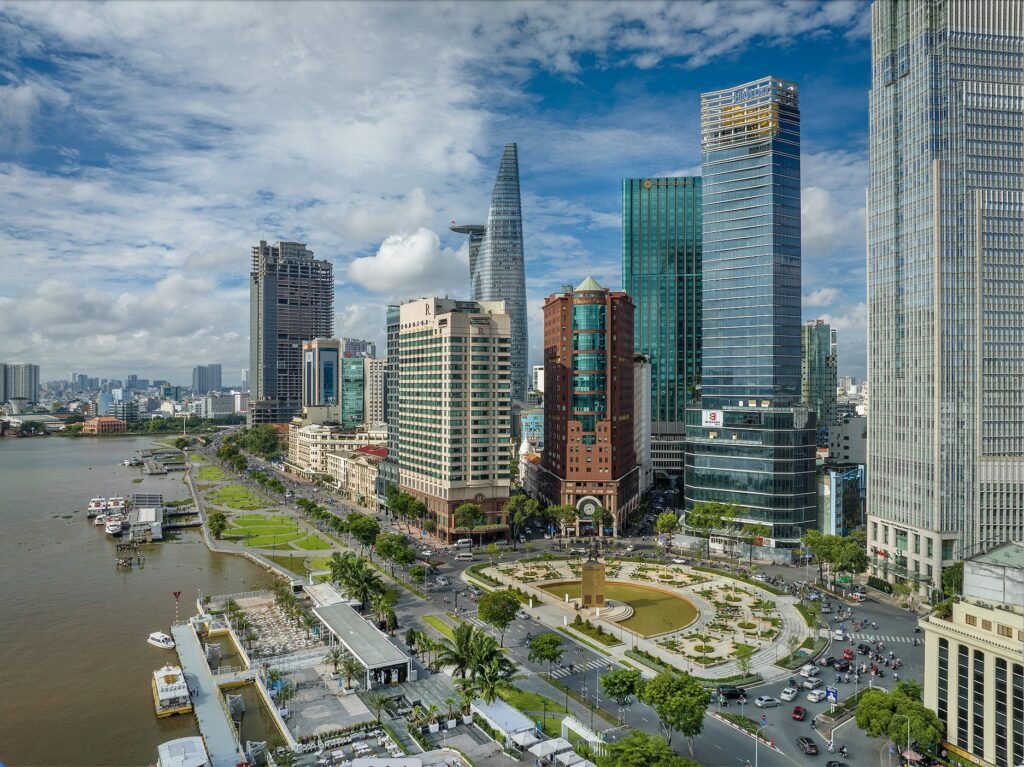
More than fourteen million inhabitants, as many scooters, and a city that has never really stopped being called Saigon. Many travellers spend only one night here before the Mekong: a pity, because this is where contemporary Vietnam is best understood.
In brief
Best time
December to March, dry and less heavy; June to October, short showers in the late afternoon
Getting there
International airport; 2 h 15 flight from Hanoi, 45 min from Da Nang
How long
Two nights for the city, three if you add Cu Chi or the delta
Combine with
The Mekong Delta 2 h away, Con Dao 45 min by air, Da Lat 30 min by air
Saigon or Ho Chi Minh City?
Both, and the usage is not political. The official name has been Ho Chi Minh City since 1976, but everyone says Saigon in everyday conversation — including the authorities, who write Sai Gon on stations and tickets. Saigon refers rather to the historic centre, the museum-city of the colonial and war years.Ten million inhabitants, a third of the country’s gross domestic product, and an energy that surprises those arriving from the North. Hanoi is a political, scholarly capital; Saigon trades, goes out at night and talks louder. Most of our travellers start or finish their tour here.
Hanoi is a political, scholarly capital; Saigon trades and talks louder.
Two days, and what to put in them
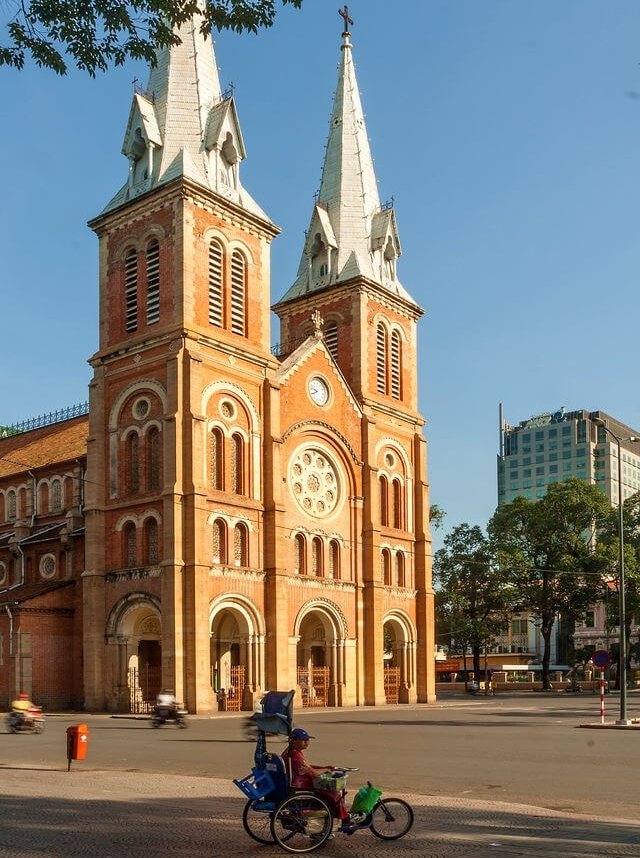
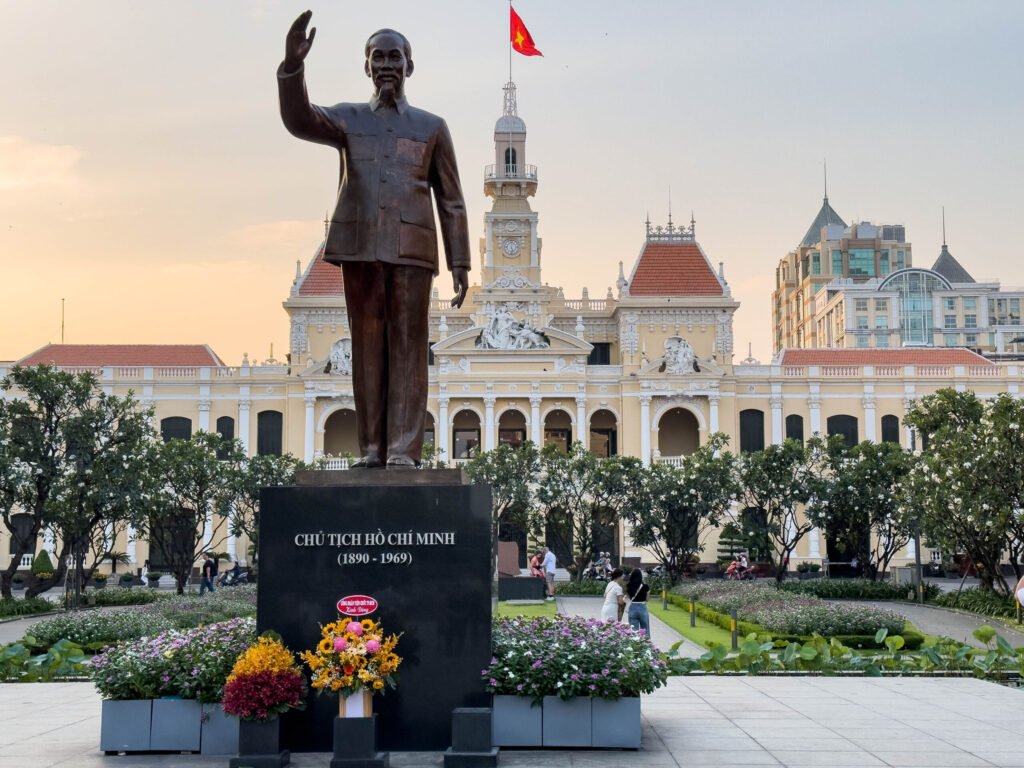
The first day fits into District 1, on foot. The central post office and Notre-Dame cathedral — built of bricks from Toulouse, under restoration for years —, the city hall, the opera house, then the Reunification Palace, left as it was in 1975 with its orange carpets and its map room in the basement.The War Remnants Museum needs two hours and an open mind: the presentation is one-sided, which is normal in a national museum, and the room devoted to Agent Orange is difficult. On the second day, change register: Cholon, the Chinese quarter, its pagodas with incense coils and its Binh Tay market.
Cu Chi, and the question of the war
An hour and a half to the north-west, the Cu Chi tunnels form a two-hundred-and-fifty-kilometre network dug by hand. You crawl about thirty metres through a passage widened for visitors — the real ones were sixty centimetres wide. There are two sites: Ben Dinh, closer and busier, and Ben Duoc, further and calmer, which we prefer.The visit includes a shooting range whose noise carries across the whole site; you can move away from it. Allow half a day. If you only have two days in Saigon, choose: Cu Chi or the delta, not both.
Southern street food
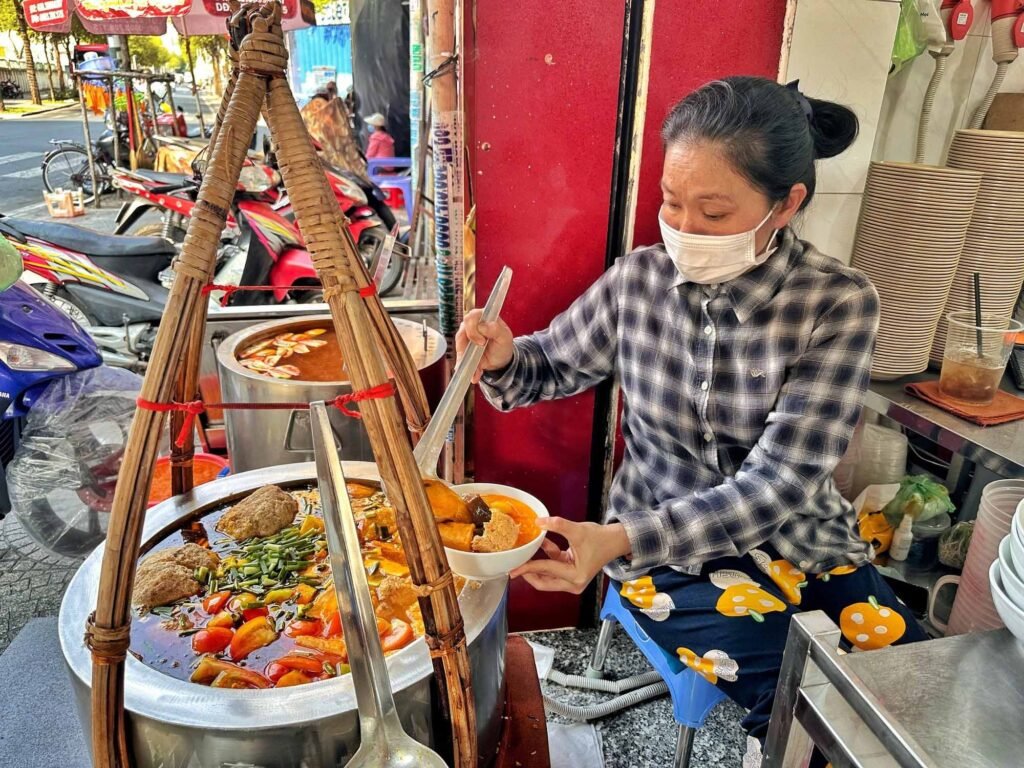
Southern food is sweeter, more herbal and more mixed than that of the North. banh mi was born here from the colonial baguette, com tam — broken rice, grilled pork ribs, egg — is the workers’ breakfast, and hu tieu, a noodle soup of Sino-Cambodian origin, is eaten at any hour.Three street addresses are worth more than one restaurant: a pavement packed with Vietnamese at noon, a covered market, an alley in the Tan Dinh district. Our guides do these tours by scooter in the evening, and it is by far the best-rated activity among our travellers in Saigon.
Where to stay and how to get around
District 1 puts everything within walking distance and costs from €45 to several hundred. Neighbouring District 3 is calmer and more residential, with beautiful colonial villas. Thao Dien, across the river, is green and family-friendly but means taking the car for everything.To get around, ride-hailing apps and taxis. Crossing the street takes a method: move forward slowly, without sudden moves, without stepping back — the scooters go around you. The first metro line opened in 2024 and serves the east–west axis; it remains marginal for a visitor.
When to come
The South has no winter: between twenty-six and thirty-four degrees all year round. The dry season runs from December to April, March and April being the most stifling. From May to October it rains, but in violent one-hour downpours in the late afternoon: this does not spoil a city stay, you just need to time your afternoon break right.
The mistakes we see most often
Spending only one night before rushing off to the delta: the city deserves two full days.
Doing Cu Chi in the morning and the war museum in the afternoon. That is a lot for one day.
Waiting for the green light to cross: it won’t stop the scooters.
Judging Vietnam by Saigon. The country begins thirty kilometres away.
The Saigon calendar
The South has no winter: between twenty-six and thirty-four degrees all year round. What changes is the water and the air.
Period
Conditions
What you need to know
December – February
26 to 32 °C, dry
The best window. Air a little less heavy, clear skies.
March – April
29 to 37 °C
The most stifling months of the year. Walk in the morning, go out in the evening.
May – June
27 to 34 °C
Start of the monsoon. Violent one-hour downpours in the late afternoon.
July – September
26 to 32 °C
The heart of the rainy season. Frequent urban flooding in some districts.
October – November
26 to 32 °C
End of the monsoon, air washed clean. Very pleasant from mid-November.
Rain does not spoil a city stay: it falls hard, for an hour, often between four and six in the afternoon. Just make it your coffee hour. What weighs more is the heat of March–April, when walking for two hours at a stretch becomes an ordeal.
Where to stay: three districts, three stays
District 1, the historic centre
Everything on foot: the central post office, the cathedral, the opera house, the Reunification Palace, Ben Thanh market. It is the default choice for two or three nights. From €45 to €300. Avoid the immediate surroundings of Bui Vien street, very noisy until three in the morning.
District 3, residential and colonial
Next to District 1, calmer, with beautiful villas under the tamarind trees and neighbourhood addresses where nobody speaks English. Our preference for a second stay, or for anyone who wants to approach the city from its edges. From €40 to €150.
Thao Dien, across the river
Green, family-friendly, with pools and international restaurants. But you are twenty to forty minutes from everything depending on traffic, which weighs heavily on a short stay. Best for families staying a week.
Cu Chi or the delta: how to decide
With two full days in Saigon, you can’t do both excursions. Here is what you need to decide.
Cu Chi tunnels
Mekong Delta as a day trip
Length
Half a day
Full day
Road
1 h 30 each way
2 h each way
Interest
Military history, ingenuity
Landscape, river life
Limitation
Noisy shooting range on site
4 h on a bus for 1 h in a boat
Our view
Choose Ben Duoc, further away and calmer than Ben Dinh
Don’t do it as a day trip: sleep there
Our recommendation is clear: do Cu Chi from Saigon, and keep the delta for a real two-day stop with a night in a guesthouse. The one-day delta excursion is the one our travellers most often come back disappointed from.
What a day in Saigon costs
Item
Simple
Comfortable
Street breakfast
1 – 3 €
5 – 10 €
Lunch
2 – 5 €
10 – 20 €
Dinner
4 – 8 €
20 – 50 €
Ride in town
1 – 3 €
—
Museum or palace
1,50 – 4 €
—
Food tour by scooter
—
40 – 70 €
The evening food tour by scooter, with a guide taking you as a passenger through four or five neighbourhoods, is the activity our travellers mention most when they get back. Three to four hours, and you see a city you can’t reach on foot.
What to do in Ho Chi Minh City: the highlights
Notre-Dame Cathedral and the Central Post Office, two French-era buildings in the heart of District 1.
The Reunification Palace, where the tanks entered on 30 April 1975.
The War Remnants Museum, to understand the conflict from the Vietnamese side.
Ben Thanh market in the morning, and its food stalls.
Cholon, the Chinese quarter, with Thien Hau pagoda and Binh Tay market.
The Jade Emperor Pagoda, one of the most beautiful in the city.
Old apartment blocks turned into cafés, such as the one at 42 Nguyễn Huệ street.
An evening of street food by motorbike in Districts 3 and 4.
A rooftop at sunset, above the Saigon River.
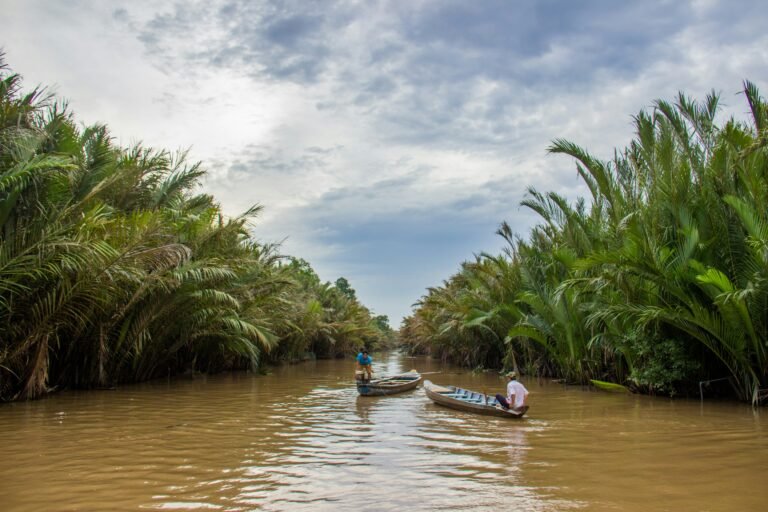
The Cu Chi tunnels, as a half-day trip, and the Mekong Delta, two hours away.
Three days in Saigon with the delta
Day one: the colonial centre in the morning, a lunch of cơm tấm, the War Remnants Museum in the afternoon, then a street dinner in District 4. Day two: the Cu Chi tunnels early in the morning, back for Cholon and its pagodas, a rooftop at sunset. Day three: off to the Mekong Delta, Ben Tre or Vinh Long, by boat along the canals, with a homestay night, or back in the evening if your flight leaves the next day.
Getting to and from the airport
Tân Sơn Nhất airport is inside the city, about seven kilometres from District 1. Allow 25 to 45 minutes depending on traffic, much more at rush hour, from 5 to 7 pm. A car via app generally costs 150,000 to 250,000 dong, about 5 to 8 €. An express bus also links the airport to the centre for a very low price. For domestic flights, arrive at least an hour and a half early: the domestic terminal is often very busy.
Saigon with children
The city is intense for younger children: heat, noise, traffic. But it works very well at an adapted pace: visits in the morning, the hotel pool in the hot hours, an outing at the end of the day. Children often love the water puppets, the markets, a boat ride on the Saigon River and, of course, the Cu Chi tunnels from the age of eight or ten. Two nights are enough before heading to the delta or a beach.
Two full days, three if you add the Cu Chi tunnels. The city works well at the start or end of a tour, before the Mekong Delta.
Is the War Remnants Museum suitable for children?
We advise against it before twelve: some rooms are very hard. The Reunification Palace is a gentler alternative.
Saigon or Hanoi: which city to prefer?
They can’t be compared: Hanoi is dense, old, restrained; Saigon is wide, fast, turned towards tomorrow. A good tour includes both.
What is the best time?
The dry season, from November to April. From May to October, showers are heavy but short, usually in the late afternoon.
Cu Chi or the Mekong Delta from Saigon?
Cu Chi, as a half-day, at the Ben Duoc site rather than Ben Dinh. Keep the delta for a real two-day stop: the day trip means four hours on a bus for one hour in a boat.
Which district should you stay in in Saigon?
District 1 for a first stay, everything is within walking distance. District 3 if you prefer calm and colonial villas. Avoid the immediate surroundings of Bui Vien street, noisy until three in the morning.
When should you avoid Saigon?
March and April, the most stifling months, when walking for two hours becomes an ordeal. The rainy season, on the other hand, doesn’t affect a city stay: the downpour lasts an hour, in the late afternoon.
Audience measurement. We would like to know which pages are useful to you, using Google Analytics. Nothing is stored without your consent, and you can change your mind at any time. Learn more



 The essentialsVietnam in 15 daysHanoi — Pu Luong — Ninh Binh — Lan Ha Bay — Hue — Hoi An — Saigon — Mekong Delta15 days / 14 nightsfrom €2,070