Everyday health: water, food, mosquitoes and pharmacy
The main cause of discomfort is not street food — it is often safer than a restaurant. It is the water. What you really need to watch on the ground, what can be bought in a Vietnamese pharmacy, and what should come from home.
In brief
Water
Never from the tap. Bottled water everywhere, industrial ice cubes safe in the cities
Malaria
Absent from the classic tourist areas. No preventive treatment needed
The real risk
Dengue, transmitted by day. Repellent in the morning and late afternoon
Pharmacies
Numerous, well stocked, no prescription needed for the essentials
Water and ice: the simple rule
Situation
Safe?
Note
Tap water
No
Even in big hotels. Brushing your teeth with it is safe.
Sealed bottled water
Yes
Check that the cap is intact. €0.20 to €0.50 a litre.
Cylindrical ice cubes with a hole
Yes
Industrially produced from treated water. These are the most common.
Crushed ice in a bag
Caution
Common in rural areas, uncertain origin.
Tea and coffee
Yes
The water has been boiled.
Juice squeezed in front of you
Yes
Avoid juices already prepared and left in the sun.
The cylindrical ice cube with a hole through it is a good sign: it comes from a factory and not a home freezer. You find it in almost all urban establishments, including pavement eateries.Think about a filter water bottle: Vietnam produces a considerable amount of plastic waste from bottles, and most hotels now offer refill fountains.
Eating street food without getting ill
The good signs
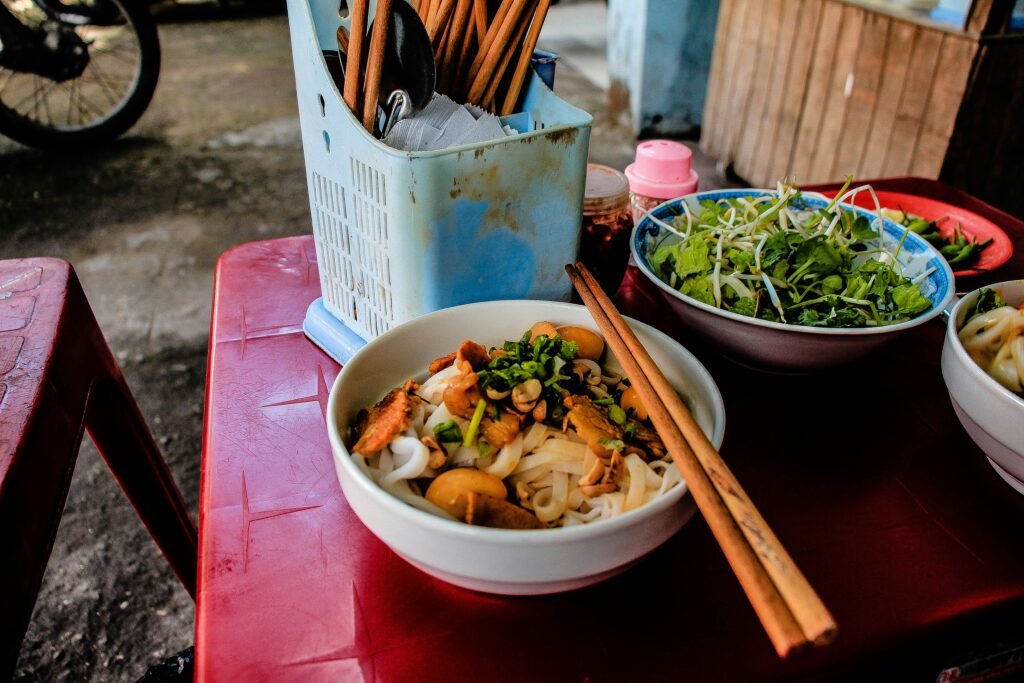
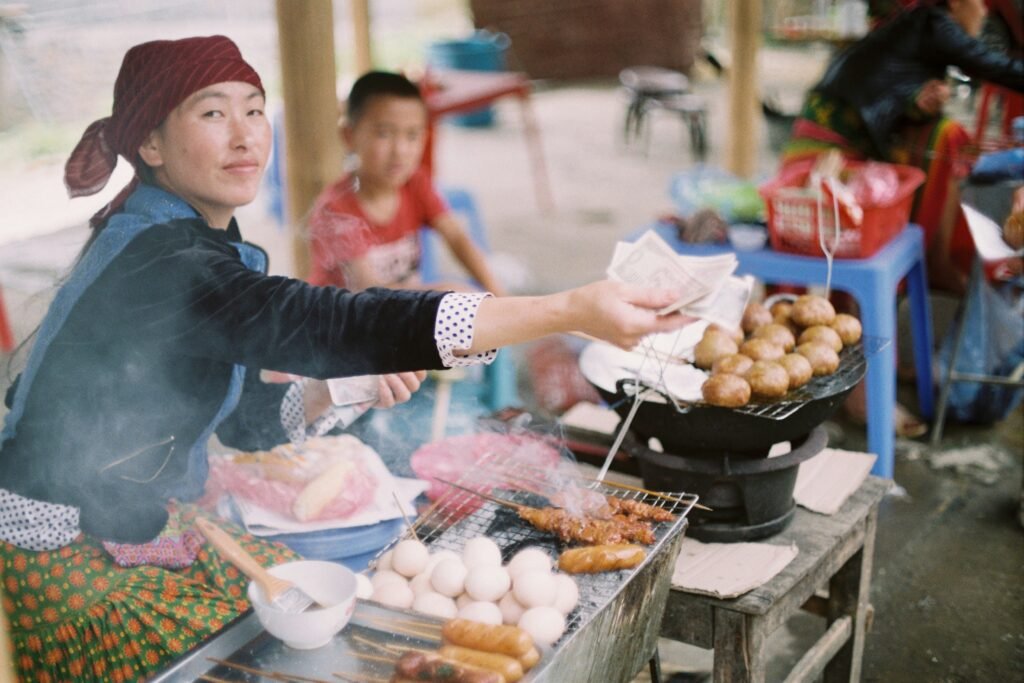
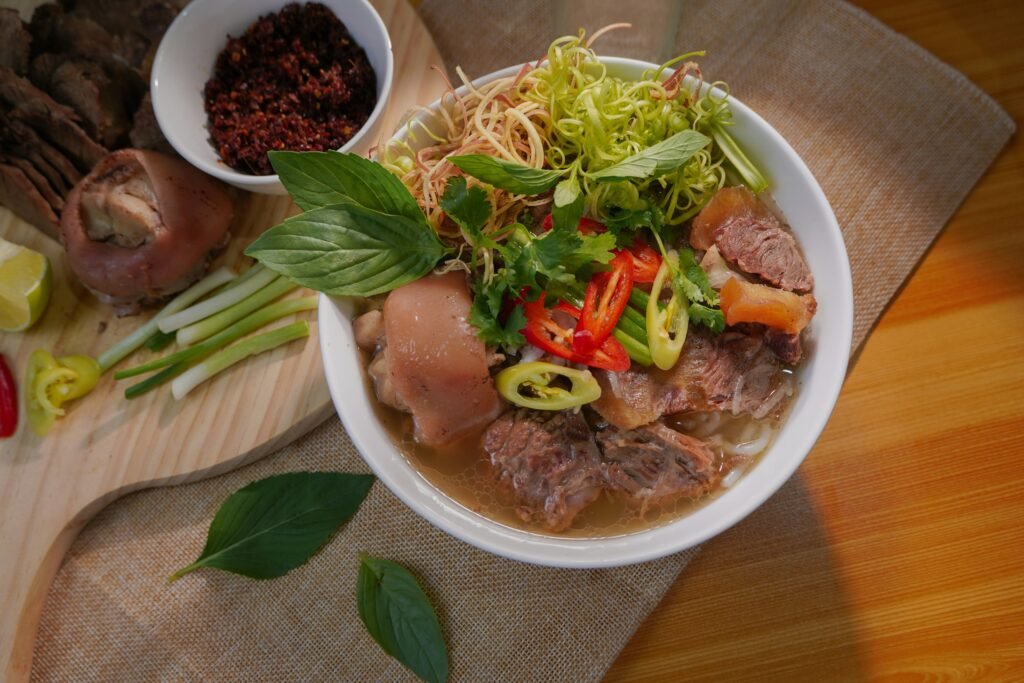
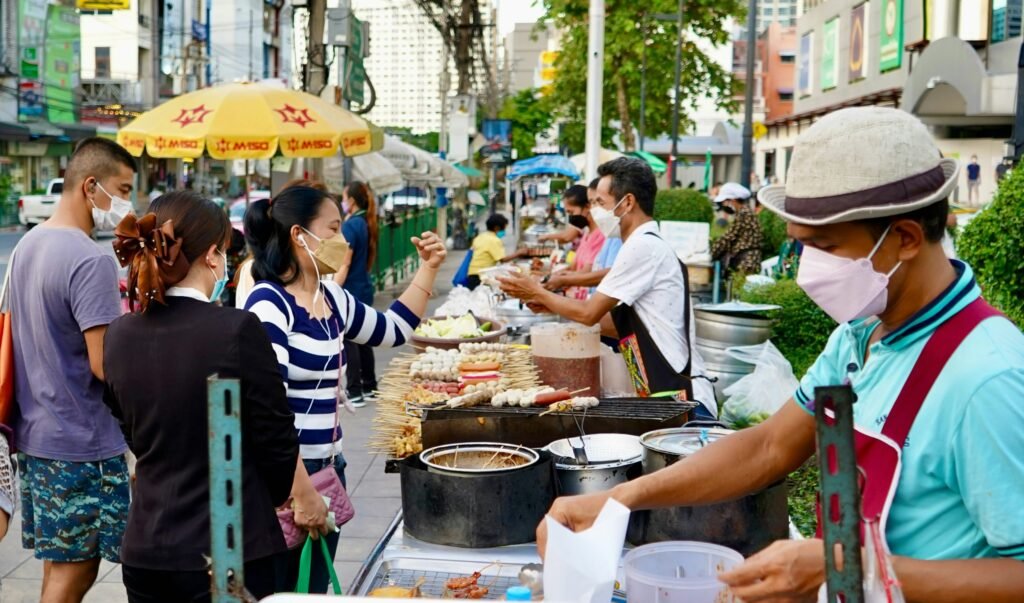
A stall frequented by Vietnamese people, where food is cooked in front of you, the pot is boiling and stock turns over fast. A stall serving only one dish is almost always better and safer than a restaurant with a long menu: it buys just what it needs every morning.
The real points to watch
Dishes lukewarm and left out on a buffet, raw shellfish, salads washed in tap water in very small rural establishments, and pre-peeled fruit sold on a tray in the sun. Fresh herbs served on a plate, on the other hand, are safe in the cities.
What happens most often
It isn’t food poisoning but adjustment : a change of gut flora, chilli, oil, MSG. It lasts twenty-four to forty-eight hours and is treated with rest, water and plain rice. An anti-diarrhoea medicine in your kit is enough in almost every case.See a doctor, however, if your temperature exceeds 38.5 degrees, if symptoms last more than three days, or if there is blood in your stools.
Mosquitoes: malaria isn’t the issue
What you need to know
Malaria is absent from the classic tourist areas — cities, Red River Delta, coast, Lan Ha Bay, Hue, Hoi An, Mekong Delta. It survives at residual levels in a few forest areas of the highlands and along the Cambodian border. For a classic tour, no preventive treatment is needed ; ask your doctor to confirm based on your itinerary.
The real risk: dengue
It is present throughout the country, including in towns, and outbreaks follow the rainy season — June to November in the North and Centre. There is no treatment, only prevention.The point that changes everything: the dengue mosquito, Aedes, bites by day, with peaks in the early morning and late afternoon. It is the opposite of the malaria mosquito. A repellent applied only in the evening is therefore useless.
What works
Measure
Effectiveness
Note
Repellent with 30 – 50% DEET or icaridin
Very good
Reapply every 4 to 6 h, morning and late afternoon
Long, light-coloured clothing
Good
Useful in forests and at the end of the day
Air-conditioning or fan
Good
Mosquitoes fly badly in a draught
Mosquito net
Good at night
Provided in homestays
Wristbands and sound apps
None
No proven effect
The travel first-aid kit
What to bring
Product
Why
Available locally?
Anti-diarrhoea medicine
The most frequent need
Yes
Rehydration salts
More useful than anti-diarrhoea medicine in case of heavy fluid loss
Yes
Paracetamol
Fever. Preferable to ibuprofen if dengue is suspected
Yes
Repellent 30 – 50%
Local products are weak
Poorly
SPF 50 sunscreen
Expensive and rare outside the big cities
Poorly
Antiseptic and plasters
Cuts, walking blisters
Yes
Personal medication
Bring a translated prescription
Variable
One precaution that matters: in case of unexplained fever, choose paracetamol over ibuprofen and aspirin. The latter increase the risk of bleeding if the fever is dengue, and you can’t know without a test.
Pharmacies on the ground
They are numerous, well stocked and cheap. Most common medicines can be obtained without a prescription, often by the unit. Staff rarely speak French or much English: show the box or the name of the active ingredient, not a foreign brand name.Two reservations. Counterfeits exist: buy from visible chains in the big cities rather than a village stall. And check expiry dates, which are rarely controlled.
Getting treatment: where to go depending on severity
Situation
Where to go
Indicative cost
Minor problem
Pharmacy
1 – 10 €
Consultation
International clinic, Hanoi or Saigon
60 – 120 €
Emergency in town
International hospital
Upfront payment requested
Emergency in a rural area
Local clinic then evacuation
Variable
Serious emergency
Medical repatriation
€20,000 to €80,000 without insurance
The international clinics of Hanoi and Ho Chi Minh City are of a good standard and have French-speaking doctors. Outside these two cities, provision drops quickly: in Ha Giang, Pu Luong or Con Dao, the local clinic deals with the immediate emergency and then arranges evacuation.
Insurance, and what to check
This is the most important point on this page. Three checks before you leave.The ceiling for medical expenses must cover at least a hundred thousand euros, and medical repatriation must be included with no ceiling. An evacuation from Vietnam costs several tens of thousands of euros.Exclusions relating to two-wheelers. Most policies exclude damage suffered while riding a two-wheeler over 50 cc without a recognised motorbike licence. It is the number one cause of refused claims in Vietnam, and it affects many travellers who rent a scooter in Ha Giang or Phu Quoc.Excluded activities : diving beyond a certain depth, canyoning, trekking above a given altitude. Fansipan, at 3,143 metres, exceeds the threshold of some policies.Insurance from premium bank cards often covers the essentials, but with low ceilings and a limited duration — often ninety days. Read the policy wording rather than the brochure.
Heat, sun and altitude
Dehydration is the most frequent problem for travellers in Vietnam, far ahead of illness. From May to September, Hanoi and Hue regularly exceed thirty-eight degrees with eighty per cent humidity: sweat no longer evaporates and the body no longer cools.Three habits are enough. Drink two to three litres a day, more when walking. Schedule visits before ten in the morning and after four in the afternoon, as the Vietnamese do. And accept the midday break: it isn’t wasted time, it is what lets you last fifteen days.Altitude is not a problem: the highest place you sleep is Sa Pa at sixteen hundred metres. The cold, on the other hand, is a surprise — zero to ten degrees from December to February in the far North, with no heating anywhere.
Official sources to check
For up-to-date medical recommendations — vaccinations, dengue, medicines banned at entry — the reference for French nationals remains the Health page of the French Ministry of Foreign Affairs, updated several times a year (other nationalities should check their own government’s travel advice). It reminds you not to buy medicines in the street, because of counterfeits, and to bring your medication with its prescription. An appointment at a travel vaccination centre, four to six weeks before departure, completes the picture.
No, nowhere, not even in big hotels. Bottled water only, including for brushing your teeth in the simplest accommodation. Bring a water bottle: most of our accommodation and vehicles let you refill it.
Are ice cubes dangerous?
In towns, no: ice is industrially produced from treated water and can be recognised by its regular, cylindrical shape with a hole. It is irregular crushed ice in isolated areas that is best avoided, along with watered-down juices.
Is street food risky?
Less so than in many restaurants. Trust three signals: a queue of Vietnamese people, cooking in front of you, and a stall that makes only one dish. A forty-dish menu in four languages is a much worse sign.
What should go in your first-aid kit?
Your personal medication with its prescription, something to treat traveller’s diarrhoea, a rehydration solution, a painkiller, an antiseptic, a repellent and a sunscreen from home. Everything else can be bought locally, cheaper and often without a prescription.
What precautions against mosquitoes?
Physical protection first: long, light-coloured clothing in the evening, a mosquito net in the countryside and mountains, repellent on exposed skin. Some species also bite in broad daylight. Ask your doctor what suits your situation.
Where can you get treatment if there is a problem?
Hanoi, Saigon, Đà Nẵng and Hội An have good-standard international clinics. Before leaving, check that your insurance covers costs and repatriation, and be aware that upfront payment is common. Our French-speaking assistance number answers at any time and knows where to send you.
Do you need antimalarials for Vietnam?
Not for a classic tour: malaria is absent from the cities, the coast and the two deltas. It survives at residual levels in a few forest areas. The real risk is dengue, against which only repellent protects.
Can you eat street food in Vietnam?
Yes, and it is often safer than a restaurant with a long menu: a stall serving one dish buys just what it needs every morning. Look for stalls frequented by Vietnamese people, where the pot is boiling in front of you.
What should you check in your travel insurance?
A medical ceiling of at least a hundred thousand euros, medical repatriation with no ceiling, and above all the exclusions relating to two-wheelers: riding a scooter over 50 cc without a motorbike licence voids cover in most policies.
Putting it into practice
The tours where you experience what this article is about
Audience measurement. We would like to know which pages are useful to you, using Google Analytics. Nothing is stored without your consent, and you can change your mind at any time. Learn more

 The essentialsVietnam in 15 daysHanoi — Pu Luong — Ninh Binh — Lan Ha Bay — Hue — Hoi An — Saigon — Mekong Delta15 days / 14 nightsfrom €2,070