Day 01Arrival in HanoiD
French-speaking guide & private driver · Transfer 40 km · 45 min
Welcome at Noi Bai and transfer to the Old Quarter. Fifteen days is the length from which you can follow the country in chronological rather than geographical order — and that is the thread of this tour. You will travel down from the cradle of the Việt people, in the Red River Delta, to the lands Vietnam conquered only in the 18th century.
The story begins with a figure: a thousand years. From 111 BC to 938, the north of present-day Vietnam was a Chinese province. The country kept its script, Confucianism, mandarin administration and village structure — and a wariness that has never gone away. Independence was regained in 938 at the battle of Bach Dang, won by planting iron-tipped stakes in the estuary to gut the Southern Han fleet as the tide went out. The stratagem was used three times in three centuries.
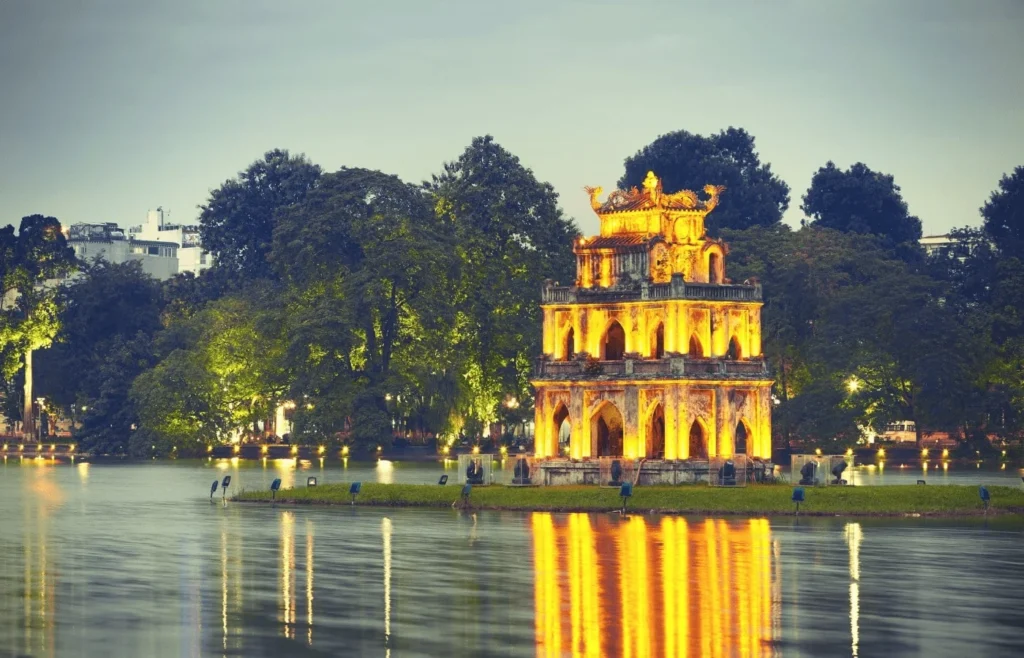
Hanoi became the capital in 1010 under the name Thang Long, “the rising dragon”. It remained so almost without interruption until 1802, and again since 1945. Seven names in a thousand years, which says a lot about the hands it has passed through.
Welcome dinner at a neighbourhood address, bún chả grilled over charcoal. It is also the moment when your guide adjusts the programme: what you want to explore further, what tires you, what you would rather skip.
Day 02Hanoi, the city of a thousand tradesB, L
French-speaking guide · Short trips · About 5 km on foot
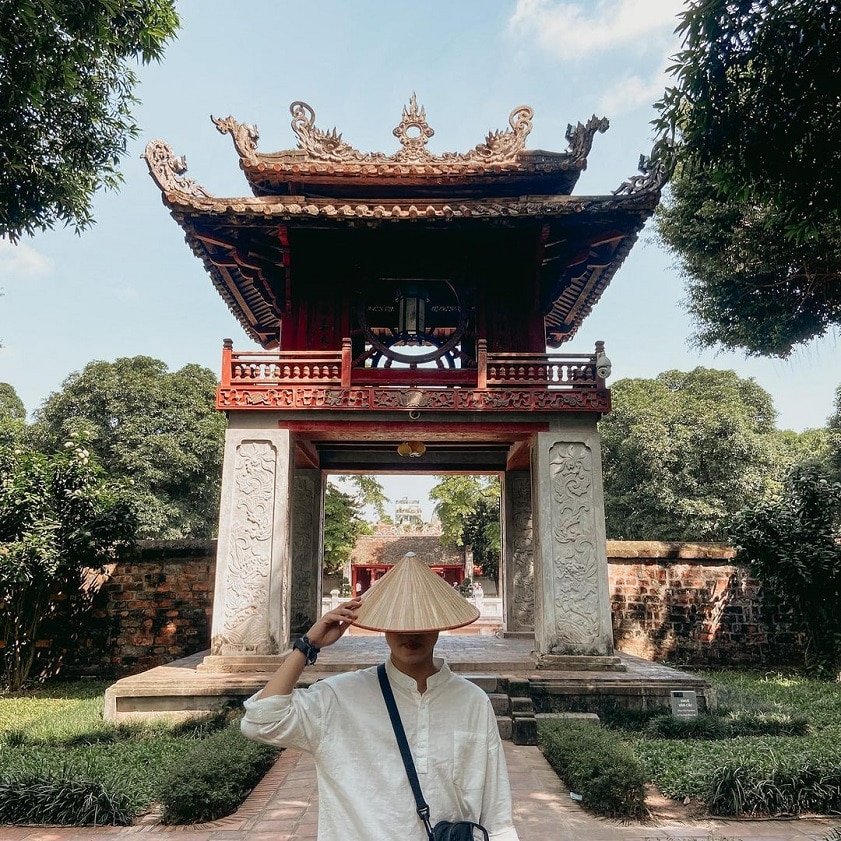
First the Temple of Literature, founded in 1070 and in 1076 the country’s first university. Eighty-two steles carried by stone turtles bear the names of those who passed the mandarin examinations between 1442 and 1779. The system was open to the sons of peasants: you rose by examination and not by birth, with a pass rate of about one per cent. A thousand years later, it still explains the place of school in Vietnamese families.
Then the Old Quarter, known as “the thirty-six streets”. Each bears the name of a trade because guilds from the delta villages settled here by district from the 15th century, with their temple and patron saint. The houses are only two or three metres wide at the front but thirty deep: tax was calculated on the width facing the street.
In the afternoon, the quarter built by the French: the 1911 opera house, a scaled-down copy of the Palais Garnier, and the National Museum of History, a masterpiece of the Indochinese style invented by Ernest Hébrard — Vietnamese timber frame, European plan. Hanoi kept this fabric almost intact for an inglorious reason: between 1954 and 1986, the country couldn’t afford to demolish.
End of the day at the Museum of Ethnology, which prepares you for the following three days in the mountains.
Day 03Hanoi — Pu LuongB, L, D
Road 170 km · 4 h · Last 20 km winding
Road south-west to the first mountains. The landscape changes in two stages: first the delta, flat and densely populated, then the hills of Thanh Hoa and finally the limestone valleys of the Pu Luong reserve.
This change of relief is also a change of population, and that is what makes these three days interesting. The Việt, eighty-five per cent of the population, have always been a people of the plains and irrigated rice; the mountains belong to fifty-three other groups. Here, they are the White Thai and the Muong. The former arrived from Yunnan around the 11th century and speak a language of the Tai-Kadai family, a cousin of Thai and Lao — not of Vietnamese. The latter are much closer to the Việt: linguists consider that Việt and Muong separated about a thousand years ago, when one group adopted the Chinese culture of the delta and the other did not.
In other words, as you go up this valley, you meet the cousins who stayed upstream of a history of which Hanoi is the other branch. It is one of the keys to Vietnam: a centralised, Confucian state in the plains, a mosaic of village societies in the highlands.
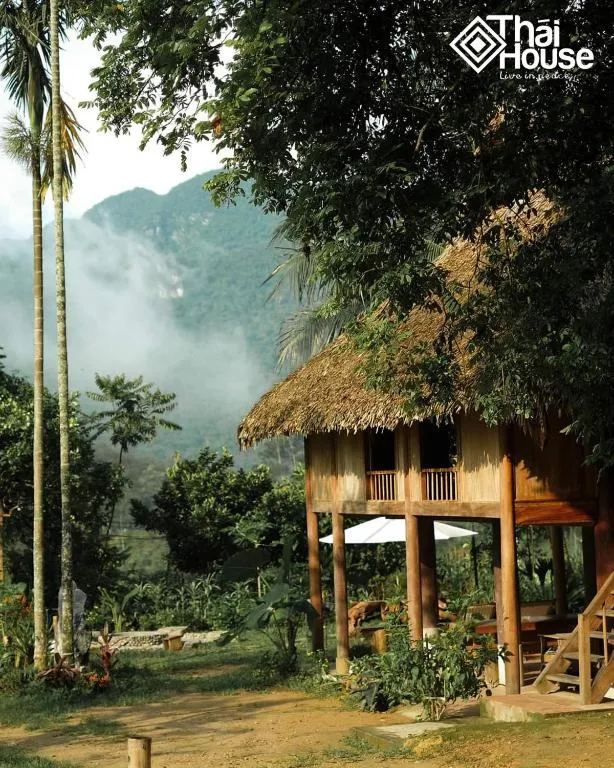
Arrival in the late afternoon and settling into a stilt house. The space underneath, once reserved for livestock, now serves as a common room; dinner is eaten sitting on the floor around shared dishes.
Day 04Pu LuongB, L, D
Walk 8 to 12 km · Moderate elevation · Adaptable pace
A day of walking from one hamlet to the next, along the paddy dykes and dirt paths. Pu Luong is not a park kept under glass: ten thousand people live and farm here, and that is what makes the crossing interesting.
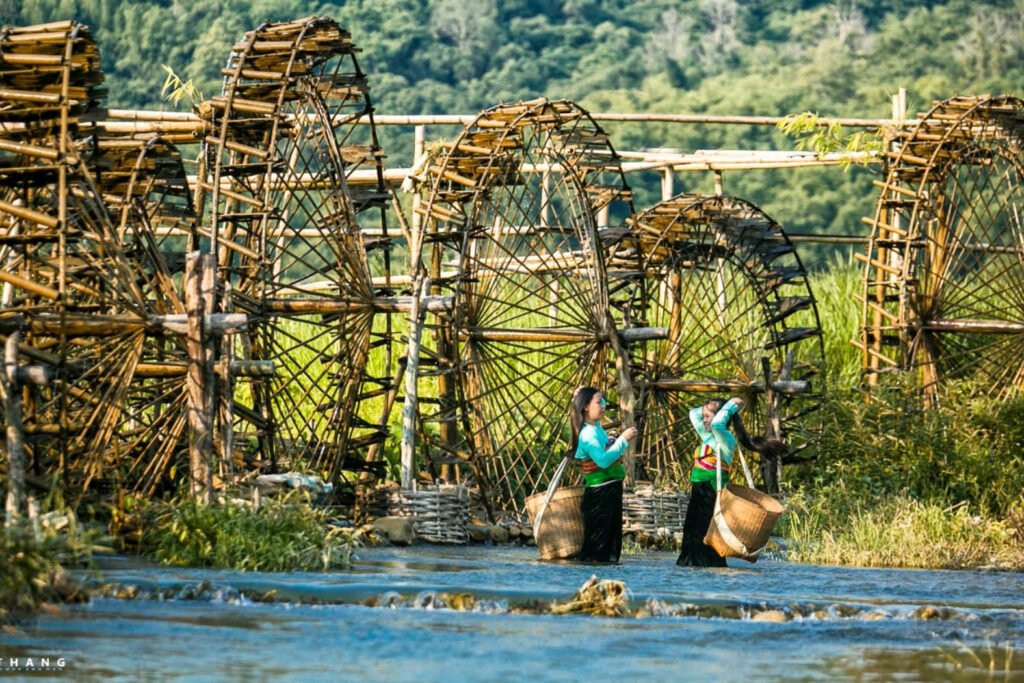
You will pass bamboo water wheels five to six metres in diameter, which lift river water to the upper terraces with no energy other than the current. Split-bamboo buckets fill at the bottom and empty at the top into a chute. The technique has been attested for centuries in South-East Asia; today it is disappearing in favour of electric pumps, and with it a know-how written down nowhere.
The reserve gives two rice harvests a year, against just one in the far North — a difference of altitude and latitude. That doubles your chances of seeing the golden terraces: late May–early June, then late September–early October.
A stop is a must at Kho Muong cave, opening onto an isolated amphitheatre reached by a steep descent through the bamboo. The hamlet at the bottom of the amphitheatre has only had electricity for about fifteen years. Back to the lodge in the late afternoon, as the mist settles on the valley.
Day 05Pu Luong — Ninh BinhB, L
Road 130 km · 3 h · Rowing boat 1 h 30
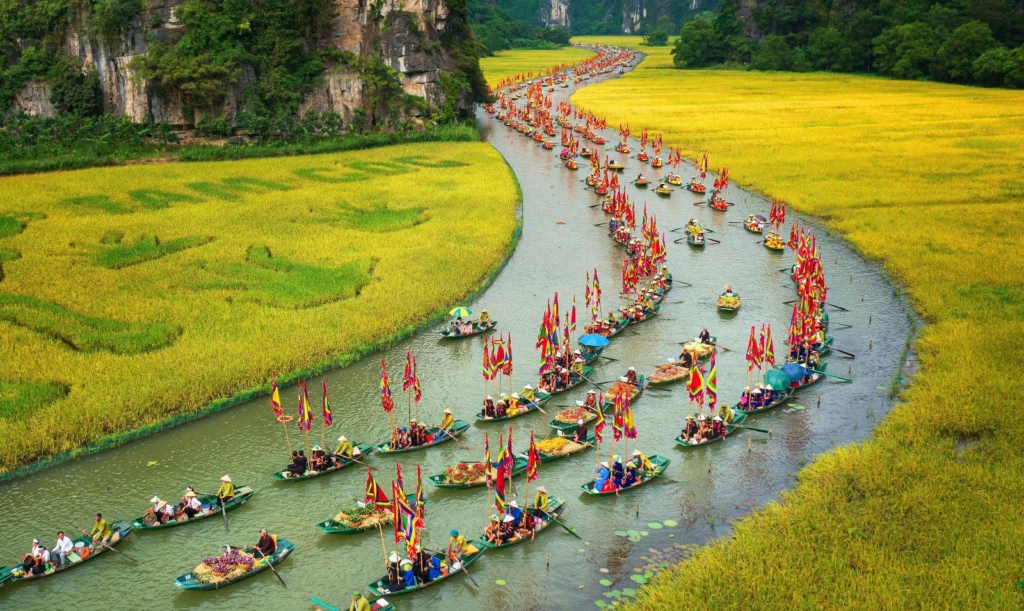
Down to the plain and arrival in Ninh Binh, which was the first capital of independent Vietnam. It is the second stage of the historical thread, and one of the least known.
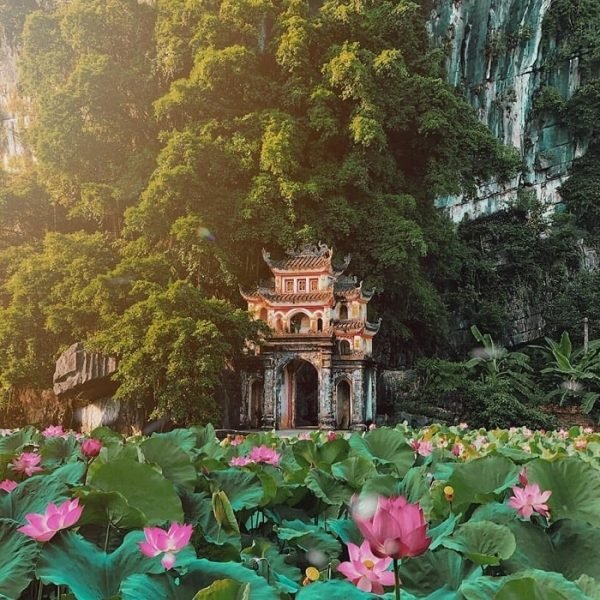
In 968, after thirty years of war between twelve lords, a former buffalo herder named Dinh Bo Linh unified the country and proclaimed himself emperor at Hoa Lu. He chose this amphitheatre of limestone cliffs because it defended itself: a closed basin, a few passes to hold, and rivers for escape. The capital stayed there for forty-two years, under the Dinh and then the Early Lê, before Ly Thai To moved it to Thang Long in 1010 — a sign that the country felt secure enough to leave its fortress and settle in the open plain.
All that remains of the 10th and 11th centuries are two temples rebuilt in the 17th, dedicated to the two dynasties. The site is modest and takes an hour to visit; it is the story that counts. You understand why Vietnam has always sited its capitals for military reasons above all.
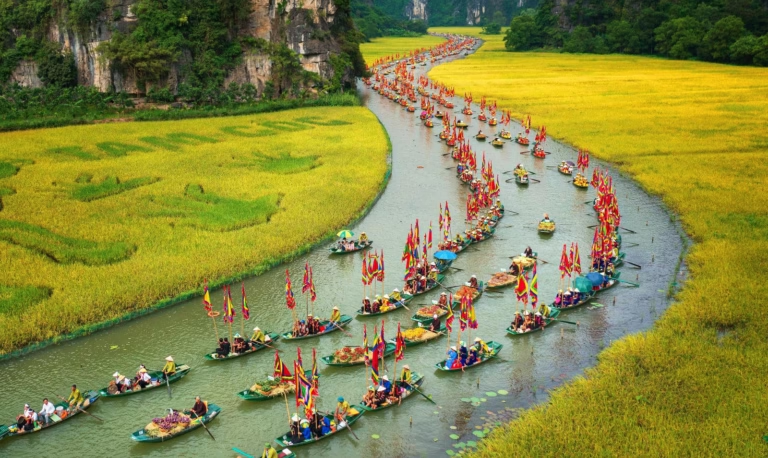
Rowing-boat outing at Tam Coc or Trang An after three o’clock, when the light becomes low. This rocky landscape is the same massif as Halong Bay, left dry when the sea retreated six thousand years ago. Night in a lodge among the rice fields.
Day 06Ninh Binh — Lan Ha BayB, L, D
Road 180 km · 3 h 30 · Boarding 12 pm
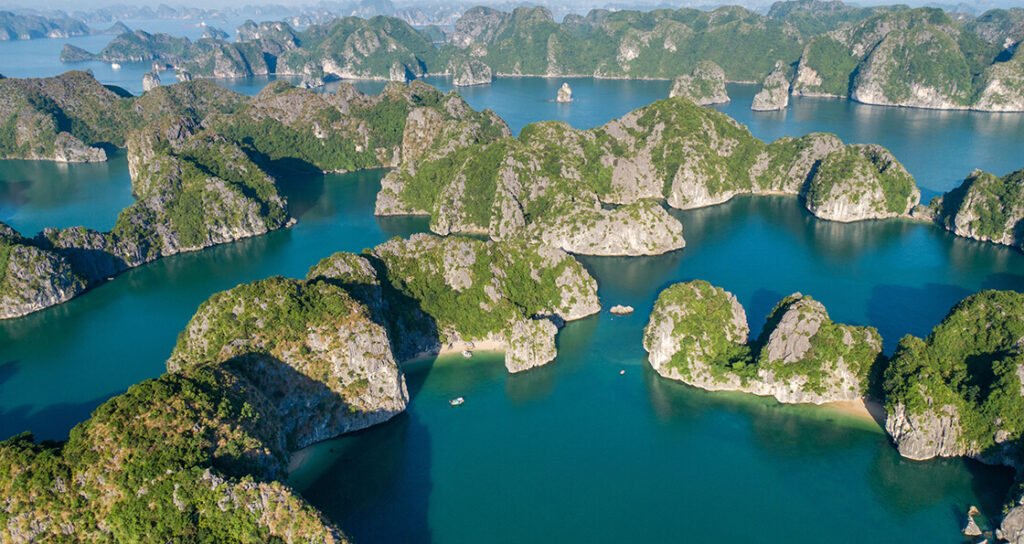
Road to the coast and boarding a small junk at noon in Lan Ha Bay, south of Halong Bay.
The estuary you skirt on arrival is that of the Bach Dang, and it deserves a moment’s pause. It was here, in 938, then in 981, then in 1288, that Vietnamese armies defeated three Chinese fleets with the same stratagem: thousands of iron-tipped stakes planted in the riverbed, invisible at high tide, and a feigned retreat to draw the enemy in as the tide went out. The third victory, General Tran Hung Dao’s over Kublai Khan’s Mongols, is probably the most retold event in Vietnamese history. Stakes have been excavated and are displayed near Hai Phong.
The landscape itself is older still: these three thousand islets are the remains of a limestone plateau laid down three hundred million years ago, dissolved by rain then drowned by rising seas after the last ice age.
Kayaking at the end of the day in an enclosed lagoon, reached through a sea tunnel passable only at low tide. Night at anchor, engines off.
Day 07Lan Ha — Hanoi — flight to HueB, L
Cruise · Road 180 km · 3 h 30 · Flight 1 h 15
Last sail at dawn, disembarkation mid-morning, flight to Hue in the early afternoon.
This flight skips five centuries. Until the 14th century, the border of Đại Việt stopped north of Hue: beyond lay Champa, a sea-facing Hindu kingdom. The Hue provinces were ceded in 1306 as a dowry when a Việt princess married a Cham king — one of the region’s rare peaceful territorial transfers, and it didn’t last long.
It was the beginning of what historians call Nam tiến, the “march to the south”: six centuries during which the Việt people moved down the coast, absorbing Champa and then the Khmer lands of the Mekong Delta. The country you are crossing today from north to south is the result of this slow push, completed only in the 18th century.
Hue became the capital in 1802, when Nguyen Anh, after thirty years of civil war and with the help of French officers recruited by Bishop Pigneau de Béhaine, reunified the country under the name Gia Long. He chose Hue because it lies halfway between the two deltas.
First evening on the banks of the Perfume River, calmer than anything you have seen so far.
Day 08Imperial HueB, L
French-speaking guide · Dragon boat 45 min · Short trips
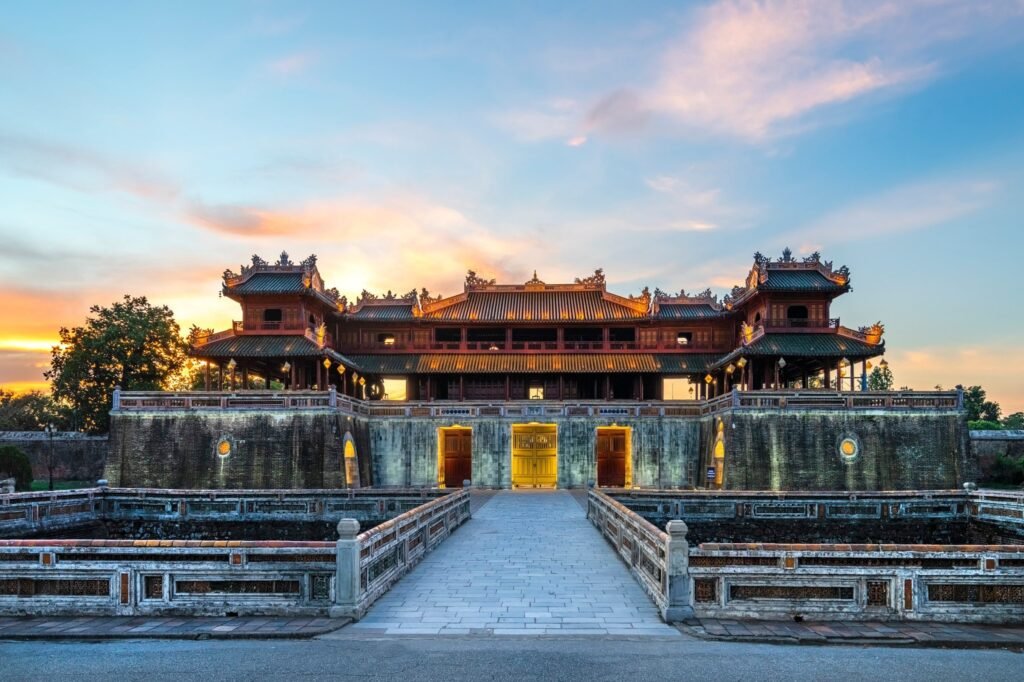
The citadel at its seven o’clock opening. A two-kilometre square, ramparts and moats, built on the Vauban model by French engineers in the service of Gia Long: the first visible trace of a presence that would become colonisation sixty years later.
The story of the thirteen Nguyen emperors is that of a sovereignty being hollowed out. In 1883, after the capture of the Thuan An forts, the Treaty of Hue placed Annam under a protectorate. Three emperors rebelled and were deposed then exiled — Ham Nghi to Algeria, Thanh Thai and Duy Tan to Réunion. The last, Bao Dai, abdicated on 30 August 1945 before a Viet Minh delegate, on the very gate through which you will enter.
In February 1968, during the Tết Offensive, the citadel was held for twenty-six days then retaken building by building. Of a hundred and sixty buildings, about twenty survived. The Purple Forbidden City is today a grassy esplanade where you can make out the foundations, and it is probably the most eloquent place in Vietnam.
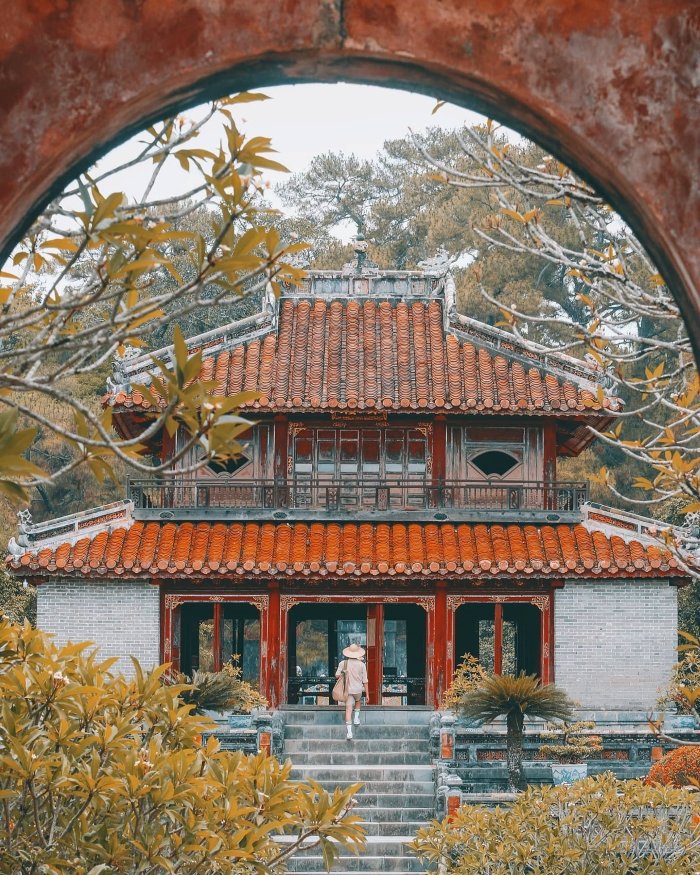
In the afternoon, a dragon-boat trip up the river to Thien Mu pagoda, from which the monk Thich Quang Duc’s car left in 1963 — it is displayed there. Then two imperial tombs: Tu Duc and Khai Dinh, one Confucian, the other openly Europeanised, which between them sum up the century that separates them.
Day 09Hue — Hoi An via the Hai Van PassB, L
Road 130 km · 4 h with stops · Pass at 496 m
The Hai Van Pass is not just the most beautiful road in the country: it is a border that served for six centuries. It separated Đại Việt from Champa, then the Trinh lords of the North from the Nguyen lords of the South during the partition of 1600–1786, then — give or take a few dozen kilometres — North and South from 1954 to 1975.
Four hundred and ninety-six metres above the Pacific, twenty-five kilometres of bends. It is also a real climatic border: the pass stops the cold air from China, and it is not unusual to leave Hue in the rain and come down into sunshine. At the top stand a Nguyen fort and French, then American, bunkers, riddled with bullet marks.
Since the tunnel opened in 2005, trucks pass underneath and the ridge is almost empty. We always take it: thirty minutes more, and the descent to Lang Co bay with its spit of sand between lagoon and sea.
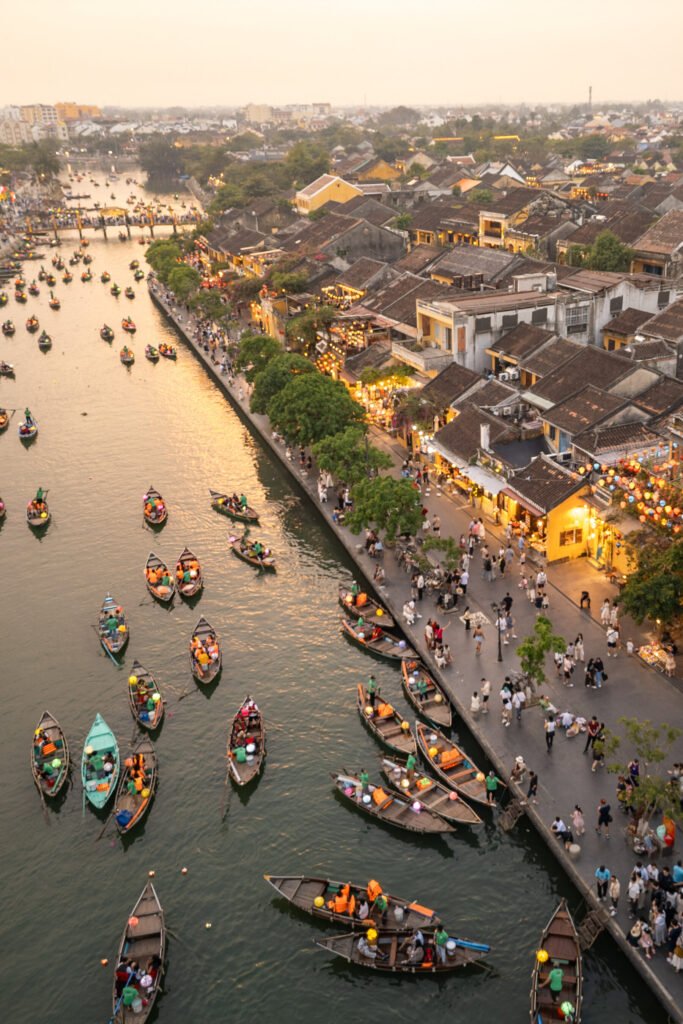
Stop at the Cham museum in Da Nang, set up in 1915 by the École française d’Extrême-Orient. Three hundred sculptures from the 7th to the 15th century, the finest Cham collection in the world — and essential preparation for the My Son day. Arrival in Hoi An as the lanterns light up.
Day 10Hoi An, craftspeople and rice fieldsB, L
Bike 12 km · Flat terrain · Cooking class 3 h
From the 15th to the 19th century, Hoi An was one of the great ports of South-East Asia. The Portuguese called it Faifo. Japanese and Chinese junks waited there for the monsoon to turn, sometimes five months, which explains the town: foreign merchants settled for half of every other year ended up building houses, temples and assembly halls by province of origin.
The Japanese covered bridge, built around 1590, marked the boundary between the Japanese and Chinese quarters. Japan closed its borders in 1639 and the Japanese community disappeared within a generation; the bridge remained the only witness.
The town owes its preservation to its decline. The Thu Bon river silted up in the 19th century, trade moved to Da Nang, and Hoi An slept for a hundred and fifty years — a slumber that saved eight hundred buildings prosperity would have replaced. UNESCO-listed in 1999.
Morning by bike in the craft villages, an afternoon of cooking that starts at the market. You will learn cao lầu, the Hoi An noodle, which requires water from one particular Cham well and ash from wood burned on the Cham Islands: yet another Cham legacy in a town people think of as Chinese.
Day 11My Son and back to Hoi AnB, L
Departure 6 am · Road 45 km · 1 h · Walk 2 km on site
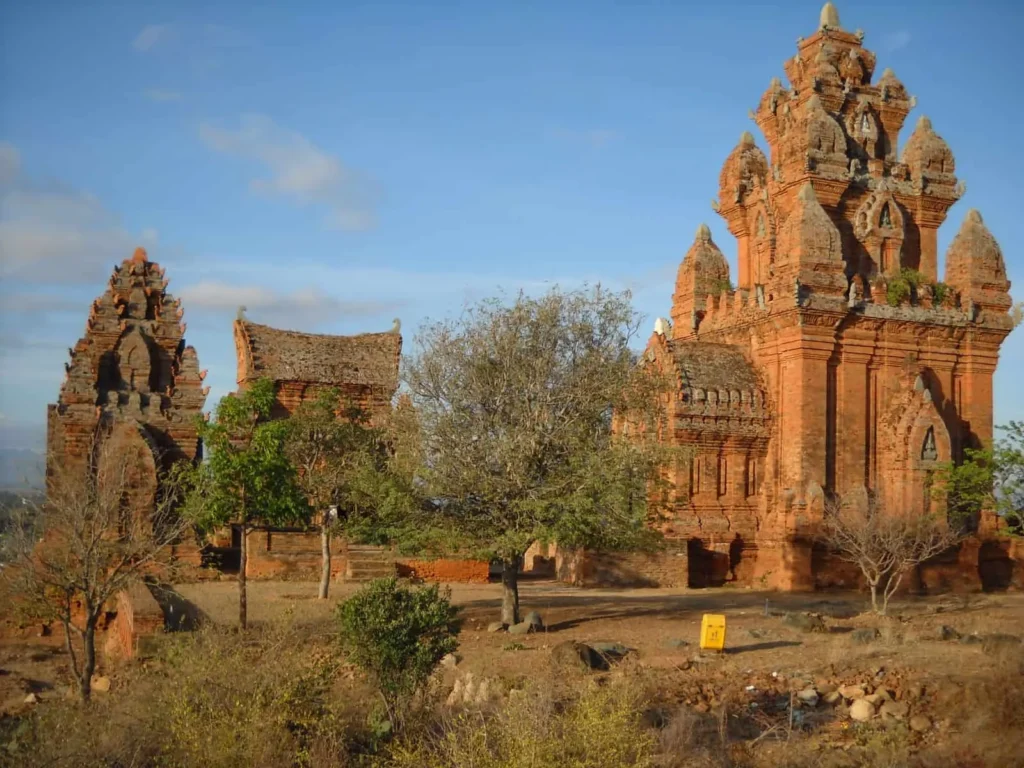
Departure at six to be on site at opening time. You arrive with the mist still clinging to the hills, the bricks red in the low light, and you have the valley to yourself: the first coaches don’t arrive before nine.
My Son was Champa’s sanctuary for more than a thousand years, from the 4th to the 13th century. Neither town nor fortress: a place of worship where each king added his tower, in a closed valley overlooked by a mountain considered the abode of Shiva. The kingdom, Hindu and sea-facing, traded with India, Java and China, and also lived from piracy.
Seventy towers were built; about twenty are still standing. They are built of fired bricks laid without visible mortar, so tight you can’t slip a blade between them, and the sculptures were carved directly into the wall once it was built. Nobody yet knows how: resin from the dầu raitree, firing the whole building on site, a vanished plant-based binder — hypotheses have been piling up for a century. The 1980s restorations, in grey cement, can be spotted at a glance.
In August 1969, American aircraft bombed the valley where the Viet Cong had set up. Group A, which housed the site’s tallest tower — twenty-four metres —, disappeared within a week. The craters are still visible between the buildings. Unexploded ordnance was removed until the 2000s: you don’t stray from the paths.
Back to Hoi An for lunch and a free afternoon.
Day 12Hoi An — Da Nang — flight to SaigonB
Road 30 km · 45 min · Domestic flight 1 h 20
Free morning — the quayside fish market between six and seven is the best possible use of it — then flight to Saigon in the afternoon.
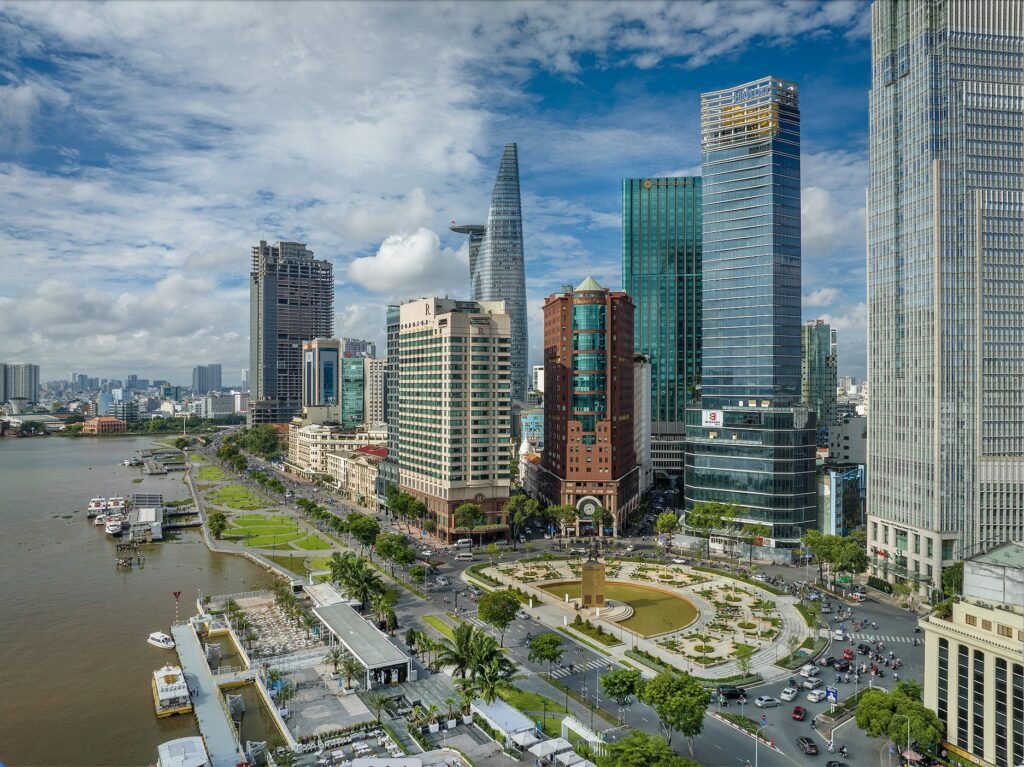
A thousand kilometres, an hour and twenty minutes, and the last chapter of the story. Saigon has only been Vietnamese since the 17th century: the region was called Prey Nokor and belonged to Cambodia. The Nguyen lords settled Việt colonists there from 1623, obtained the right to levy taxes, then annexed the whole delta in the 18th century. A million Khmer Krom still live there.
It was here that France began its conquest: the capture of Saigon in 1859, the cession of three provinces in 1862, French Cochinchina in 1867. Unlike Tonkin and Annam, protectorates in law, Cochinchina was a full colony — which explains why it was the most deeply transformed: land registry, rubber plantations, drainage canals, and a French-speaking bourgeoisie that never existed in the North.
First evening in District 1. To cross the street: move forward slowly, without sudden moves, without stepping back.

Day 13Saigon — Cai BeB, L, D
Road 110 km · 2 h 30 · Sampan 2 h
Morning in Saigon before heading down to the delta. The Reunification Palace has remained as it was on 30 April 1975: orange carpets, rotary phones, map room and communications centre in the basement. It was through its gate that a North Vietnamese tank drove that morning, ending thirty years of war.
The War Remnants Museum needs two hours and an open mind. The presentation is one-sided, which is normal in a national museum; the room on Agent Orange is difficult. Your guide will also tell you what museums don’t: that for Vietnamese under fifty — that is, three-quarters of the country — the war is history, not a memory, and that the question occupying families today is the price of housing, not 1975.
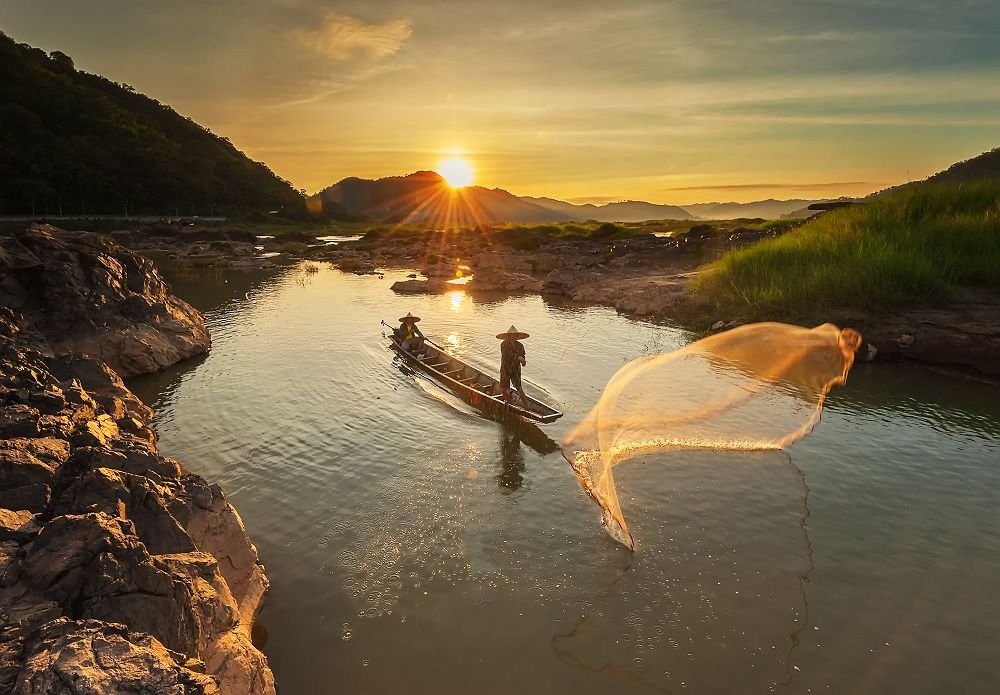
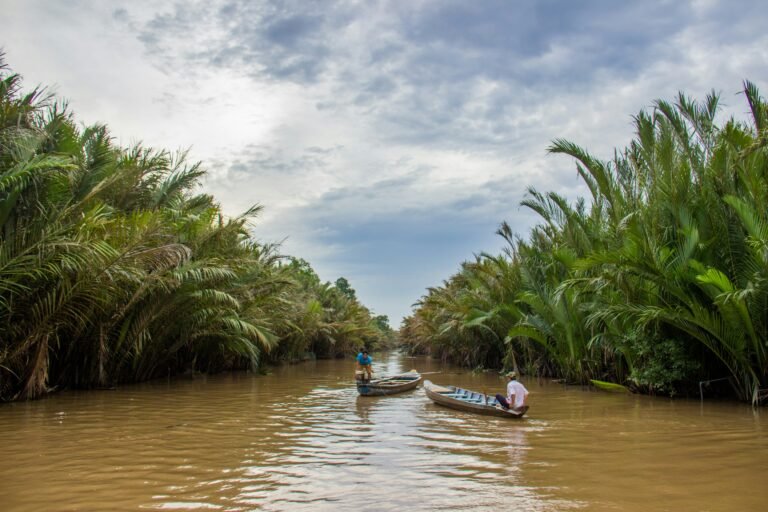
Road to Cai Be in the afternoon and a sampan outing along the canals. The Mekong doesn’t cross the delta, it unravels into it: nine branches, thousands of hand-dug canals, seventeen million inhabitants on a plain that rarely rises above two metres.
Night in a guesthouse in the middle of an orchard, with the family’s dinner.
Day 14Cai Be — Can Tho — SaigonB, L
Up at 5 am · Boat 2 h · Road 170 km · 3 h 30
Up at five for the Cai Rang floating market. It is a wholesale market: wholesalers buy from producers between five and seven, and by nine nothing is left. Each boat hangs a sample of what it sells from a pole, a shop sign older than writing.
We say it frankly: the market has shrunk a lot since bridges have allowed fruit to be moved by truck — about a hundred boats compared with several hundred twenty years ago. We go early and in a small boat, which changes everything.
This delta is the last conquest of Vietnamese history, and the most fragile. Upstream dams hold back the sediment that built it, sand mining deepens the channels, and groundwater pumping makes the ground subside by one to four centimetres a year. Salt water now pushes several tens of kilometres inland in the dry season. After six centuries of marching south, the country is starting to retreat before the sea.
Back to Saigon in the late afternoon.
Day 15Saigon — return flightB
Transfer 8 km · 30 to 60 min depending on traffic
Depending on your flight time, a last morning. Cholon, the Chinese quarter, closes the story well: pagodas with incense coils, Binh Tay market built in 1928 by a Cantonese merchant. The southern Chinese controlled the rice trade; the nationalisations of 1978 hit their community and explain much of the exodus of the boat people.
In fifteen days you will have travelled through two thousand years in order: Chinese domination and independence in the North, the first capital at Hoa Lu, the march to the south, Champa at My Son, the empire at Hue, colonisation and war in Saigon, and the conquest of the delta.
This is not scholarship for its own sake. A country that was dominated for a thousand years, that took six centuries to reach its present shape and fought three wars in thirty years cannot be understood any other way — and it sheds light on many things you will have observed without explaining them.
Transfer to Tan Son Nhat, which is within the city itself: count on traffic rather than distance.
Continue
Other tours you might like
 The essentialsFrom the North to the Mekong, on to CambodiaHanoi — Ninh Binh — Lan Ha Bay — Hue — Hoi An — Saigon — Mekong Delta — Chau Doc14 days / 13 nightsfrom €1,990
 The essentialsEssential Vietnam — 12 daysHanoi — Ninh Binh — Lan Ha Bay — Hue — Hoi An — Saigon — Mekong Delta12 days / 11 nightsfrom €1,740
 The essentialsVietnam in 10 daysHanoi — Ninh Binh — Lan Ha Bay — Hue — Hoi An — Saigon10 days / 9 nightsfrom €1,500