The ethnic minorities of the North: who lives in these mountains
People speak of the North’s “ethnic groups” as a colourful backdrop. They are fifty-three distinct peoples, with their own languages, architecture and calendars — and there is a very particular way to meet them without reducing them to a photograph.
In brief
The number
Fifty-four peoples recognised by the Vietnamese state
Recognising them
By clothing and embroidery, which often indicate the village
Markets
The real meeting place, early in the morning and on a specific day
Homestays
Yes, provided the family is paid directly
Fifty-four peoples, one country
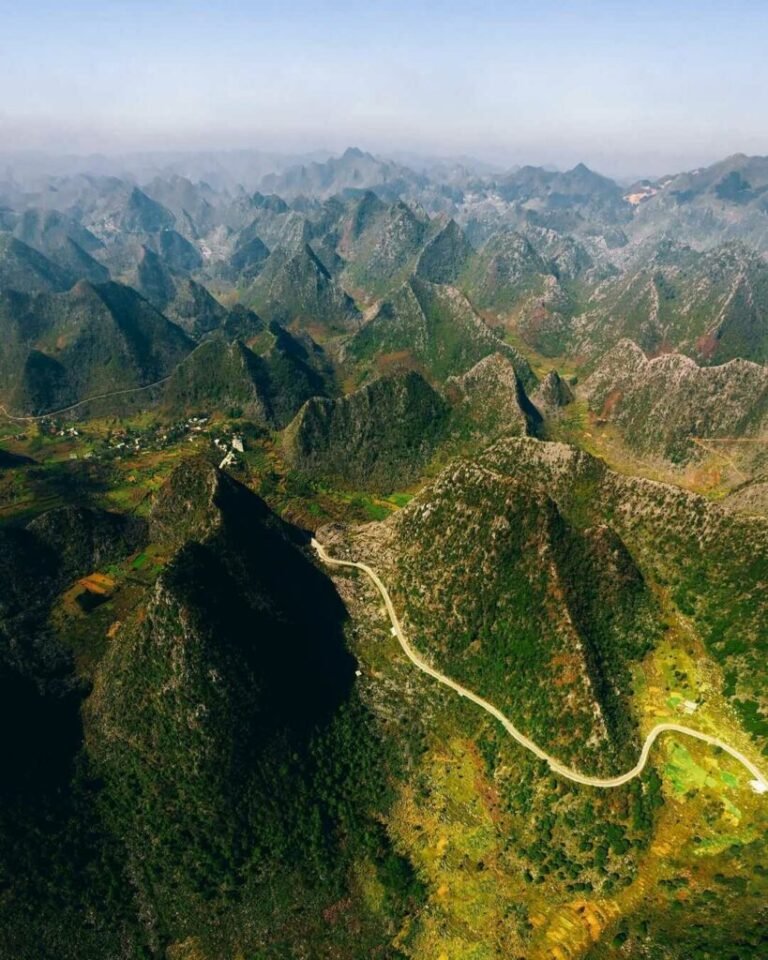
Vietnam officially recognises fifty-four ethnic groups. The Kinh, simply called “the Vietnamese”, make up about eighty-five per cent and occupy the deltas and the coast. The fifty-three others mostly live at altitude, and it is an almost geographical rule: the higher you go, the greater the diversity.This distribution is not picturesque, it is historical. The Kinh occupied the flood-irrigated rice land; groups who came later from southern China, many in the 18th and 19th centuries, took what was left — the slopes. Hence the terraced rice fields, which are not an aesthetic choice but a technical answer to the lack of flat land.The Tày are the country’s largest minority group, followed by the Thái, the Mường and the Hmong. Each has its own language — often unrelated to Vietnamese —, its architecture, its calendar of festivals and its clothing. A Sunday market in Bắc Hà can bring together six or seven distinct groups, each recognisable at twenty metres.
Recognising who you meet
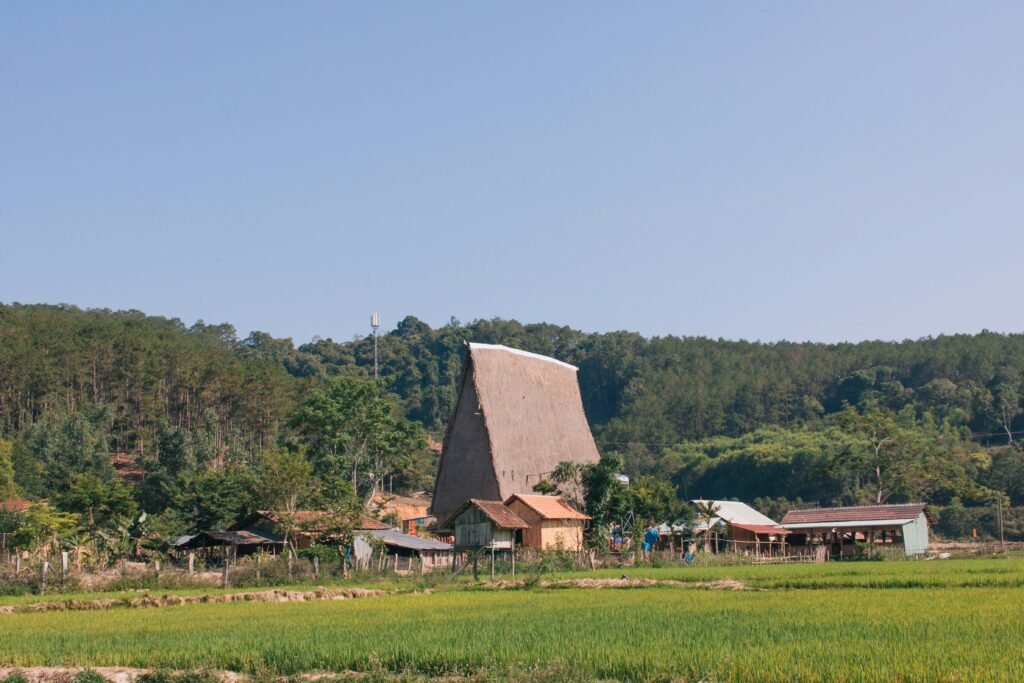
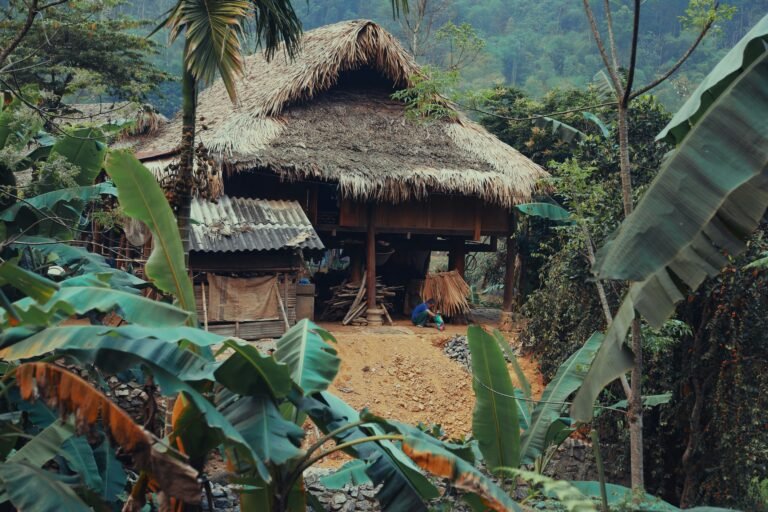
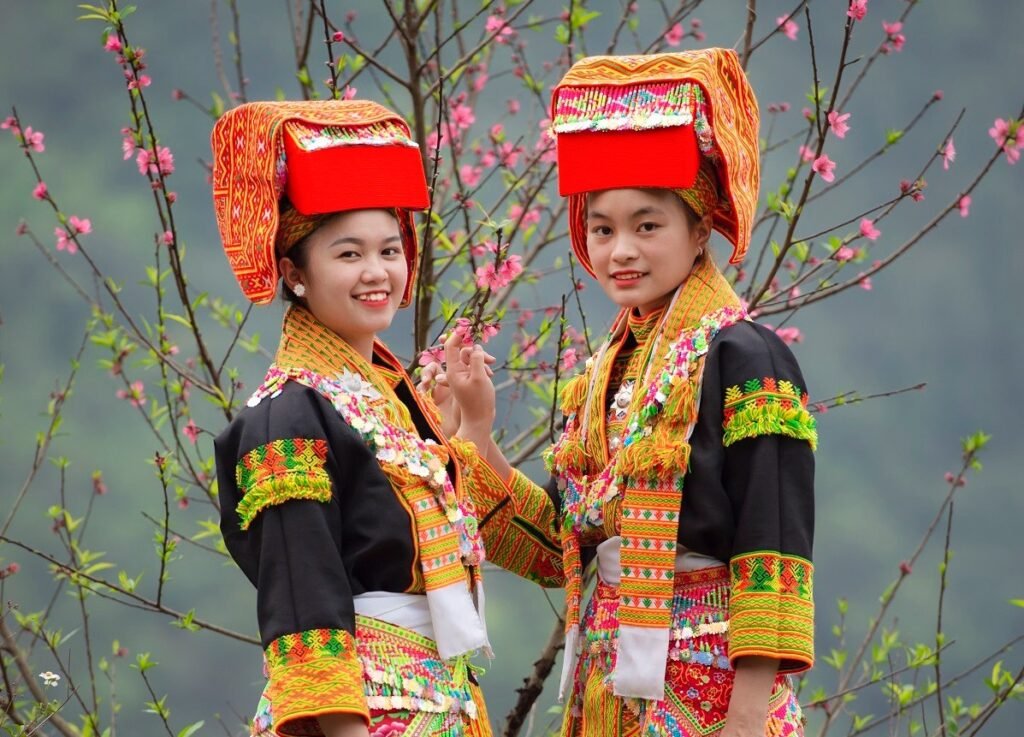
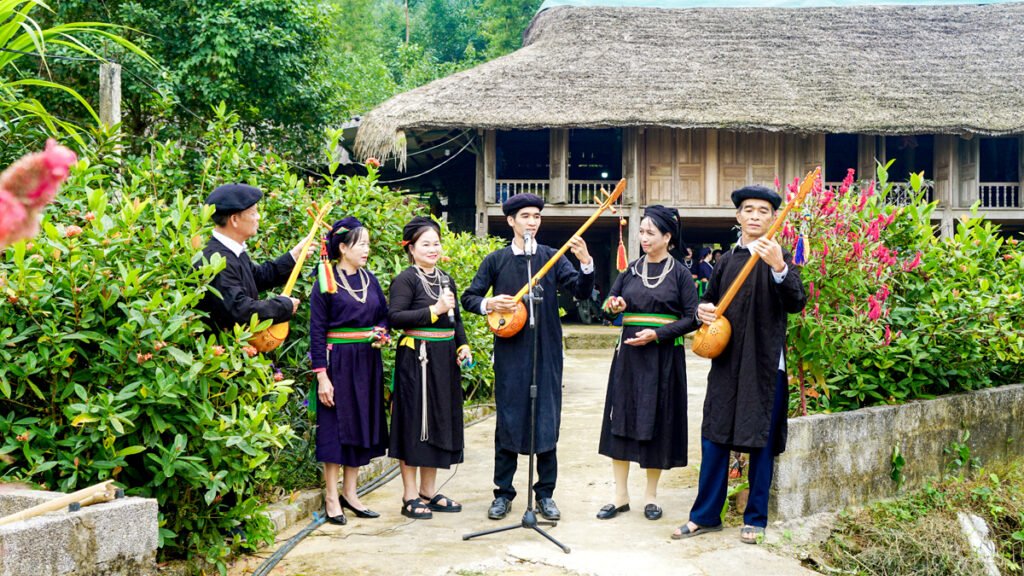
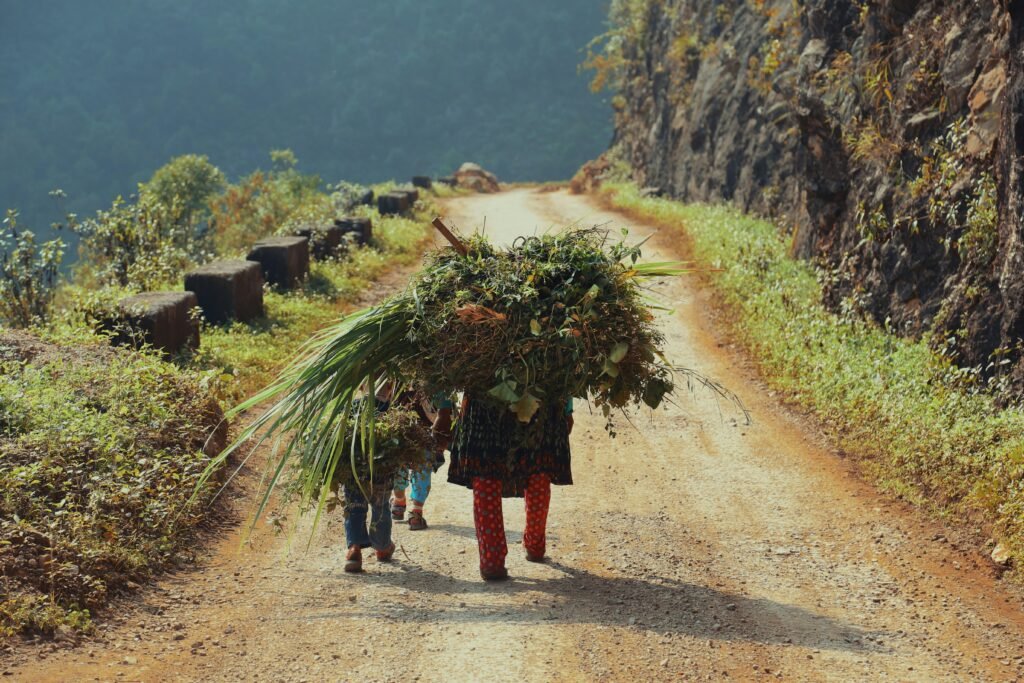
The Hmong are the most visible in the high mountains, in Ha Giang, Sa Pa, Mù Cang Chải. They are subdivided into Black, Flower, White and Green Hmong, according to costume. Women grow hemp, weave it, then dye it with indigo: the deep-blue hands you will see at markets are not dirty, they are the sign of work in progress.The Red Dao wear a scarlet turban and wool pom-poms; tradition has married women shave their eyebrows and hairline. They are the ones who prepare the medicinal herb baths, a hundred or so species in a scalding wooden tub, after a day’s walk.The Thái occupy the mid-altitude valleys — Mai Châu, Pu Luong, Sơn La. They live in stilt houses with very low roofs, weave geometric brocades and perform the xòedance, inscribed on UNESCO’s intangible heritage list in 2021. It is among them that homestays happen most naturally.The Tày and the Nùng, culturally close, are settled around Cao Bang and Bắc Sơn. They are the most integrated into Kinh society, and their wooden houses with tiled roofs look more like those of the delta. Rarer still, the Lô Lô and the Pà Thến number only a few thousand people.
Markets, and why they matter
The weekly market is not an attraction; it is the central institution of mountain life. People walk in from hamlets three hours away, sell two chickens, buy salt and thread, settle family business and drink a lot of maize spirit. Trade is only a pretext.Bắc Hà is held on Sunday and remains the largest in the North-West: horses and buffaloes are still traded there. Cán Cấu, on Saturday, is smaller and rougher. Đồng Văn and Mèo Vạc, on Sunday, are the markets of the Ha Giang loop.A nuance that matters: these markets are not staged, but some have been damaged by visitor numbers — concrete halls, goods imported from China, women paid to pose. We favour smaller markets and the days when the coaches don’t come up, even if it means shifting your stop by a day.
A mountain market is judged by one thing: the number of people there who are neither selling nor buying anything.
Staying with a family, properly
For many of our travellers, the homestay night is the best memory of the trip. It calls for a few simple courtesies that nobody on site will explain to you, out of politeness.
Take off your shoes before stepping onto the floor of a stilt house, always.
The ancestral altar and the central pillar are sacred: you don’t lean against them, put anything on them, or sleep with your head facing them.
Ask before taking photos, especially of older women and children. A refusal is a refusal.
Don’t give children sweets or money: it creates the begging that spoils some villages around Sa Pa today. If you want to help, buy the mother’s weaving.
Accept the first glass of rice spirit. You can refuse the following ones, and you had better.
Our homestay nights are booked directly with the families, with no middleman, and we never put two groups in the same house on the same night.
Costume as an identity card
In the northern mountains, costume often lets you recognise a people, and sometimes even a village. The Black H’mong of Sa Pa wear clothes dyed with indigo, almost black, which leave their hands tinged blue. The Flower H’mong of Bac Ha wear bright colours and very fine embroidery. The Red Dao are recognisable by their large red headscarf decorated with pompoms. These costumes are still worn every day, especially by women, and even more on market days.
What is changing today
Roads, electricity and the telephone have transformed life in the mountains in twenty years. Young people leave to study or work in the cities, tourism brings income but also tensions, and some traditions are adapting. Travelling in these regions means seeing a world in motion, not a museum: that is why we favour families and villages where tourism directly benefits the inhabitants.
Buying crafts in the right place
Embroidery, indigo-dyed fabrics and silver jewellery from the mountains make beautiful souvenirs. Buy them preferably directly from the women who make them, in the villages or at markets, or from cooperatives that return the profits to the artisans. Be wary of factory-made pieces sold as handmade in city shops.
One last piece of advice
Learn to say hello and thank you in Vietnamese, and ask your guide for the equivalent words in the language of the village you are visiting. This small effort is always welcomed with a smile, and it changes the nature of the encounter.
Where to meet them, without staging
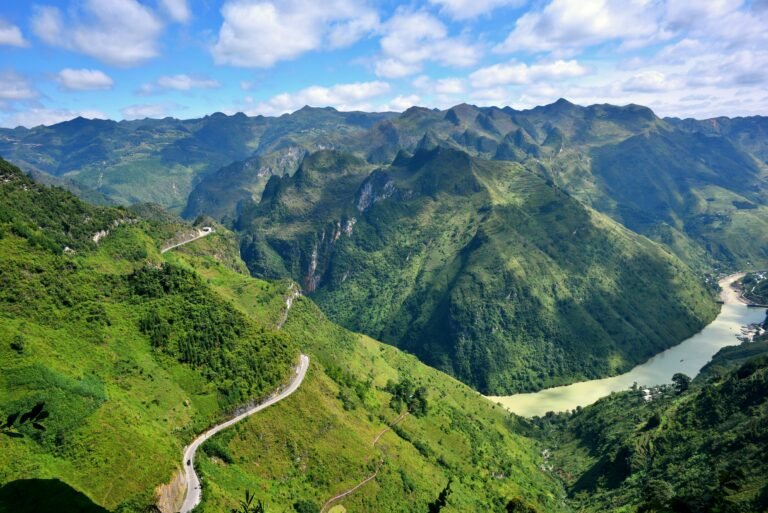
In Pu Luong and Mai Châu, among the Thái, four hours from Hanoi: the most accessible, including with children. In Ha Giang, among the Hmong and the Lô Lô, for the most intact and most demanding version. In Bắc Hà, for the markets. In Cao Bang, among the Tày, to combine minorities and karst landscapes.Sa Pa is still magnificent but has turned into a town of hotels: we only send our travellers outside the town, to the side valleys, and never in high season.A word about guides. Our French-speaking guides are Kinh, but in each region we work with a local guide from the group concerned, who translates and introduces. It is an extra cost we take on: without it, you visit a landscape instead of meeting people.
Three to six depending on the itinerary. A loop in Ha Giang lets you meet five or six in four days; a stay in Pu Luong shows mainly one, the Thái, but much better. We prefer the second option for a first trip.
Is it respectful to visit these villages?
It depends entirely on how. A coach dropping off forty people for thirty minutes of photos is not. A night with a family paid directly, with a guide from the group, is — and tourism income is often what allows young people to stay in the village rather than leave for a factory.
Can you photograph people?
Always ask, with a gesture if you don’t speak the language. Older women often refuse, for reasons of their own. On the other hand, don’t pay for a photo: that is what turned some women in Sa Pa into extras.
Do you need to be a good walker?
Not necessarily. In Pu Luong and Mai Châu, stages are two to four hours on gentle terrain, and everything can be done by car. In the North-West and Ha Giang, the elevation gains are real but remain optional.
Which season for the markets and the rice fields?
Markets are held all year round. Rice fields are green in June–July, golden in late September, and water mirrors in May. Avoid January–February at high altitude: it can freeze.
Which souvenirs can you buy without making a mistake?
Indigo-dyed hemp and Thái brocades, bought directly from the woman who wove them. Avoid the embroidery sold in bulk in Sa Pa shops: almost all of it comes from China, and your guide will confirm it.
Putting it into practice
The tours where you experience what this article is about
Audience measurement. We would like to know which pages are useful to you, using Google Analytics. Nothing is stored without your consent, and you can change your mind at any time. Learn more


 Off the beaten trackTrekking in the North-West — 11 daysHanoi — Mai Châu — Pu Luong — Nghia Lo — Mu Cang Chai — Thac Ba Lake — Hanoi11 days / 10 nightsfrom €1,650