
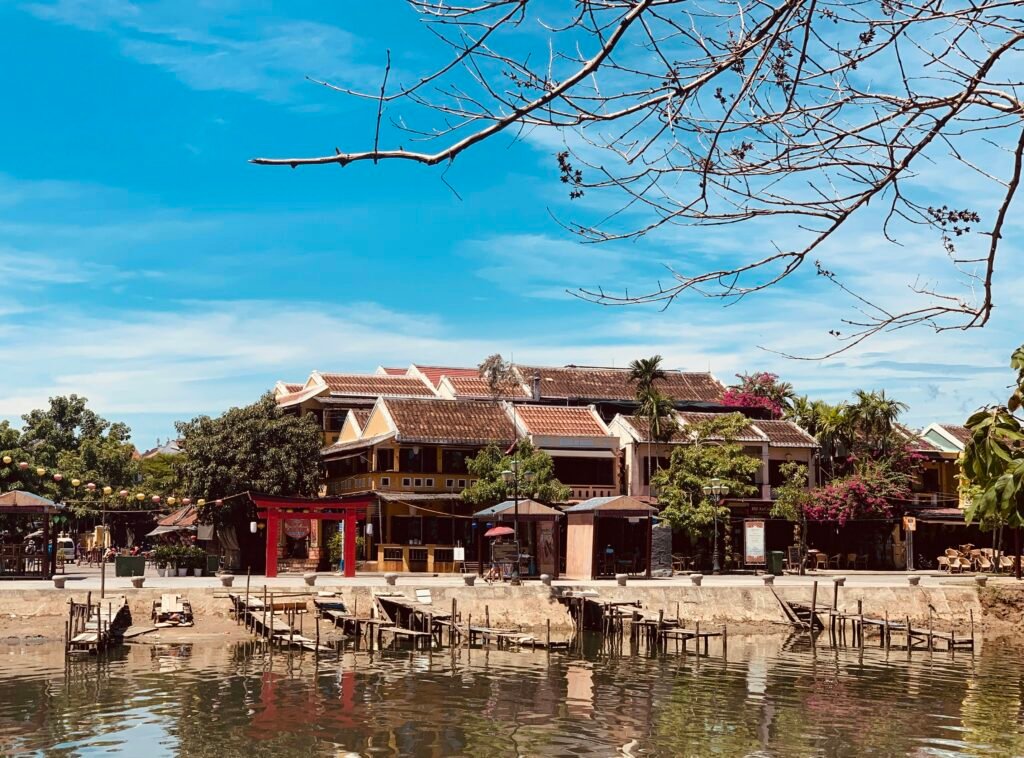
Day 01Arrival in HanoiD
French-speaking guide & private driver · Transfer 40 km · 45 min
Welcome as you come out of customs at Noi Bai and transfer to the Old Quarter. Ten days for Vietnam is a choice, and it is worth understanding which one: the country stretches sixteen hundred kilometres from north to south, the distance from Paris to Naples. In ten days you take two domestic flights, see three regions instead of five, and leave the far North and the Mekong Delta for another trip.
What you gain in exchange: you never spend two days in a row on the road. That is what distinguishes this format from a “see everything” tour where you unpack seven times in ten days.
A first evening with no programme. Around five o’clock, the Old Quarter pavements fill with thirty-centimetre plastic stools and people are served bia hơi, a very light lager, brewed that same morning and delivered in kegs to each neighbourhood. It is unpasteurised, doesn’t keep, and costs the equivalent of twenty cents a glass. It is a Hanoi institution, inherited from the Czech breweries set up in the 1960s under socialist friendship agreements.
Welcome dinner with your guide, who will accompany you throughout the trip. This is when things get adjusted: you say how much you like to walk, what you don’t want to miss, what tires you. The programme for the following days is corrected accordingly.
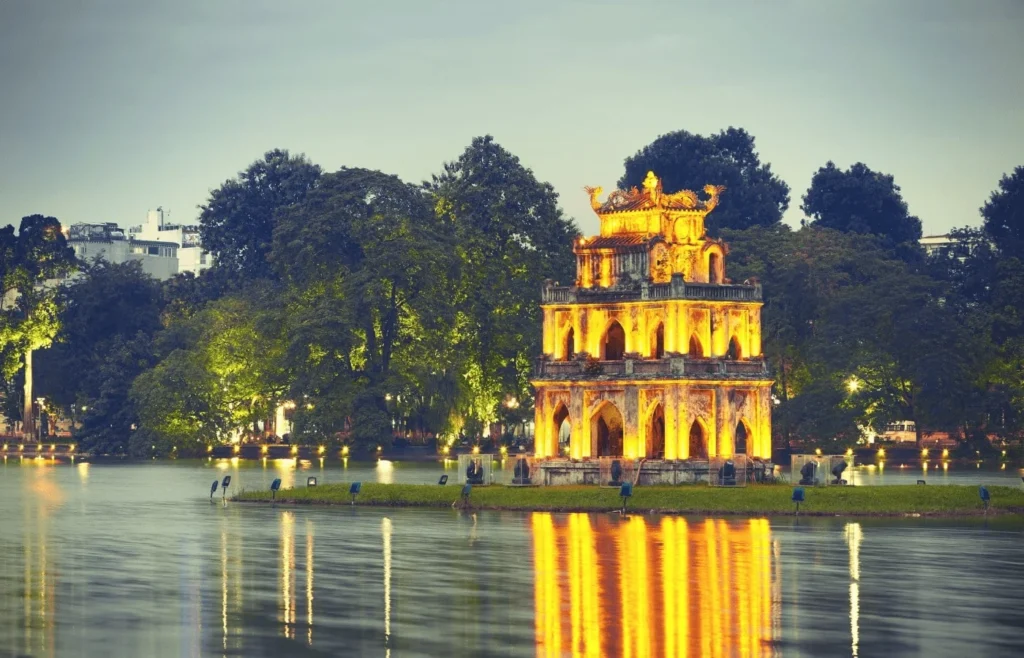
Day 02Hanoi, the city of a thousand tradesB, L
French-speaking guide · Short trips · About 5 km on foot
Morning in the Old Quarter, then the quarter built by the French: the 1911 opera house, a scaled-down copy of the Palais Garnier, the Indochinese-style National Museum of History — that blend of Vietnamese timber framing and European plan invented by Ernest Hébrard in the 1920s —, the tree-lined avenues and the Metropole hotel.
Hanoi is one of the few capitals in Asia to have kept its colonial fabric almost intact, for an inglorious reason: the poverty of 1954–1986 prevented demolition. What Saigon rebuilt, Hanoi left to age, and today that is its strength.
Lunch around phở. A word on its origin, because the question always comes up: the dish was born around 1900 in the villages of Nam Dinh, in the south of the delta, in contact with the canteens of workers at a French spinning mill. The oxtail broth is probably a legacy of pot-au-feu — the Vietnamese hardly ate beef before the French arrived, as the animal was used for ploughing. The name itself may come from “feu”, as in “pot-au-feu”.
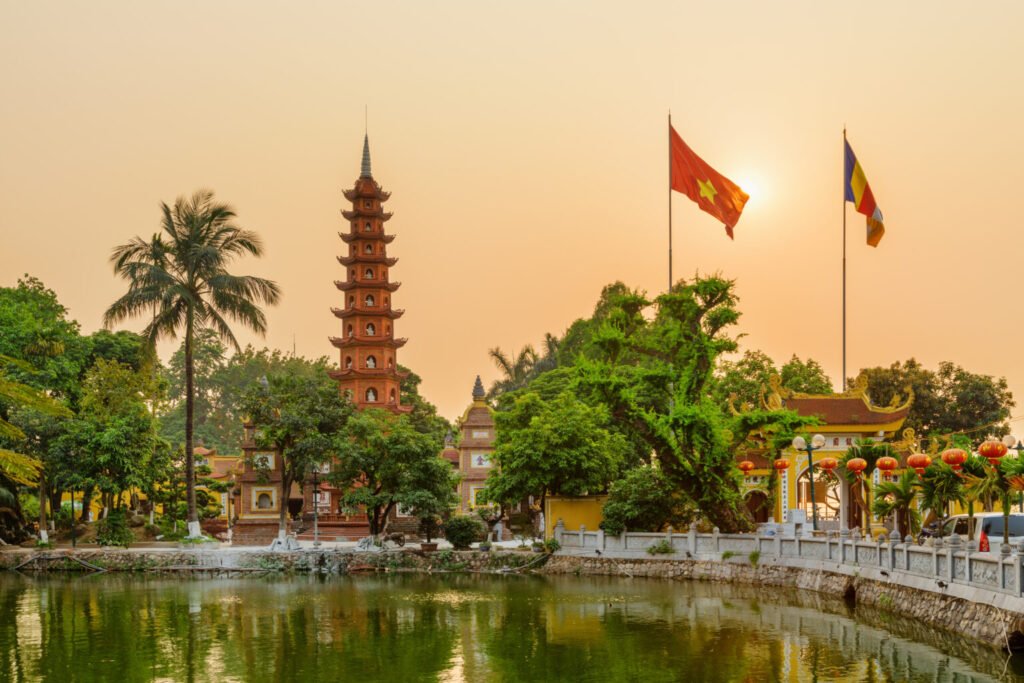
Afternoon at the Museum of Ethnology or Tran Quoc pagoda, the oldest in the city, founded in the 6th century on a peninsula of West Lake. You choose: ethnic groups or Buddhism. The first is better preparation for the rest of the trip; the second is best visited at sunset.
Day 03Hanoi — Ninh BinhB, L
Road 100 km · 2 h · Rowing boat 1 h 30
Two hours of motorway to the south, and the delta suddenly closes in: limestone peaks a hundred to two hundred metres high rise abruptly in the middle of the rice fields. Ninh Binh is the same massif as Halong Bay, left dry when the sea retreated six thousand years ago.
What you understand here, and what will serve you throughout the trip, is the Vietnamese relationship with water. The Red River Delta is flat, low, and gets six months of rain out of twelve. For a thousand years, the answer has been the same: dykes, canals, pumps and a village organisation of collective work. The word làng, the village surrounded by its bamboo hedge, still refers today to the basic unit of rural society, with its temple, its well and its council of elders.
Rowing-boat outing at Tam Coc or Trang An, after three o’clock, when the light softens and the day’s groups have left. The rowers push the oars with the soles of their feet, a gesture you won’t see anywhere else in Vietnam, invented to spare the back on two-hour trips.
Night in a lodge in the middle of the rice fields rather than in town. Ninh Binh town is a charmless road junction; the good addresses are six kilometres away, at the foot of the cliffs, and it makes a huge difference when you wake up.
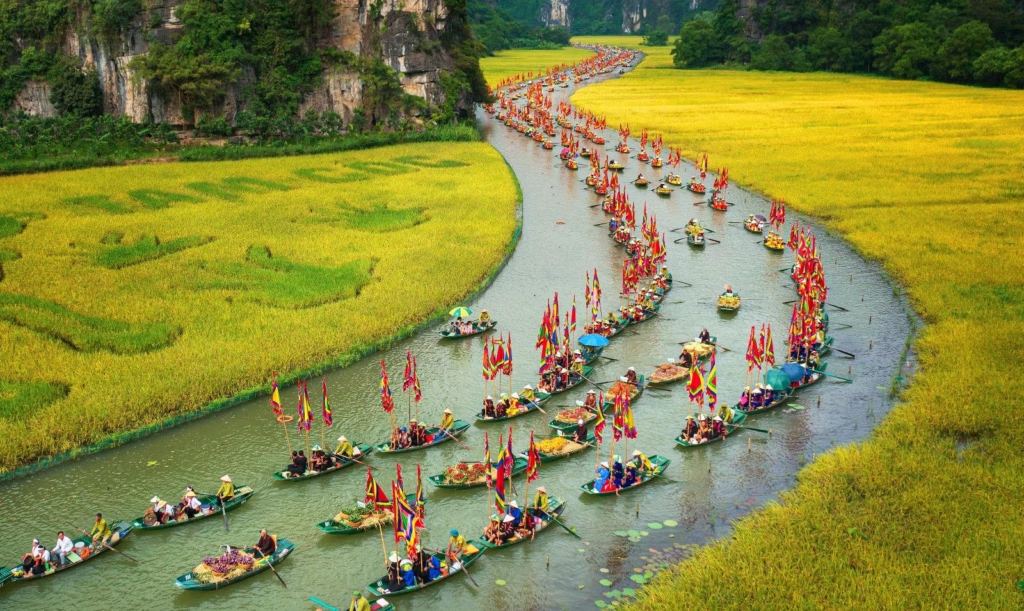
Day 04Ninh Binh — Lan Ha BayB, L, D
Road 180 km · 3 h 30 · Boarding 12 pm
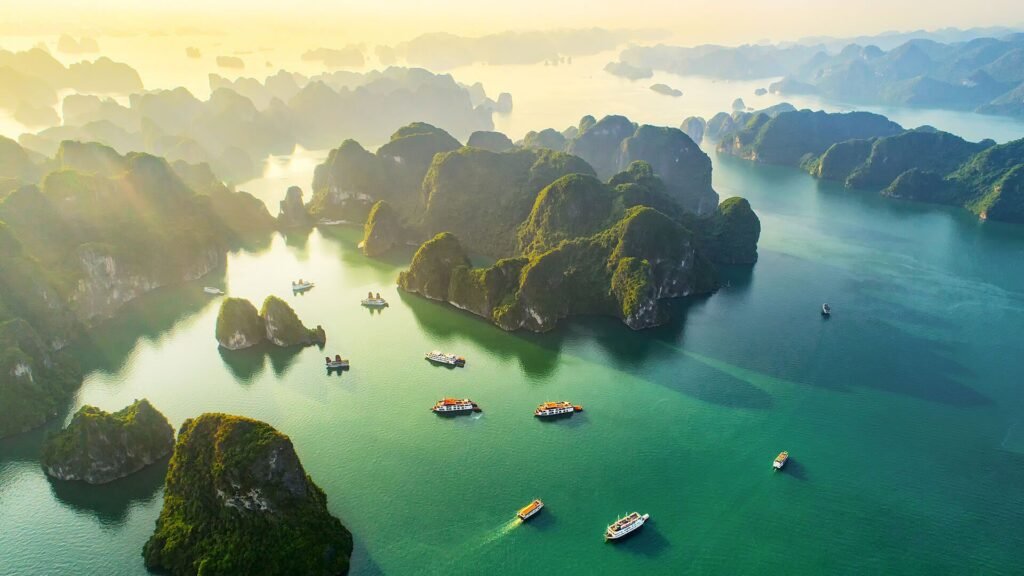
Road to the coast and boarding a small junk at noon. We sail in Lan Ha Bay, south of Halong Bay: the same limestone, the same landscape, but a few dozen boats instead of several hundred, and sandy coves that Halong practically doesn’t have.
The geology is worth telling once. These three thousand islets are the remains of a limestone plateau laid down at the bottom of a warm sea three hundred million years ago. Slightly acidic tropical rain dissolved it over millions of years, carving networks of caves; then the sea rose by a hundred and twenty metres after the last ice age and drowned the valleys. The towers you see are only the summits of a much higher relief.
Kayaking in the late afternoon in an enclosed lagoon, reached through a sea tunnel passable only at low tide. These inner lagoons, cut off from the open sea for millennia, shelter species found nowhere else; some have their own gecko.
The night on board is the moment our travellers mention most when they get back. Around eight in the evening, all engines are switched off, there is no light on the horizon, and you hear the water against the hull and the fish jumping.
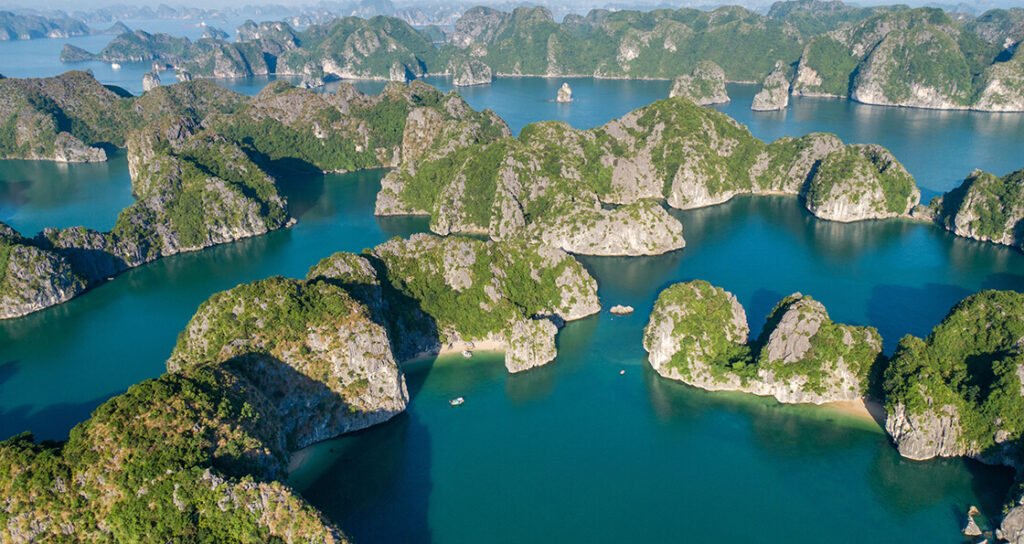
Day 05Lan Ha — Hanoi — flight to HueB, L
Cruise · Road 180 km · 3 h 30 · Flight 1 h 15
Early rise for the last sail: between six and eight, the bay is yours, the water smooth and the mist still clinging to the peaks. Breakfast at anchor, disembarkation mid-morning, road to the airport.
The Hanoi–Hue flight takes an hour and fifteen minutes and takes you across the country’s climatic border. The North has four seasons, with a real winter when the thermometer drops to twelve degrees; the Centre and the South have only two, dry and wet. It is the Hai Van Pass, which you will cross in two days, that marks this boundary: it stops the cold air coming from China.
Hue was the capital of Vietnam from 1802 to 1945, under the thirteen emperors of the Nguyen dynasty. Only a hundred and forty-three years, but everything the country produced that is most refined in architecture, cuisine and court music comes from this period. The city is also the most scholarly in Vietnam, and the most discreet: people speak more quietly than in Hanoi and much more quietly than in Saigon.
Settling in in the late afternoon and a first stroll along the banks of the Perfume River, so named because flowers from the orchards upstream fell into it in autumn and perfumed the water.
Day 06Imperial HueB, L
French-speaking guide · Dragon boat 45 min · Short trips
The citadel first, at its seven o’clock opening. It is a two-kilometre square, ringed by ramparts and moats, built on the Vauban model by French engineers in the service of Emperor Gia Long. Inside is the Imperial City; inside that again, the Purple Forbidden City, reserved for the emperor, his wives and the eunuchs.
You need to know what you are going to see. In February 1968, during the Tết Offensive, the citadel was held for twenty-six days by North Vietnamese forces and then retaken building by building. Of a hundred and sixty buildings, about twenty survived. The Purple City is today a grassy esplanade where you can make out the foundations — and it is perhaps the most eloquent place on the site.
In the afternoon, a dragon-boat trip up the river to Thien Mu pagoda, then two imperial tombs. We choose two out of seven, because visiting them all would leave you indifferent: Tu Duc, a park with a lotus lake where the emperor wrote poems during his lifetime; and Khai Dinh, blackened concrete and porcelain mosaics, half European, half Chinese, completed in 1931.
In the evening, imperial cuisine. The court demanded dishes that were numerous, small and well presented; what remains is a cuisine of detail that only Hue practises — banh khoai, banh beo, banh nam, served by the dozen in little dishes.
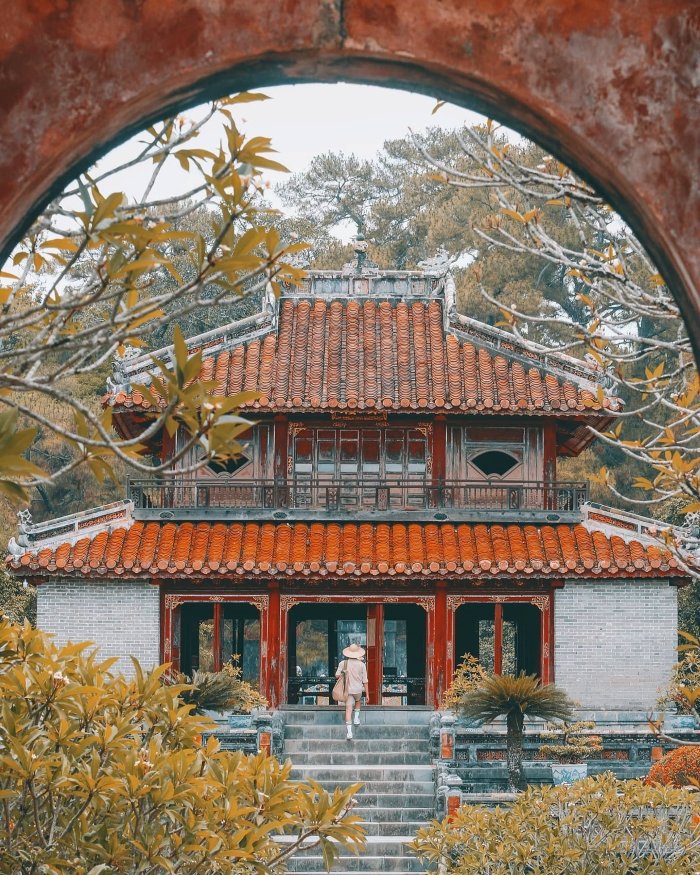
Day 07Hue — Hoi An via the Hai Van PassB, L
Road 130 km · 4 h with stops · Pass at 496 m
A hundred and thirty kilometres, four hours: it is the most beautiful road in Vietnam and you don’t drive it fast. It first skirts the Tam Giang lagoon, the largest in South-East Asia — seventy kilometres long — where thousands of families live from fixed-net fishing, bamboo fences planted in the shallow water.
Then the Hai Van Pass, Hải Vân, “clouds of the sea”. Four hundred and ninety-six metres above the Pacific, twenty-five kilometres of bends, and a real climatic border: it is not unusual to leave Hue in the rain and come down into Da Nang in full sunshine. The pass long separated Đại Việt from the Cham kingdom; at the top stand a Nguyen fort and French, then American, bunkers, riddled with bullet marks.
Since the tunnel opened in 2005, trucks pass underneath and the ridge road is almost empty. We always take it: thirty minutes more, and the descent towards Lang Co bay, with its spit of sand between lagoon and sea, is one of the views you remember from a trip to Vietnam.
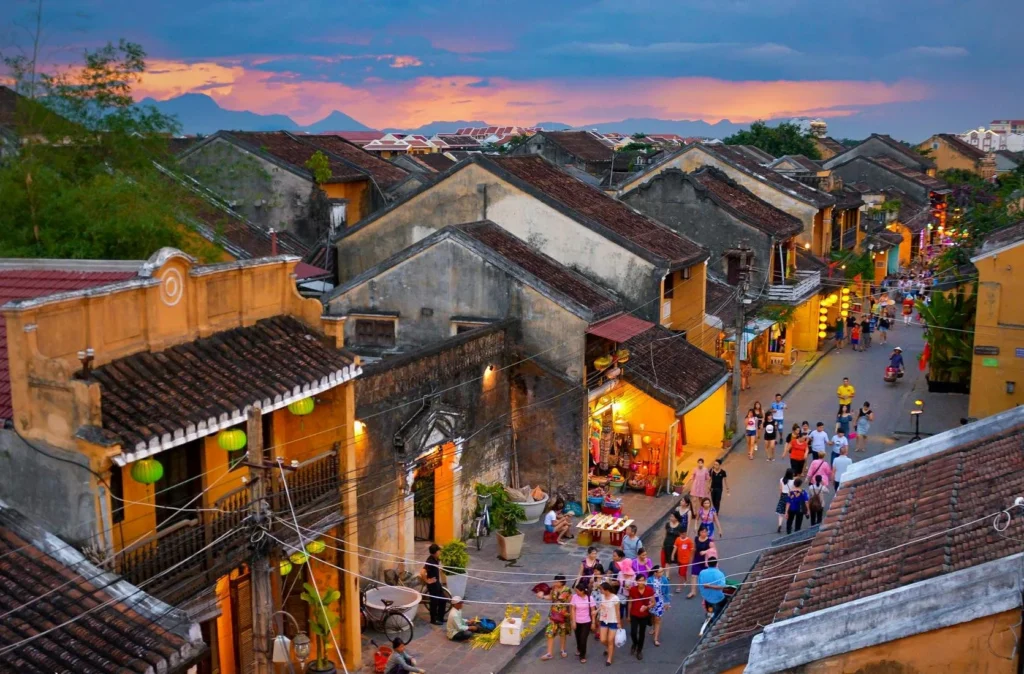
Stop at the Cham museum in Da Nang, set up in 1915 by the École française d’Extrême-Orient: three hundred sandstone sculptures from the 7th to the 15th century, the finest Cham collection in the world. Arrival in Hoi An in the late afternoon, as the lanterns light up.
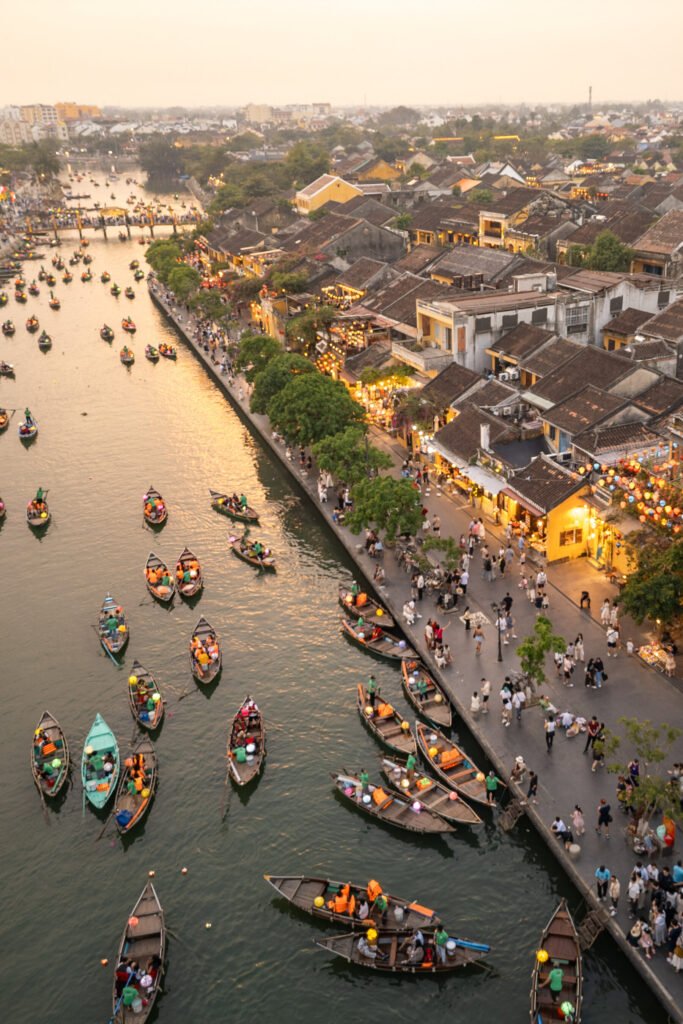
Day 08Hoi An, craftspeople and rice fieldsB, L
Bike 12 km · Flat terrain · Cooking class 3 h
From the 15th to the 19th century, Hoi An was one of the great ports of South-East Asia. Japanese and Chinese junks waited there for the monsoon to turn, sometimes four or five months, and left laden with silk, ceramics and agarwood. What remains is a merchant town: narrow shophouses, Chinese assembly halls by province of origin, a 16th-century Japanese covered bridge.
The town owes its preservation to its decline. The Thu Bon river silted up in the 19th century, trade moved to Da Nang, and Hoi An slept for a hundred and fifty years. It is this slumber that saved eight hundred buildings that prosperity would have replaced.
Morning by bike through the villages: Tra Que, where herbs for the whole region grow on beds fertilised with river algae; Thanh Ha, which has been throwing pottery for five centuries; the rice fields and the round baskets of the crab fishermen.
In the afternoon, a cooking class, which starts at the market choosing the produce. You will learn cao lầu, the Hoi An noodle: it is made with water from one particular Cham well and ash from wood burned on the Cham Islands, which explains why you find it nowhere else, not even in Da Nang.
Day 09Hoi An — Da Nang — flight to SaigonB
Road 30 km · 45 min · Domestic flight 1 h 20
Free morning in Hoi An. The best use of it is the quayside fish market, between six and seven: the boats come in, women buy at auction, and it is all over before the town wakes up. It is also the time when the old town is empty, before the ten o’clock groups.
Flight to Saigon in the afternoon. An hour and twenty minutes in the air for a thousand kilometres, and another country: ten million inhabitants, a third of national GDP, a city that has always traded. Hanoi is a political, scholarly capital; Saigon is a marketplace. People speak louder, go out later, and the southern accent swallows the final consonants the North pronounces.
A word on the name, since it always intrigues. The city has officially been called Ho Chi Minh City since 1976, but everyone says Saigon in conversation, including the authorities — stations and plane tickets say “Sai Gon”. It is not a political act, it is usage.
First evening in District 1. Crossing the street takes a method: you move forward slowly, without sudden moves, never stepping back, and the scooters go around you. Waiting for a gap in the traffic doesn’t work; there won’t be one.

Day 10Saigon — return flightB
Transfer 8 km · 30 to 60 min depending on traffic
Depending on your flight time, a last morning. Two options we often suggest, very different.
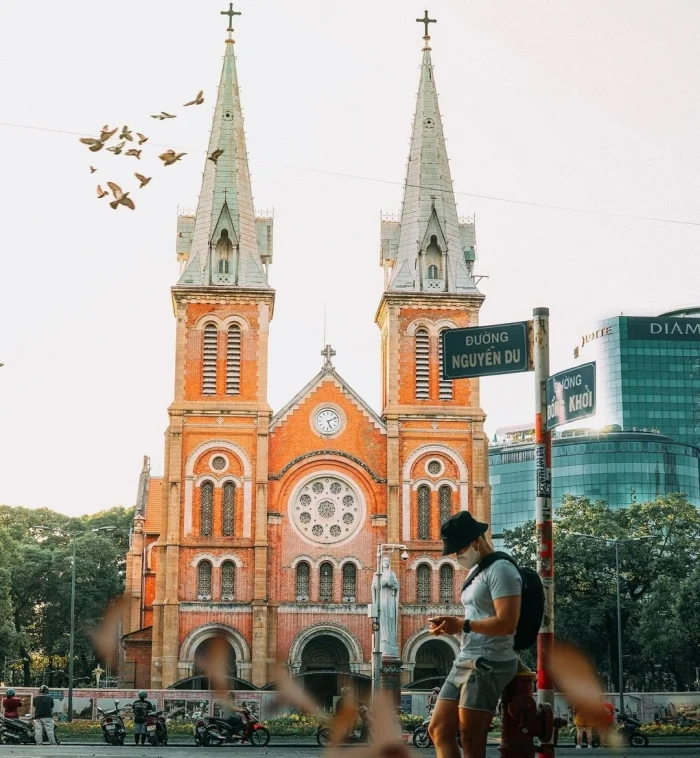
The first: District 1 on foot. The central post office, Notre-Dame cathedral built of bricks from Toulouse, the city hall, then the Reunification Palace, left exactly as it was on 30 April 1975 — orange carpets, rotary phones, map room in the basement. It was through this palace’s gate that a North Vietnamese tank drove that morning, ending the war.
The second: Cholon, the Chinese quarter, its pagodas hung with incense coils that burn for two weeks, and Binh Tay market. The southern Chinese have been settled here since the 18th century and long controlled the rice trade; their community was hit hard by the nationalisations of 1978, which explains much of the exodus of the boat people.
Transfer to Tan Son Nhat airport, which is within the city itself — count on traffic rather than distance. And if these ten days have given you a taste for the rest: you are missing the far North and the Mekong Delta, exactly one more week.
Continue
Other tours you might like
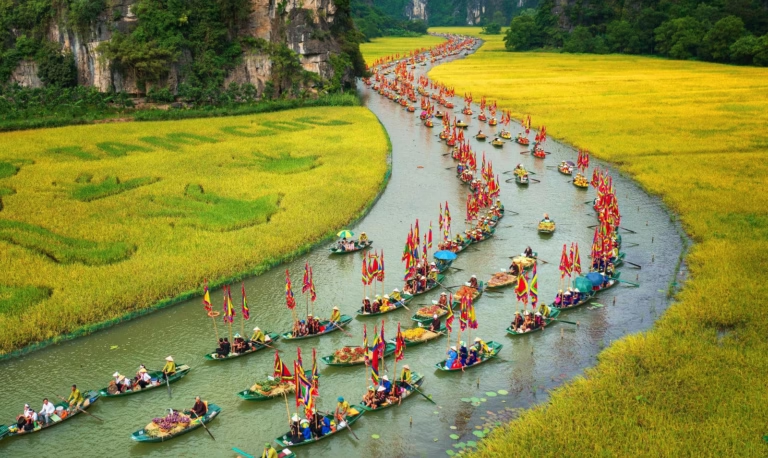 The essentialsEssential Vietnam — 12 daysHanoi — Ninh Binh — Lan Ha Bay — Hue — Hoi An — Saigon — Mekong Delta12 days / 11 nightsfrom €1,740
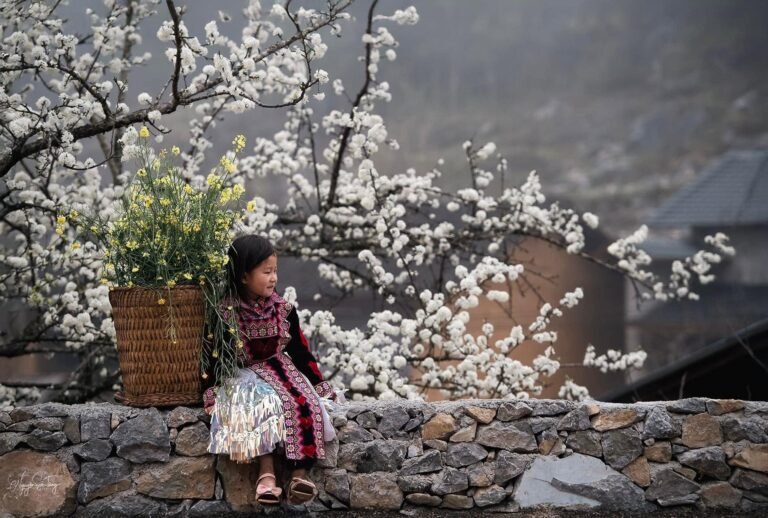 The essentialsNorthern Vietnam — 8 daysHanoi — Ninh Binh — Pu Luong — Lan Ha Bay — Hanoi8 days / 7 nightsfrom €1,190
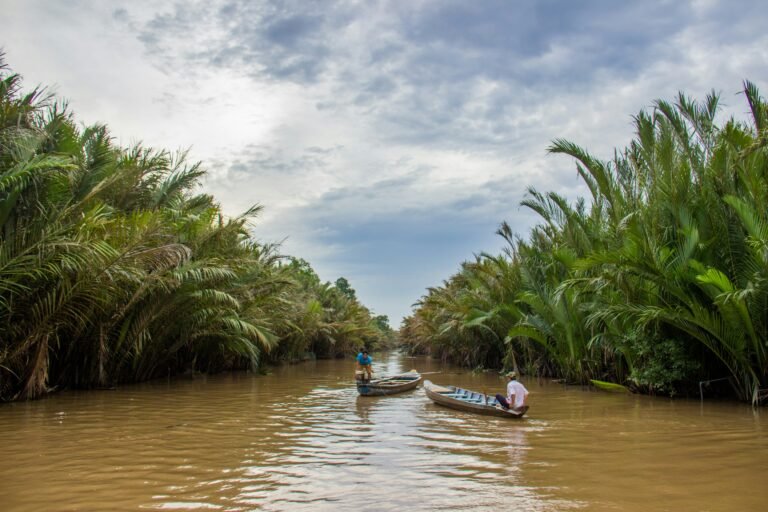 The essentialsFrom the North to the Mekong, on to CambodiaHanoi — Ninh Binh — Lan Ha Bay — Hue — Hoi An — Saigon — Mekong Delta — Chau Doc14 days / 13 nightsfrom €1,990