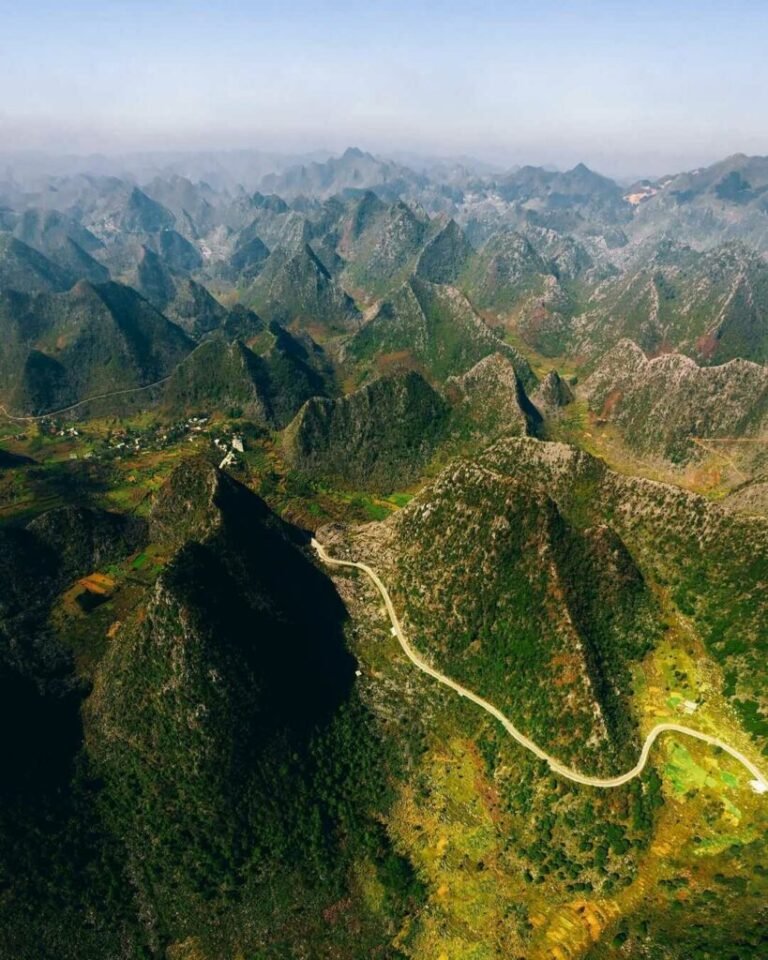
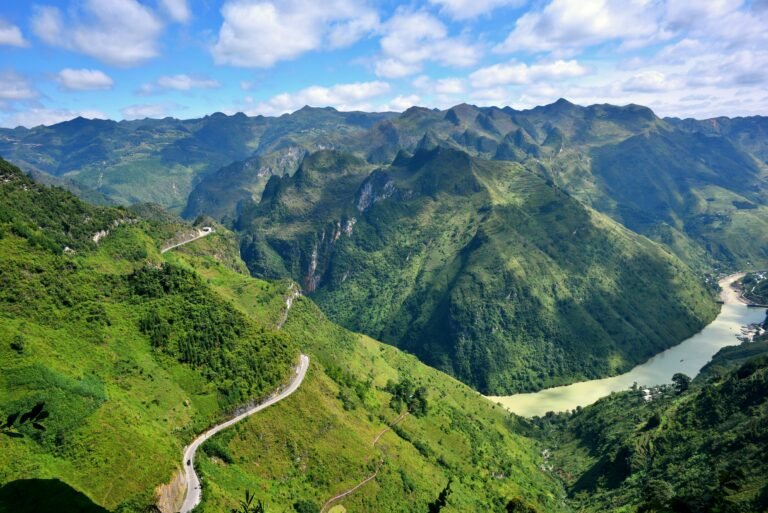
The largest ethnic market in the North-West, every Sunday morning, where the Flower Hmong come to sell buffaloes and buy embroidery thread. Around it, a plateau of plum orchards at a thousand metres that almost nobody visits on weekdays.
In brief
Best time
All year round for the market; September to November and March–April for the light and the orchards in blossom
Getting there
6 h from Hanoi by car, or night train to Lao Cai then 1 h 30 by road
How long
One night on site, absolutely the Saturday-to-Sunday one
Combine with
Sa Pa 2 h 30 away, Ha Giang by the ridge road, Hanoi by night train
The Sunday market, and why you should sleep there the night before
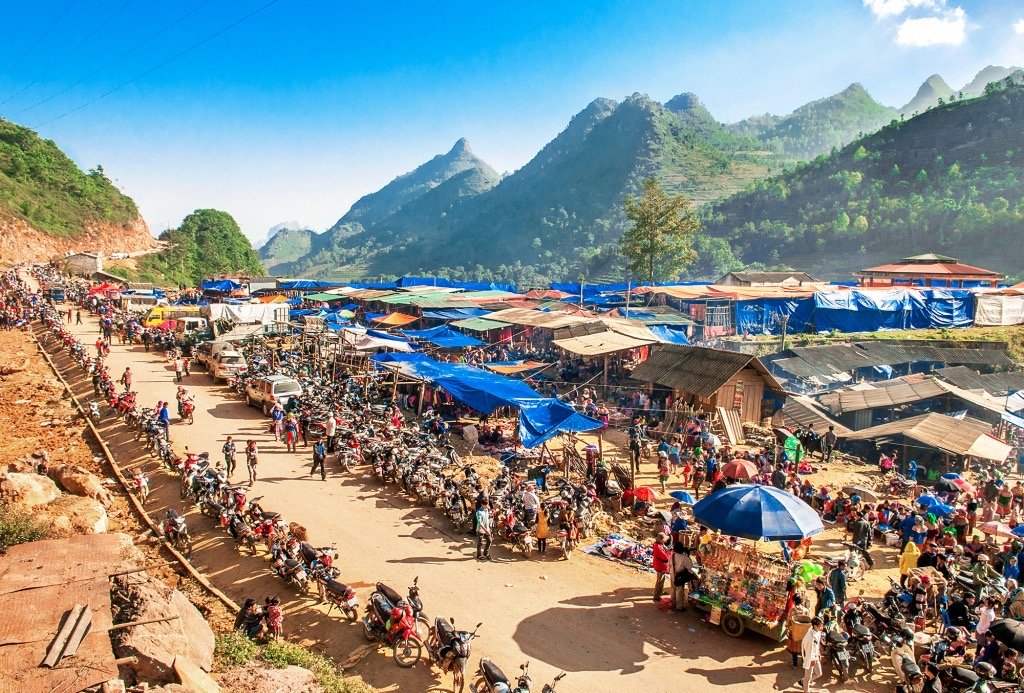
Bac Ha market is held every Sunday morning and remains the largest ethnic market in northern Vietnam. The buses from Sa Pa arrive around ten. Before that, between seven and nine, the market still belongs to those who come to buy and sell: it is the only reason we have you sleep there the night before.At that hour, the buffalo alley is full. Men feel the animals’ hocks, talk at length, leave with an animal on the end of a rope. Further on is the horse market, then the fabric stalls, the reels of thread, the baskets of indigo. At the back, under the tarpaulins, you eat a bowl of thang co — horse-meat stew — sitting on a plastic stool, next to people who have walked three hours to get there.
Between seven and nine, the market still belongs to those who come to buy and sell.
Can Cau market, on Saturday
Twenty kilometres to the north, Can Cau is held on Saturday morning. It is smaller, rougher, attended almost exclusively by Hmong and Dao, and practically without tourists. Guard dogs, medicinal herbs and horses are sold there, and maize spirit is drunk from nine in the morning.If your itinerary lets you arrive on Saturday morning rather than Saturday evening, do both markets. It is the best way to understand that these gatherings are not shows: they are the days when people settle their affairs, get married, and hear the news from the next valley.
The Flower Hmong, and what their costume says
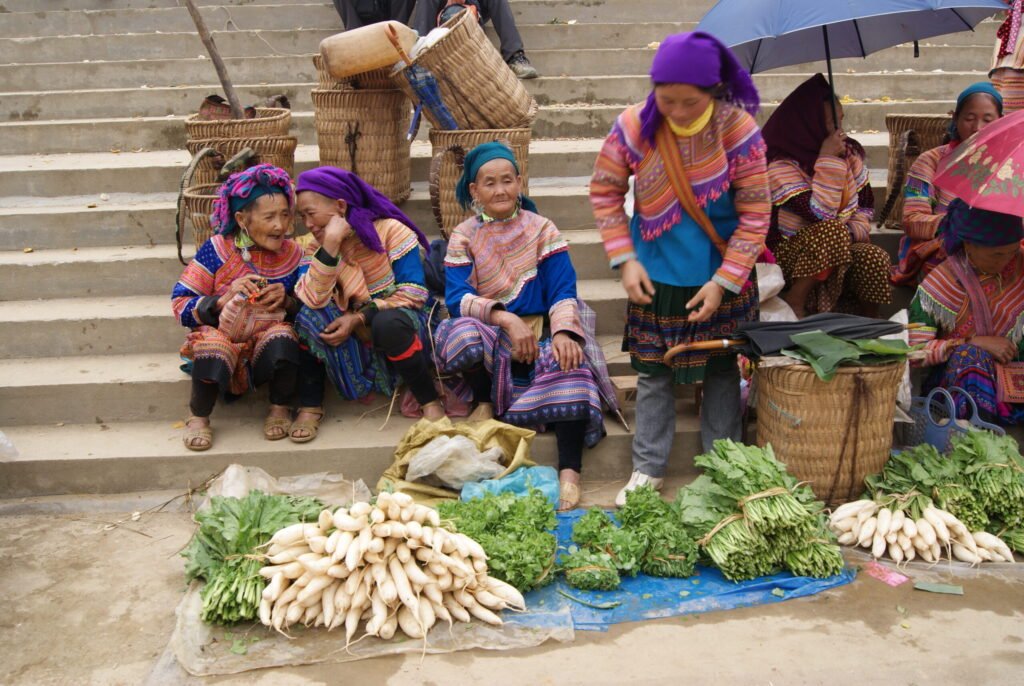
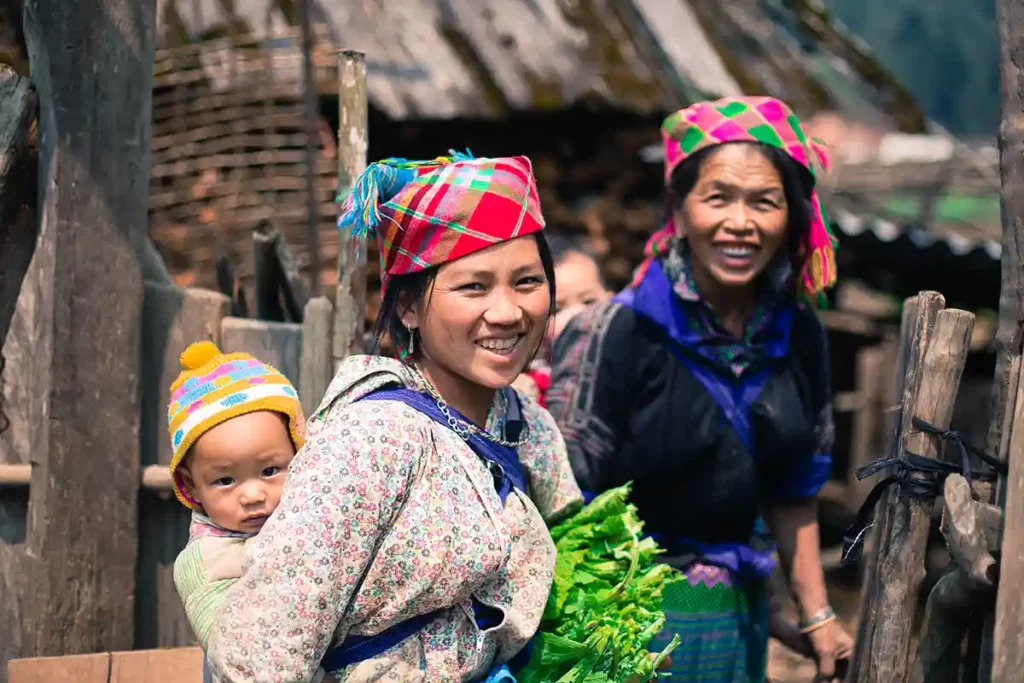
Bac Ha is the land of the Flower Hmong, whose women wear the most elaborate outfits in all of Vietnam: pleated hemp skirts, embroidered aprons, pom-pom headdresses, in five or six layers of colour. A complete costume represents several months of work and is passed down.Contrary to what people often think, these clothes are not brought out for visitors. They indicate the subgroup, sometimes the village, and are worn to market because market day is the day you show yourself. Around Bac Ha also live Tay, Nung, Phu La and Red Dao — about fifteen groups in all in the district.
Beyond the market
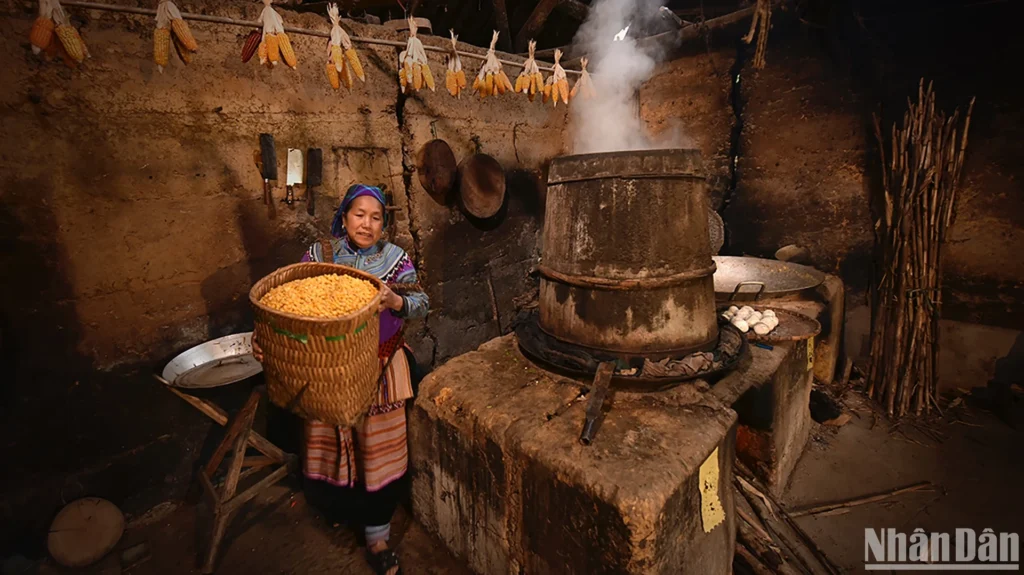
On other days, Bac Ha is a large, sleepy town at nine hundred metres, and that is just fine. You can visit the palace of the Hmong king Hoang A Tuong, a colonial curiosity from 1921 mixing European baroque and Chinese roofs, built for a local chief the French had armed.Above all, you walk. The villages of Ban Pho, Na Hoi and Ta Chai are one or two hours’ walk from the centre, along dirt tracks between maize fields. Ban Pho is known for its maize spirit, distilled at home; you will be offered a taste, and it is stronger than it looks.
How to get there, and where to stay
Two options from Hanoi. The direct road takes six hours via the Lao Cai motorway. The night train to Lao Cai, then an hour and a half by car, costs less and saves a day: you arrive in Bac Ha late on Saturday morning.Accommodation is simple: a few small hotels in the centre and Tay guesthouses in the surrounding hamlets. Allow €20 to €45 a night for two. Saturday-night rooms go weeks in advance in high season — it is the only time of the week the town is full.
The mistakes we see most often
Coming on a day trip from Sa Pa: arriving at ten, when the market has already changed in nature.
Scheduling Bac Ha on a Tuesday: nothing happens, and it is six hours on the road for a large town.
Photographing women up close without a word or a glance. Buy something from them, smile, ask — almost all agree.
Leaving at noon. The two hours that follow, when families head home laden along the ridge paths, are worth as much as the market itself.
The region’s markets: the full calendar
Bac Ha is not a destination, it is a calendar. Everything depends on the day you arrive.
Market
Day
Distance
What you see there
Bac Ha
Sunday
Town centre
The largest in the North. Buffaloes, horses, textiles, thang co.
Can Cau
Saturday
20 km north
Smaller and rougher. Dogs, medicinal herbs, spirit from 9 am.
Coc Ly
Tuesday
35 km west
On the banks of the Chay river, very few visitors.
Sin Cheng
Wednesday
30 km north
Attended almost exclusively by Hmong and Nung.
Lung Khau Nhin
Thursday
60 km
Towards the border, for those staying several days.
So the ideal programme fits in one sentence: arrive on Friday or Saturday morning, do Can Cau on Saturday, sleep on site, do Bac Ha on Sunday at seven. That is what we build when your dates allow.
How to read a Flower Hmong costume
What the garment says
The women of Bac Ha wear the most elaborate outfits in Vietnam: pleated hemp skirts, embroidered aprons, pom-pom headdresses, in five or six layers of colour. It is not a festive costume brought out for visitors. It indicates the subgroup, sometimes the village, and is worn to market because market day is the day you show yourself.
The time it represents
Hemp takes a whole year: sowing, harvesting, retting, drying, splitting the stems and joining the fibres by hand. Women spin as they walk, distaff at the waist. Then comes indigo, twenty to thirty successive baths. A complete costume represents twelve to eighteen months of work and is passed down.
The district’s other peoples
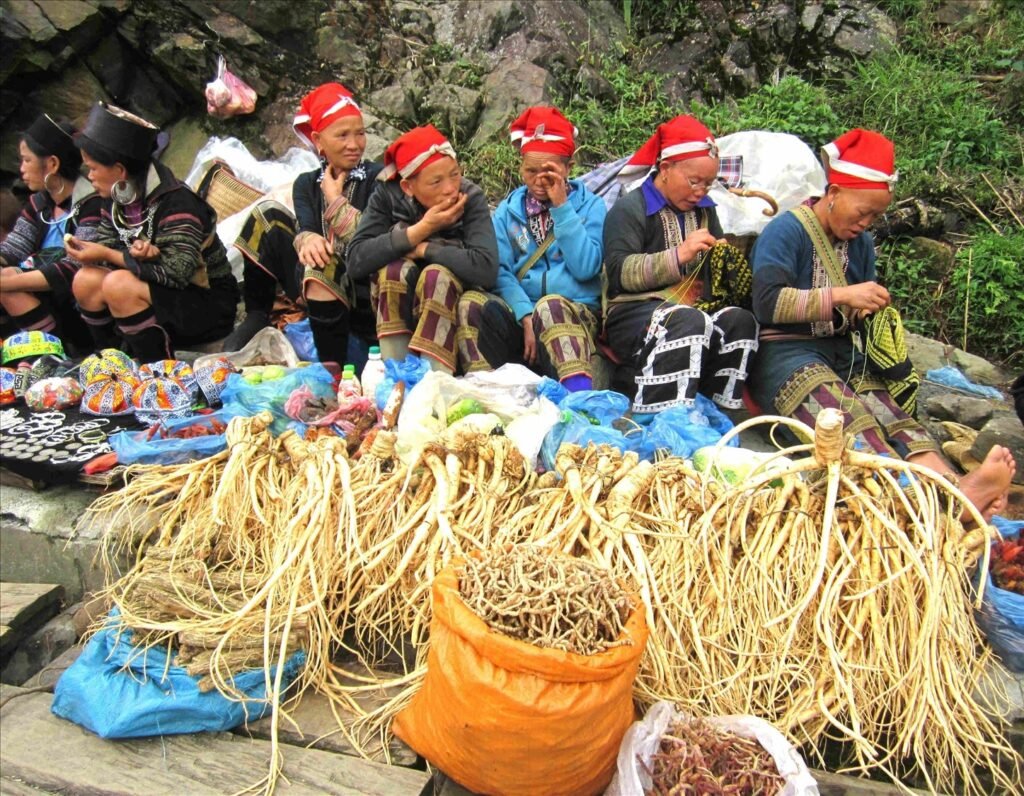
Around Bac Ha also live Tay, Nung, Phu La and Red Dao — about fifteen groups in all. The Red Dao are recognisable by their scarlet turbans and the shaved foreheads of married women.
How to get there, and where to stay
Option
Length
Indicative price
Private car from Hanoi
6 am
€110 – 150 one way
Night train + 1 h 30 by road
Night + morning
€25 – 60 for the train
From Sa Pa
2 h 30
50 – 80 €
Small hotel in the centre
—
€20 – 45 for two
Tay guesthouse in a hamlet
—
15 – 30 €
The night train to Lao Cai and then an hour and a half by road remains our choice: you sleep as you travel, arrive in Bac Ha late on Saturday morning, and have gained a day.Saturday-night rooms go weeks in advance in high season. It is the only time of the week the town is full — on other days, you will have the choice.
The Hmong king’s palace
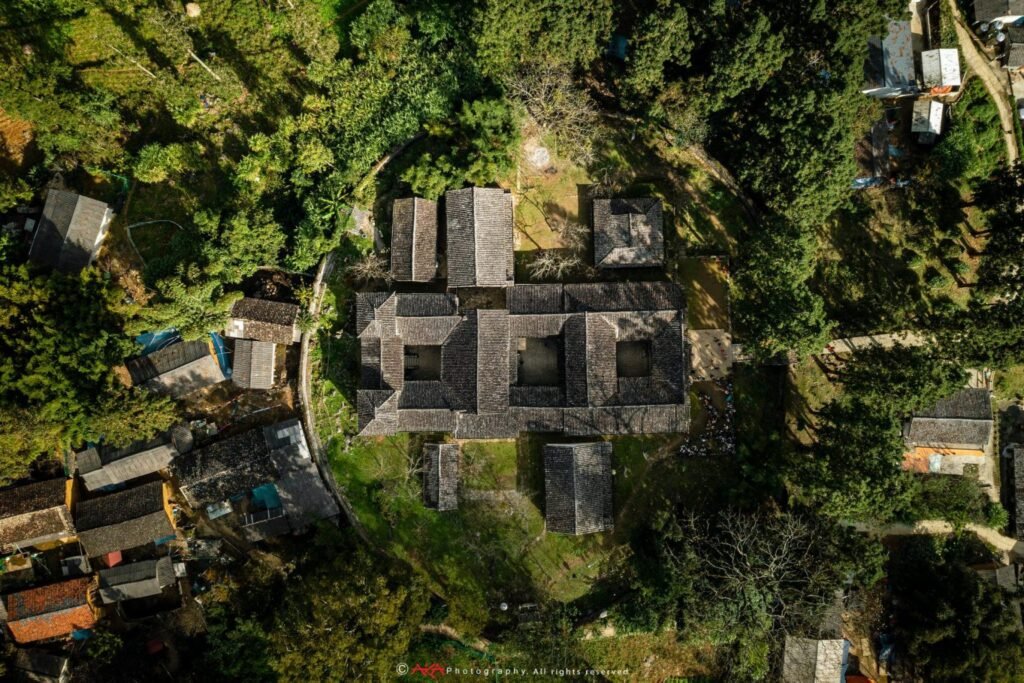
Built in 1921 by a Chinese mason for Hoang A Tuong, a local chief the French had armed and recognised as “king of the Hmong” — a convenient fiction for administering from a distance a region over which they had no hold.The architecture mixes European baroque, Chinese roofs and an inner courtyard: two storeys, columns, balustrades, and sixty-centimetre walls with arrow slits. The family controlled the opium trade across the district, a cash crop encouraged by the colonial monopoly, which drew a large share of Indochina’s budget from it.The visit takes twenty minutes and the building is poorly maintained. Yet it is worth the detour, because it explains in one go why maize replaced the poppy on these slopes, and how a colonial power governs a mountain it doesn’t control.
Partly, at the edges. The heart of the market — livestock, seeds, fabric — remains real trade between villagers. Going early makes all the difference.
Which day do you need to be there?
Sunday for Bac Ha, Saturday for Can Cau. It is one of the few stops in the country that dictates a date, and we build the itinerary around it.
Can you photograph people?
With a glance, a smile and their consent, yes. Our guides explain what to ask and what to avoid. Photographing from a distance without a word is badly received, here as elsewhere.
How many nights?
One, well placed in the week. The region can be visited in a day and combined with Sa Pa.
On which day is Bac Ha market held?
On Sunday morning, and it is the largest ethnic market in northern Vietnam. Can Cau, twenty kilometres away, is held on Saturday: arriving on Friday or Saturday morning lets you do both.
Is Bac Ha worth the detour from Sa Pa?
Yes, but not as a day trip. The Sa Pa buses arrive at ten, when the market has already changed in nature. You need to sleep there on Saturday night.
How much does an old Hmong costume cost?
A complete hand-spun, hand-dyed piece represents twelve to eighteen months of work and sells for several hundred euros. The embroidery sold for a few euros on the stalls is industrial.
Audience measurement. We would like to know which pages are useful to you, using Google Analytics. Nothing is stored without your consent, and you can change your mind at any time. Learn more

 Off the beaten trackTrekking in the North-West — 11 daysHanoi — Mai Châu — Pu Luong — Nghia Lo — Mu Cang Chai — Thac Ba Lake — Hanoi11 days / 10 nightsfrom €1,650