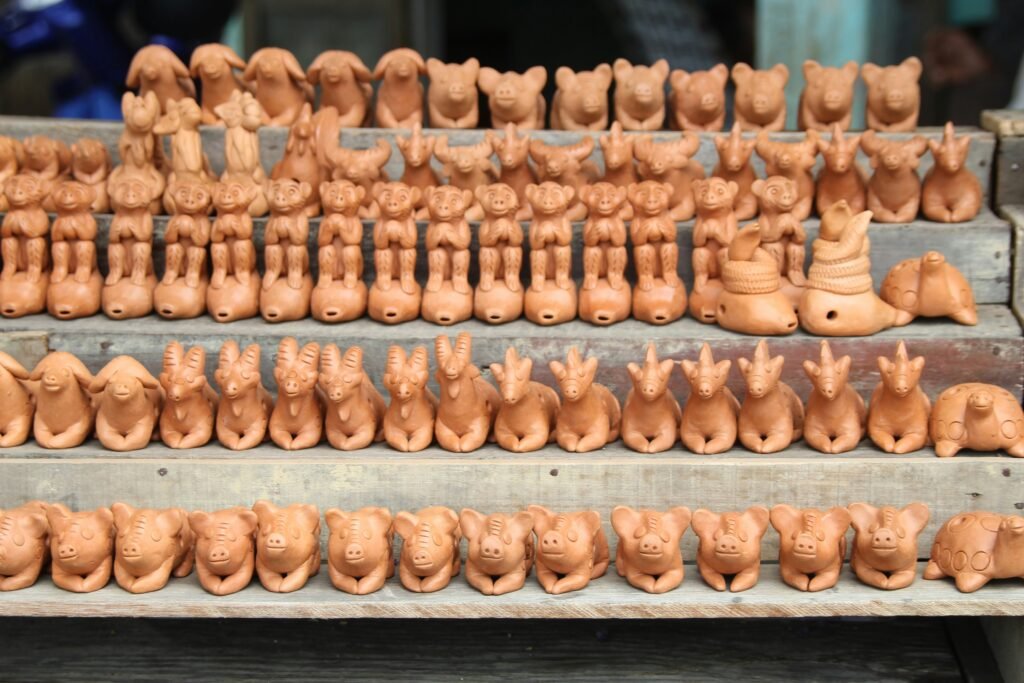
Speaking Vietnamese: forty words and the pronouns that change everything
Nobody expects you to speak Vietnamese. But ten words pronounced correctly change the temperature of a conversation, and a badly chosen pronoun can cause offence without anyone ever telling you.
In brief
Most useful
<em>Cảm ơn</em> (thank you) and <em>Xin chào</em> (hello), pronounced with the right tones
The difficulty
Six tones. The same sound means six different things
The social key
There is no neutral “I” or “you”: people address each other by family relationship
To install
A translator app with the offline Vietnamese pack and the camera function
The six tones, simply explained
Vietnamese has been written in the Latin alphabet since the early 20th century, which makes it deceptively familiar. The difficulty isn’t the writing but the pitch of the voice: the same syllable said on six different melodies gives six unrelated words.
Tone
Mark
Example
Meaning
Flat
ma
ma
ghost
Rising
má
má
cheek
Falling
mà
mà
but
Questioning
mả
mả
grave
Tumbling
mã
mã
horse
Heavy, glottalised
mạ
mạ
rice seedling
This isn’t an academic curiosity: it is why a word learned on the plane isn’t understood on arrival. Vietnamese people don’t hear “an accent”, they hear a different word.Two practical consequences. Automatic voice translation works badly : better to show the screen than have it read aloud. And it is better to master five words correctly than thirty approximately.
Pronouns: the real key
What doesn’t exist
There is no neutral “I” or “you” in ordinary conversation. People address each other with a kinship term chosen by relative age: older brother, younger sister, uncle, grandmother. You are one person’s “younger brother” and another’s “older brother” in the same conversation.That is also why you will be asked your age within the first few minutes. It isn’t nosiness: the other person needs to know what to call you.
The minimum table
You are talking to…
You say “I”
You say “you”
A slightly older man
em
anh
A slightly older woman
em
chị
Someone younger
anh (m) / chị (f)
em
A man your parents’ age
cháu
chú
A woman your parents’ age
cháu
cô
An elderly person
cháu
ông (m) / bà (f)
In practice, anh and chị cover eighty per cent of situations with adults your age or slightly older. Remember those two and you will manage anywhere.
The mistake to avoid
The word tôi, which every textbook gives as “I”, exists but sounds official and distant — as if you were addressing a counter clerk. It isn’t wrong, it is cold. At a stall or in someone’s home, prefer em or anh.Calling a woman clearly older than you “em”, on the other hand, is clumsy, and nobody will correct you.
Words to know, by situation
Politeness
English
Vietnamese
Approximate pronunciation
Hello
Xin chào
sin chow
Thank you
Cảm ơn
gahm uhn
Thank you very much
Cảm ơn nhiều
gahm uhn nyew
Excuse me
Xin lỗi
sin loy
Yes
Vâng (north) / Dạ (south)
vung / yah
No
Không
khome
Goodbye
Tạm biệt
tahm bee-et
Very good
Tốt lắm
tote lahm
At the table
English
Vietnamese
The bill
Tính tiền
It’s delicious
Ngon quá
No chilli
Không cay
No meat
Không thịt
I’m vegetarian
Ăn chay
No sugar
Không đường
No ice
Không đá
Water
Nước
Cheers
Một, hai, ba… dô!
Shopping and getting around
English
Vietnamese
How much?
Bao nhiêu tiền?
It’s expensive
Đắt quá
Cheaper?
Bớt được không?
No thank you
Không, cảm ơn
Where is…?
Ở đâu?
Toilets
Nhà vệ sinh
Stop here
Dừng ở đây
Straight on / left / right
Thẳng / trái / phải
Numbers
1
2
3
4
5
10
100
1 000
một
hai
ba
bốn
năm
mười
trăm
nghìn
A very useful shortcut at the market: Vietnamese people often count in implied “thousands”. “Hai mươi” — twenty — for a piece of fruit means twenty thousand dong, about seventy cents.
North and South don’t speak the same way
Vietnamese is a single language, but the gap between the Northern and Southern accents surprises even Vietnamese people.First, the number of tones : six in the North, five in the South, where two of them merge. Then the final consonants , often swallowed in the South, which makes understanding harder for anyone who learned from a Northern textbook. Finally, the vocabulary , which differs for everyday words.
English
North
South
Yes
Vâng
Dạ
Spoon
Thìa
Muỗng
Pineapple
Dứa
Thơm
Peanut
Lạc
Đậu phộng
The language taught in schools and used by the national media is that of Hanoi. If you learn a few words before you go, that is the version you will find, and it is understood everywhere — including in Saigon.
French in Vietnam: where things stand
You often read that French is still widely spoken in Vietnam. That is inaccurate, and it is better to know before you go.It is spoken by a small minority of elderly people, mainly in Hanoi, Hue and Ho Chi Minh City, and by professionals who learned it by choice — including our guides. English is by far the first foreign language taught, followed by Korean and Japanese.Traces do, however, remain in everyday language, inherited from colonisation, and you will recognise them.
Vietnamese
Origin
bánh mì
pain de mie (bread)
ga
gare (station)
xà phòng
savon (soap)
bơ
beurre (butter)
phô mai
fromage (cheese)
cà phê
café (coffee)
và li
valise (suitcase)
búp bê
poupée (doll)
What really works on the ground
A translator with a camera
Download the Vietnamese pack offline before you leave. The feature that translates a menu or label when you point the camera at it is the one you will use most, and it works offline once the pack is installed.
Show rather than say
Write or display the sentence, and hold out the screen. It works better than voice translation, which the tones defeat.
Numbers on your fingers
Careful: Vietnamese people don’t count on their fingers the way Europeans do, and a raised thumb doesn’t mean “one”. For a price, have it written down or typed on a calculator — every vendor has one, and it is standard practice even between Vietnamese people.
Gestures to know
To call someone over, hold your palm facing down, fingers scratching the air. Palm up with a crooked index finger, an ordinary Western gesture, is used to call an animal and goes down badly.You give and receive with both hands, or with the right hand supported by the left: money, a business card, a gift, a cup of tea. It is the gesture that makes the biggest impression for zero learning effort.
The apps that help
A translation app, with Vietnamese downloaded to work offline, is a great help at the market or the restaurant, especially for reading a menu with the camera. It does not replace a few words spoken yourself, but it unlocks many situations when your guide is not around.
In one sentence
Ten well-chosen words, a few pronouns and plenty of smiles: that is all it takes for Vietnamese to become a pleasure rather than an obstacle.
What ten words really change
Let’s be precise about the benefit. Nobody expects you to speak Vietnamese, and your guides translate everything that matters. What ten words change is something else: the temperature of the exchanges where there is no guide.The market vendor you say cảm ơn to with the right tones, the driver you say anhto, the homestay grandmother you say ngon quá to after dinner: those three moments happen without an interpreter, and they are often the ones you remember.One last tip: get corrected. Ask your guide to listen to you pronounce the five words you want to remember, on the first day. Ten minutes is enough, and it is infinitely more effective than an app — because they will hear what you can’t yet hear.
Do you need to speak Vietnamese to travel in Vietnam?
No. Your guides translate everything that matters, and English is enough in hotels and tourist areas. Ten words do, however, change the temperature of the exchanges where there is no guide.
Why is Vietnamese hard to pronounce?
Because it has six tones in the North and five in the South: the same syllable said on six melodies gives six unrelated words. Vietnamese people don’t hear an accent, they hear a different word.
How do you say hello and thank you?
Xin chào for hello, Cảm ơn for thank you. They are the two words to master first, and it is better to master five correctly than thirty approximately.
Why am I asked my age?
It isn’t nosiness. There is no neutral “I” or “you” in Vietnamese: people address each other with a kinship term chosen by relative age, and the other person needs to know what to call you.
Which pronouns should you learn?
Anh for a slightly older man, chị for a woman a little older, em for yourself when talking to them. Those three cover the vast majority of situations.
Is French still spoken in Vietnam?
Very little: a minority of elderly people and professionals who learned it by choice. English is the first foreign language taught. There are, however, French words left in everyday language, such as bánh mì or ga.
Do translation apps work?
Badly for speech, because of the tones. Very well for text and with the camera for menus. Download the offline Vietnamese pack before you leave.
Are there gestures to avoid?
Yes. To call someone over, your palm should face down: the Western gesture, crooked index finger with palm up, is used to call an animal. And you give and receive with both hands.
Putting it into practice
The tours where you experience what this article is about
Audience measurement. We would like to know which pages are useful to you, using Google Analytics. Nothing is stored without your consent, and you can change your mind at any time. Learn more




 The essentialsVietnam in 15 daysHanoi — Pu Luong — Ninh Binh — Lan Ha Bay — Hue — Hoi An — Saigon — Mekong Delta15 days / 14 nightsfrom €2,070