The country’s largest island, in the Gulf of Thailand, a stone’s throw from Cambodia. More than half its area is a national park; the other half has filled with resort complexes in ten years. The whole question is which side you sleep on.
In brief
Best time
November to March, calm sea and dry skies; July–August very wet
Getting there
1 h flight from Saigon, 2 h 15 from Hanoi; 30-day visa exemption for the island
How long
Three nights at the end of a tour, four if you dive
Combine with
The Mekong Delta and Chau Doc just before, Saigon for the return flight
Two islands in one
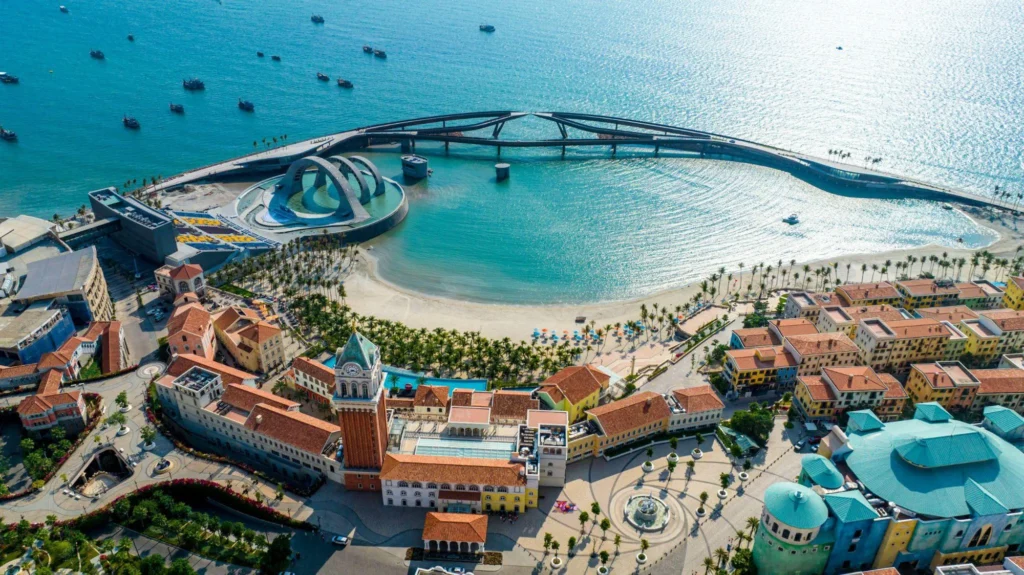
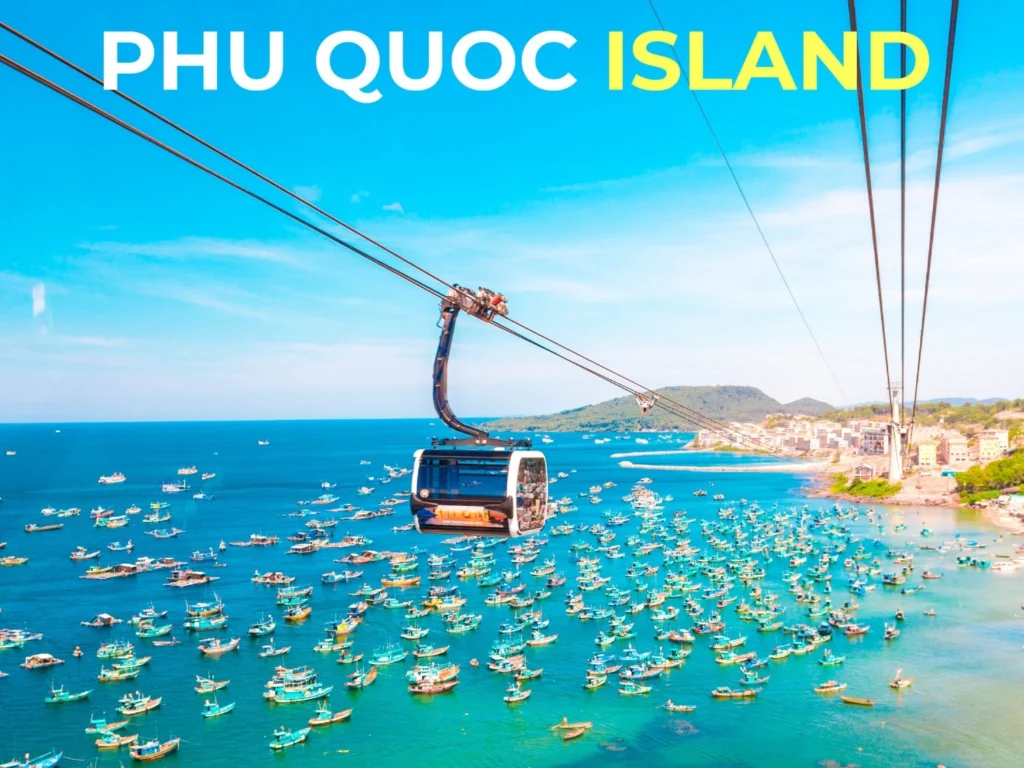
Phu Quoc is the largest island in Vietnam, almost the size of Singapore, set in the Gulf of Thailand — closer to the Cambodian coast than the Vietnamese one. It has changed very fast: an international airport in 2012, resort complexes, an eight-kilometre cable car, theme parks.So let us be clear: the south of the island, around Duong To and An Thoi, is entirely developed and no longer looks anything like Vietnam. The north, a national park over half its area, has stayed wooded, with almost empty beaches and fishing villages. The choice of hotel therefore decides the stay far more than elsewhere.
Here, the choice of hotel decides the stay far more than elsewhere.
What you really do there
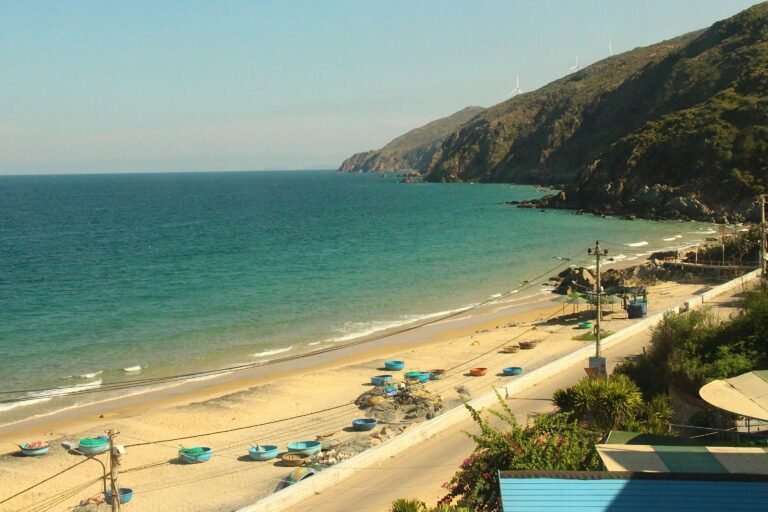
You rest, after two or three weeks of touring — that is its role in our programmes, and it plays it well. Long Beach, to the west, offers the sunsets; Sao Beach, to the south-east, the whitest sand, provided you go early; Ong Lang and the northern beaches, calm.Two outings are worthwhile. A day by boat to the An Thoi archipelago, snorkelling on the southern reefs. And the Duong Dong night market, for seafood chosen live on the ice. Night squid fishing, offered everywhere, will mainly appeal to children.
Pepper, fish sauce and pearls
The island produces three famous things. Phu Quoc pepper, grown on wooden poles in plantations you can visit in the north — red, black, white, hand-picked. Nuoc mam, fish sauce, whose factories line up fifteen-tonne wooden barrels in which anchovies ferment for twelve months; the smell is strong, the visit short and instructive.And pearls, raised on farms on the west coast. All three combine well in a half-day by car, with the Tranh or Da Ban waterfalls in the wet season.
The season, which decides everything
This is the key point. From November to March, the sea is calm, the sky crisp, the water at twenty-eight degrees: this is the season. From April to June, the heat rises but the sea stays fine. From July to September, the south-west monsoon hits the west coast head-on — rain, swell, boat trips cancelled, seaweed on the beaches.If your trip falls in July–August and you want a beach, look instead at the sheltered central coast — Quy Nhon, Nha Trang — or Con Dao, which stays decent until September.
Phu Quoc or Con Dao?
Two islands, two trips. Phu Quoc has the widest range of hotels in the country, frequent flights, restaurants, and suits families as well as honeymooners. Con Dao has fewer beds, fewer roads, a poignant penal past and untouched nature: it is the choice of those who want silence.One practical argument often tips the balance: Phu Quoc offers visa exemption for a thirty-day stay if you arrive directly on an international flight, though this only matters for trips limited to the island.
Access, accommodation, length of stay
One hour by air from Saigon, two hours fifteen from Hanoi, several flights a day. On the island, taxis, rental scooters and hotel shuttles; the island is fifty kilometres from north to south, so plan your journeys.Accommodation ranges from a guesthouse at €30 to resorts at several hundred. Three nights is the right format at the end of a tour: one to arrive, two to do nothing.
The mistakes we see most often
Booking in July–August on the west coast, in the full south-west monsoon.
Choosing a hotel in the south hoping for an authentic island: it is the most built-up area.
Arriving at Sao Beach at eleven, with the shuttles.
Placing Phu Quoc in the middle of the tour. It is best savoured at the end, when the fatigue has set in.
The Phu Quoc calendar, and why it decides everything
Phu Quoc is the destination in Vietnam where the season changes the experience most radically. The west coast, where almost all the hotels are, takes the south-west monsoon head-on.
Period
Sea
What you need to know
November – March
Calm, water at 28 °C
The season. Crisp skies, boat trips guaranteed, sunsets.
April – June
Still fine
Heat rising to 35 °C, decent sea, fewer people.
July – September
Swell, seaweed
South-west monsoon. Outings cancelled, beaches strewn with debris.
October
Sea calming down
Transition. Still some showers, but the swell eases.
If your trip falls in July–August and you want a beach, don’t try to force Phu Quoc: look at the sheltered central coast — Quy Nhon, Nha Trang — or Con Dao, decent until September. It is the most useful piece of advice we can give you about this island.
North or south: two islands in one
South (Duong To, An Thoi)
North (Ong Lang, Cua Can, Ganh Dau)
Development
Very built-up, resorts, theme parks
Wooded, national park, villages
Beaches
Sao Beach, Long Beach
Quiet coves
Restaurants
Many, international
Few, family-run
Airport access
10 – 20 min
30 – 50 min
Price
€40 to several hundred
50 – 250 €
For whom
Families, short stays
Those seeking calm
The choice of hotel decides the stay far more than elsewhere in Vietnam. The south of the island, with its eight-kilometre cable car and its theme parks, no longer looks anything like Vietnam. The north, a national park over half its area, has stayed wooded.
Pepper, fish sauce and pearls
Pepper
Grown on wooden poles in plantations you can visit in the north of the island. Hand-picked, it is sold in three colours — green, black, red — and red, picked fully ripe, is the most sought after. Allow five to fifteen euros per hundred grams depending on quality.
Fish sauce
The factories line up fifteen-tonne wooden barrels in which anchovies ferment for twelve months with salt. The Phu Quoc appellation has been protected in Europe since 2013. The visit lasts twenty minutes, the smell is strong, and you come out knowing how to read a label: forty degrees of nitrogen for a first press, ten to fifteen for an industrial sauce cut with water and sugar.
Pearls
Raised on farms on the west coast, free visit and adjoining shop. It is fine, no more; buy pepper instead.All three combine in half a day by car, with the Tranh or Da Ban waterfalls in the wet season.
What a day in Phu Quoc costs
Item
Simple
Comfortable
Night
30 – 60 €
120 – 500 €
Seafood meal
8 – 15 €
25 – 60 €
Boat day to An Thoi
20 – 35 €
€80 – 150 (private)
Scooter hire
€6 – 10 a day
—
Taxi airport – north of the island
15 – 25 €
—
Flight Saigon – Phu Quoc
40 – 100 €
—
An administrative detail that interests few travellers but is worth knowing: Phu Quoc offers visa exemption for a thirty-day stay if you arrive directly from abroad and don’t leave the island. So it doesn’t apply to a tour of Vietnam, but it can be useful for a beach stopover from Bangkok or Singapore.
From November to April. From May to October, the south-west monsoon makes the sea murky and rough on the west coast, where most of the beaches are.
Do you need a separate visa for Phu Quoc?
No. The island follows the same rules as the rest of the country: 45-day exemption for French citizens, e-visa beyond that.
How many nights should you plan?
Three to four. Fewer doesn’t justify the flight; more than five gets long unless you want to do nothing at all.
Can you go with young children?
Yes, it is actually the most suitable island: short flights, calm sea in season, well-equipped hotels and short distances on site.
When should you not go to Phu Quoc?
From July to September: the south-west monsoon hits the west coast, where almost all the hotels are. Swell, seaweed on the beaches, boat trips cancelled. Choose Quy Nhon or Con Dao instead.
North or south of Phu Quoc?
The south is entirely developed — resorts, cable car, theme parks — and practical with children. The north, a national park over half its area, has stayed wooded and calm. The choice of hotel decides the stay.
What should you bring back from Phu Quoc?
Pepper, in three colours, between five and fifteen euros per hundred grams. First-press fish sauce also travels, but check the rules on liquids in hand luggage.
Audience measurement. We would like to know which pages are useful to you, using Google Analytics. Nothing is stored without your consent, and you can change your mind at any time. Learn more




 Sea and islandsThe South and Phu Quoc — 10 daysSaigon — Cai Be — Can Tho — Chau Doc — Phu Quoc — Saigon10 days / 9 nightsfrom €1,590