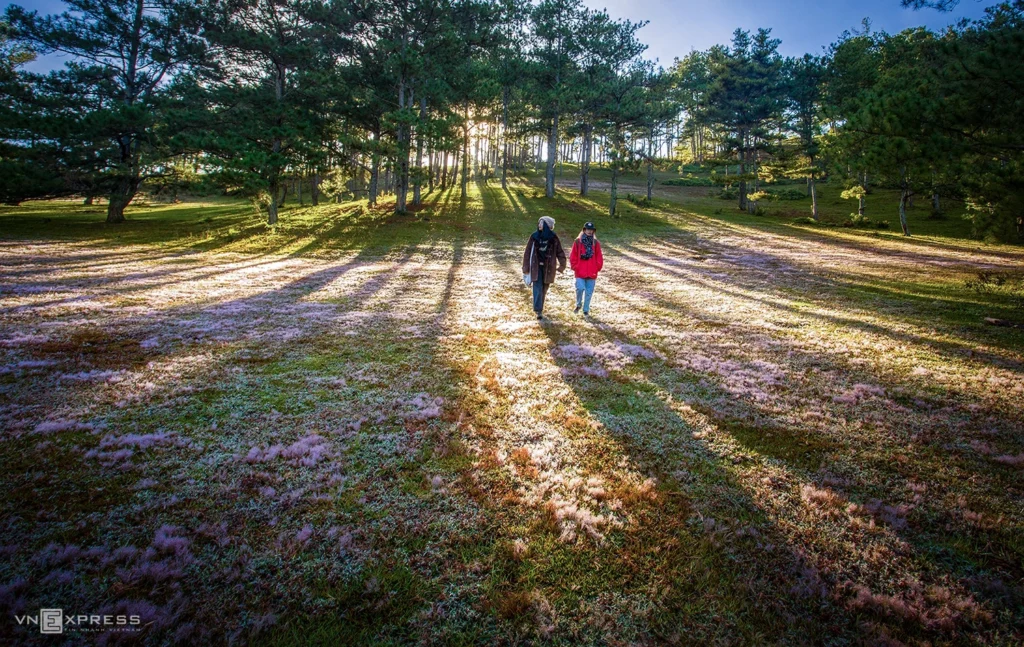
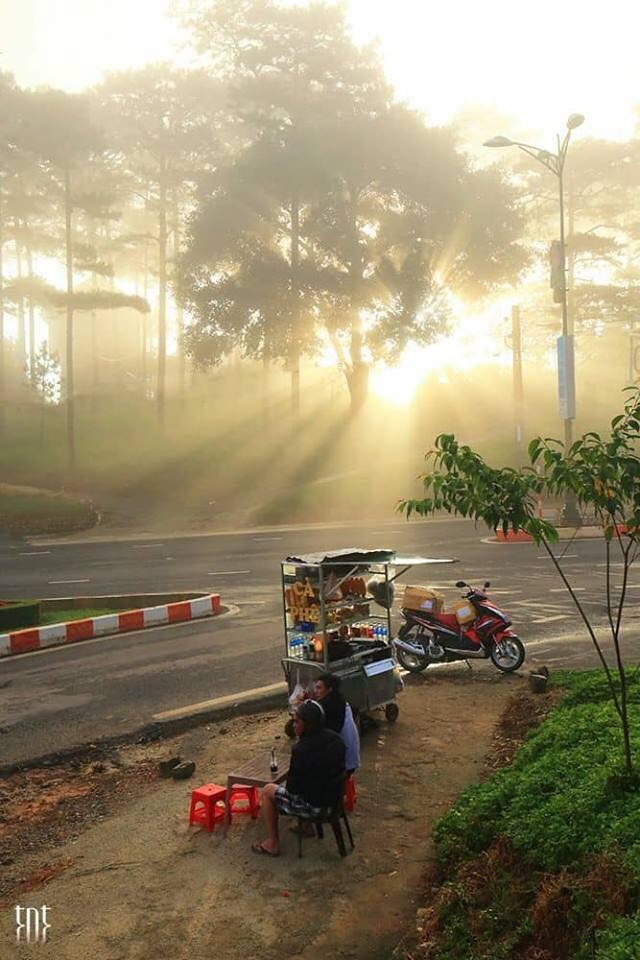
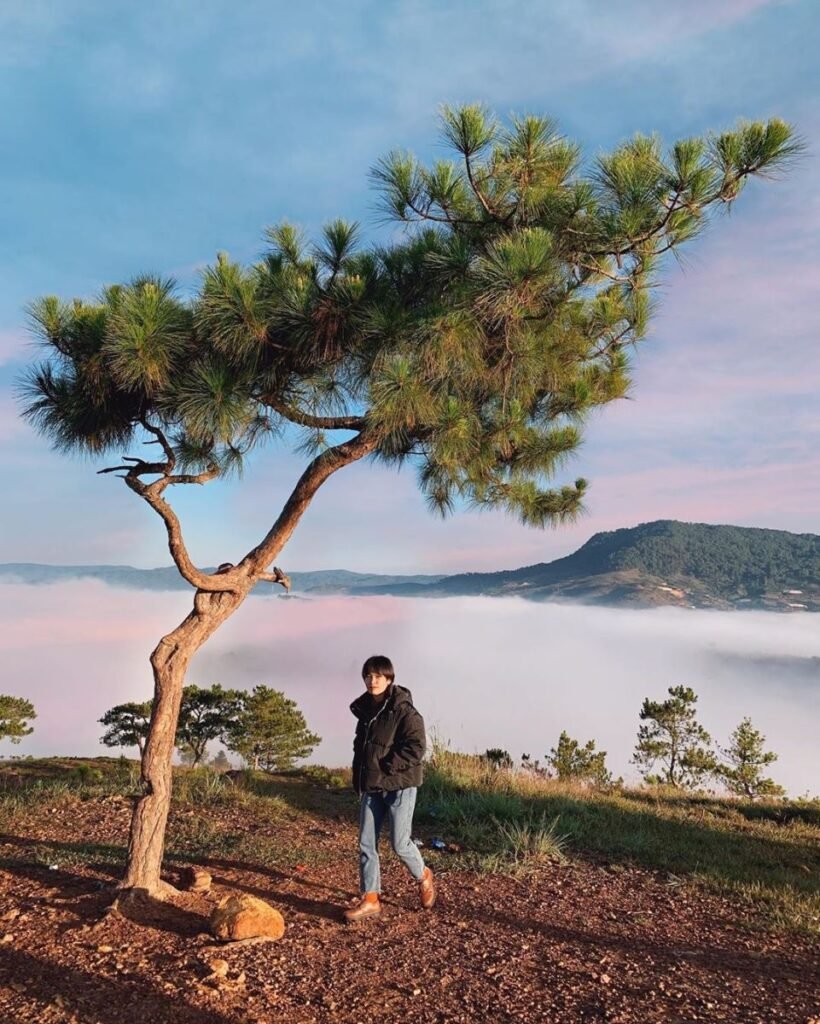
Fifteen hundred metres above sea level, colonial villas among the pines, coffee growing on the hillsides and air at eighteen degrees. Da Lat is the counterpoint to tropical Vietnam, and the only city in the country where you sleep under a blanket.
In brief
Best time
December to March, dry and cool; December–January for the flower fields
Getting there
50 min flight from Saigon, 1 h 45 from Hanoi; 4 h by road from Nha Trang
How long
Two nights, three if you go hiking or visit the plantations
Combine with
Saigon before, Nha Trang or Quy Nhon by the mountain road, Mui Ne 4 h away
A French hill station
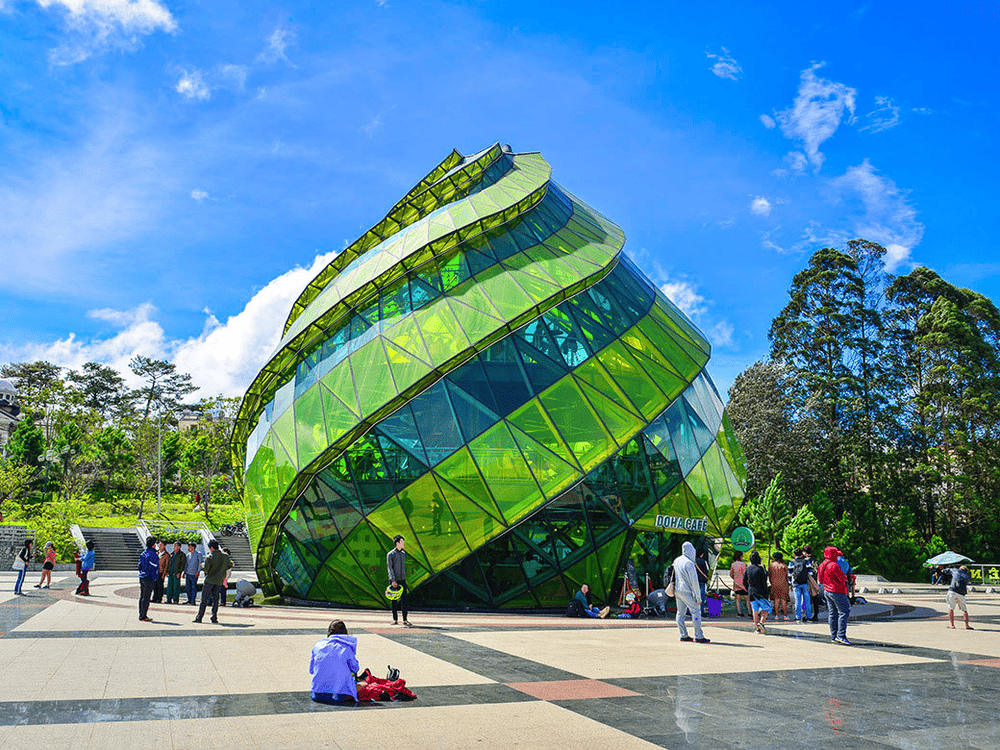
Da Lat was born of a decree: in 1897, Paul Doumer asked Dr Yersin for a place at altitude where the French of Indochina could escape the heat. Yersin proposed this plateau at fifteen hundred metres, where it is between fifteen and twenty-four degrees all year round.What remains is a city with no equivalent in Vietnam: fifteen hundred Art Deco and neo-Norman villas scattered among the pines, a 1938 station modelled on Deauville’s, a red-brick Lycée Yersin, and streets that climb and dip. Vietnamese couples come here on honeymoon; French visitors find something unexpected.
Fifteen hundred villas among the pines, and a station modelled on Deauville’s.
Coffee, seriously
Vietnam is the world’s second-largest coffee producer and most of its production is lowland robusta, destined for industry. Around Da Lat, the altitude allows arabica, and it is here that Vietnam’s speciality coffee scene was born.You visit plantations at Cau Dat, where the French planted from the 1920s, with drying on raised beds and roasting on site. In town, about ten roasters serve filter coffees and slow extractions you won’t find anywhere else in the country. It is one of our favourite visits — and the best souvenir to bring home.
Around the lake and on the ridges
The artificial Xuan Huong lake circles the centre: seven kilometres on foot or by bike, with the flower gardens at one end. The summer palace of Bao Dai, the last emperor, is still furnished as it was in the 1930s; Linh Phuoc pagoda, entirely covered in mosaics of broken pottery, is the opposite excess.To get out of town: Mount Lang Biang, twenty-one hundred metres, a two-hour climb and a panorama over the whole plateau; the Datanla and Pongour waterfalls; and canyoning in the Datanla valley, the only activity of its kind in Vietnam, run by local agencies. Check that yours is certified: there have been accidents.
Market gardeners and flowers
Da Lat feeds the south of the country. On the slopes around the city, thousands of greenhouses produce strawberries, artichokes, cabbages, lettuce and above all cut flowers — the region supplies half of Vietnam’s flowers. The village of Van Thanh and the Lang Biang valley can be visited at the growers’.The greenhouses are also the main criticism levelled at Da Lat: plastic has eaten up a good part of the hills, and the landscape is no longer that of 1990s postcards. You have to go a little higher, towards Cau Dat or Tuyen Lam lake, to find the pines again.
Climate, access and where to place it
Fifteen to twenty-four degrees all year round, with cool nights — bring a light jumper, even in summer. The dry season runs from December to March; from June to October it rains at the end of the day. December–January, when the wild sunflowers and cherry trees bloom, is the prettiest time.Fifty minutes by air from Saigon, or four hours by road from Nha Trang along a spectacular mountain road. On a tour, Da Lat fits between the coast and Saigon: it is a cool breather after the heat of the coast.
The mistakes we see most often
Packing only a light sweater: some January nights drop to twelve degrees.
Staying in the town centre, which is congested and has little charm. The interest is on the ridges.
Racing through the tourist “sights” around the lake: most are selfie parks.
Going canyoning with the first agency you come across.
The Da Lat calendar
Fifteen to twenty-four degrees all year round: Da Lat has no hot season. What changes is the rain and the blossom.
Period
Conditions
What you need to know
December – January
Dry, 12 to 22 °C
Wild sunflowers and cherry trees in bloom. The prettiest time.
February – March
Dry, 14 to 24 °C
Clear skies, ideal for hiking and the plantations.
April – May
First rains
Still very manageable, showers at the end of the day.
June – October
Rainy season
It rains almost every afternoon. Waterfalls at full flow.
November
Transition
End of the monsoon, air washed clean. A good compromise.
Bring a proper jumper: January nights drop to twelve degrees and no accommodation is heated. It is the most common mistake of travellers arriving from Saigon in a T-shirt.
Coffee: understanding what you drink
Robusta and arabica
Vietnam is the world’s second-largest coffee producer, but most of it is lowland robusta , grown around Buon Ma Thuot at five hundred metres, destined for industry and instant coffee. Around Da Lat, the altitude — fifteen hundred metres — allowsarabica, more acidic, more aromatic, and it is here that Vietnam’s speciality coffee scene was born.
The plantations of Cau Dat
The French planted here from the 1920s. Today you visit farms with drying on raised beds and roasting on site — half a day, and one of our favourite visits in the country.
What to taste, and bring home
Type
What it is
Indicative price
Cà phê sữa đá
Filter + condensed milk + ice
0,60 – 1,50 €
Cau Dat arabica
Speciality bean, 1,500 m
€10 – 25 a kilo
Buon Ma Thuot robusta
For the traditional filter
€6 – 12 a kilo
“Civet” coffee
Avoid, see below
—
A frank word about weasel coffee, sold everywhere in Da Lat as a curiosity. The original artisanal production, from berries gathered in the wild, has been replaced by farming caged civets that are force-fed. We don’t include it in any of our programmes and we advise you not to buy it.
What a day in Da Lat costs
Item
Indicative price
Night in a guesthouse
€25 – 50 for two
Night in a renovated colonial villa
80 – 200 €
Meal
3 – 10 €
Plantation visit with tasting
15 – 30 €
Canyoning at Datanla
€50 – 80 a day
Flight Saigon – Da Lat
35 – 80 €
A word of caution on canyoning: it is the only activity of its kind in Vietnam, it is run by local agencies of very uneven quality, and there have been fatal accidents. Check that the operator is certified and the equipment recent. We work with only two of the twenty or so providers in town.
Where to place Da Lat on a tour
Da Lat fits between the coast and Saigon: it is a cool breather after the heat of the coast. Four hours by road from Nha Trang along a spectacular mountain road, fifty minutes by air from Saigon.Two nights are enough for the town and a plantation; three if you want to hike Lang Biang or go canyoning. Beyond that, you go round in circles — it is a breather stop, not a destination for a long stay.A useful trade-off: if your tour already goes through the Kon Tum highlands, Da Lat will duplicate the climate and plantations. Choose one or the other.
Yes if you add a coffee plantation and an outing on the ridges. A single night leaves you only the town, which is the least interesting part.
Is it really cold?
Cool rather than cold: fifteen to twenty-four degrees, with nights sometimes dropping to ten in January. A jacket is more than enough.
Is it suitable for children?
Very much so. The climate is restful after the heat of the coast, the coffee plantation is fun to visit, and distances on site are short.
Is canyoning safe?
It is with serious supervision, and it isn’t without. We only work with operators whose equipment, qualifications and insurance we have checked.
Should you try civet coffee in Da Lat?
We advise against it. The original artisanal production has been replaced by farming caged civets that are force-fed. Choose a Cau Dat arabica instead, between €10 and €25 a kilo.
When should you go to Da Lat?
December to March, the dry season. December–January is the prettiest: wild sunflowers and cherry trees in bloom. Bring a jumper; nights drop to twelve degrees and nothing is heated.
How many nights in Da Lat?
Two for the town and a plantation, three if you hike Lang Biang. It is a breather between the coast and Saigon, not a destination for a long stay.
Audience measurement. We would like to know which pages are useful to you, using Google Analytics. Nothing is stored without your consent, and you can change your mind at any time. Learn more


 The essentialsVietnam in 15 daysHanoi — Pu Luong — Ninh Binh — Lan Ha Bay — Hue — Hoi An — Saigon — Mekong Delta15 days / 14 nightsfrom €2,070