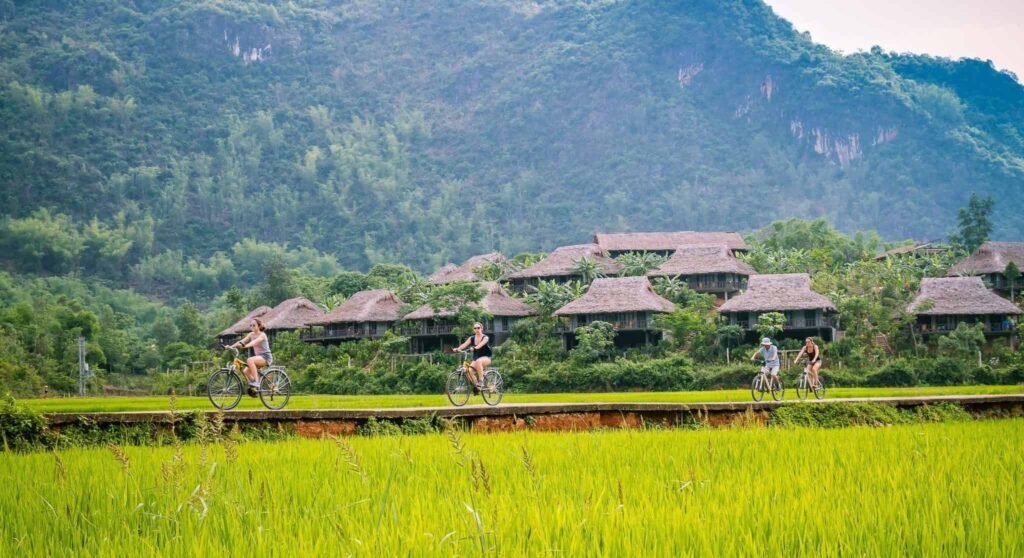
Four hours from Hanoi, a 17,500-hectare nature reserve, Thái hamlets on stilts and terraces that run down to the river. It is the stop we always suggest instead of Sa Pa — and nobody has regretted it yet.
In brief
Best time
Late May–early June and late September–early October, the two harvests; April and November for walking in the cool
Getting there
4 h 30 from Hanoi by road, with no difficult pass
How long
Two nights, three if you want two days of walking
Combine with
Ninh Binh 2 h 30 away, Mai Chau 1 h 30, Hanoi there and back
Why Pu Luong rather than Sa Pa
Pu Luong is a 175 km² nature reserve in Thanh Hoa province, four and a half hours from Hanoi. It has what most travellers are looking for when they go up to Sa Pa: terraced rice fields, Thai villages on stilts, paths between hamlets. Without the town, without the souvenir shops, without the vendors who follow the groups.The reserve is still inhabited and farmed: about ten thousand people, White Thai and Muong, live inside it. So it is not a park kept under glass but an agricultural valley you cross on foot, which makes it one of the stops families rate most highly.
It has what most people look for when they go up to Sa Pa, without the town or the souvenir shops.
Two harvests a year
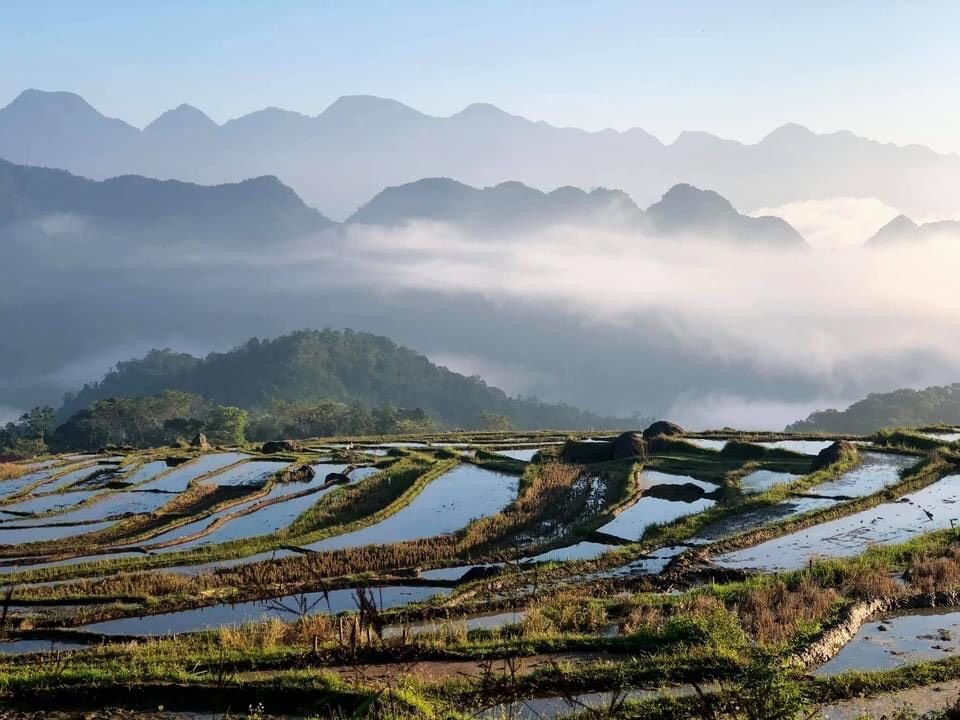
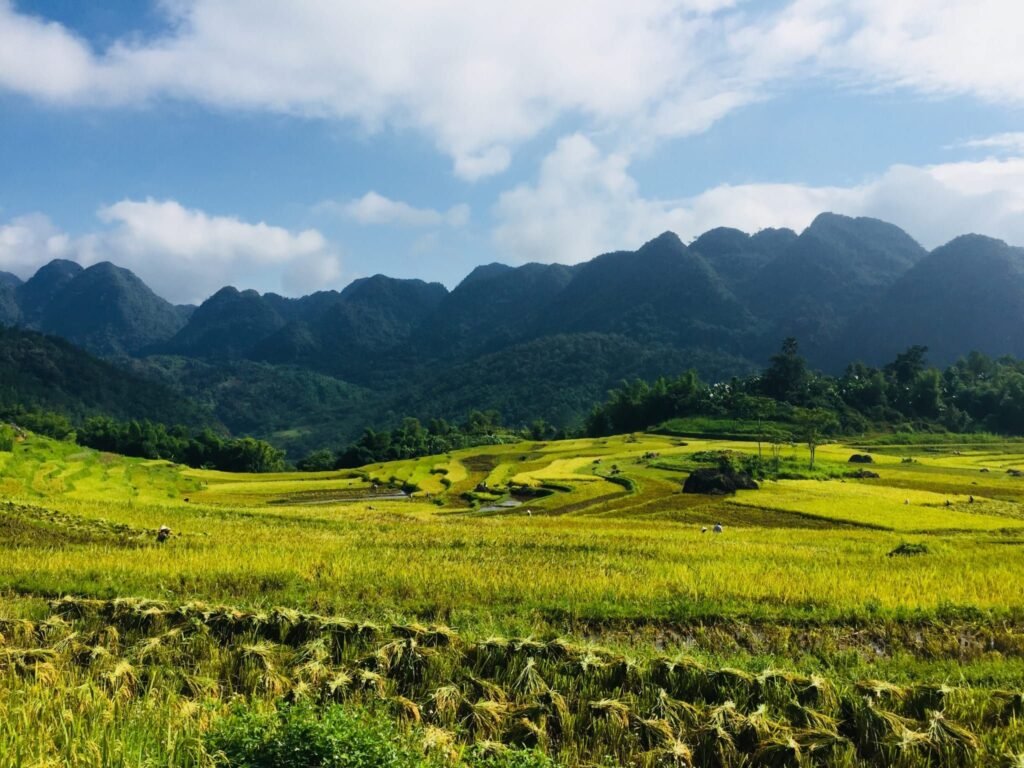
Unlike the far North, Pu Luong harvests twice: late May–early June, then late September–early October. That doubles your chances of seeing the golden terraces and makes the destination far less dependent on the calendar than Mu Cang Chai.In between, in July and August, the rice fields are an intense green but it rains hard at the end of the day. From December to February, mornings are misty and cool — eight to twelve degrees — and the fields are resting. April and November offer the best compromise for hiking.
Hiking from one hamlet to the next
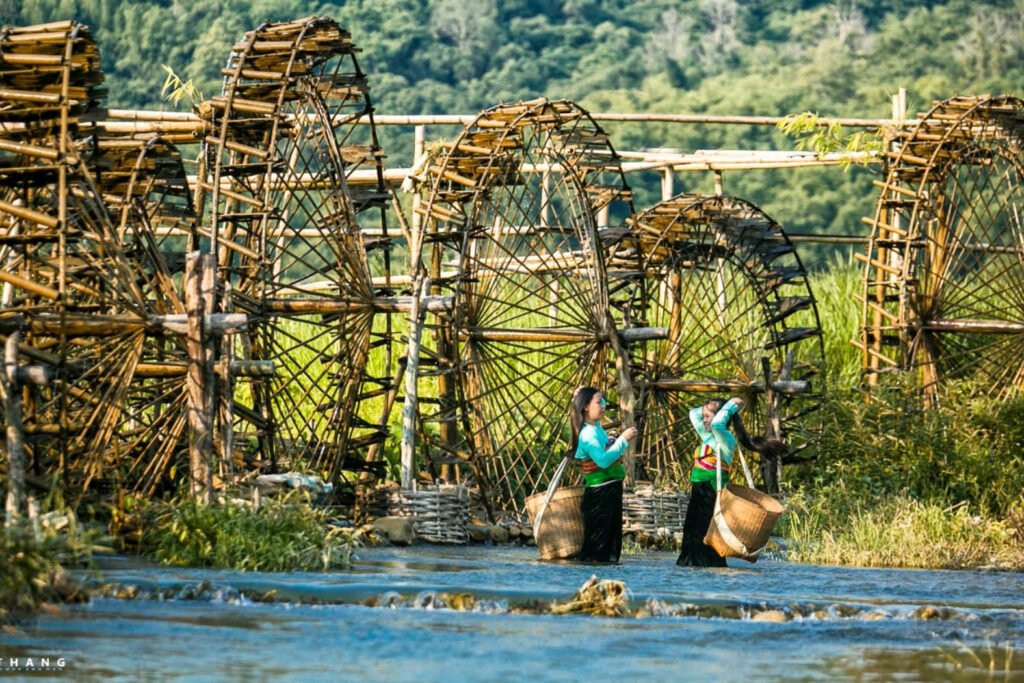
That is the reason to come. The classic routes link Ban Hieu, Kho Muong, Don and Hang, along dirt paths, bamboo footbridges and steps cut into the paddy dykes. Allow three to five hours per day of walking, with a moderate but real elevation gain.Two detours are worth it. Ban Hieu waterfall, cascading over several hundred metres, where you swim between two pools. And Kho Muong cave, opening onto an isolated amphitheatre, reached after a steep descent through the bamboo. The bamboo water wheels that lift river water to the terraces — some are six metres in diameter — are the image everyone brings home.
Staying in a homestay or a lodge
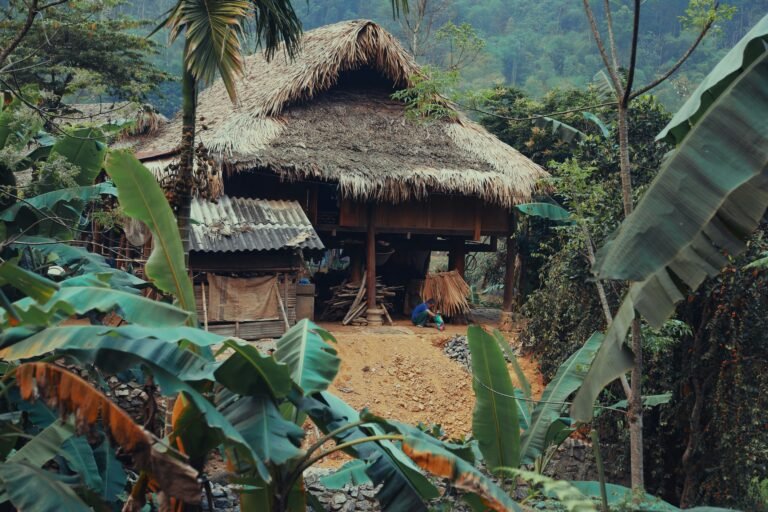
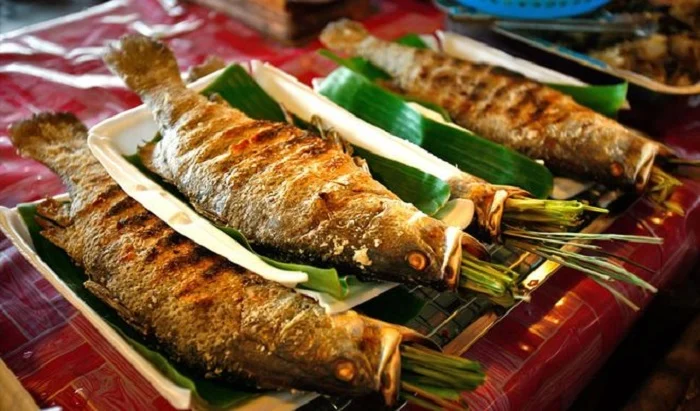
Thai stilt houses have long welcomed guests: a mattress on the floor under a mosquito net in the common room or a small private room, dinner shared with the family, €15 to €35 for two. It is simple, clean, and the dinner — river fish, bamboo shoots, rice spirit — is worth the night on its own.About ten eco-lodges have opened over the last ten years, with infinity pools facing the terraces, between €80 and €180. We like to mix the two: one night in a homestay after the walk, one night in a lodge to rest.
How to get there
Four and a half hours from Hanoi by private car, via Mai Chau or Cam Thuy. The road is decent and has no difficult pass, which clearly sets Pu Luong apart from the destinations of the far North — a real argument with children or for anyone who doesn’t cope well with bends.On site, you get around on foot, by bike or by motorbike taxi. There is no ATM in the reserve and phone coverage is patchy: bring cash.
The mistakes we see most often
Staying only one night: four and a half hours on the road each way for half a day of walking.
Coming in flip-flops. The paddy dykes are narrow and slippery as soon as it has rained.
Relying on your bank card: no ATM, no card terminal in the hamlets.
Choosing July–August for walking: it is the hottest and most humid time of the year.
Pu Luong, Sa Pa or Mai Chau: the comparison
Three mountain destinations north of Hanoi, often pitted against each other. Here is what really sets them apart.
Pu Luong
Sa Pa
Mai Chau
Drive from Hanoi
4 h 30, no pass
5 h 30 or night train
3 h 30
Harvests per year
2
1
2
Elevation gain
Moderate
Steep
Flat
Crowds
Low
Very high
Moderate
Peoples
White Thai, Muong
Hmong, Dao, Tay, Giay…
White Thai
Insistent vendors
No
Yes
Few
Many of our travellers end up choosing Pu Luong instead of Sa Pa, and practically none regret it. Sa Pa keeps a real advantage on one point: ethnic diversity, which is markedly greater. Mai Chau, closer and perfectly flat, is better suited to families with young children.
The two harvests: the detailed calendar
Period
State of the terraces
Our view
Late May – early June
First harvest, golden
Excellent, and far less well known than autumn.
July – August
Intense green
The hottest and most humid. Heavy rain at the end of the day.
Late September – early October
Second harvest, golden
The most sought-after period. Book early.
October – November
Fields harvested
Dry air, crisp light. The best time for walking.
December – February
Resting
8 to 12 °C early in the morning, mist in the valley. Beautiful in a different way.
March – April
Ploughing, transplanting
Mild, tender green, very pleasant for walking.
Two harvests instead of one double your chances of seeing the golden terraces. It is Pu Luong’s decisive argument against the far North, and it comes down to two things: a lower altitude — the inhabited valleys are at three hundred metres compared with fifteen hundred in Dong Van — and a more southerly latitude.
Walking routes
Ban Hieu – Kho Muong, the full day
Ten kilometres, four hours, moderate but real elevation gain. You pass the cascading Ban Hieu waterfall, where you swim between two pools, then make a steep descent through the bamboo to the isolated amphitheatre of Kho Muong and its cave.
Don – Hang, the half-day
Three hours on the paddy dykes, between two Thai hamlets, with the bamboo water wheels along the way. Accessible to all and doable with children from eight years old.
The Pu Luong ridge
The summit rises to seventeen hundred metres. The climb takes six to eight hours there and back and needs a guide: the trail is not marked. For strong walkers only.In all cases, closed shoes: the paddy dykes are narrow and slippery as soon as it has rained.
What a stay in Pu Luong costs
Item
Indicative price
Night in a homestay, stilt house
€15 – 35 for two, dinner included
Night in an eco-lodge with a pool
80 – 180 €
Meal
3 – 8 €
Hiking guide
€20 – 35 a day
Private car from Hanoi
€90 – 130 one way
Two practical points that surprise people: there is no ATM in the reserve, and phone coverage varies from one hamlet to the next. Bring cash for the whole stay.We like to mix the two types of accommodation: one night in a homestay after the walk, for the dinner shared on the floor — river fish grilled in banana leaf, bamboo shoots, rice spirit distilled by the family — and one night in a lodge to rest.
Two nights at least for a real day of hiking. Three nights let you reach the most remote hamlets and keep a morning without walking.
Is the hiking difficult?
No, normal fitness is enough. Days cover six to twelve kilometres with moderate elevation gain; we adapt the distance to your group.
Is there phone signal and wifi?
4G works in most hamlets and the lodges have wifi. The most isolated homestays don’t — which is also part of their appeal.
Can you go with children?
Yes, from six or seven for the short walks. The lodges with pools are very popular with families.
Pu Luong or Sa Pa?
Pu Luong if you want the same terraces but calmer, 4 h 30 from Hanoi with no difficult pass, with two harvests a year instead of one. Sa Pa keeps the edge on ethnic diversity.
When can you see the golden rice fields in Pu Luong?
Twice a year: late May–early June, then late September–early October. That doubles your chances compared with the far North, which harvests only once.
Is there an ATM in Pu Luong?
No, and phone coverage varies from one hamlet to the next. Bring cash for the whole stay.
Audience measurement. We would like to know which pages are useful to you, using Google Analytics. Nothing is stored without your consent, and you can change your mind at any time. Learn more

 Off the beaten trackTrekking in the North-West — 11 daysHanoi — Mai Châu — Pu Luong — Nghia Lo — Mu Cang Chai — Thac Ba Lake — Hanoi11 days / 10 nightsfrom €1,650