The colonial centre, the palace of 1975, the Cholon Chinatown and the Cu Chi tunnels: our day-by-day programme for Saigon, with what we advise against.
In brief
Ideal length
Two full days, three with Cu Chi
Don’t miss
Reunification Palace, War Remnants Museum, Cholon
Watch out
One-day Mekong trips often disappointing
Best season
December to April
Saigon in two or three days: the right length
Ho Chi Minh City, which everyone still calls Saigon, doesn’t have Hanoi’s gentleness. It is a city of ten million people, faster, more modern, more forward-looking. Yet it can be visited very well in two full days, and three if you want to add the Cu Chi tunnels or a first foray into the Mekong Delta.Here is the programme we offer our travellers, day by day, with what we advise against.
Saigon doesn’t have Hanoi’s gentleness: it is faster, more modern, and can be visited very well in two days.
Day one: the colonial centre and recent history
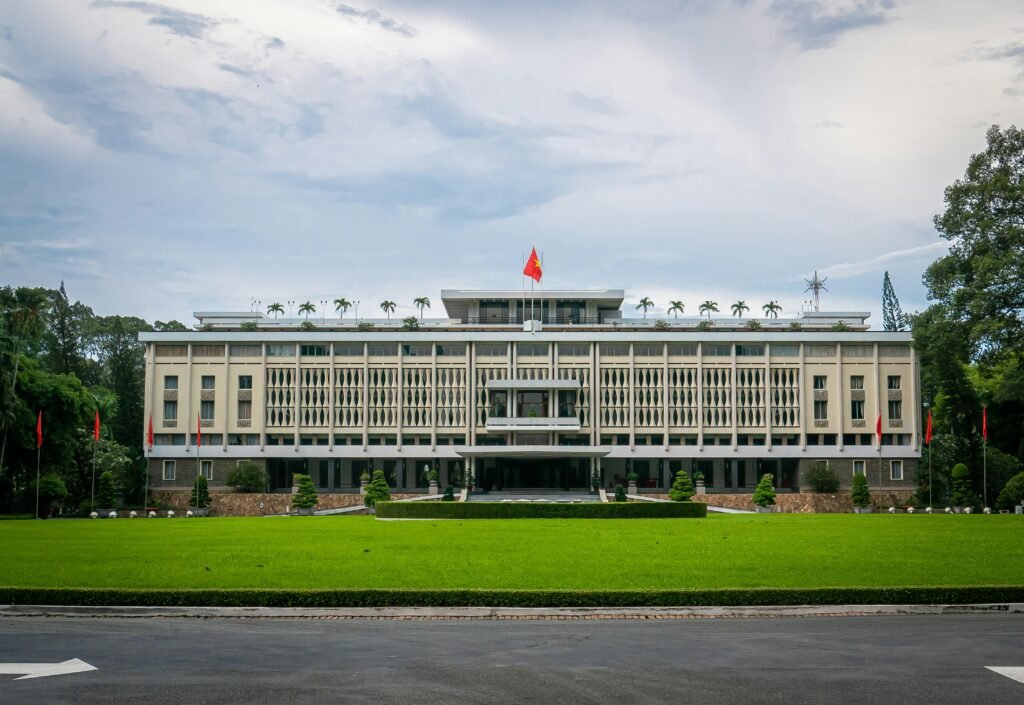
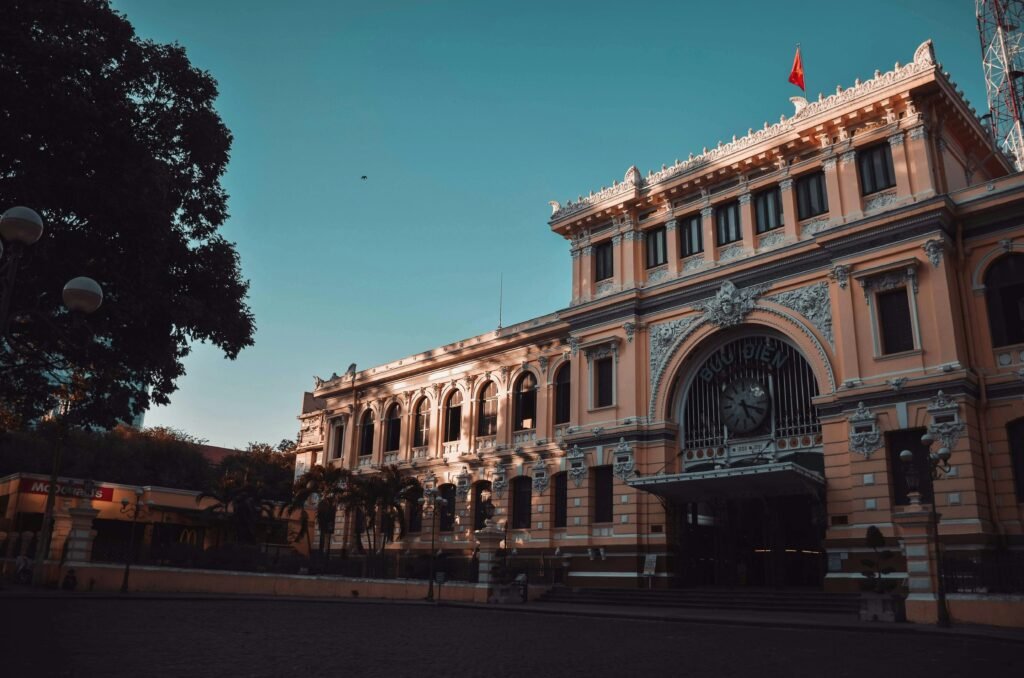
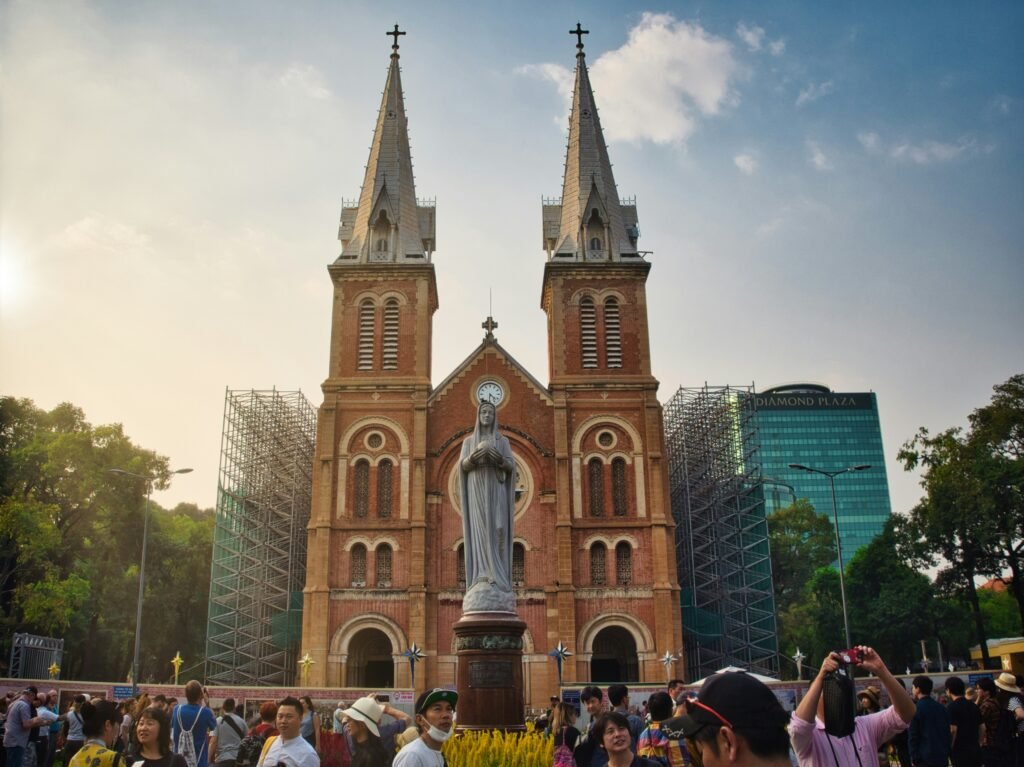
Start early with the Reunification Palace, the former presidential palace of South Vietnam, left as it was in April 1975: 1960s reception rooms, map room and bunker in the basement. Allow an hour and a half.A few minutes’ walk away, the Central Post Office, completed at the end of the 19th century and often wrongly attributed to Gustave Eiffel, keeps its great glass roof and old maps. Notre-Dame Cathedral, just opposite, has been under restoration for several years: you can at least see its red-brick façade.In the afternoon, the War Remnants Museum is the most powerful visit in Saigon. It presents the conflict from the Vietnamese point of view, with very harrowing photographs, notably of Agent Orange. Allow two hours and a quiet moment afterwards. End the day on the former rue Catinat, now Đồng Khởi, as far as the Opera House and the river.
Day two: Cholon, pagodas and markets
Cholon, Chinatown, is the Saigon that hurried visitors don’t see. Binh Tay market, under its clock tower, is a wholesale market selling everything the south produces. The district’s Cantonese and Fujian pagodas, such as Thiên Hậu, dedicated to the sea goddess, are filled with hanging incense coils.On the way back to the centre, stop at the Jade Emperor Pagoda, one of the most beautiful in the city, dark and smoky. Ben Thanh market, very touristy, is worth it mainly for its food stalls. In the evening, the alleys of the former District 4, across the canal, are the best place to eat seafood and grilled snails with Saigon residents.
Day three: Cu Chi or the Mekong
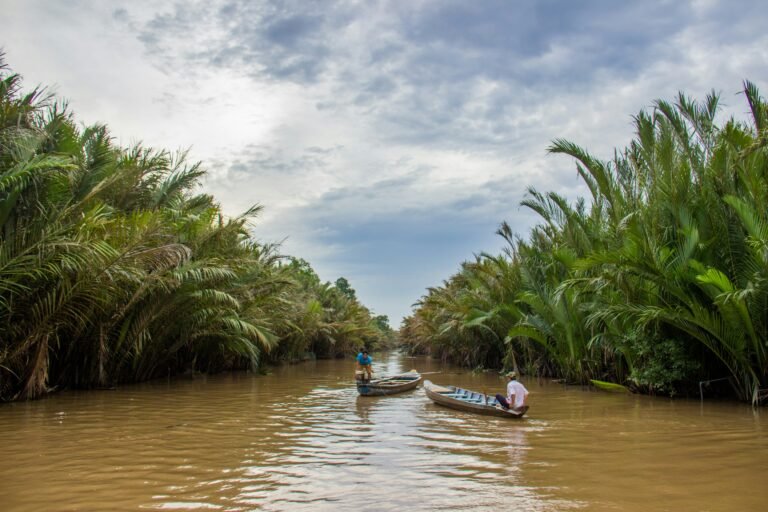
The Cu Chi tunnels are about an hour and a half to two hours by road. The Ben Duoc site is more authentic and less visited than Ben Dinh. You go down into sections of tunnel widened for visitors, and grasp the scale of the network dug during the war. Avoid the shooting range, noisy and pointless.If you are continuing to the Mekong Delta on your trip, keep this third day for Saigon and leave directly for Ben Tre or Can Tho the next day. A day trip to the delta from Saigon is possible, but it often amounts to a lot of road for little time on the water.
Saigon in the evening
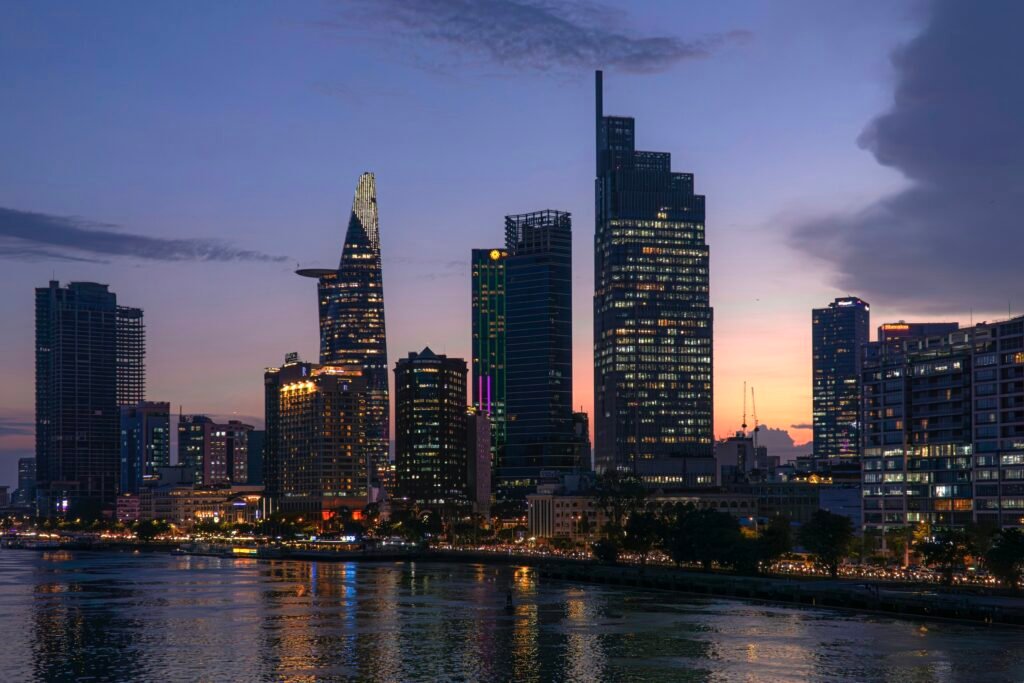
Saigon comes alive mostly at night, when the heat eases. Nguyen Hue walking street fills with families and young people, between the illuminated city hall and the river. Rooftop bars offer views over the city and its towers. To eat, District 4 and its Vinh Khanh street line up dozens of open-air seafood restaurants, very popular with Saigonese.Bui Vien Street, the backpacker district, is noisy and lively until late: interesting to see once, less so to sleep in. The night market around Ben Thanh is mostly touristy; we prefer the small neighbourhood markets that your guide knows.
Getting around Saigon
The city is large and traffic is heavy, especially at rush hour. Cars and motorbikes booked through an app are practical and cheap; taxis from the big companies are reliable. The centre, around Dong Khoi and Nguyen Hue, can be explored on foot, once you learn to cross the street at a steady pace. For Cholon and the outlying districts, a car with a driver saves a lot of time and energy.
The museums worth a visit
Beyond the War Remnants Museum and the Reunification Palace, two museums are often overlooked. The Fine Arts Museum occupies a beautiful colonial mansion and presents Vietnamese painting, from lacquer to contemporary works. The History Museum, in the botanical garden, traces the country from prehistory, with fine Cham and Funan collections. They are quiet and air-conditioned: perfect for the hot hours.
Saigon with children
With children, we keep days short: the Cu Chi tunnels fascinate older children, a water puppet show or a boat trip on the river pleases younger ones, and the botanical garden offers shade. A hotel with a pool makes all the difference in the afternoon.
Before or after the Delta
Saigon is the gateway to the Mekong Delta, two hours away by road. We advise spending two nights there at the start, then heading to the Delta for one or two nights, and returning to Saigon only if the return flight requires it. That way the city and the countryside answer each other, with no days lost in traffic jams.
What we advise against
Cheap “Mekong in a day” group tours that stop at shops. Cyclos picked up in the street with no price agreed in advance. And trying to do everything on foot: distances are long and the heat is strong. Use taxi apps such as Grab, or Metro Line 1 for some journeys to the east.
When to visit Saigon
Saigon has two seasons. The dry season, from December to April, is the most pleasant, with heat building until April. The rainy season, from May to November, brings heavy late-afternoon showers, short most of the time: sightseeing remains entirely possible. During Tết, the city empties and many restaurants close for a few days.
Eating in Saigon
Cơm tấm, broken rice with a grilled pork chop, is the everyday dish. Hủ tiếu, the southern noodle soup, is eaten in the morning. Saigon’s bánh mì is generous, and crispy bánh xèo is shared in the evening. For coffee, do as Saigon residents do: a cà phê sữa đá, iced with condensed milk, sitting on a stool on the pavement.
Where to stay in Saigon
The centre, around the Opera House and Đồng Khởi street, is practical for doing everything on foot, or nearly. The former District 3, more residential, offers boutique hotels on quieter streets. Avoid Bui Vien street if you want to sleep: it is the bar street, very noisy until late.
Audience measurement. We would like to know which pages are useful to you, using Google Analytics. Nothing is stored without your consent, and you can change your mind at any time. Learn more


 The essentialsVietnam in 15 daysHanoi — Pu Luong — Ninh Binh — Lan Ha Bay — Hue — Hoi An — Saigon — Mekong Delta15 days / 14 nightsfrom €2,070