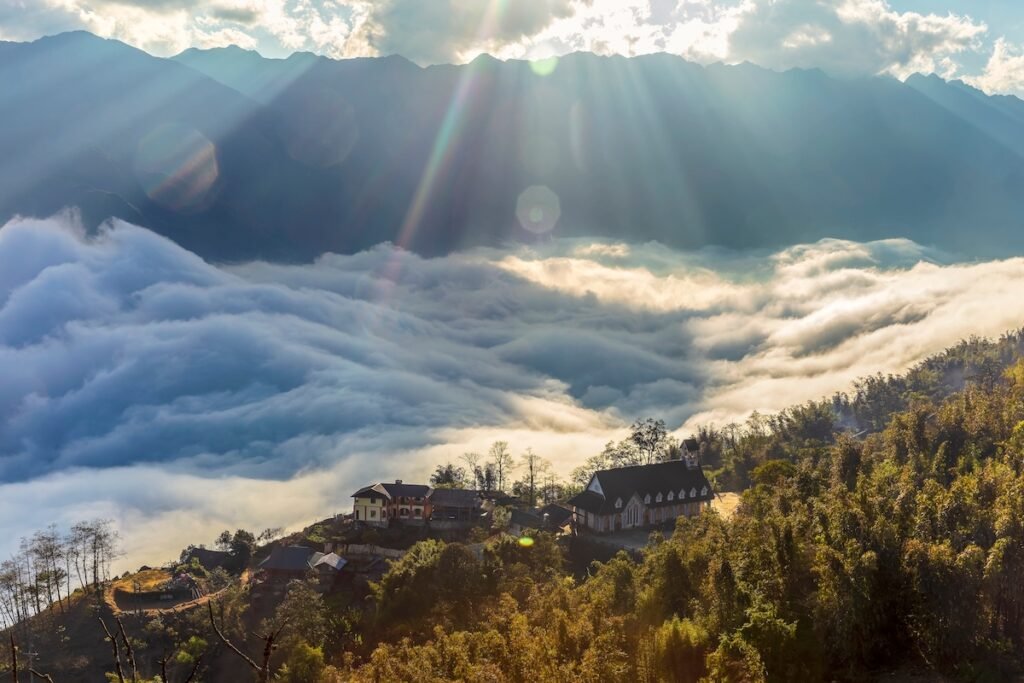
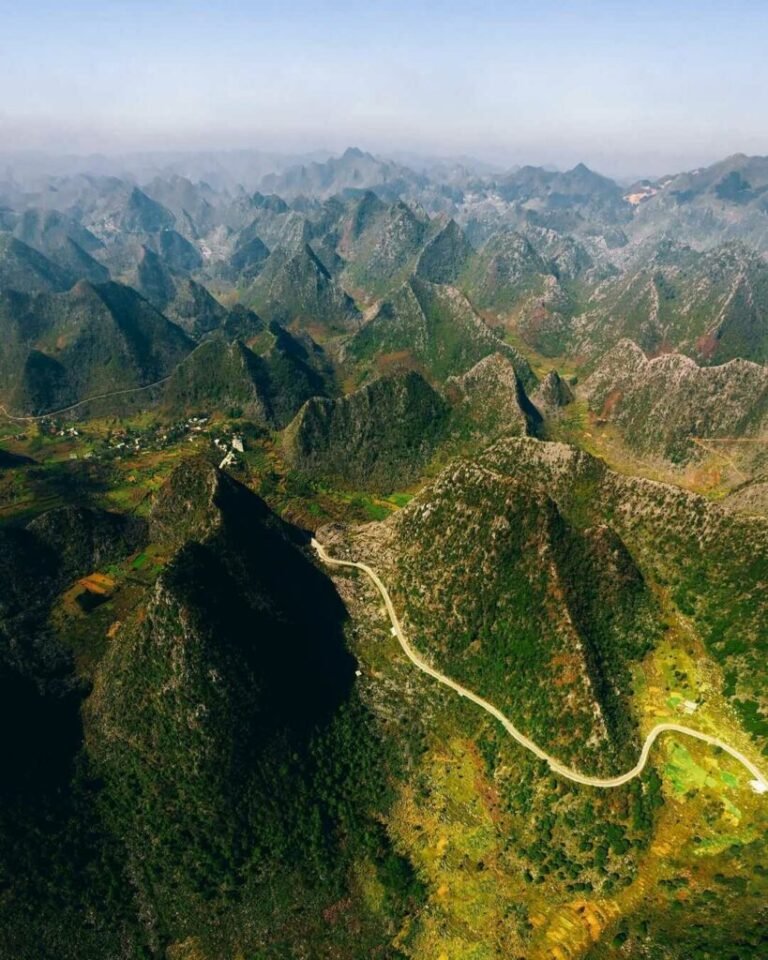
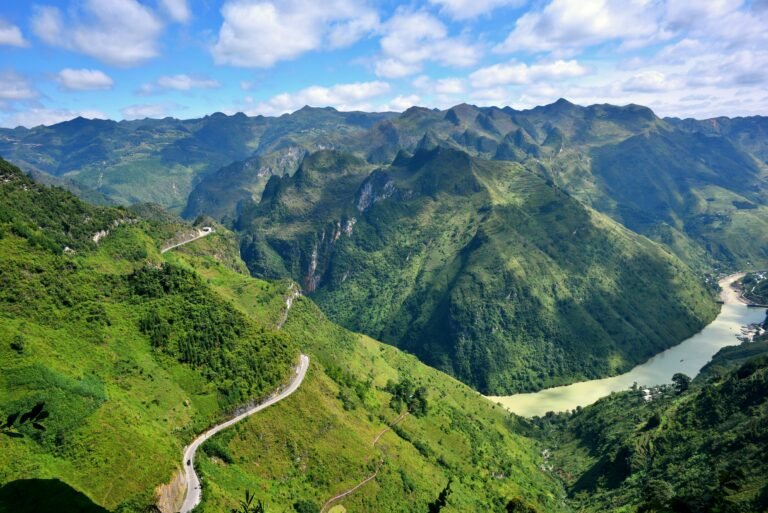
Red earth, coffee plantations, Bahnar communal houses and lakes edged with rice fields: the Vietnam of the southern minorities, which almost no traveller sees.
In brief
Best time
November to April, dry season; coffee harvest from November to January
Getting there
Flight to Buon Ma Thuot or Pleiku, or 4 hrs by road from Quy Nhon to Kon Tum
How long
Four to five days as a loop
Combine with
Quy Nhon, Nha Trang, Da Lat
The Vietnam almost nobody sees
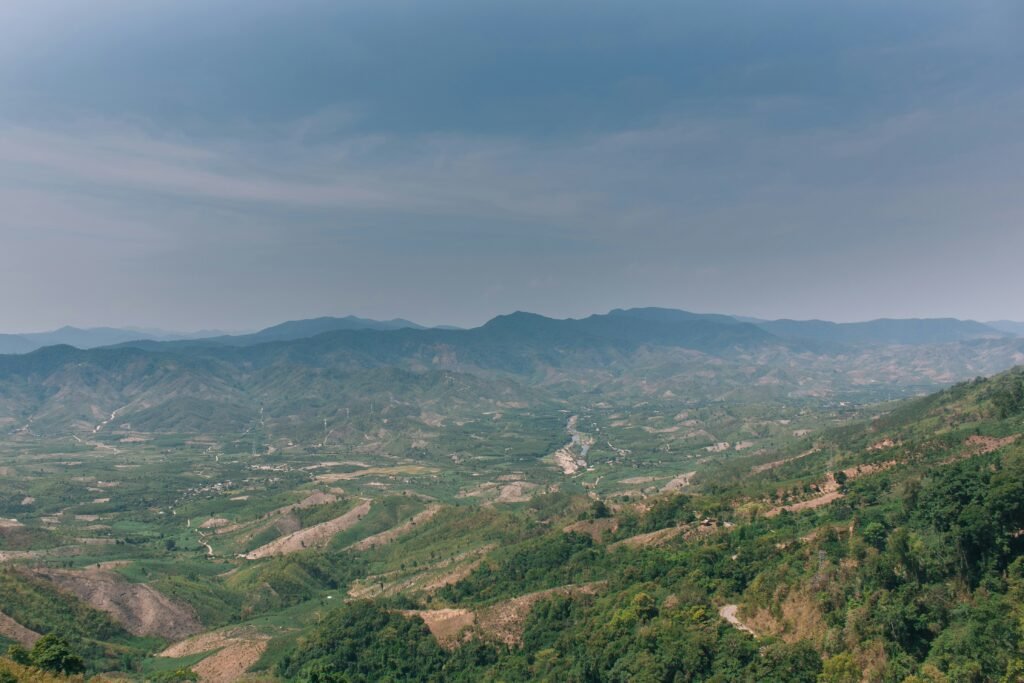
Between the central coast and the borders of Laos and Cambodia stretches a great plateau of red earth, five hundred to eight hundred metres above sea level: the Central Highlands, the Tây Nguyên. The landscape is made of coffee, pepper and rubber plantations, forests, lakes and waterfalls, and above all villages of minorities — Bahnar, Sedang, Jarai, Ede, M’nong — whose culture is very different from that of the northern mountains.Very few foreign travellers go there. That is both the limitation and the appeal of the region: the welcome is sincere, the roads are free of tour buses, but you need a guide to understand what you are seeing.
The welcome is sincere and the roads free of tour buses, but you need a guide to understand what you are seeing.
Kon Tum and the communal houses
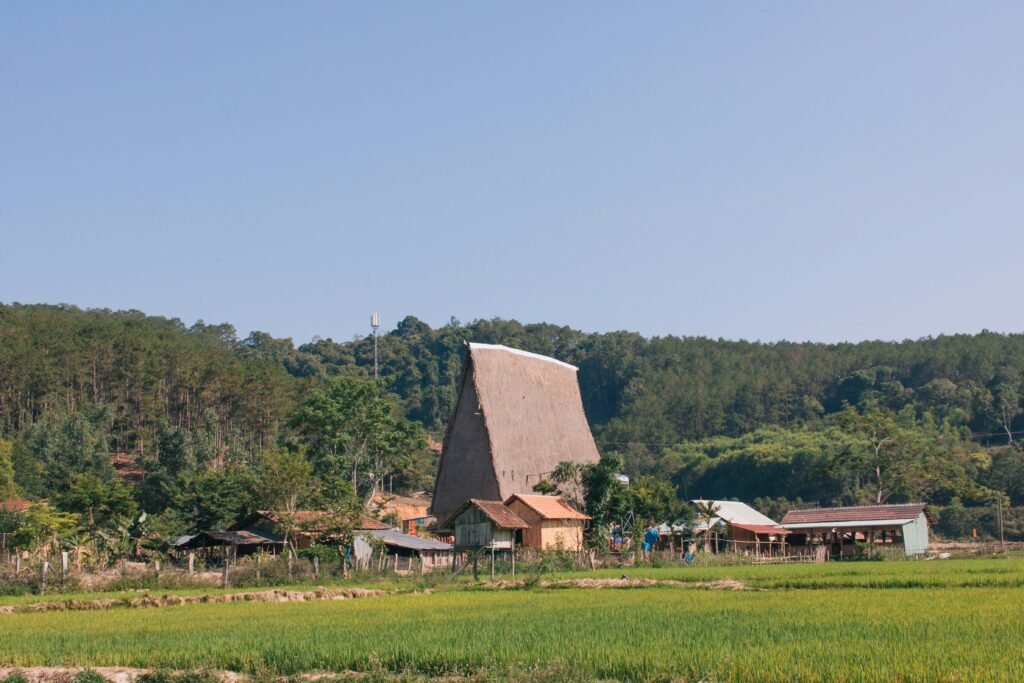
Kon Tum is the most pleasant town in the highlands for discovering Bahnar culture. The surrounding villages have kept their nhà rông, the communal house with a blade-shaped thatched roof, sometimes more than twenty metres high, where assemblies and festivals are held. Some are a few minutes’ walk from the town centre, on the banks of the Dak Bla river.In town, the wooden church built by French missionaries in the early 20th century blends Romanesque architecture with Bahnar motifs. It remains a busy place of worship: most Bahnar in the region are Catholic.
Buon Ma Thuot, coffee capital
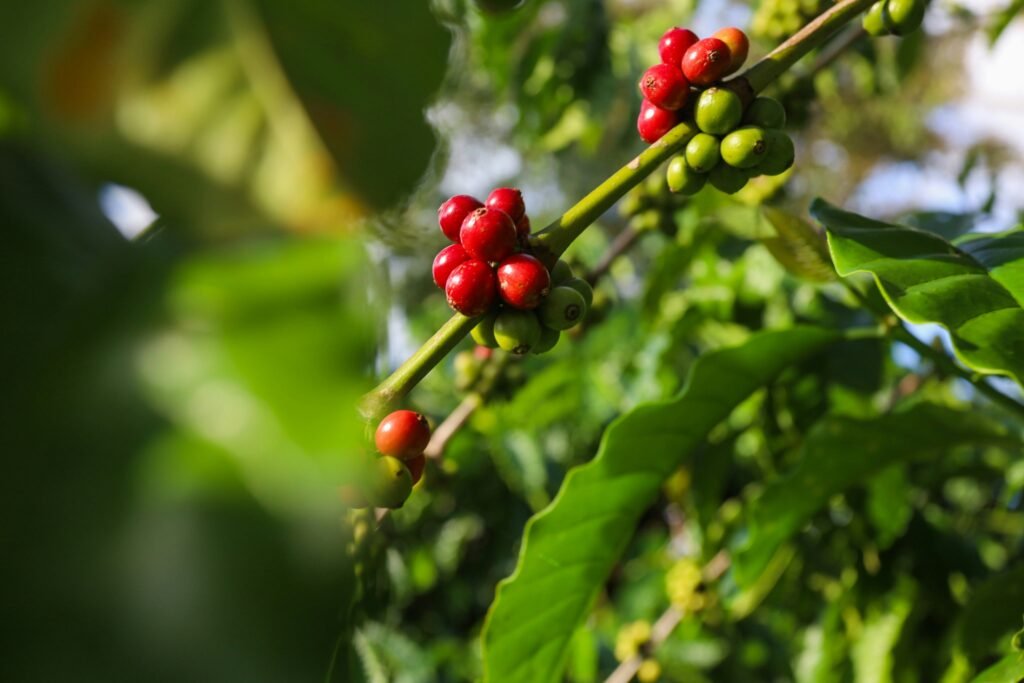
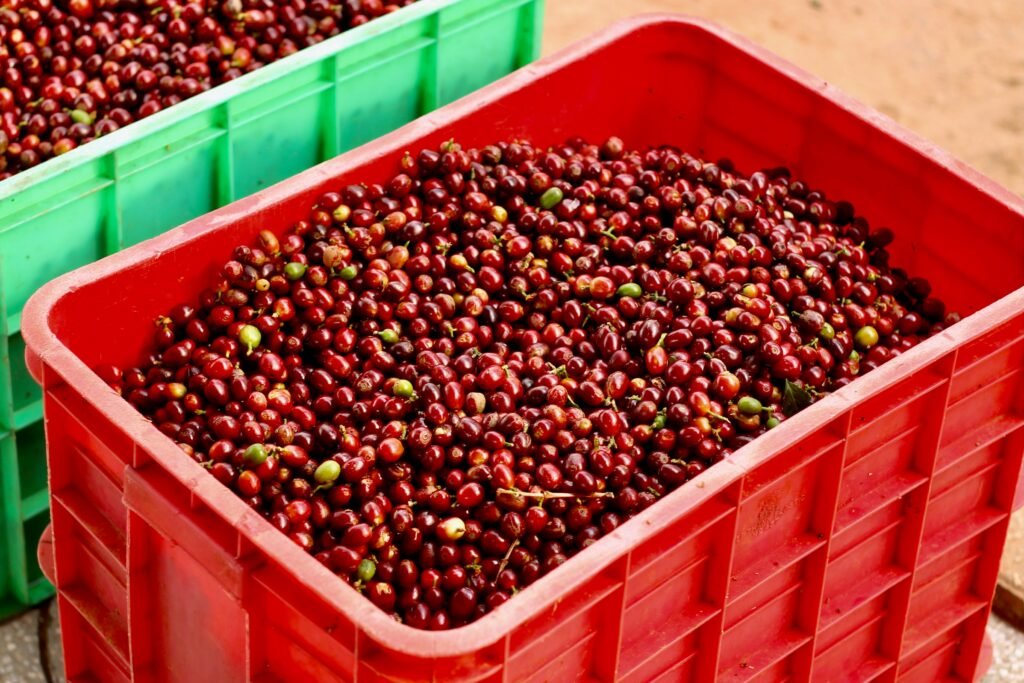
Vietnam is the world’s second-largest coffee producer, and almost all of it grows here. Buon Ma Thuot is a town without much charm but very lively, with a modern, well-designed coffee museum and dozens of cafés where the local robusta is drunk, dripped through a phin, with or without condensed milk.During the harvest, from November to January, red beans dry on tarpaulins by the roadside and in farmyards. Several family plantations welcome visitors to follow the bean’s journey from tree to cup.
Lak lake and the M’nong villages
An hour’s drive south of Buon Ma Thuot, Lak lake is surrounded by rice fields and hills. The M’nong village of Jun, on its shore, has kept its long stilt houses and hosts travellers overnight. In the morning, you cross the lake in a dugout canoe carved from a single trunk.An important point: you will see elephants offered for rides around the lake and in Yok Don park. We never include them in our programmes and advise you not to ride them. The park has in fact launched a no-contact observation programme, which is the only way of seeing them that we recommend.
Waterfalls and gong culture
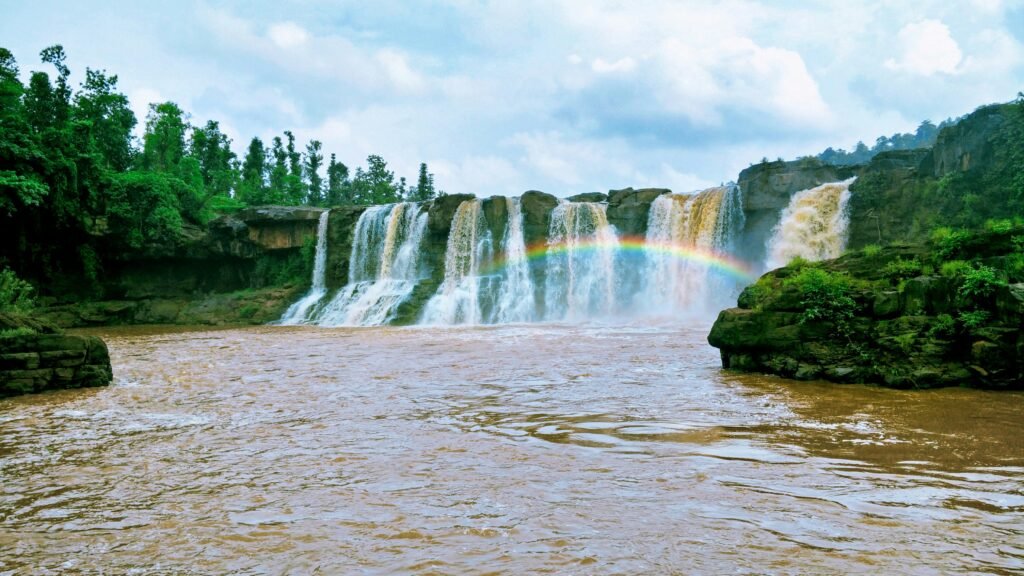
The Dray Nur and Dray Sap falls, on the Serepok river, are the most beautiful in the region, especially at the end of the rainy season. They are easily combined in half a day from Buon Ma Thuot.The Space of Gong Culture of the Central Highlands is inscribed on UNESCO’s Intangible Cultural Heritage list. If your stay coincides with a village festival or the Buon Ma Thuot coffee festival, held in March in some years, don’t miss it.
When to come, and how
The dry season runs from November to April: passable roads, clear skies, cool nights. From May to October, the rainy season makes some tracks muddy but the waterfalls are at their fullest.Most people arrive by plane to Buon Ma Thuot or Pleiku from Hanoi or Saigon, or by road from the coast: about four hours between Quy Nhon and Kon Tum. Allow four to five days for a loop of Kon Tum, Pleiku, Buon Ma Thuot and Lak lake, then head down to Nha Trang or Da Lat.
Pleiku and the Gia Lai plateau
Between Kon Tum and Buon Ma Thuot, Pleiku is the main town of the Gia Lai plateau. The town itself has little charm, but its surroundings deserve half a day: Bien Ho lake, a former volcanic crater with very clear water surrounded by pine trees, and the neighbouring tea plantations, lined up on hills of red earth. The plateau is covered in coffee, pepper and rubber plantations: it is one of the country’s great farming regions, and the road crosses a landscape very different from the rice fields of the delta.
The Ba Na and Jarai villages
The highlands are home to several indigenous peoples, including the Ba Na around Kon Tum and the Jarai around Pleiku. Their villages are organised around the high-roofed communal house, the rong, where meetings and festivals take place. The Jarai are also known for their tombs surrounded by carved wooden statues, which depict daily life and accompany the deceased.These villages are not museums. We visit them with a guide who knows the families, asking before taking photos and not entering cemeteries without permission. A homestay night is possible in some villages, with simple comfort.
Eating in the highlands
Highland food is simple and tasty. Cơm lam, sticky rice cooked in a section of bamboo over a wood fire, often accompanies chicken grilled with herbs and smoked pork. You can also try bamboo shoots, forest vegetables and, at festivals, rice wine drunk through straws from a large jar, rượu cần, which is shared among several people. And of course coffee, which you should drink in Buon Ma Thuot, in the heart of the country’s leading coffee-growing region.
How many days, and what to combine it with
Allow four to five days to link Kon Tum, Pleiku and Buon Ma Thuot without rushing. The highlands combine naturally with the coast: from Pleiku, the road descends to Quy Nhon in about four hours, through wooded passes. Our Secret Centre tour links Kon Tum, Quy Nhon and Phong Nha in this way, for travellers who already know the country’s great classics.
Good to know before you go
The highlands are still little geared to international tourism. Hotels are decent but simple, little English is spoken and the roads, often good, cover long distances. A French-speaking guide and a driver make all the difference here: they open the doors of villages, translate and adapt the programme to the festivals and markets of the moment. The dry season, from November to April, is the most pleasant; the rainy season makes some tracks difficult.
Our agency’s view
The highlands are a region for a second or third trip, or for those with three weeks and a real curiosity about minorities. It isn’t a postcard destination: the best moments are encounters. We always build it with a guide from the region, who knows the families and speaks their language.
Audience measurement. We would like to know which pages are useful to you, using Google Analytics. Nothing is stored without your consent, and you can change your mind at any time. Learn more

 Off the beaten trackThe secret Centre: Kon Tum, Quy Nhon and Phong Nha — 12 daysHanoi — Phong Nha — Huế — Kon Tum — Quy Nhon — Saigon12 days / 11 nightsfrom €1,690