A UNESCO-listed national park, a limestone massif pierced by several hundred caves, and the largest underground passage in the world. Phong Nha is the stop almost nobody puts in a first trip — and the one people talk to us about most when they get back.
In brief
Best time
February to August; the river caves often close from October to December because of floods
Getting there
4 h by road from Hue, 45 min from Dong Hoi (flight or night train from Hanoi)
How long
Two nights, three if you do a cave with a bivouac
Combine with
Hue to the south, the demilitarised zone on the way, Hanoi by night train
One of the oldest karsts in Asia
Phong Nha-Ke Bang national park covers 1,230 km² of four-hundred-million-year-old limestone, in Quang Tri province (the former Quang Binh province, merged in July 2025), between the sea and the Lao border. Three hundred caves have been recorded and exploration continues: new caves are found every year.The park has been UNESCO-listed since 2003. It is also one of the most heavily bombed regions of the war: the Ho Chi Minh trail passed here, and the caves served as hospitals and depots. The village of Phong Nha, razed, was entirely rebuilt after 1975.
Three hundred caves recorded, and new ones discovered every year.
Paradise Cave
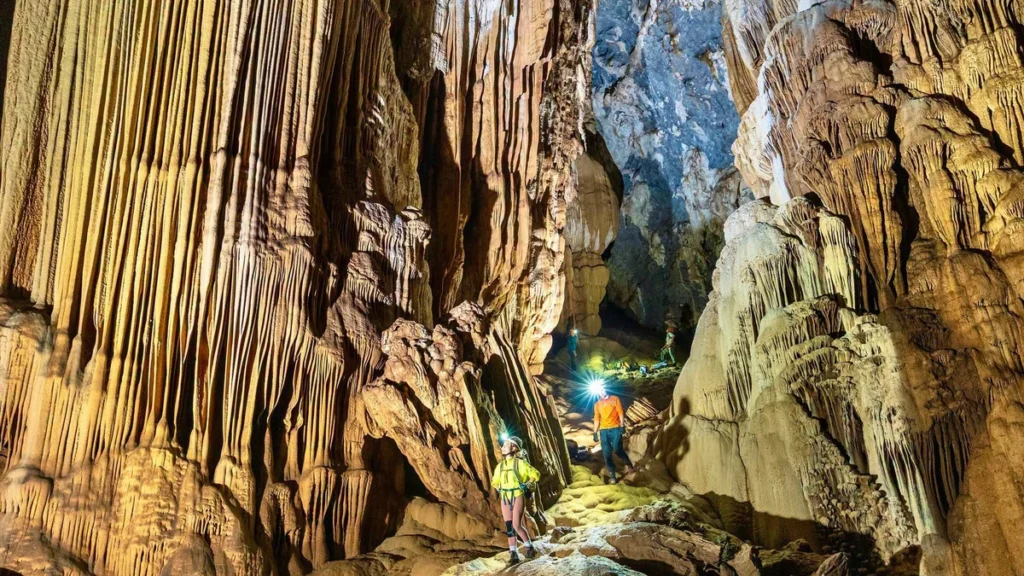
Thien Duong runs for thirty-one kilometres, one of them fitted with a wooden walkway. The entrance chamber is seventy-two metres high, with formations hanging from the ceiling like curtains. It is the most spectacular of the caves accessible to everyone, and the busiest: come at opening time.For walkers, the “seven-kilometre” option leaves the walkway and heads into the wild section, with helmet, headlamp and wading. Half a day, guided, with no technical difficulty.
Phong Nha cave, by boat
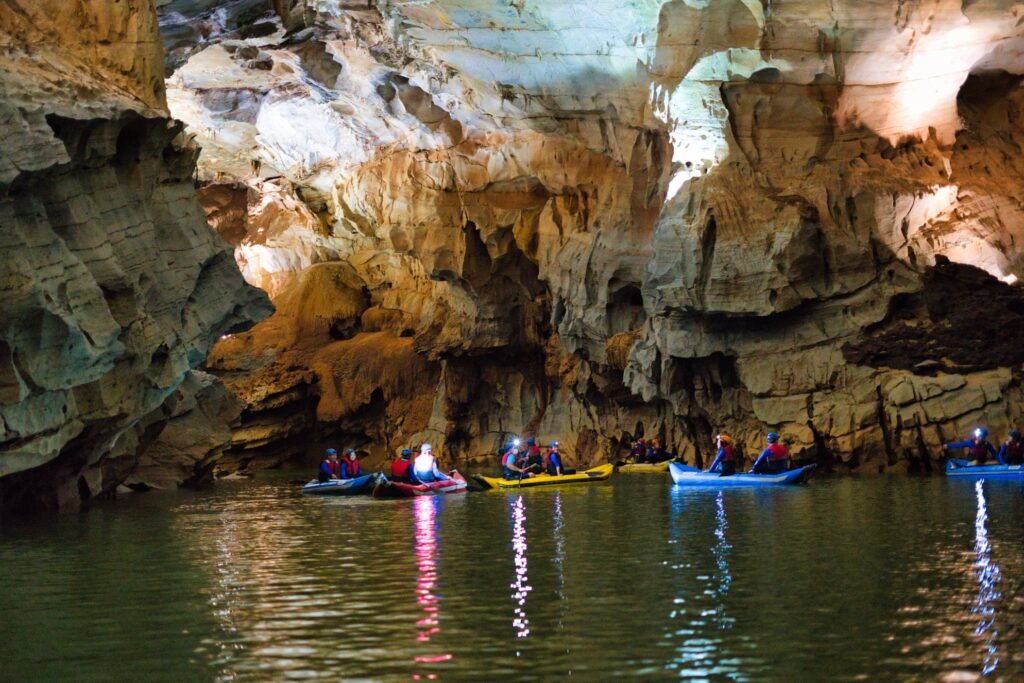
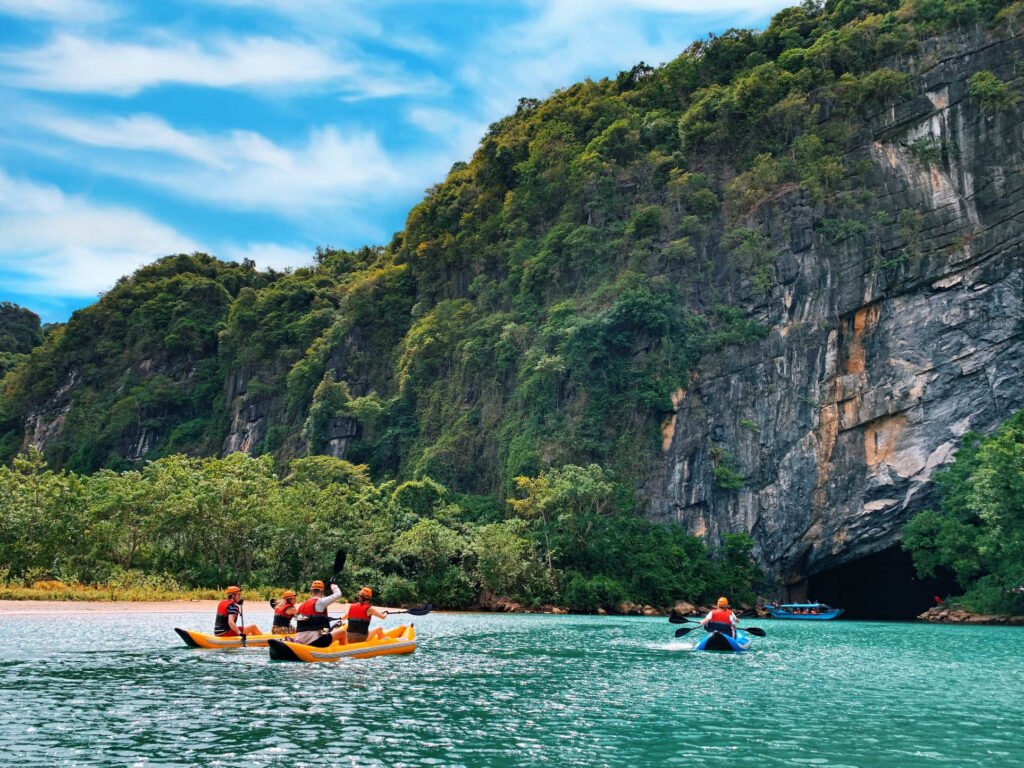
You enter by the Son river: a motorboat travels upstream for thirty minutes, cuts its engine at the entrance and continues by oar under the vault for a kilometre and a half. The silence, the green water and the echo make the experience.On the walls are 9th-century Cham inscriptions: the place was a sanctuary long before it was a tourist site. Watch the season: from October to December, floods regularly close the cave for several days at a time.
Son Doong, and why we say little about it
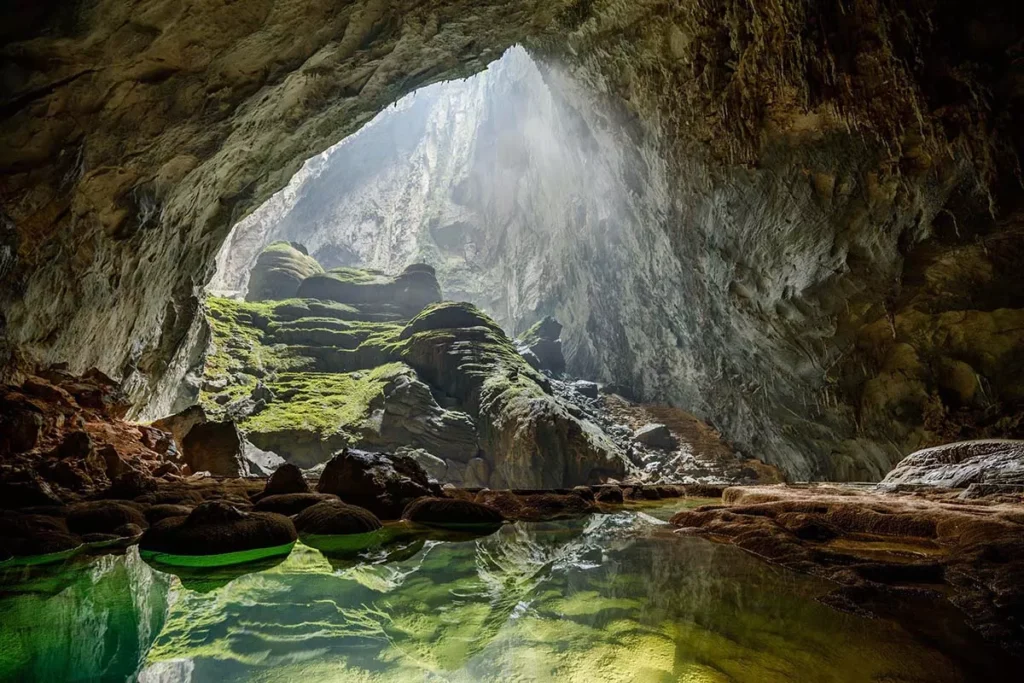
Son Doong is the largest cave in the world: five kilometres of passage, up to two hundred metres high and a hundred and fifty wide, with its own forest and its own clouds. It was only explored in 2009.Only one operator is authorised there, fewer than a thousand visitors a year, a four-day expedition at about three thousand dollars per person, booked one to two years in advance and subject to physical fitness. We say little about it because only a handful of travellers can go. The alternatives — Hang En, the world’s second-largest cave, with a bivouac on an underground sand beach, or Tu Lan with its rivers to swim through — offer 90% of the sensation for 10% of the price.
Above ground
The park is not just its caves. The Bong Lai loop, by bike or scooter, crosses a farming valley with three or four stops that have become famous — a bar in a meadow, a duck farm, a wooden bridge. It is a very pleasant, effortless half-day.The western branch of the Ho Chi Minh trail road crosses the jungle for eighty almost deserted kilometres, with the Eight Ladies cemetery and the Tra Ang pass. Allow a day with a driver.
When to come, and how
February to August: dry, hot, all caves open. June and July exceed thirty-eight degrees in the valley, but the caves are at twenty. From October to December, the region gets very heavy rain and the river caves close without notice — it is the destination’s only real risk.You arrive via Dong Hoi, forty-five minutes away: flights from Hanoi and Saigon, or the night train from Hanoi. From Hue, four hours by road, with the demilitarised zone on the way. Accommodation, in Phong Nha or Son Trach, ranges from a guesthouse at €20 to a lodge at €120.
The mistakes we see most often
Coming in November: it is the month when the caves close most often.
Staying only one night: two caves and the valley need two full days.
Visiting Thien Duong at eleven, when the coaches have arrived.
Being disappointed not to see Son Doong without looking at Hang En, which is accessible.
Which cave to choose: the comparison
Three hundred caves recorded, about ten open to the public, and very different levels of commitment. Here are the essentials to help you decide.
Cave
Length
Difficulty
Indicative price
For whom
Thien Duong (Paradise)
2 h
Walkway, none
~ 10 €
Everyone, including children
Thien Duong 7 km
Half a day
Mud, water, helmet
~ 50 €
Walkers
Phong Nha (by boat)
1 h 30
None
~ €6 + boat
Everyone, closed in floods
Tu Lan
1 to 2 days
Swimming in an underground river
150 – 300 €
Good physical condition
Hang En
2 days, bivouac
Jungle trekking
~ 300 €
Adventurers
Son Doong
4 days
Expedition
~ 3 000 $
Booked 1 to 2 years ahead
Our advice for a two-night stay: Thien Duong at opening time on the first day, Phong Nha by boat in the afternoon, then the Bong Lai valley by bike the next day. If you are disappointed not to see Son Doong, look at Hang En: it is the world’s second-largest cave, with a bivouac on an underground sand beach, for a tenth of the price.
The calendar, and the stop’s only real risk
Period
Conditions
River caves
February – May
22 to 32 °C, dry
All open. The best window.
June – August
Up to 39 °C
Open. The caves are at 20 °C: an ideal refuge.
September
First rains
Generally open.
October – December
Very heavy rain
Frequent closures, without notice, for several days at a time.
January
18 to 24 °C
Open, but cool and often grey.
It is this destination’s only real risk, and it is serious: from October to December, the Son river flood closes the river caves overnight. We always plan an alternative on land — the Ho Chi Minh trail, the Bong Lai valley — but if the caves are your only motivation, don’t come in November.
Above ground: what visitors miss
The Bong Lai loop
By bike or scooter, a very peaceful farming valley with three or four stops that have become locally famous: a bar in the middle of a meadow, a duck farm, a wooden bridge. An effortless half-day, and the best moment of many stays.
The Ho Chi Minh trail, western branch
Eighty almost deserted kilometres through the jungle, with the Eight Ladies cemetery and the Tra Ang pass. Allow a day with a driver. It is one of the few roads in the country where you can drive for an hour without meeting anyone.
The demilitarised zone
Two hours to the south, the 17th parallel, the Hien Luong bridge painted in two colours for twenty years, and the Vinh Moc tunnels where six hundred villagers lived underground for six years. The passages are their original size: nothing has been widened for visitors.
What a stay in Phong Nha costs
Item
Indicative price
Guesthouse in Son Trach
€15 – 35 for two
Lodge with a pool
70 – 130 €
Meal
3 – 8 €
Bike hire
€2 – 4 a day
Flight Hanoi – Dong Hoi
40 – 90 €
Night train Hanoi – Dong Hoi
25 – 55 €
Phong Nha remains one of the cheapest stops in the country, and one of the few where the night train really makes sense: you leave Hanoi in the evening, arrive in Dong Hoi in the early morning, and are in the first cave at opening time.
No for Paradise Cave and Phong Nha cave, which are done on a walkway and by boat. Yes for the adventure caves, which require wading and wearing a helmet.
Can you visit Son Doong with us?
No. Only one operator holds the licence and permits go nearly a year in advance. We explain the procedure and organise the rest of the trip around those dates.
How many nights should you plan?
Two nights. One forces you to choose between the two main caves, and the region deserves half a day above ground, cycling between the hamlets.
Which period should you avoid?
October to December. It is the Centre’s rainy season, and the caves can close overnight when the underground rivers rise.
Which cave should you visit in Phong Nha?
Thien Duong at opening time for the most spectacular one accessible to all, and Phong Nha by boat in the afternoon. If you want a real adventure without Son Doong’s price, Hang En is the second-largest cave in the world.
When do the caves close?
From October to December, the Son river flood regularly closes the river caves, without notice and for several days at a time. It is the stop’s only real risk.
How much does the Son Doong expedition cost?
About three thousand dollars per person for four days, with a single authorised operator, fewer than a thousand visitors a year and booking one to two years ahead. Hang En offers 90% of the sensation for 10% of the price.
Audience measurement. We would like to know which pages are useful to you, using Google Analytics. Nothing is stored without your consent, and you can change your mind at any time. Learn more

 Off the beaten trackThe secret Centre: Kon Tum, Quy Nhon and Phong Nha — 12 daysHanoi — Phong Nha — Huế — Kon Tum — Quy Nhon — Saigon12 days / 11 nightsfrom €1,690