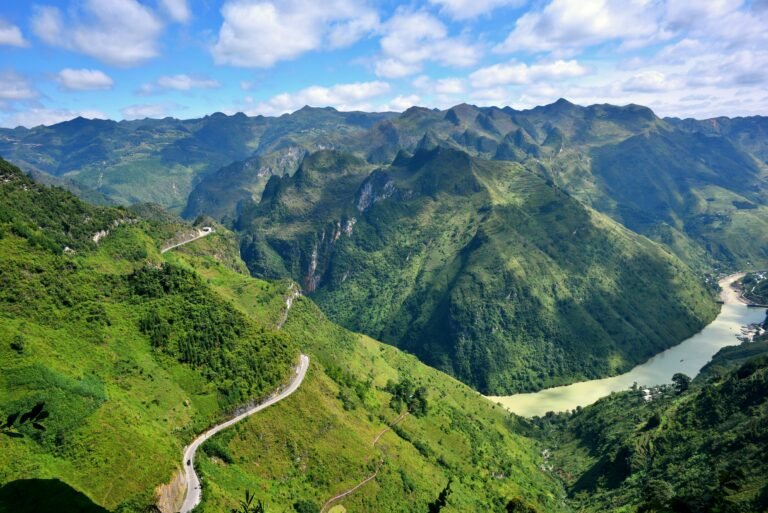
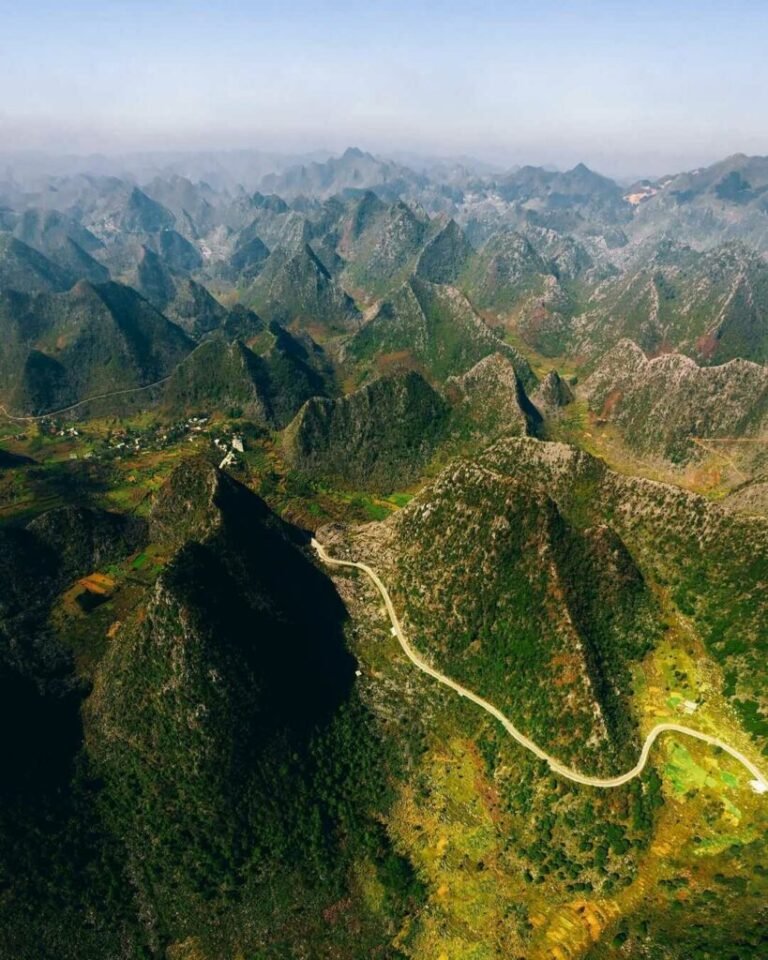
It is the most spectacular region of Vietnam and the least comfortable. A limestone plateau listed as a Global Geopark, passes at 1,500 metres, markets where horses are still sold, and very few foreign travellers.
In brief
Best time
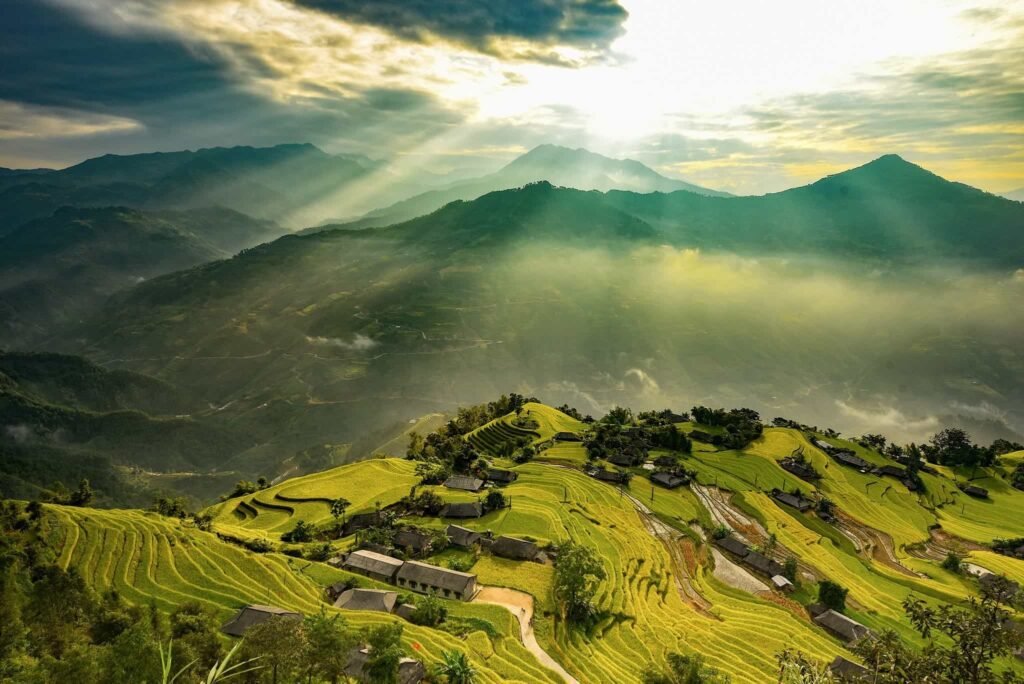
September–October for buckwheat in flower and the rice fields; March–April for plum blossom
Getting there
6 h from Hanoi to Ha Giang town, then 2 to 3 h a day on the loop
How long
Three nights minimum, four to do the loop without driving all the time
Combine with
Cao Bang via the Bao Lac road, Bac Ha and its Sunday market, Hanoi
What is called “the loop”
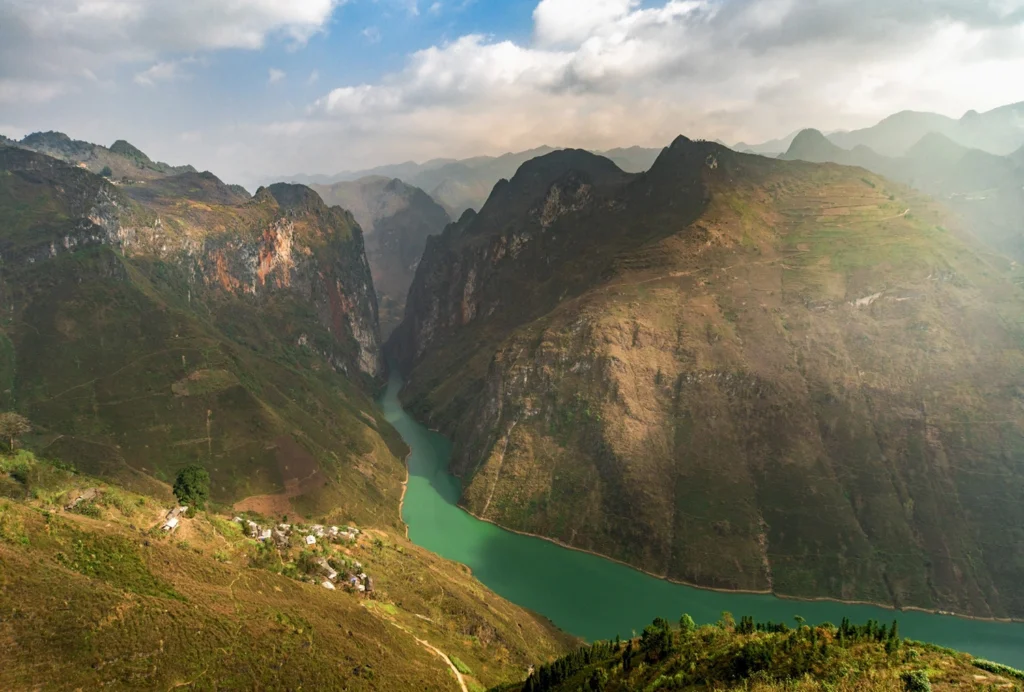
The Ha Giang loop is a three-hundred-and-fifty-kilometre circuit on the Dong Van limestone plateau, in the far north, along the Chinese border. It links Quan Ba, Yen Minh, Dong Van and Meo Vac by roads cut into the cliff face, the most famous of which, the Ma Pi Leng pass, towers seven hundred metres above the Nho Que river.The plateau has been a UNESCO Global Geopark since 2010. It is a land of stone: the Hmong grow maize in pockets of soil wedged between the rocks, sometimes three square metres at a time, carrying the earth up on their backs. You only understand northern Vietnam after seeing that.
The Hmong grow maize in pockets of soil wedged between the rocks, sometimes three square metres at a time.
The ethnic markets, the real heart of the trip
Twenty-two ethnic groups live on the plateau. The weekly markets are where everything happens: Meo Vac on Sunday — the largest livestock market in the North —, Dong Van on Sunday too, Lung Phin and Pho Cao on a six-day cycle that shifts the date every week.Ask for the calendar before setting your dates: arriving on the wrong day means missing half the region’s interest. The Khau Vai “love market”, once a year in spring, where former lovers meet for one night a year, is a curiosity that has become very crowded.
What to see on the loop
The Vuong palace, in Sa Phin, is a Hmong residence from 1919 in stone and pinewood, built by the family that controlled the opium trade under the French; it is worth the stop for its Sino-Hmong architecture. The Lung Cu flag tower marks the country’s northernmost point.The boat trip down the Nho Que river, in the Tu San gorge — eight hundred metres of vertical cliffs — is the excursion not to miss. Finally, the old town of Dong Van, with its earth houses roofed with yin-yang tiles and its stone market built in 1925, is the best place to sleep on the plateau.
When to go: buckwheat and plums
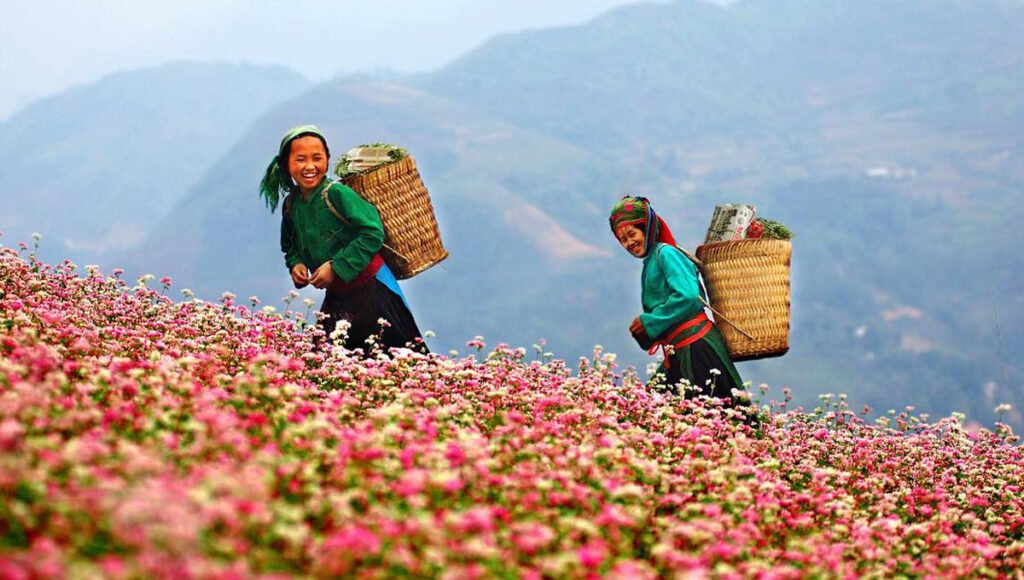
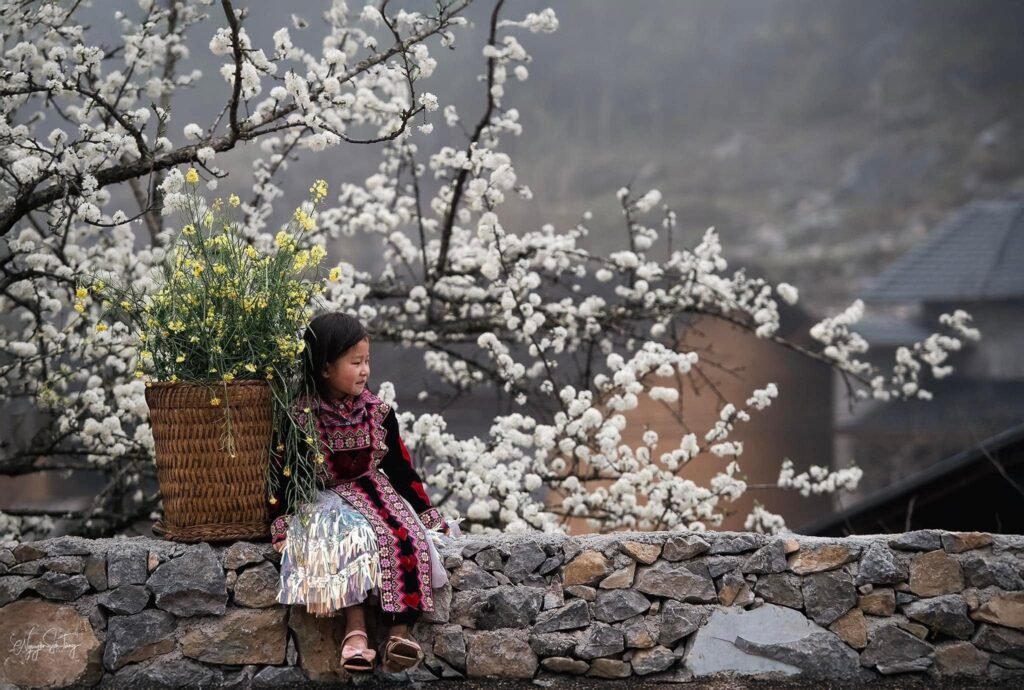
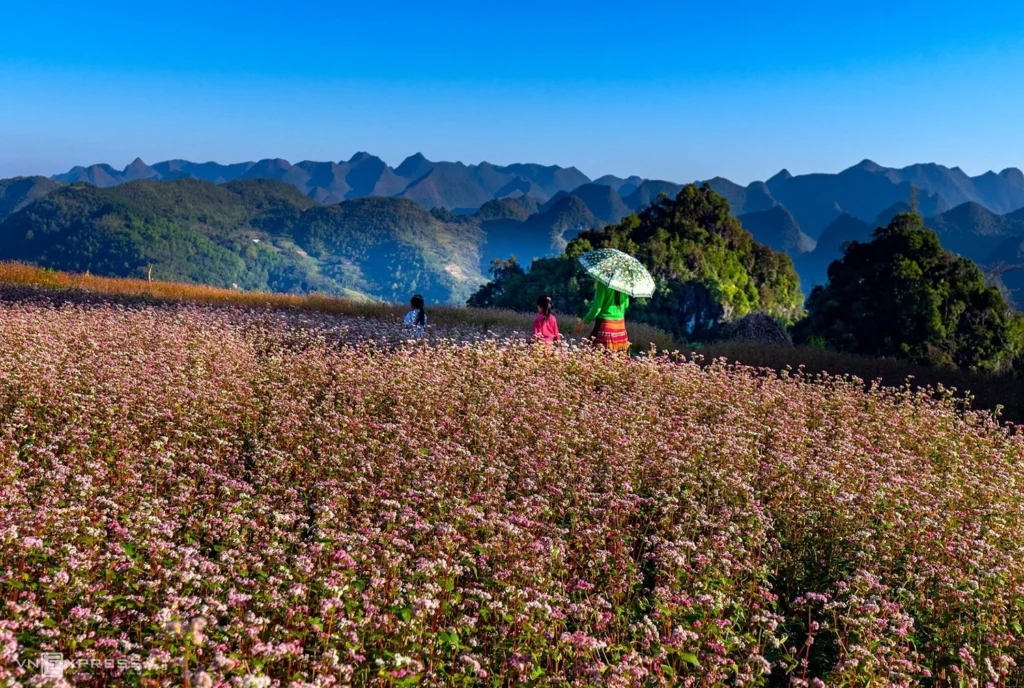
Two windows. From mid-October to mid-November, buckwheat fields bloom pink across the plateau, at the same time as the last golden rice fields in the lower valleys. In March and April, plum and wild plum trees are in blossom, with clear mornings.From December to February it is cold — frost is not rare at fifteen hundred metres — and mist often drowns the passes. From June to August, rain causes landslides that cut the road several days a year.
How to get there, and why not by scooter
Six hours from Hanoi to Ha Giang town, then the loop itself, with two to three hours on the road a day. A border-zone travel permit is required; we have it issued before your arrival.Independent scooter hire is very popular with backpackers, and we don’t offer it. The roads are narrow, without crash barriers, with trucks and fog; serious accidents involving foreign travellers are frequent and most travel insurance does not cover riding without a Vietnamese motorbike licence. We work with local drivers, or with riders for those who want the motorbike experience without driving.
Where to stay on the plateau
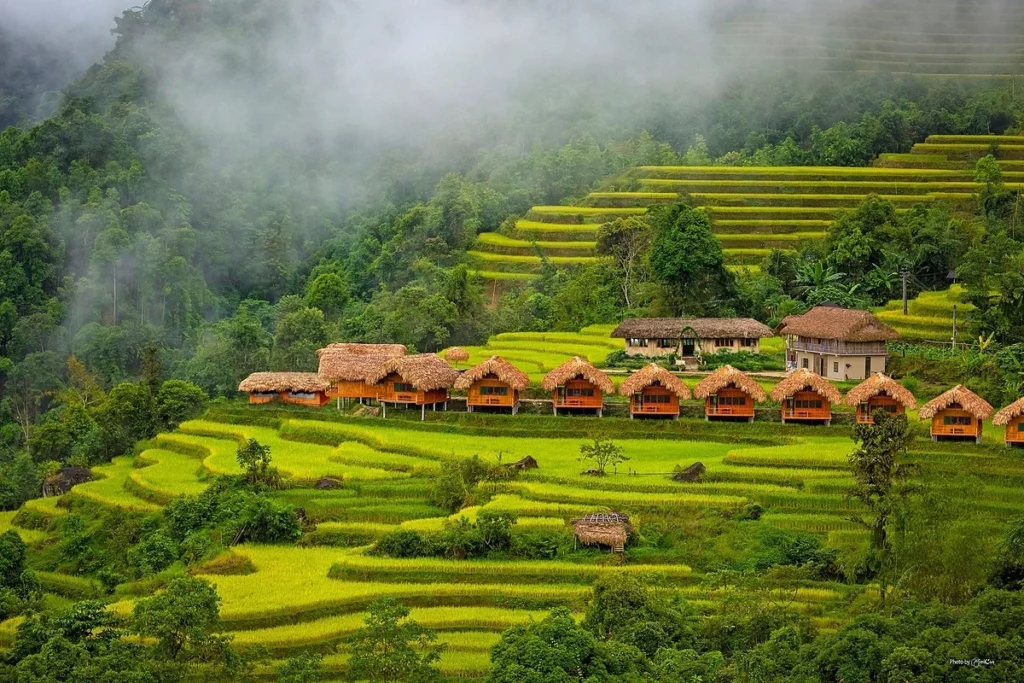
Hmong, Tay and Dao guesthouses in the villages, between €15 and €40; a few more polished addresses in Dong Van and Yen Minh, up to €100. Comfort is simple everywhere: uneven hot water, no heating, thick blankets in winter.
The mistakes we see most often
Doing the loop in two days: fourteen hours on the road just to say you did it.
Setting the dates without looking at the market calendar.
Hiring a scooter without a motorbike licence: no insurance cover, no experience of ridge roads.
Underestimating the January cold at fifteen hundred metres.
The plateau calendar
Period
What you will see
Our view
Mid-October – mid-November
Buckwheat in flower, pink across the plateau
The most beautiful window, and the busiest with Vietnamese visitors.
September – early October
Golden rice fields in the lower valleys
Excellent, with generally clear skies.
March – April
Plum and pear trees in blossom
Clear mornings, mild temperatures. Our preference for walking.
December – February
Bare stone, mist
Frost possible at 1,500 m. The passes disappear in the fog.
June – August
Intense green
Heavy rain and landslides that cut the road several days a year.
A point few guides mention: the mid-October buckwheat is not an ornamental plant. It is a lean-season crop, sown after the maize, whose flour is used to make pancakes when rice stores run out. The plateau’s beauty at this season is the by-product of subsistence farming.
The market calendar: the real travel plan
In these mountains, the weekly market is the institution that links villages two or three hours’ walk apart. Arriving on the wrong day means missing half the region’s interest.
Market
Day
What you see there
Meo Vac
Sunday
The largest livestock market in the North. The Hmong arrive from 5 am.
Dong Van
Sunday
On the square of the 1925 stone market, in the old town.
Lung Phin
6-day cycle
Small, very few visitors. Ask for the current date.
Pho Cao
6-day cycle
Likewise. Textiles and medicinal herbs.
Khau Vai
Once a year, spring
The “love market”. Now very crowded.
Markets on a six-day cycle shift their date every week: they fall on Monday, then Sunday, then Saturday. That is why we ask for your dates before setting the order of the stops, not the other way round.
Doing the loop: car, motorbike or rider
Car with driver
Our default option. The driver knows the passes, stops wherever you like, and you look at the landscape instead of the road. It is also the only reasonable option with children or in the rainy season.
Motorbike rider
The so-called easy rider option: you ride pillion behind a local driver. The same sensations as riding, without the risk or the insurance question. It is what we offer those who want the motorbike experience.
Riding yourself
We don’t offer it, and we should say exactly why. Above 50 cc, a recognised motorbike licence is required; without one, most travel insurance doesn’t cover damage, and a minor fall becomes very expensive. The roads are narrow, without crash barriers, with fog, trucks and livestock on the road at night. Serious accidents involving foreign travellers on this loop are frequent and rarely reported.
What the loop costs
Item
Indicative price
Night in a guesthouse
€15 – 40 for two
Night at a more polished address in Dong Van
60 – 100 €
Meal
3 – 7 €
Boat in the Tu San canyon
~ €5 per person
Border-zone permit
Included, we take care of it
Private car with driver
€80 – 120 a day
Bring cash: there are no ATMs on the plateau outside Dong Van and Meo Vac, phone coverage is patchy, and almost nobody accepts cards.
Yes, for the northern border zone of the plateau. It is issued in Ha Giang within a few hours and we always take care of it for our travellers.
Can you do the loop by scooter?
It is possible but we strongly advise against it: narrow roads, fog, trucks and frequent accidents. We only organise this tour by private vehicle with a local driver.
How many days should you plan?
Four days minimum from Hanoi, six to include Cao Bang and Ban Gioc waterfall without spending your days in the car.
Is it suitable for children or seniors?
We advise against it for children under ten because of the long, winding roads. For fit seniors, it is entirely doable with longer stages.
On which day are the Ha Giang markets held?
Meo Vac and Dong Van on Sunday. Lung Phin and Pho Cao follow a six-day cycle, so their date shifts every week. We set the order of the stops according to your dates, not the other way round.
How many days for the Ha Giang loop?
Three nights at least, four so you don’t drive every day. In two days, it is fourteen hours on the road just to say you did it.
Can you ride the loop by scooter yourself?
It is possible but we don’t offer it. Without a recognised motorbike licence, travel insurance doesn’t cover you, and the roads — narrow, without crash barriers, with fog and trucks — cause serious accidents every year. We work with local riders.
Audience measurement. We would like to know which pages are useful to you, using Google Analytics. Nothing is stored without your consent, and you can change your mind at any time. Learn more
 Off the beaten trackHa Giang off the beaten track — 9 daysHanoi — Ha Giang — Dong Van — Cao Bang — Ban Gioc — Hanoi9 days / 8 nightsfrom €1,390